Window privacy solutions are treatments applied to glass surfaces to control visibility, manage light, and improve security in homes and businesses. The right choice depends on your space, budget, and how much natural light you want to keep. From affordable privacy window film to full plantation shutters, the options in 2026 cover every need and price point. This guide covers the most effective window covering options for privacy, with practical advice on choosing and fitting them correctly.
1. what are the best window privacy solutions?
The best window treatments for privacy fall into three main categories: films, blinds and shutters, and layered fabric systems. Each category suits different rooms, budgets, and privacy goals. Films work well for bathrooms and offices where you want light without visibility. Blinds and shutters suit living rooms and bedrooms where you need adjustable control. Layered systems, such as sheer curtains combined with block-out blinds, give you the most flexibility across day and night.
2. privacy window films: types, costs, and key features
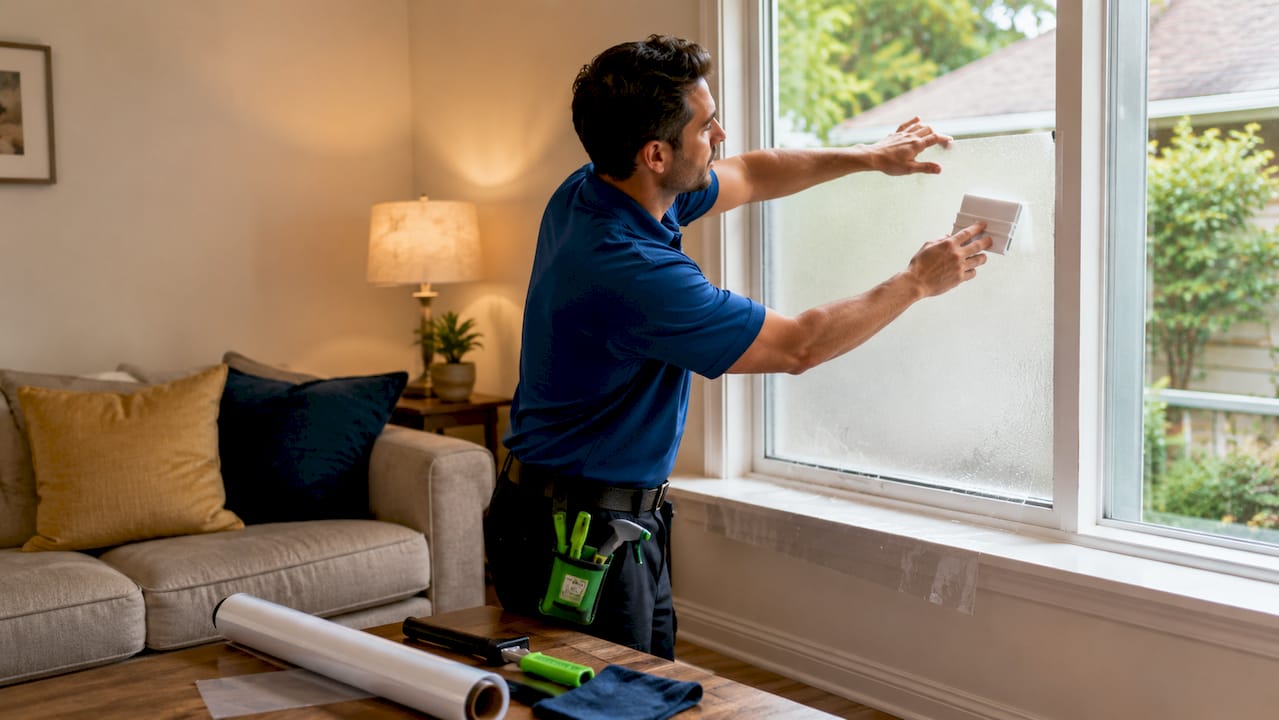
Privacy window film is the industry term for adhesive or static-cling coatings applied directly to glass. These films diffuse or block the view through a window while still allowing light to pass through.
The main types of privacy film include:
- Static-cling frosted film: No adhesive required. Applies with water and removes cleanly. Sanmadrola films cost between £6 and £25 per roll and block 45%–85% of solar heat. That makes them one of the most cost-effective options for renters and homeowners alike.
- Decorative and patterned film: Adds a design element while obscuring the view. Popular in offices and retail spaces where branding or aesthetics matter.
- One-way mirror film: Allows you to see out during daylight while blocking the view from outside. Effectiveness drops at night when interior lighting reverses the effect.
- Switchable PDLC smart film: The premium option. PDLC smart films toggle between opaque and clear in under one second and last over ten years. They block up to 60% of infrared heat and 99% of UV rays. This technology suits boardrooms, medical facilities, and high-end residential glazing.
Beyond privacy, films protect your interiors. Static window films can block 84% of UVA rays, which reduces furniture fading significantly. That is a practical benefit most people overlook when comparing films to blinds.
Pro Tip: When applying static-cling film, use generous water during installation to improve adhesion and reduce air bubbles. Spray the glass thoroughly before laying the film, then use a squeegee to push bubbles outward from the centre.
3. blinds vs shutters: which gives better privacy control?
Blinds and shutters are the most widely used window covering options for privacy in UK homes. They offer adjustable control that films cannot match. The table below compares the main types.
| Type | Privacy Level | Light Control | Best For | Approx. Cost |
|---|---|---|---|---|
| Venetian blinds | Medium | High | Living rooms, offices | £20–£80 |
| Roller blinds (block-out) | Very high | Full block | Bedrooms, media rooms | £25–£120 |
| Cordless pleated blinds | Medium | Moderate | Homes with children | £30–£100 |
| Plantation shutters | Very high | Excellent | Long-term investment | £150–£600+ |
Venetian blinds let you tilt the slats to direct light upward while blocking sightlines from outside. This makes them ideal for ground-floor offices or front rooms where you want daylight without exposure. The FRIDANS block-out roller blind from IKEA blocks all light and shapes, making it effective for complete privacy even when interior lights are on at night. That is a critical point: many standard blinds become transparent from outside once you switch your lights on after dark.
Cordless pleated blinds remove the cord hazard, making them the right choice for households with young children. Shutters represent a longer-term investment. They provide superior privacy and style control while blending architecturally with the property. Adjustable louvres mean you never get that closed-in feeling that solid blinds can create.
Pro Tip: Measure your window recess carefully before ordering blinds. Inside recess installation requires 8–14cm of clearance to avoid interference with window handles and frames. Getting this wrong is the most common installation mistake.
4. layered window coverings for day and night privacy
A single treatment rarely solves every privacy need across a full day. Layered systems combine two or more treatments to give you flexible control at different times.
The most effective combinations include:
- Sheer curtains with roller blinds: Sheers diffuse the view during daylight and soften the room’s appearance. At night, you lower the roller blind for full privacy. This is the most popular layered approach in UK living rooms.
- Bamboo blinds with linen curtains: Natural bamboo adds warmth and texture. It filters light beautifully but does not block it entirely. Pairing bamboo with a heavier curtain gives you the option of full privacy when needed.
- Outdoor privacy screens with interior film: For large glazed areas or bi-fold doors, an exterior screen or decorative panel reduces visibility before light even reaches the glass. This works particularly well for privacy solutions for large windows and glass walls in commercial spaces.
- Awnings and pergolas: These provide shade and partial privacy from above, reducing the angle at which people can see into ground-floor rooms. They also cut solar heat gain, which improves comfort in summer.
Lighting conditions directly affect how well any privacy treatment performs. A frosted film or sheer curtain that works perfectly during the day becomes nearly transparent once you turn on interior lights at night. Layered systems solve this problem by giving you a block-out option for evening use. For garden buildings, the same principle applies. If you are fitting windows in an outbuilding, residential-grade windows for garden cabins benefit from the same layered approach used in main properties.
5. how to choose and install the right privacy treatment
Selecting the right solution comes down to four practical steps.
- Define your privacy goal. Do you need full opacity, partial diffusion, or adjustable control? A bathroom needs permanent frosting. A living room needs adjustable options. A boardroom may justify PDLC smart film.
- Assess your light preferences. Privacy and natural light are not opposites, but some treatments sacrifice one for the other. Frosted films and block-out blinds reduce glare but also reduce brightness. Venetian blinds and shutters let you keep both.
- Measure accurately. For inside-recess blind fitting, allow 8–14cm of clearance from the window frame. For film, measure the exact glass area and add 2cm on each side for trimming. Incorrect measurements are the leading cause of poor-fitting installations.
- Set a realistic budget. Static-cling films start at under £10 and are a genuine DIY option. Plantation shutters can cost several hundred pounds per window but last decades. PDLC smart film sits at the premium end and typically requires professional fitting. For commercial properties, commercial window glazing options often include privacy glass as a built-in feature, which removes the need for additional treatments.
For maintenance, wipe films with a soft damp cloth and avoid abrasive cleaners. Blinds benefit from occasional dusting and a yearly check of the mechanism. Shutters need very little upkeep beyond occasional painting or oiling of the louvres. If your existing glazing is damaged or misted, no privacy treatment will perform well over compromised glass. Addressing the glass first gives any treatment the best possible base to work from. You can read more about home window security to understand how privacy and security improvements often go hand in hand.
What we have learned installing privacy solutions since 2005
After nearly two decades of working with glazing across homes and commercial properties, one pattern stands out clearly. Most people choose a privacy treatment based on appearance alone, then regret it within a year because it does not perform at night or in changing light conditions.
The biggest mistake we see is treating privacy as a daytime problem. A frosted film looks perfect in a showroom. In a ground-floor kitchen with the lights on at 7pm in January, it offers almost no privacy at all. The physics are straightforward: light travels from bright to dark, so whoever is standing outside in the dark can see everything inside.
Our honest recommendation is to start with the night scenario, not the day scenario. Choose a treatment that works when you are most visible, then layer something lighter on top for daytime aesthetics. Shutters with adjustable louvres remain our preferred option for rooms where you want long-term performance without compromise. They cost more upfront, but they outlast every blind and film we have ever installed.
For budget-conscious projects, a quality static-cling frosted film combined with a simple roller blind gives you 90% of the performance of a premium solution at a fraction of the cost. Do not overlook the installation step either. A well-fitted affordable blind outperforms an expensive one that was measured incorrectly.
How cloudy2clear windows can help you get it right
Whether you are upgrading a home or fitting out a commercial space, Cloudy2Clear Windows has the experience to help you choose and install the right solution.
Cloudy2Clear Windows has been working with homeowners and businesses across the UK since 2005. We specialise in double glazing replacement and repairs, including privacy-enhancing glass options that perform better than surface-applied films. If your existing windows are misted, cracked, or simply not giving you the privacy you need, our local teams can assess and resolve the issue quickly. Find your nearest branch, including our teams covering Oxford and Milton Keynes, and book a consultation today.
FAQ
What is the most affordable privacy window film?
Static-cling frosted films are the most affordable option, typically costing between £6 and £25 per roll. Brands such as Sanmadrola and Rabbitgoo are widely available and require no adhesive or professional fitting.
Do privacy films work at night?
Standard frosted and one-way films lose effectiveness at night when interior lights are on. Block-out blinds or layered treatments are the reliable solution for night-time privacy.
How do i measure windows for inside-recess blinds?
Allow 8–14cm of clearance between the blind and the window frame to avoid interference with handles and hinges. Always measure the width and drop at three points, as window recesses are rarely perfectly square.
Are shutters worth the cost compared to blinds?
Shutters provide superior long-term privacy control, durability, and architectural style compared to blinds. They cost significantly more upfront but rarely need replacing, making them a sound investment for permanent properties.
What is PDLC smart film and is it suitable for homes?
PDLC smart film is a switchable glazing technology that toggles between opaque and clear in under one second. It suits high-end residential projects and commercial spaces, blocking up to 99% of UV rays and lasting over ten years.