Specify fire-rated glass whenever an opening forms part of a fire-separating element. It is a tested, certified component of a fire-resisting system that protects escape routes, maintains compartmentation, and satisfies UK building regulations. Standard toughened or laminated glass offers no fire resistance, regardless of how it looks or how it was installed.
The immediate reasons to specify it are straightforward:
- Life safety: keeps escape routes usable for a rated period so occupants can get out
- Compartmentation: stops fire and smoke spreading between zones of a building
- Compliance: Approved Document B sets minimum resistance periods for glazed elements in fire-separating constructions
- Insurance and liability: non-compliant glazing can void cover and expose you to enforcement action
- Property protection: slows structural damage and limits the spread of heat
What do the fire-resistance ratings on glass actually mean?
Fire-rated glass is classified by what it resists and for how long. The three performance classes you will see on BS EN 13501-2 test reports and specification sheets are:
- E (integrity): prevents flames and hot gases passing through for the rated period
- EW (integrity + radiation control): as above, plus limits radiant heat on the unexposed face
- EI (integrity + insulation): as above, plus limits the temperature rise on the unexposed face
The minute rating (30, 60, 90 or 120) follows the letter code. So EI60 means 60 minutes of both integrity and insulation. Approved Document B also references the REI notation, where R indicates load-bearing resistance — relevant for structural glazed elements.
| Rating | What it does | Typical use |
|---|---|---|
| E | Provides integrity (flame/smoke barrier) for a period | Vision panels in internal doors and other applications |
| EW | Provides integrity plus limits radiant heat | Screens near escape routes and similar locations |
| EI | Provides integrity and insulation against heat transfer | Protected corridors, stairways, compartment walls, and higher risk areas |
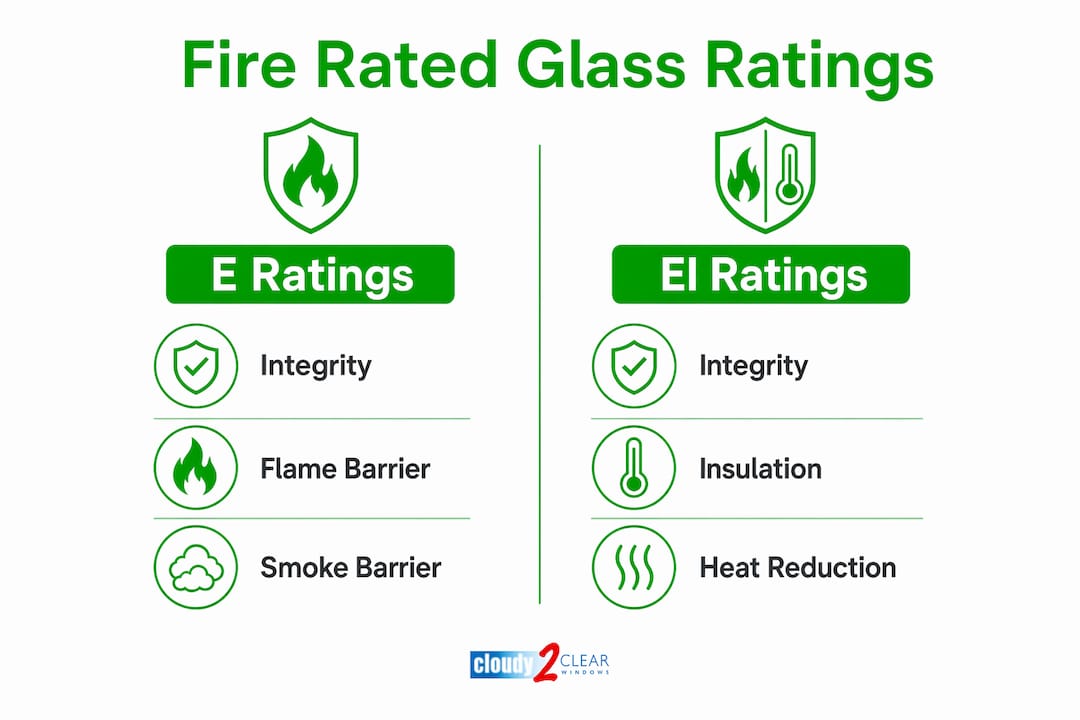
EI is commonly required for escape routes because it limits heat transfer as well as preventing flame passage. E-only glazing may be restricted in area on some escape routes under Approved Document B tables.
Where in a UK building must you use fire-rated glazing?
The short answer: anywhere the glazing sits within a fire-separating element. Common locations include:
- Fire doors with vision panels in protected corridors, stairwells and lobbies
- Protected escape routes in flats, offices, schools and care homes
- Compartment walls between separate occupancies or fire compartments
- Staircase enclosures in houses with loft conversions (a frequent discovery during refurbishment)
- Façades and external walls where unprotected area limits apply under Approved Document B
The Regulatory Reform (Fire Safety) Order 2005 places a duty on the Responsible Person in non-domestic premises to maintain passive fire protection, including glazing. In practice, fire-rated glazing is often discovered to be missing or incorrectly replaced during refurbishment or a fire-risk assessment. If you are planning interior door replacements, it is worth checking whether any glazed panels fall within a fire-rated location before work begins; see this guidance on what to consider when replacing interior doors.
How is fire-rated glass tested and what proof should you ask for?
The two test standards you will encounter are BS 476 Part 22 (the historic British standard, still referenced for older installations) and BS EN 13501-2 (the current European classification system). For new applications, EN classifications should be specified; guidance indicates these will be mandatory in certain contexts.
Third-party certification gives you independent assurance that a product consistently meets its claimed rating. Look for:
- Certifire approval mark (a UKAS-accredited scheme)
- BSI Kitemark on the glass or its packaging
- Permanent markings on the glass itself: manufacturer name, product reference and test standard
The Glass and Glazing Federation recommends checking the glass for manufacturer markings and confirming test data with the supplier before installation. A certificate alone is not enough — the certificate must match the exact product and system being installed.
Pro Tip: Cross-reference the Certifire or BSI certificate number against the manufacturer’s published data sheet. The glass product name, thickness and system reference should match exactly. If they do not, the installation may fall outside the tested scope.
Documents to request from your installer or supplier before work starts:
- Test report reference (BS EN 13501-2 classification report)
- Third-party certification number (Certifire or BSI Kitemark)
- Manufacturer’s system reference and permitted dimensions
- Evidence of installer competence (training records or scheme membership)
Why ‘like-for-like’ glass replacement can invalidate fire resistance
This is the most common and most dangerous mistake. Fire-rated glass is not a standalone product; it must be installed as part of a complete, tested fire-resistant glazed system. The frame, glazing seals, beads and fixings are just as important as the glass itself. Substituting any single component can invalidate the entire fire rating.
Common errors that invalidate fire resistance:
- Substituting standard toughened glass for a rated product
- Using non-rated or incorrect glazing seals and intumescent strips
- Installing rated glass in a frame that was not part of the tested system
- Making on-site modifications to dimensions outside the tested scope
- Damaging intumescent components during fitting
The enforcement and insurance consequences are real. A building-control officer or fire authority inspector can require remedial work, and an insurer may decline a claim if non-compliant glazing contributed to fire spread. Your glazing compliance record directly affects your cover.
How often should you inspect fire-rated glazing?
Tie fire-rated glazing checks to your fire-door inspection cycle and your fire-risk assessment review. As a minimum, inspect annually. Three triggers require an immediate check regardless of schedule:
- Refurbishment or building works near any glazed fire-separating element
- A fire brigade visit or enforcement notice
- An insurer instruction or insurance renewal survey
Inspection checklist
- Confirm permanent markings are present and legible on the glass
- Check intumescent strips and glazing seals for damage, compression or missing sections
- Inspect the glass for cracks, chips or any sign of unauthorised replacement
- Examine beads and fixings for looseness, corrosion or DIY alterations
- Verify that no on-site modifications have been made to the frame or aperture size
- Record findings in your passive fire protection survey log
Pro Tip: Intumescent seals can be damaged by ordinary cleaning products and minor impacts. Never use abrasive cleaners near glazing seals in fire-rated doors or screens, and flag any impact damage for professional assessment before the next inspection.
What are the practical trade-offs with fire-rated glazing?
Fire-rated glass costs more than standard glazing and typically carries longer lead times. The table below gives qualitative guidance to help you plan.

| Factor | Fire-rated glazing | Standard double glazing |
|---|---|---|
| Cost | Noticeably higher, especially for EI products | Lower |
| Lead time | Often 2–6 weeks for certified units | Usually 1–2 weeks |
| Thermal performance | Generally lower U-values than modern double glazing | Better thermal efficiency available |
| Acoustic performance | Varies by product; some EI glass performs well | Wide range available |
| Appearance options | Clear, tinted and wired options; wired glass is visually distinctive | Broad range |
The thermal gap is worth planning for. If you are replacing glazing in a fire-rated location and energy performance matters, ask your installer about glazing options for energy efficiency that are compatible with the required fire classification. Some EI products can be specified with low-emissivity coatings, though the tested system reference must still be maintained.
What should you ask an installer before specifying the job?
A compliant specification needs more than a product name. Include these items in any tender or quote request:
- Required classification (E, EW or EI) and duration in minutes
- Full glazed-system reference: manufacturer, frame type and associated test report number
- Permitted pane dimensions within the tested system
- Confirmation that seals, beads and fixings are from the tested system
- Third-party certification number (Certifire or BSI Kitemark)
Questions to ask your installer
- Can you provide the BS EN 13501-2 test certificate for this exact system?
- What is the manufacturer’s system reference, and does it cover these dimensions?
- Are your installers trained or accredited for fire-rated glazing installation?
- Can you provide traceable batch numbers for the glass supplied?
Documents to request at handover
- Certificate of conformity for the installed system
- Signed installation record confirming the system reference and dimensions
- Photographs of permanent markings on the installed glass
- Maintenance guidance from the manufacturer
Keeping traceable certificates and an installation sign-off at handover reduces liability and speeds any future insurer or building-control check.
Why Cloudy2Clear Windows treats fire-rated glazing as a system responsibility
The temptation when replacing a cracked or misted pane in a fire door is to treat it as a straightforward glass swap. In our experience, that approach is where compliance failures begin. A pane that looks identical to the original may carry no fire rating at all, and once it is fitted, the problem is invisible until an inspection or, worse, a fire.
Cloudy2Clear Windows has been repairing and replacing glazing in residential and commercial properties since 2005. That depth of experience means we understand that a fire-rated replacement is not just about the glass. It is about verifying the full system, supplying certified components, and handing over paperwork that stands up to scrutiny. Our types of safety glass guide covers the product landscape in detail for readers who want to go deeper.
Use the checklists in this article as your starting point, and contact us if you need an inspection or a compliant replacement quote.
Cloudy2Clear Windows: compliant fire-rated glazing from inspection to handover
Fire-rated glazing done properly means verified systems, certified glass, and paperwork you can keep on file. Cloudy2Clear Windows offers exactly that: inspection of existing fire-rated units, glass-only replacement within tested systems, full glazed-system installation, and compliance documentation at handover.
Our commercial window repair service is available to property managers and housing associations across the UK, with local branches covering areas including Milton Keynes and beyond. We operate Monday to Friday, 8:30am to 6:30pm. Start with an inspection, and we will tell you exactly what is needed before any work is quoted.
FAQ
Why specify fire-rated glass rather than standard toughened glass?
Standard toughened glass is impact-resistant but carries no fire rating. Fire-rated glass is a tested component of a fire-resisting system that maintains compartmentation and keeps escape routes usable for a stated period.
What is the difference between E and EI fire-rated glass?
E (integrity) prevents flames and hot gases passing through. EI (integrity plus insulation) also limits the temperature rise on the unexposed face, making it the required classification for most protected escape routes.
Does replacing one pane in a fire door need a full system check?
Yes. The Glass and Glazing Federation confirms that substituting any component, including the glass alone, can invalidate the fire rating of the entire glazed system if the replacement falls outside the tested specification.
How do I know if existing glazing is fire-rated?
Check the glass for permanent manufacturer markings showing the product name, test standard and classification. If the glass is unmarked in a location that requires fire resistance, treat it as non-compliant and arrange a professional inspection.
How often should fire-rated glazing be inspected?
At minimum, annually, aligned with your fire-door inspection cycle. Immediate checks are needed after any refurbishment, a fire brigade visit, or an insurer instruction.