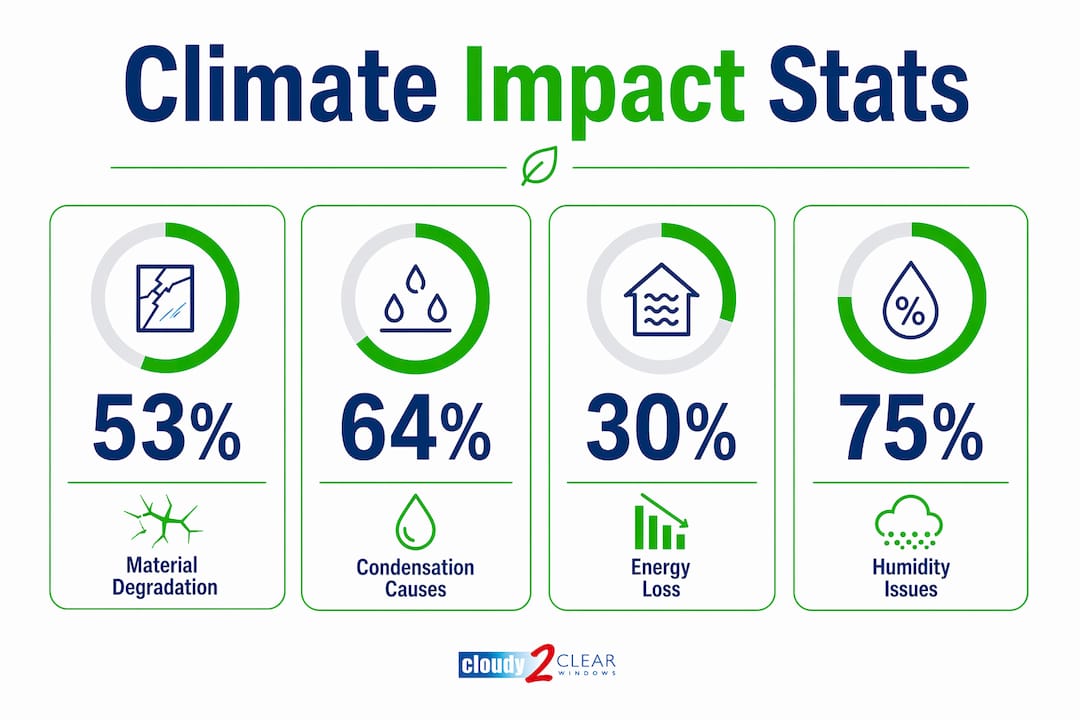
The impact of climate on windows determines their lifespan, energy efficiency, and how well they protect your home. According to the U.S. Department of Energy, windows account for up to 30% of a home’s heating and cooling energy use. That figure alone shows why your choice of window material, glazing, and installation quality matters far more than most homeowners realise. Whether you face bitter winters, humid summers, or coastal storms, your windows are on the front line.
How does climate affect window materials and sealing?
Temperature extremes are the most direct cause of window degradation, and the effect varies significantly by frame material. Aluminium, uPVC, vinyl, and fibreglass all expand and contract at different rates as temperatures shift. That movement puts constant stress on seals, frames, and glazing units.
The differences between materials are stark:
- Vinyl frames become brittle below −20°C and soften above 65°C, making them a poor choice for regions with extreme seasonal swings.
- Aluminium alloys with thermal breaks can withstand temperatures as low as −40°C without structural degradation, making them reliable in cold and coastal climates.
- Fibreglass frames expand at almost the same rate as glass itself. That matched expansion preserves seal integrity under rapid temperature changes, reducing the risk of fogging and air leakage.
- uPVC frames perform well in moderate UK climates but can warp under prolonged UV exposure or intense heat.
Real-world installation data makes the performance gap even clearer. Non-thermal window profiles degrade 53% in air infiltration and water resistance within just 12 months in varied climates. Premium thermal windows, by contrast, degrade only 5–7% over the same period. That is a significant difference in both comfort and running costs.
Pro Tip: If you live in a region with cold winters and warm summers, prioritise fibreglass or thermally broken aluminium frames over standard vinyl. The upfront cost is higher, but the seal integrity over time is far superior.
Does humidity and moisture damage your windows?
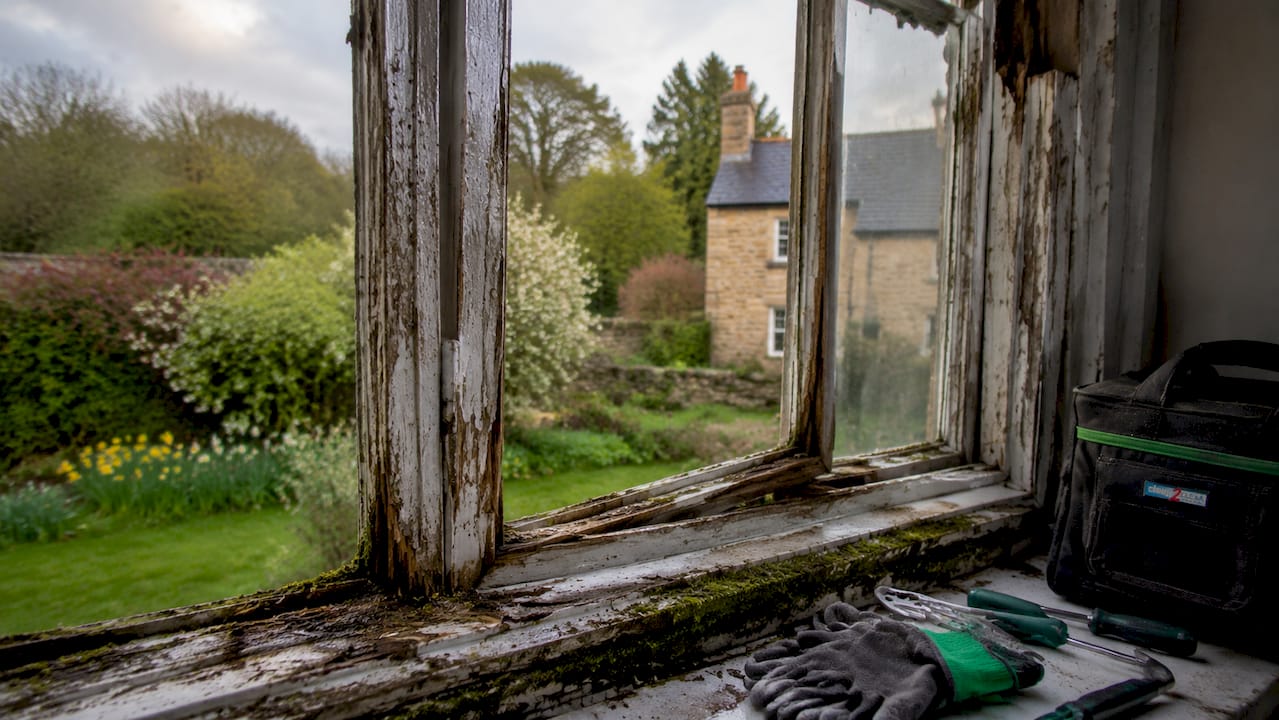
Moisture is a slower but equally damaging force on window performance. High humidity causes swelling in wood and some vinyl frames, which distorts the frame shape and compromises the seal around the glazing unit. Over time, this leads to draughts, condensation between panes, and in severe cases, mould growth on frames and surrounding walls.
Here is how moisture damage typically progresses:
- Humid air enters through gaps in poorly sealed or ageing frames, raising the moisture level inside the window cavity.
- Condensation forms on the inner glass surface or between panes, indicating either a failed seal or high indoor humidity.
- Frame swelling or warping occurs in wood and lower-grade vinyl, reducing the window’s ability to close and seal properly.
- Mould develops on frames and surrounding plasterwork, creating health risks and further structural damage.
- Air infiltration increases, driving up heating costs and reducing indoor comfort.
The cause of condensation is frequently misdiagnosed. 64% of window condensation issues relate to indoor humidity and ventilation problems rather than seal failures. That means replacing your windows may not solve the problem if the root cause is poor ventilation. Addressing humidity control first can save you a significant amount of money.
Pro Tip: Before assuming your double glazing has failed, check your indoor humidity levels with a hygrometer. If readings consistently exceed 60%, improve ventilation first. Trickle vents, extractor fans, and dehumidifiers often resolve condensation without any window replacement.
Which window materials are best for your climate?
Choosing the right window for your climate zone is one of the most practical decisions you can make as a homeowner or landlord. The table below compares the most common frame materials against key climate conditions.
| Frame Material | Cold Climates | Hot Climates | Humid/Coastal | Extreme Swings |
|---|---|---|---|---|
| Vinyl | Poor | Poor | Moderate | Poor |
| uPVC | Good | Moderate | Good | Moderate |
| Aluminium (no thermal break) | Poor | Good | Good | Poor |
| Aluminium (thermal break) | Excellent | Excellent | Excellent | Excellent |
| Fibreglass | Excellent | Excellent | Excellent | Excellent |
| Timber | Moderate | Poor | Poor | Poor |
Beyond frame material, the glazing specification matters just as much. Key technologies to consider include:
- Low-E coatings: A thin metallic layer on the glass that reflects heat. In cold climates, it keeps warmth inside. In hot climates, it blocks solar heat gain.
- Argon-filled double glazing: Argon gas between panes is a better insulator than air. Low-E coatings with argon fill reduce condensation and frost buildup during extreme cold, protecting the window structure.
- Triple glazing: Adds a third pane for superior thermal performance, particularly valuable in northern UK regions or exposed properties.
- Laminated glass: Holds together when broken, offering protection against storm debris and forced entry. You can read more about laminated glass benefits for UK homes specifically.
Regional climate strategies also differ in focus. Thermal retention is the priority in cold regions, while solar heat rejection matters most in warmer zones. Selecting glazing without considering your specific climate zone means you may be paying for performance you do not need, or missing the protection you do.
How are building codes responding to climate change?
Extreme weather events are becoming more frequent across the UK and globally. Heatwaves, high winds, and intense rainfall are no longer rare occurrences. This shift is pushing both building regulations and homeowner expectations towards greater structural resilience and thermal performance.
ENERGY STAR 7.0 has updated its thermal and solar heat gain criteria to reflect these changing conditions. The new standards require higher thermal resistance and lower solar heat gain coefficients, raising the baseline for what qualifies as a climate-appropriate window. UK building regulations are moving in the same direction, with Part L of the Building Regulations setting minimum U-values for replacement windows.
The shift towards climate-resilient windows is increasingly driven by structural survival needs. More frequent high-wind and hail events are pushing builders towards impact-resistant designs that were previously only common in hurricane-prone regions of the United States. For UK homeowners, this translates into a growing case for laminated glass, reinforced frames, and multi-point locking systems.
Energy savings from upgrading to climate-appropriate windows are also well documented. Higher-performing window series can amortise installation costs within 18 months in extreme climates, provided installation is carried out correctly. That payback period makes a compelling financial argument for upgrading sooner rather than later.
What should homeowners do to protect their windows?
Practical steps make a real difference to how long your windows last and how well they perform. The right approach depends on your local climate, but the following guidance applies broadly across the UK.
- Assess your local climate risks. Consider temperature range, average humidity, proximity to the coast, and exposure to wind. Each factor points towards different frame and glazing priorities. A homeowner’s guide to choosing windows can help you match specifications to your region.
- Inspect seals and frames annually. Look for discolouration, condensation between panes, draughts, or visible warping. Catching problems early prevents minor issues from becoming costly replacements.
- Prioritise thermal performance. When replacing windows, choose double or triple glazing with Low-E coatings. The long-term energy savings from upgrades consistently outweigh the higher upfront cost.
- Manage indoor humidity actively. Use trickle vents, bathroom and kitchen extractors, and consider a whole-house ventilation strategy if condensation is a recurring problem.
- Do not cut corners on installation. Installation quality has greater impact on window longevity than the price or model of the window itself. A premium window fitted poorly will underperform a mid-range window fitted correctly.
- Budget for quality materials. Vinyl may be the cheapest option upfront, but in a climate with significant temperature variation, the replacement cycle is shorter. Fibreglass or thermally broken aluminium costs more initially but delivers better long-term value.
Pro Tip: Schedule a window inspection every autumn before temperatures drop. Resealing any gaps with appropriate exterior-grade sealant before winter prevents cold air infiltration and moisture ingress during the most demanding months.
What we have learned after two decades of window installations
Having worked across the UK since 2005, Cloudy2Clear Windows has seen first-hand how climate conditions shape window performance. The most consistent finding is this: homeowners underestimate how much their local environment affects their windows until something goes wrong.
The most common misconception we encounter is that condensation between panes always means the window has failed. In many cases, the window is fine. The problem is the indoor environment. Sorting out ventilation first saves homeowners money and avoids unnecessary replacements.
We have also seen a clear shift in what customers ask for. Ten years ago, the conversation was almost entirely about price. Now, more homeowners ask about thermal performance, Low-E coatings, and frame longevity. That change reflects real experience with higher energy bills and more unpredictable weather.
The advice we give consistently is to invest in installation quality above all else. A well-fitted mid-range window will outperform an expensive window fitted by someone cutting corners. We have repaired too many premium units that failed within two years because the installation was poor. The window itself was not the problem.
Climate-responsive window design is not a trend. It is a practical response to conditions that are already here. The homeowners who act on that now will spend less on repairs and energy over the next decade.
Climate-ready window solutions from cloudy2clear windows
If your windows are showing signs of climate-related wear, whether that is fogging between panes, draughts, or visible frame damage, Cloudy2Clear Windows can help. With nearly two decades of experience across the UK, the team specialises in double glazing repairs and replacements that are matched to your home’s specific climate demands.

From Oxford to Milton Keynes, Cloudy2Clear Windows offers local expertise backed by national experience. Whether you need a single pane replaced or a full upgrade to thermally efficient glazing, the team provides honest assessments and quality installations. Find your nearest branch for double glazing repairs in Milton Keynes or explore the full range of services to protect your home year-round.
FAQ
How does climate affect window lifespan?
Climate accelerates window degradation through thermal expansion, moisture ingress, and UV exposure. Non-thermal window profiles can degrade by 53% in air infiltration performance within 12 months in varied climates.
What are the best windows for cold UK climates?
Fibreglass or thermally broken aluminium frames with argon-filled double or triple glazing and Low-E coatings are the best choice. These materials maintain seal integrity and thermal performance even in sustained cold.
Does condensation always mean my double glazing has failed?
Not always. Research shows 64% of condensation problems relate to indoor humidity and poor ventilation rather than seal failure. Check indoor humidity levels and improve ventilation before considering window replacement.
How do low-e coatings help in changing climates?
Low-E coatings reflect heat back into the room in winter and block solar heat gain in summer. Combined with argon-filled glazing, they reduce condensation, frost buildup, and energy loss across seasonal extremes.
When should i replace rather than repair my windows?
Replace windows when you notice persistent fogging between panes, significant frame warping, or draughts that resealing cannot fix. If your frames are over 20 years old and showing multiple failure signs, a full window pane replacement is likely more cost-effective than repeated repairs.