Hiring a professional installer delivers better compliance, performance, safety, warranty protection, and predictable long-term costs than DIY. Here is what that means in practice:
- Expertise and correct sizing prevent draughts, seal failure, and premature faults
- Energy savings of up to £135 per year for a three-bed semi when A++ units are fitted correctly
- Safety and UK Building Regulations compliance (Part L and Part K) without the risk of failed inspections
- Warranty and insurance-backed guarantees that only hold when a certified installer does the work
- Reduced maintenance and fewer emergency call-outs over the product’s lifetime
- No hidden DIY costs such as building control fees, independent inspections, or rework
Trust signals to look for include FENSA-registered or TrustMark-accredited installers. Cloudy2Clear Windows, established in 2005, is a practical local example of what professional installation looks like in the UK residential and commercial sectors.
What are the real benefits of professional installation?
Accurate sizing is where most installations succeed or fail. A window that is even a few millimetres out of square creates gaps that let in draughts, allow moisture ingress, and put stress on the frame seals from day one. Professional installers measure twice, use templates where needed, and select the correct sealant and fixings for the substrate, whether that is brick, timber, or PVC. That attention to detail is what preserves the stated thermal performance of the unit over years, not just weeks.
Poor installation drives the majority of remedial service calls in the double glazing sector. A registered installer reduces that risk significantly because their work is tied to a recognised scheme, which means their methods are audited and their guarantees are enforceable.
Pro Tip: Ask the installer to show you the frame measurements and the specification sheet for the sealed unit before work begins. If they cannot produce either, that is a warning sign worth acting on.
How professional installation improves energy efficiency
Correct installation preserves the stated U-value of a window. A U-value measures how much heat passes through a material; the lower the number, the better the insulation. If a unit is poorly sealed or misaligned, heat escapes around the frame rather than through the glass, and the rated performance becomes meaningless.
Replacement windows rated A++ or A+++ have U-values of around 1.2–0.8 W/m²K, compared with older 2002-standard units at approximately 2.8 W/m²K. For a typical three-bed semi, that difference translates to annual heating savings in the order of £95–£135.
A failed sealed unit can significantly reduce insulation and add considerably to annual heating bills. Timely professional replacement, rather than leaving a misted or failing unit in place, is often the more cost-effective decision.
DIY supply-only purchases do not attract the same relief, so the installed cost gap between professional and DIY routes is often narrower than it first appears.
For a deeper look at how glass specification affects thermal performance, the double glazing energy efficiency guide from Cloudy2Clear Windows is a useful starting point.
Does professional installation keep you compliant with UK building regulations?
Yes, and the consequences of non-compliance are more serious than most homeowners expect. Replacement windows in England and Wales must meet the requirements set out in the Building Regulations Approved Documents: Part L covers thermal performance (whole-window U-value limits), and Part K covers safety glazing in critical locations such as doors and low-level panels.
A FENSA-registered installer can self-certify compliance on your behalf, removing the need for you to notify local building control. CERTASS-registered installers offer the same self-certification route. TrustMark accreditation adds a further layer of consumer protection. Without one of these routes, the homeowner must notify building control directly and arrange an independent inspection.
Common DIY compliance pitfalls include:
- Fitting a unit that does not meet the current Part L U-value threshold
- Installing safety glazing in the wrong specification for a critical location
- Failing to notify building control, which can create problems during conveyancing
- Voiding home insurance cover if a non-compliant installation contributes to a claim
Trust signals to request from any installer:
- Proof of FENSA, CERTASS, or TrustMark registration
- Public liability insurance certificate
- Insurance-backed guarantee (IBG) documentation
- A copy of the self-certification notice they will lodge on your behalf
The building regulations compliance guide from Cloudy2Clear Windows covers these requirements in practical detail.
Why warranty and aftercare depend on who fits your windows
Many manufacturers will not honour a product warranty unless the unit was fitted by a certified installer. This is not small print to overlook. If a sealed unit fails within its guarantee period but was self-installed, the manufacturer can decline the claim on the grounds of improper fitting.
There are two distinct layers of protection to understand:
- Product warranty: covers manufacturing defects in the sealed unit itself, typically 5–10 years depending on the supplier
- Installer or insurance-backed guarantee (IBG): covers the workmanship and, crucially, remains valid even if the installation company ceases trading
The IBG is the more valuable of the two for long-term peace of mind. A reputable installer will provide one as standard. Ask for the guarantee terms in writing before work starts, not after.
Documentation to request and keep:
- Installation certificate (required for conveyancing)
- Written guarantee terms, including what is and is not covered
- Contact details for aftercare and the IBG provider
- Manufacturer registration confirmation where applicable
Pro Tip: Store your installation certificate and guarantee documents with your property deeds or in a dedicated home file. Solicitors routinely ask for these during a house sale, and a missing certificate can delay completion.
For a full breakdown of what double glazing cover should include, the window warranties guide from Cloudy2Clear Windows explains the key terms clearly.
How expert fitting extends the life of your windows
A correctly installed sealed unit sits square in its frame, with even compression on the gaskets and no stress points on the glass. That matters because uneven pressure accelerates seal degradation, which leads to misting, moisture ingress, and eventually a failed unit that needs replacing far sooner than it should.
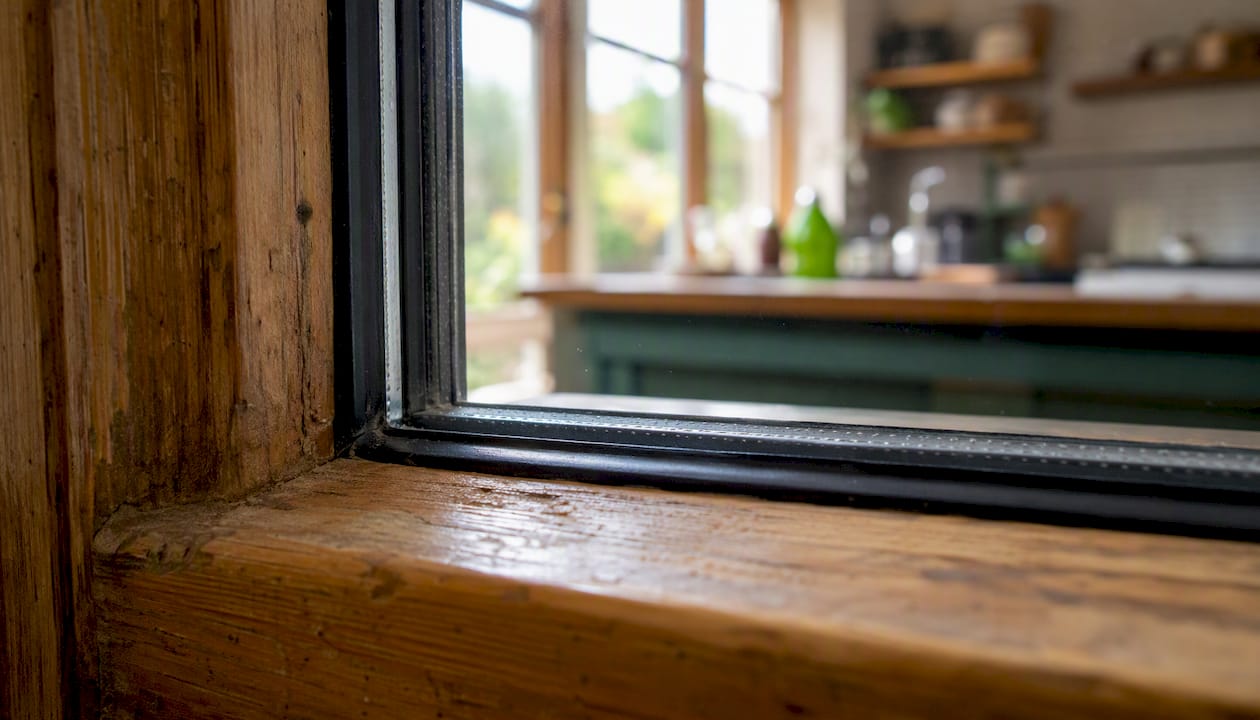
Professional installation also reduces hardware wear. Hinges, handles, and locking mechanisms on doors and windows last longer when the frame is plumb and the sash closes without binding. A door that drops slightly because the frame was not set level will wear its hinges unevenly within a few years.
The financial case is straightforward:
- Correctly fitted units typically last 20–25 years before requiring replacement
- Poorly installed units often show seal failure within 5–10 years
- Emergency call-outs, when a failure becomes urgent rather than planned, tend to cost around 30% more than scheduled work
Planned replacement, done properly the first time, is almost always cheaper over the full ownership period than a series of reactive repairs.
What does DIY window installation actually cost you?
The material cost of a sealed unit is only part of the picture. Homeowners who fit windows themselves face a set of additional costs that rarely appear in the initial calculation.
- Building control notification and inspection: if you cannot self-certify, independent checks can cost £200–£400
- Lost VAT relief: DIY supply-only purchases do not qualify for 0% VAT on energy-saving materials
- Voided warranties: manufacturer cover typically requires certified installation
- Rework costs: a misaligned or poorly sealed unit may need professional remediation, paying twice for the same job
- Time: a professional team fits a standard window in a fraction of the time a homeowner can, with less disruption
DIY alternatives such as secondary glazing films or bubble wrap offer temporary insulation gains at low cost, but they do not improve the U-value of the existing unit, carry no warranty, and do nothing for security or compliance. For a detailed look at where DIY door projects go wrong, the partner guide on common DIY door replacement pitfalls is worth reading before you decide.
Professional labour for window fitting typically runs between £40 and £150 per window, depending on size and specification. Set against the compliance, warranty, and energy benefits, that figure looks rather different from a pure cost.
How to choose a professional installer in the UK
Vetting an installer takes less than 30 minutes if you know what to ask. Work through this checklist before signing anything.
- Verify registration: check FENSA, CERTASS, or TrustMark databases directly online; do not rely solely on a logo on a van or website
- Confirm public liability insurance: ask for the certificate and check the cover level (£2 million minimum is standard)
- Request an insurance-backed guarantee: confirm it is provided by an independent IBG provider, not just the installer themselves
- Ask who self-certifies: the installer should confirm they will lodge the self-certification notice with the relevant scheme
- Get the specification in writing: frame material, glass specification, U-value, and hardware should all appear on the quote
- Ask for references or recent examples: a confident installer will offer these without hesitation
- Confirm the timescale and remedial process: what happens if something is not right after installation?
Red flags to avoid:
- Cash-only quotes with no written contract
- Pressure to skip building control or “sort it out later”
- No written guarantee or vague verbal assurances
- Unwillingness to provide registration scheme details
Pro Tip: When comparing quotes, ask each installer to quote on identical specifications. A lower price for a lower U-value unit is not a like-for-like comparison.
The window installation standards guide from Cloudy2Clear Windows sets out what a compliant installation should look like in practice.
What Cloudy2Clear Windows data shows about UK installation outcomes
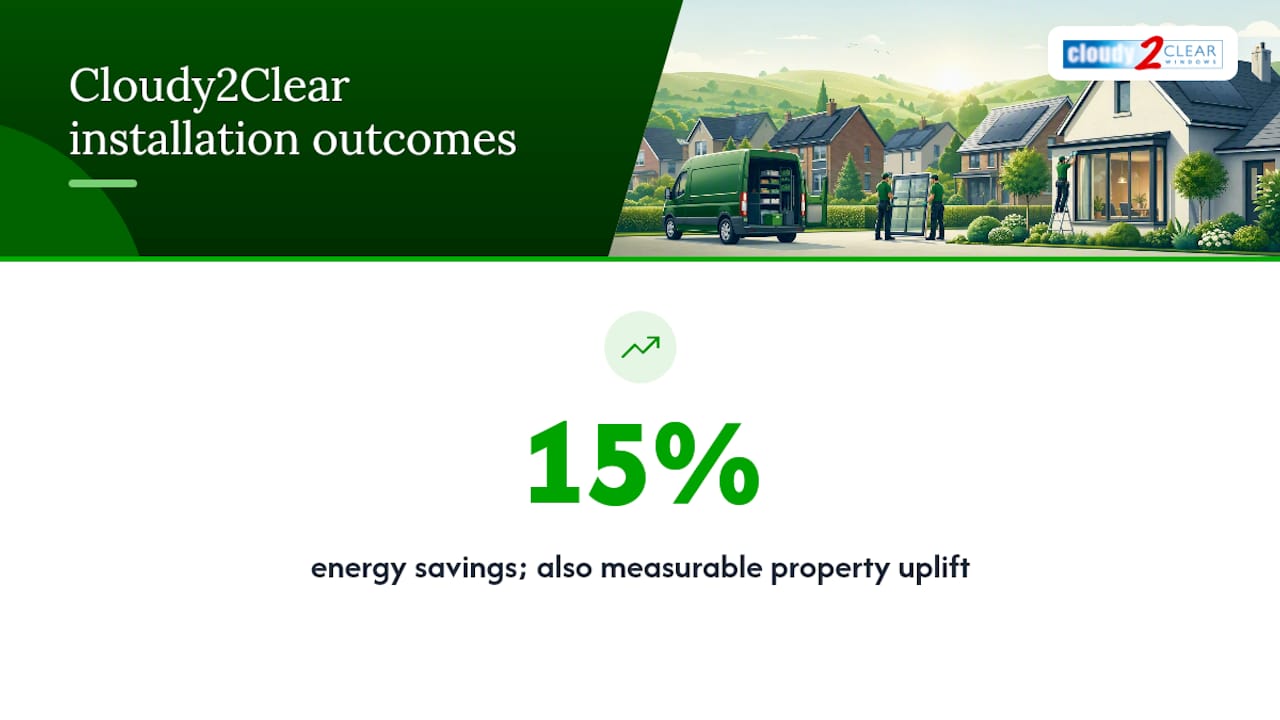
Cloudy2Clear Windows reports that professionally installed double glazing can deliver around 15% energy savings for typical domestic projects, alongside a measurable uplift in property value.
A typical Cloudy2Clear Windows job involves an initial survey, same-day or next-day glass replacement in most cases, and a written guarantee covering both the unit and the workmanship. For a standard misted sealed unit on a residential property, the process from booking to completion usually takes less than a week. Commercial and housing association projects follow a similar process, with compliance documentation provided as standard for each unit replaced.
Cloudy2Clear Windows: experience since 2005
Cloudy2Clear Windows has been installing, replacing, and repairing double glazed windows across the residential and commercial sectors since 2005. Services cover misted and failed sealed units, cracked or broken glass, door glass and hardware repairs, conservatory glazing, Velux windows, and energy-efficient upgrades for both private homeowners and commercial property managers.
Internal guides cover everything from energy performance and compliance to warranty terms and product selection. Case studies and branch-specific examples are available on request.
Cloudy2Clear Windows can help you book with confidence
Replacing a failed or inefficient sealed unit is one of the most cost-effective improvements you can make to a property. Cloudy2Clear Windows offers glass-only replacements that avoid the cost and disruption of full frame removal, with double glazing replacement carried out by experienced installers who provide written guarantees and full compliance documentation.
For urgent repairs, the broken window repair service covers cracked and smashed glass with fast turnaround. Business owners and housing association managers can find out more about the commercial window repair service, which includes compliance inspections and bulk replacement programmes.
Branches cover locations across the UK. To request a quote or book an inspection, contact your nearest Cloudy2Clear Windows branch directly.
Sources
- Planning Portal — Approved Documents (Building control)
- Double Glazing Repair vs Replacement UK 2026 | Axiom
- Cost of replacing window glass | MyBuilder
FAQ
What are the main benefits of professional installation?
Professional installation delivers correct sizing, Building Regulations compliance, preserved manufacturer warranties, and insurance-backed guarantees. It also protects your energy savings by ensuring the unit performs to its rated U-value from day one.
Does a professional installer handle building regulations for me?
Yes. A FENSA or CERTASS-registered installer can self-certify compliance with Part L and Part K of the Building Regulations, removing the need for you to notify local building control separately.
Can DIY window installation void my warranty?
Most manufacturers only honour product warranties when the unit has been fitted by a certified installer. Poor or uncertified installation can also affect home insurance cover if a related claim arises.
How much does professional window installation cost in the UK?
Professional fitting typically costs between £40 and £150 per window for labour, depending on size and specification. Set against the cost of building control inspections, lost VAT relief, and potential rework, the professional route is often the better value.
What is the importance of using a registered installer scheme like FENSA?
A FENSA-registered installer self-certifies compliance on your behalf, provides an installation certificate needed for conveyancing, and commonly includes an insurance-backed guarantee that protects you even if the company later ceases trading.