Fitting a new window pane usually takes a few hours at most. The wait before that is often longer. A single-glazed pane can be cut and fitted in under an hour, while a double glazed unit is normally made to your measurements first, so the whole job runs over two visits spread across days. This guide explains both parts of the timeline, what can stretch it, and how to keep your home safe while you wait.
The short answer: two timelines, not one
When people ask how long a pane takes, they usually mean one of two things. Either they want to know how long the fitter will be in the house, or they want to know how long until the window is fixed. Those are very different numbers.
| Stage | What happens | Typical length |
|---|---|---|
| Survey and measuring | The glazier checks the damage, measures the unit and notes the glass specification | Often under an hour, and sometimes done at the first visit |
| Making the glass | A sealed unit is manufactured to your exact size and specification | Days rather than hours, depending on the glass type |
| Fitting | The old glass is removed and the new pane or unit is fitted and checked | Commonly a few hours per window, less for a simple single pane |
| Clear-up | Old glass is taken away and the work area is left tidy | Included in the visit |
The figures are guides, not promises. Glass type, size, access and the frame all change them, and we explain each of those below.
Why double glazed units are not fitted the same day
A double glazed unit is two panes of glass separated by a spacer bar and sealed around the edge, with the gap between them filled with air or gas. It is built to fit one particular opening. A few millimetres out and it will not sit properly in the frame.
That is why a glazier cannot normally pull a replacement off the van. The unit has to be measured on site, ordered, manufactured and then brought back for fitting. Some work is quicker if the glass you need is a common size and specification, but you should not expect a same-day swap for a misted or failed unit unless the glazier has told you so.
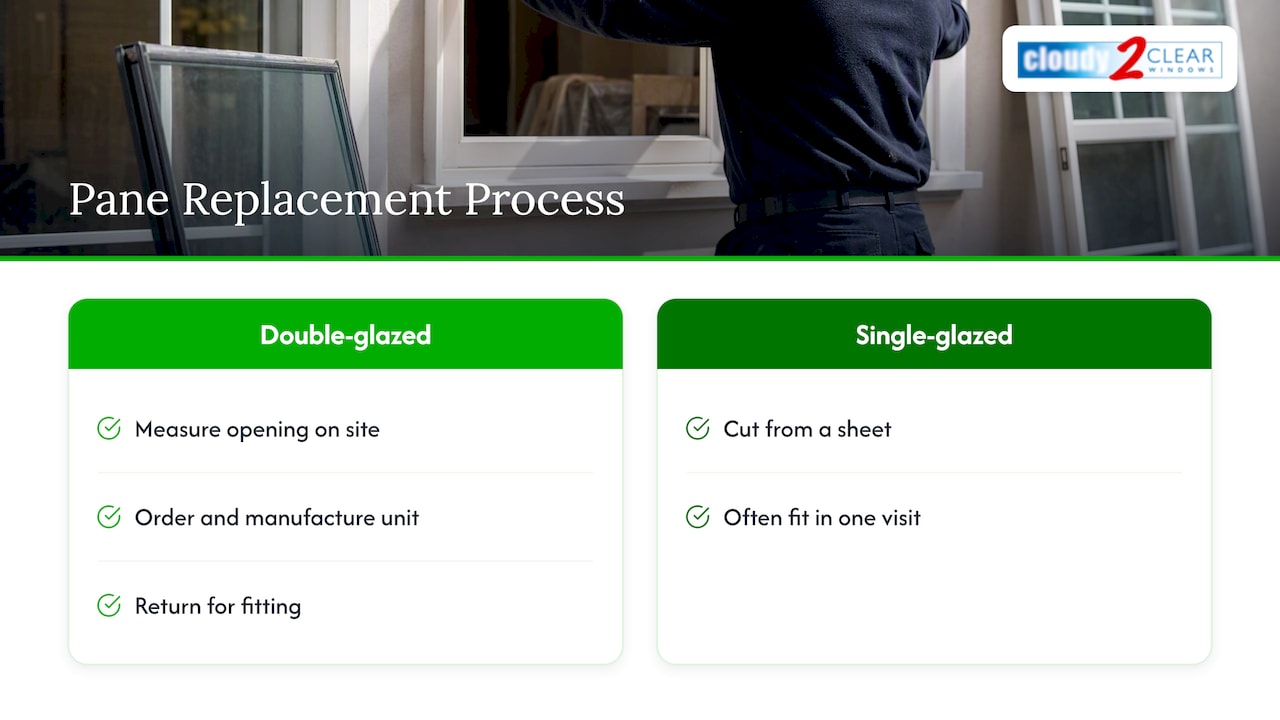
Single-glazed panes are different. The glass is cut from a sheet, so it can often be measured and fitted in a single visit.
What happens on the day of the fit
Once the new glass arrives, the fitting visit is straightforward. For a typical uPVC window, the steps run like this:
- Protect the area. Dust sheets go down and furniture near the window is moved back.
- Remove the glazing beads. These are the thin strips that hold the glass in the frame. They are eased out carefully so they can be refitted.
- Record the packers. Small plastic packers sit beneath the glass and help support its weight. Their positions are noted so they can be reproduced.
- Lift out the old unit. A failed or broken pane is taken out and the glazing rebate, the channel the glass sits in, is cleaned.
- Fit the new glass. The new unit is set on its packers and centred in the opening.
- Refit the beads and check. Beads are clipped back, then the window is opened, closed and locked to make sure everything works.
This is the same sequence described in a trade guide to replacing a sealed unit in a uPVC window. The packing step matters more than it looks. On an opening window the packers carry the weight of the glass and keep the sash square, which is what lets it close and lock properly afterwards.
For most homes, one or two windows is a morning’s work. A whole house of failed units, or a large conservatory roof, takes longer simply because there is more glass to handle.
What can make the job take longer
Most delays come from the glass, not the fitting. These are the usual causes.
Safety glass has to be made to size
Glass in doors, in panels beside and above doors, and in low windows must be safety glass. Building guidance says safety glass is required in doors, glazing alongside and above doors, and glazing below 800 mm.
Toughened glass cannot be cut once it has been treated. It is cut to its final size and then heat-treated, so the same guidance allows about one week for manufacture and delivery. That is a council construction guide from 2004, so treat it as a sensible allowance for the process rather than a current quote. Laminated glass can be cut locally and supplied from stock, which is why it can sometimes be quicker.
If your broken pane is in a door or a low window, expect the glass to be the slowest part of the job. Our guide to what toughened safety glass is explains where it is required and why.
Special glass specifications
Standard clear double glazing is the quickest to organise. Glass with extra features usually takes longer to specify, check and make:
- Soundproofing or acoustic glass
- Energy-efficient glass with special coatings
- Obscure or patterned glass that has to match the rest of the house
- Laminated security glass for doors
- Leaded or decorative units in older properties
If you want an upgrade at the same time as the repair, it is worth saying so at the first visit. The glazier can then order the right unit once rather than twice.
Access and the state of the frame
A window on the ground floor with clear access is the easy case. Upstairs windows, bay windows, tall stairwell glazing and conservatory roofs need more time, more people or extra equipment. Commercial buildings add their own limits, such as working around opening hours or needing safe access to the outside of the glass.
The frame matters too. If beads are brittle, seals are perished or the frame has warped, the glazier may need to fix those before new glass can go in. That is one reason a proper look at the window beats a quote over the phone.
Odd sizes and unusual windows
Velux roof windows, caravan windows and old timber frames often use glass sizes and thicknesses that are not standard. Measuring is more careful, and manufacture may take longer. The result is worth the wait, because glass that fits well lasts longer and seals better.
Weather and access to your home
Fitting in heavy rain is difficult, especially when the frame is open and the bead channel is exposed. Bad weather can shift a booking. So can a tenant or occupier who is not available on the day, which matters for housing associations and landlords arranging several properties.
Replacing a single pane yourself
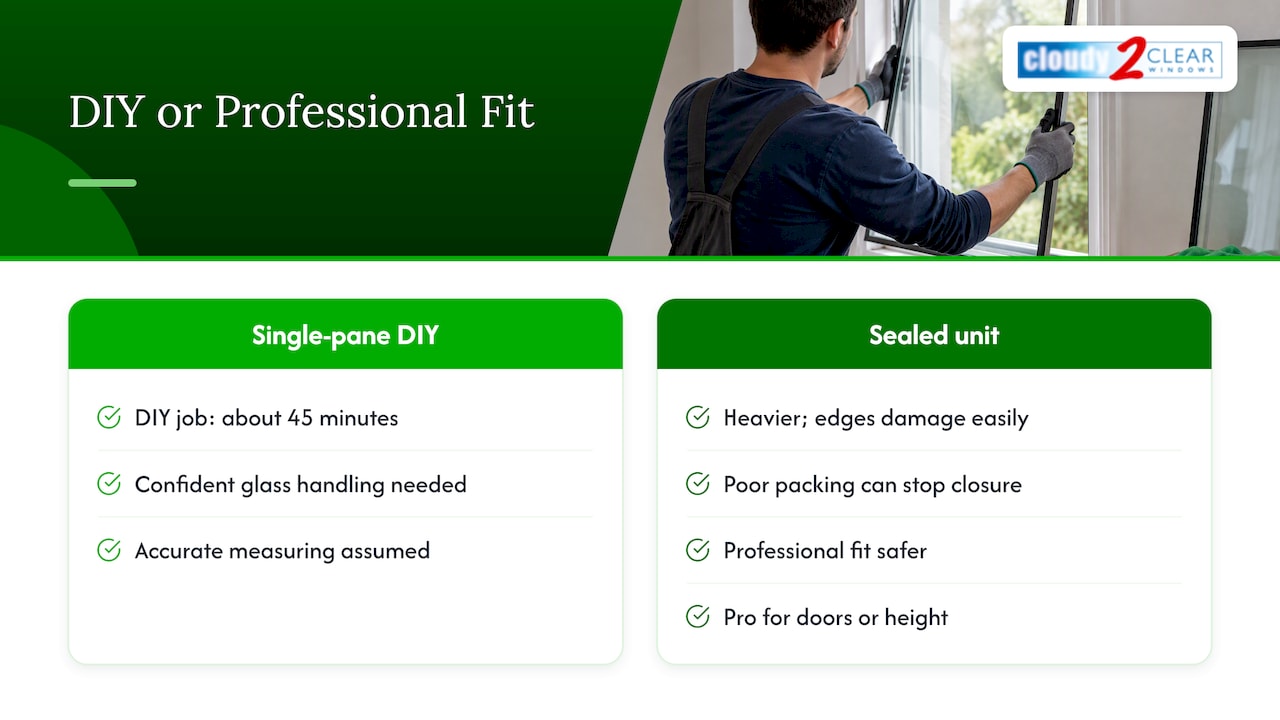
Single glazing is the one case where a DIY repair is realistic. A Guardian DIY guide to replacing a single-glazed pane lists about 45 minutes for the job. It is an older article, and it assumes you are confident cutting out old putty, handling glass and measuring accurately.
Sealed double glazed units are a different matter. They are heavier, unforgiving of poor measuring and easy to damage at the edges, and a badly packed unit can leave a sash that will not close properly. If your glass is double glazed, or the pane is in a door or at a height, a professional fit is the safer route. It also keeps the work properly guaranteed.
If your window has failed because the seal has gone, the glass itself is often fine and the frame is sound. In that case, replacing only the unit is quicker and less disruptive than replacing the whole window. Our article on why unit replacement beats full window replacement goes through when that applies.
Keeping your home safe while you wait
Because of the lead time for made-to-measure glass, a cracked or smashed pane can sit in your window for days. How you handle that gap matters.
- Do not pull out broken glass yourself. The Glass and Glazing Federation’s glass breakage guidance says broken glass can be razor sharp and advises people not to remove it from the framing themselves wherever possible.
- If you must handle it, the same guidance says to wear cut-proof gloves and safety glasses, and to protect other people where glass could fall, for example from high-level or sloping glazing.
- Keep children and pets out of the room until the glass has been made safe.
- Ask the glazier about temporary protection. Boarding or securing the opening keeps weather and intruders out while the new glass is made.
For a step-by-step approach, read our guide on how to remove broken glass safely. If the broken window is a business shopfront, our advice on the first hour after smashed shopfront glass helps you secure the premises and plan a quick reopening.
How we approach it at Cloudy2Clear Windows
We have installed, replaced and repaired double glazed windows for homes and businesses since 2005. Here is how we see the question of time.
The quickest way to get a window working again is usually to replace only the glass. If the frame is sound, there is no reason to remove it, make good the plaster and decorating around it, and wait for an entire new window to be made. Replacing the glass alone means a smaller job, less mess and a shorter wait. That is the principle our business is built on.
We also tell customers plainly that the made-to-measure stage is the part we cannot hurry. A unit that is rushed or measured badly causes more delay than it saves. So we would rather spend time at the survey, check the frame, note the glass type and confirm the specification before we order. When that is done properly, the fitting visit is short and the window works as it should.
Our glass replacements are backed by a 25-year guarantee, and we offer energy-efficient and soundproofing glass where you want an upgrade at the same time.
Getting your window fixed sooner
You cannot change how long a sealed unit takes to manufacture, but you can avoid adding days around it. These steps help:
- Report the problem early. Misted units rarely fix themselves, and a cracked pane can fail further.
- Take clear photos. Show the whole window and the damage, plus any labels or markings on the spacer bar if you can see them.
- Note the location. Tell the glazier if the pane is in a door, low down, upstairs or in a conservatory, since that affects the glass type and access.
- Decide on upgrades at the start. Soundproofing, energy-saving or security glass is far easier to order the first time.
- Check access. Clear the area around the window and confirm who will be home for each visit.
- List every window with a problem. Fitting several units in the same visit saves repeat call-outs.
If you manage a commercial building or a housing association stock, the same principles apply on a larger scale. Grouping windows by type and location keeps the programme efficient, and our commercial window repair team can plan around the way your building is used.
Book a glass replacement with Cloudy2Clear Windows
If you have a misted, cracked or broken pane, our double glazing replacement service replaces the glass without the cost and disruption of a new frame. For smashed glass, see our broken window repairs. Our phone lines are open Monday to Friday, 8:30am to 6:30pm, and we cover homes and businesses across England and Scotland. Send us a photo and a few details, and we will tell you what the job involves and how long it is likely to take.
Frequently asked questions
Can a window pane be replaced in one day?
A single-glazed pane often can, because the glass is cut to size and fitted in one visit. A double glazed unit normally cannot, because it is made to measure and has to be manufactured first. The fitting itself is usually the short part of the job.
How long does it take to fit a double glazed unit once it arrives?
Fitting is typically a matter of hours per window. The glazier removes the beads, lifts out the old unit, cleans the channel, sets the new glass on its packers, refits the beads and checks that the window opens and locks. Larger, heavier or harder-to-reach windows take longer.
Why does safety glass take longer?
Toughened glass must be cut to its final size before it is heat-treated, so it cannot be trimmed afterwards. That means it is made to order, and one council guide allows about a week for manufacture and delivery. Door glass and low windows usually need safety glass.
Is it safe to leave a cracked pane while waiting for new glass?
It is safer to keep the pane in place than to remove it yourself, unless it is loose or falling. Keep people away from it and ask your glazier about temporary boarding. If glass is hanging or at risk of falling, call a glazier straight away rather than handling it.
Do I need to replace the whole window if only the glass has failed?
Usually not. If the frame, hinges and seals are in good condition, the glass unit can be replaced on its own. A glazier should check the frame at the survey to confirm it is sound.