Your conservatory is cold in winter because it is mostly glass and a lightweight roof, and both lose heat far faster than a brick wall. To make it warmer, work in this order: the roof, then the glazing, then draughts and floor, and only then the heating. Tired or misted glass units sit in the second step. At Cloudy2Clear Windows we replace only the glass, not the frame, so a conservatory with failed panes can be put right with little disruption.
This guide explains where the heat goes, what to tackle first, and how to choose heating that does not simply warm the garden.
Why your conservatory gets so cold in winter
A conservatory is built differently from the rest of your house. EDF Energy explains that it is made of large panes of glass with a plastic frame and roof, so it loses far more heat than a brick structure with an insulated, tiled roof. Even good double or triple glazing is far less insulating than a wall.
Three things combine to make the room feel miserable:
- The roof. Grand Designs Magazine reports that the roof is the biggest culprit, with typically around 80% of a conservatory’s heat lost through it when the roof is poorly insulated.
- The glass. EDF Energy notes that even the best-quality glazing loses heat more quickly than an uninsulated cavity wall.
- The way it behaves in sun. As Ideal Home notes, a conservatory gains heat quickly with a little sunshine and loses it just as fast in the evening. A north-facing one will always be cold and needs more permanent heating.
There is also a regulatory reason. Aircon Revolution explains that most UK conservatories meeting certain conditions are exempt from building regulations approval. Those conditions include being at ground level, under 30 square metres, separated from the house by external-quality doors, and having their own independent heating with its own controls. So many were never required to meet the insulation standards of the rest of the house.
The practical lesson is that heating a poorly insulated conservatory is a losing battle. Fix the building envelope first, and the heating you already have starts to work.
The order that works: roof, glazing, draughts, heating
Most advice online jumps straight to radiators. That is the last step, not the first. Here is the sequence that gets the best result for the effort.
| Step | What to look at | Why it comes here |
|---|---|---|
| 1. Roof | Insulation level, slipped or damaged panels | Most heat escapes upwards |
| 2. Glazing | Misted, cracked or failed sealed units, tired seals | Glass is the largest area of the room |
| 3. Draughts and floor | Gaps around doors, vents and frames, a cold slab | Removes cold air and the cold-underfoot feeling |
| 4. Heating | Radiator, electric option, underfloor, trench | Works best once heat is no longer escaping |
| 5. Soft measures | Blinds, curtains, rugs | Cheap finishing touches that hold warmth in |
Step 1: Deal with the roof
Homebuilding quotes energy efficiency expert Tim Pullen, who says that most of the heat in a conservatory escapes through the roof, and that most solar heat also enters that way. That is why roof insulation is described as a smart strategy for enjoying the space all year round. The same article describes properly insulating the roof, plus retractable awnings over glazing, as the ideal solution.
There are two broad routes:
- Replace the roof with a modern insulated one. Grand Designs Magazine notes the job can be done in as little as a day, though it may take two or three.
- Improve what you have by adding insulation to the existing roof structure and checking for slipped or damaged panels, which can let cold air in.
Roof work is a structural job in its own right, and a roof that is working hard to keep the heat in will also help with the damp problem many owners notice. If you see streaks of water or fogging on the inside of the roof, our guide to how to prevent condensation in a conservatory explains the causes. For ideas on handling condensation at roof and vent level, this piece on veranda condensation, roof and vent fixes covers similar ground.
If your problem is the opposite season too, our checklist on stopping conservatory heat gain before a roof upgrade shows what to consider before you commit to a new roof.
Step 2: Check the glass, the biggest surface in the room
Once the roof is dealt with, the walls of glass are where the next share of warmth escapes. This is where we come in. A conservatory’s side panels, doors and windows are fitted with sealed double glazed units. When the seal fails, the unit can mist up between the panes, and it no longer does the insulating job it was made for. A cracked pane lets cold air and moisture in as well.
Signs that a unit has failed:
- Fogging, cloudiness or droplets trapped between the two panes that wipe never removes.
- Cracks or chips, including hairline ones at the edge.
- A pane that feels noticeably colder to the touch than its neighbours on a winter morning.
- Persistent condensation on the inside around one unit when the others stay clear.
The fix does not require a whole new conservatory. Our approach is to replace only the glass, not the frame. That means lower costs and less disruption than replacing entire units, and a faster job. If the frames are sound, new glass restores clarity and brings back the energy efficiency of a working sealed unit. Our conservatory window repair service covers exactly this, and our double glazing replacement page explains how replacement glass works in other rooms.
We also offer eco-friendly insulated glass options, and our work is backed by a 25-year guarantee.
Glass choice matters beyond warmth. Many conservatory owners find the room noisy when it rains, because glass and roof panels carry sound. If that bothers you, read why your conservatory is noisy in the rain and how to quieten it, or look at our double glazing for soundproofing.
EDF Energy is honest about the limits: double glazing, blinds and shutters all reduce heat waste but work best alongside other insulation measures. That is why the glass step sits second in the order, not alone.
Step 3: Stop the draughts and warm the floor
Draughts around doors, vents and frames
Cold air creeping in makes a room feel colder than the thermometer says. The usual culprits in a conservatory are worn seals on opening windows and doors, tired gaskets, gaps where the frame meets the wall and loose roof panels.
The Energy Saving Trust recommends self-adhesive foam strips for opening windows, and metal or plastic strips with brushes or wipers for a longer-lasting result. It lists draught proofing around windows, floors and doors among the simple measures that cut wasted heat.
A few practical points:
- Check the seals on every opening light and door by closing it on a sheet of paper. If it slides out easily, the seal is not doing its job.
- Look at the hinges, handles and locks. A door that does not pull tight against its seal leaks air even when the seal itself is fine. Our locks, handles and hinges repairs put these right.
- Keep trickle vents open where fitted. They are there to control moisture, and our guide on uPVC door draughts explains how to replace seals while leaving ventilation in place.
- If you have patio-style doors between the house and conservatory, see our advice on patio door draughts.
For more background, our articles on draught proofing windows and what a window draught is, with causes and fixes go through the checks in more detail. A door whose glass or hardware has failed is something we repair directly: see our double glazed door repairs.
A floor that feels cold underfoot
If the floor is cold, the whole room feels colder than it is. Doors2Floors explains that an uninsulated slab is why a conservatory feels cold underfoot even when the air is warm. If you are relaying the floor, insulating beneath the finish is the one chance you get without doing the job twice.
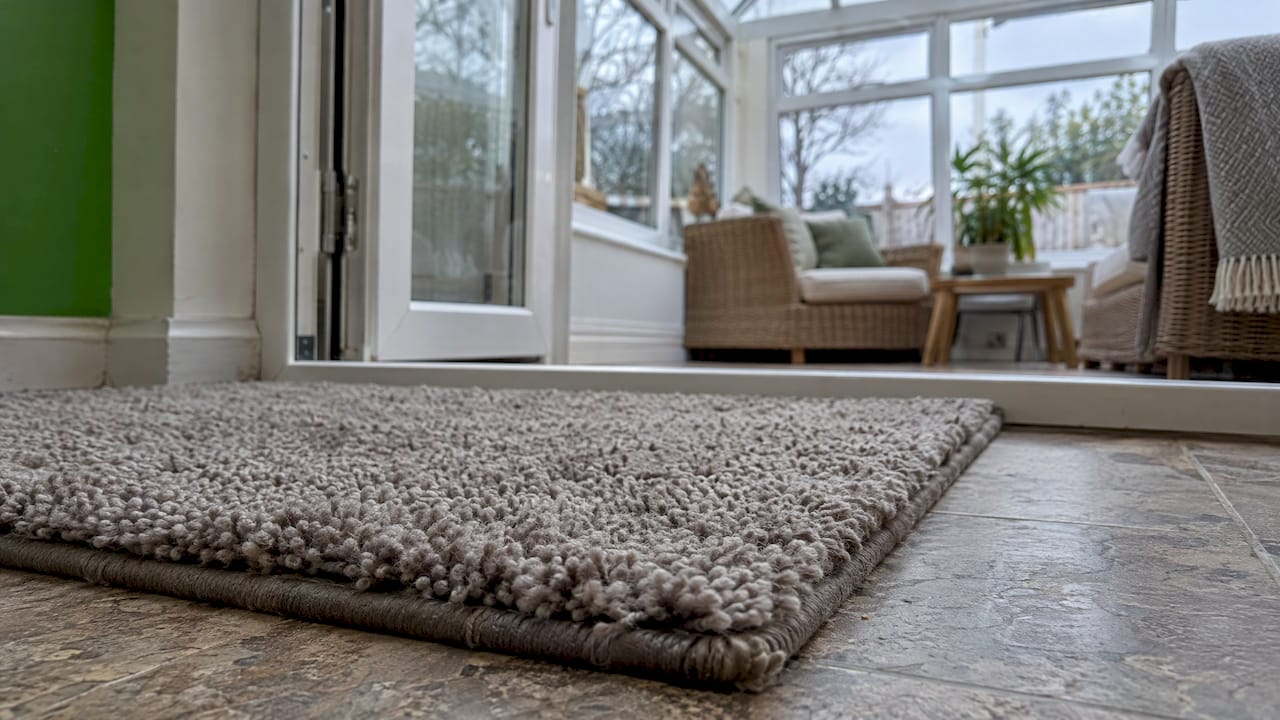
If you are not relaying the floor, a thick rug is the simplest improvement. It will not replace insulation, but it takes the chill off.
Step 4: Choose heating once the heat stays in
With the roof, glass and draughts sorted, heating becomes far more effective. The main options, as described by Grand Designs Magazine, are:
- Underfloor heating, a popular choice for an orangery or garden room. Ideal Home quotes one window company director calling it by far the most effective heating for a conservatory, because stone or ceramic floors are always cold, and a room heated only by radiators has more cold zones than a brick extension.
- Trench heating, suited to rooms with large expanses of glass. The heat rising from the trench acts as an air curtain that limits heat loss, restricts draughts and helps prevent window condensation.
- Electric radiators, an option for rooms used irregularly in colder months.
- Extending the central heating, which the Eco Experts describe as usually the most cost-effective solution when connected to the home’s system, but only efficient if the conservatory is well insulated.
The last point is the one to remember. Even the cheapest heating wastes energy if the room leaks. Ideal Home also points out that the cheapest way to heat a conservatory is to insulate the space, add blinds and use the sun’s heat. If you want something with little initial outlay, a plug-in heater or electric radiator are likely the most cost-effective choices.
If your conservatory is used only at weekends, an electric option may suit. If you work from it every day, a permanent system connected to the house suits better. Match the heating to how you use the room, not to the size of the glass.
Step 5: Blinds, curtains and rugs
Soft furnishings are the quickest wins, and they work well alongside everything above. Ideal Home quotes a product design lead saying that curtains and blinds will massively reduce heat transfer, so the room stays warmer for longer. Cellular blinds, with honeycomb pockets that trap air, are the type experts recommend considering.
A few habits help:
- Close blinds or curtains at dusk, when the room starts to lose the heat it gained in the day.
- Open them on sunny winter mornings so the room can gain free warmth.
- Keep furniture away from radiators and vents so warm air can circulate.
When the cold is a glass problem
How do you tell whether the glass is behind your cold conservatory? Run through this list on a cold day.
- Walk around and look at every unit for misting, cracks or discolouration.
- Feel the glass. Cold spots on one unit but not others suggest that unit has failed.
- Look at the seals and edges for gaps, shrinkage or damage.
- Check the frame. If it is solid and square, glass-only replacement is usually all that is needed.
- Compare rooms. If the main house windows are noticeably warmer than the conservatory glazing, the units are worth a closer look.
If the answer to any of these is yes, a repair visit is the quickest way to find out what you have.
Perspective: why glass-only replacement suits a cold conservatory
We have been installing, replacing and repairing double glazed windows since 2005, for homes and businesses alike. When a conservatory is cold, the instinct is often to replace everything. In many cases that is more than the room needs.
Our view is simple. The frame is usually the sound part of the structure. The glass is the part that wears out when the seal fails. Replacing only the glass means lower costs, less disruption and faster work than replacing whole units, and it gives you clear, energy-efficient glazing again.
The best result comes when the glass is part of a plan. Look at the roof, replace failed glass, seal the draughts, then heat the room. Each step makes the next one work harder for you. That is why we encourage you to treat the glass as a core part of keeping a conservatory warm, not an afterthought.
Our work comes with a 25-year guarantee, and we offer eco-friendly insulated glass options for those who want to do more with the room.
Conservatory glass repairs near you
We repair and replace glass in conservatories, doors, Velux windows and more, for homes, businesses and housing associations. Our conservatory window repair page explains what the job involves, and you can see everything we do on our services page.

Our operational hours are 8.30am to 6.30pm, and you can call us 24 hours a day, 7 days a week to book a quote. Our landing page has the details.
Double glazing repairs in Coventry, Oxford, Stockport and beyond
We cover England and Scotland through local branches. Examples include Coventry, Oxford, Stockport, Milton Keynes and Norwich. Each branch page lists the areas it covers.
If you manage commercial premises or housing association properties, our inspection and full replacement services cover compliance as well as glass.
FAQ
How do I warm up a cold conservatory?
Start with the roof, where most heat escapes. Then replace failed glass units, seal draughts and insulate or cover the floor. Add heating last, because it works best in a room that keeps its heat. Blinds and curtains add warmth at little effort.
Is a north-facing conservatory always cold?
It will be colder than one that catches the sun, because it gains less free heat. Ideal Home quotes an expert who says a north-facing conservatory will need more permanent heating. Good roof insulation and sound glazing still make it far more comfortable.
Can I insulate a conservatory roof from inside?
Insulation is the right aim, as Homebuilding describes properly insulating the roof as the ideal solution. The method depends on your roof type and its structure, so have the roof assessed before deciding between improving it and replacing it. Check for slipped panels first, as they let cold air in.
Can I book a quote outside opening hours?
Yes. Our operational hours are 8.30am to 6.30pm, but you can call us 24 hours a day, 7 days a week to book a quote.
Sources
- Conservatory insulation, EDF Energy
- How to make a conservatory warmer, Grand Designs Magazine
- How to make a conservatory warmer in winter, Ideal Home
- How to heat a conservatory, Ideal Home
- Why is my conservatory too cold to use in winter, Aircon Revolution
- How to keep a conservatory warm in winter, Homebuilding
- Draught proofing, Energy Saving Trust
- Conservatory flooring options, Doors2Floors
- A guide to conservatory heating, The Eco Experts