Many homeowners believe installing double glazed windows automatically ensures compliance with building regulations. The reality is far more nuanced. Regulations in England and Scotland include detailed requirements covering energy efficiency, safety glazing, ventilation, fire resistance, and accessibility standards. Understanding these rules protects you from fines, ensures occupant safety, and unlocks significant energy savings. This guide walks you through every essential requirement so you can confidently plan compliant window installations or upgrades.
Introduction to Building Regulations for Windows
Building regulations for windows operate under distinct frameworks in England and Scotland. England follows Approved Document L1B and related guidance issued by the Ministry of Housing, Communities and Local Government. Scotland relies on Technical Handbooks published by Scottish Government Building Standards.
These regulations exist to safeguard occupants, reduce energy waste, and maintain minimum standards across all properties. Window replacements and upgrades trigger building regulation requirements regardless of whether planning permission applies. Property managers and homeowners must understand which rules govern their specific situation to avoid costly mistakes.
Key regulatory areas include:
- Energy efficiency thresholds measured by U-values and air permeability
- Safety glazing requirements in vulnerable locations
- Fire resistance for windows in escape routes
- Ventilation and daylight minimums for habitable rooms
- Accessibility standards ensuring ease of use
England’s Approved Document L1B specifies energy efficiency requirements for replacement windows. Different glazing unit configurations affect compliance differently. The impact of glazing bars on regulations also matters when selecting designs. Understanding these fundamentals helps you make informed choices that meet legal standards while improving energy efficiency in windows.
Energy Performance Standards and Requirements
Energy performance standards form the backbone of window regulations in both England and Scotland. U-values measure thermal transmittance, indicating how much heat passes through a window. Lower U-values mean better insulation, less heat loss, and reduced energy bills.
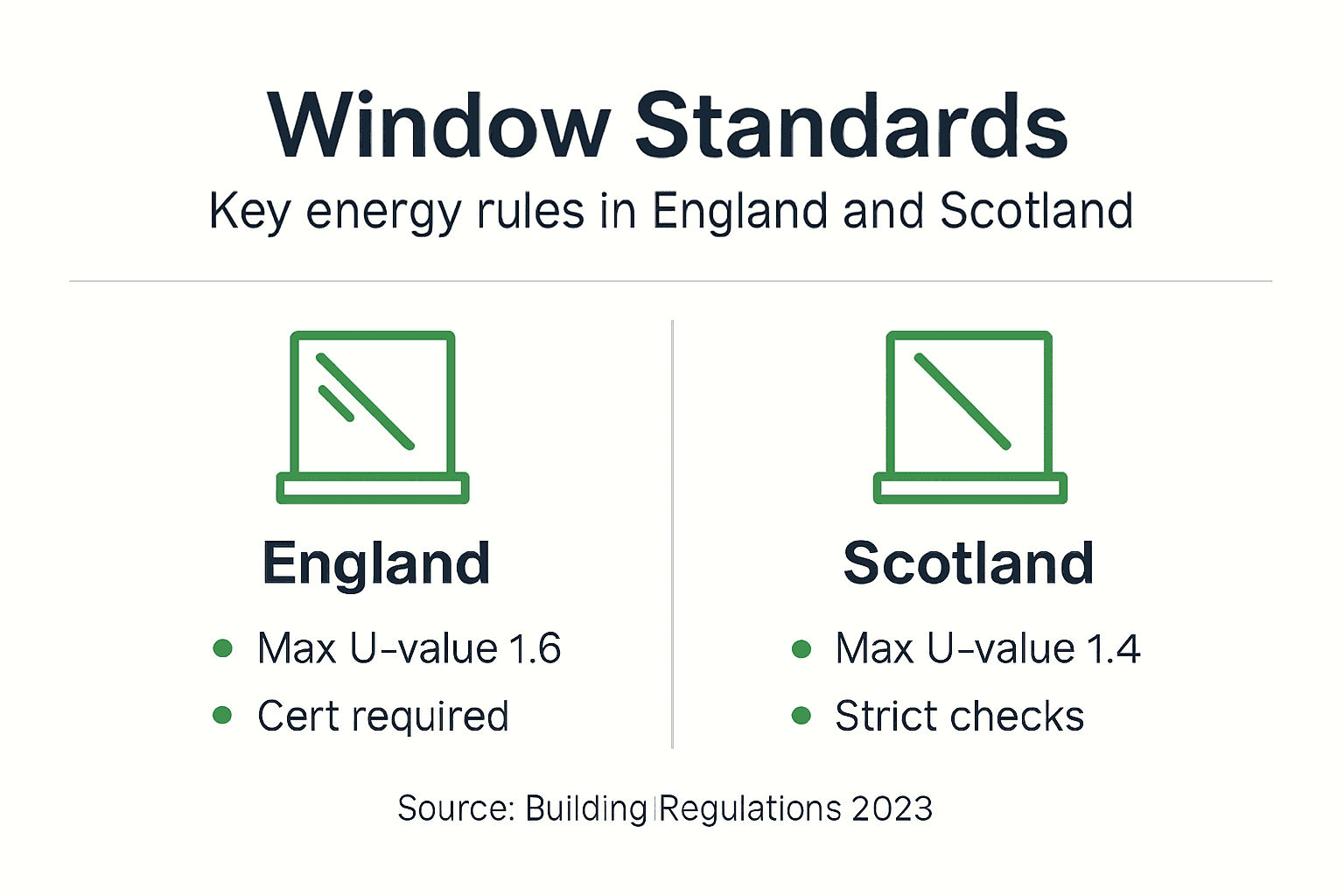
| Region | Maximum U-Value | Impact |
|---|---|---|
| England | 1.6 W/m²K | Moderate insulation requirement |
| Scotland | 1.4 W/m²K | Stricter standard for greater energy savings |
England’s Approved Document L1B requires window U-values of 1.6 W/m²K or lower for compliance. Scotland’s stricter 1.4 W/m²K threshold reflects its commitment to reducing carbon emissions more aggressively. These standards apply to replacement windows and new installations alike.
Air permeability requirements ensure windows seal properly without allowing drafts, yet maintain adequate ventilation. Modern double glazing typically meets these thresholds, but not all products carry proper certification. Verify U-value ratings before purchase to guarantee compliance.
Proper window selection delivers tangible benefits:
- Household heating bills can drop by up to 15% with compliant windows
- Reduced carbon footprint aligns with national climate goals
- Enhanced thermal comfort eliminates cold spots and drafts
- Long-term savings offset initial installation costs
Pro tip: Always request U-value certification documentation from suppliers before purchase. This simple step prevents discovering non-compliance after installation, which requires expensive remediation.
Our detailed window energy efficiency guide explores how different glazing options achieve these standards. Understanding English energy efficiency standards helps you select products that deliver compliance and comfort.
Safety and Accessibility Regulations
Safety glazing prevents serious injuries from broken glass. Building regulations mandate safety glass in specific high-risk locations. Any window within 800mm of floor level must use toughened or laminated safety glazing. This requirement protects children and adults from potentially fatal lacerations if glass breaks.

Fire safety adds another layer of requirements. Fire safety regulations require windows in escape routes to meet fire resistance with self-closing devices and fire-rated glass. Windows forming part of fire-resisting walls need specific fire ratings to prevent flame spread. These standards vary based on building type and occupancy.
Ventilation and daylight requirements ensure healthy indoor environments. Windows in sleeping rooms must meet ventilation and daylight minimums per Approved Document F. Habitable rooms need:
- Background ventilation providing continuous fresh air
- Purge ventilation through openable windows for rapid air changes
- Minimum daylight factors calculated based on room size and window area
Scottish regulations include specific accessibility standards. Windows must operate with reasonable force, allowing people with limited mobility to open and close them safely. Handle heights and opening mechanisms require consideration for wheelchair users.
Pro tip: Work exclusively with certified installers familiar with these layered requirements. They understand how safety glazing, fire resistance, ventilation, and accessibility interact, ensuring nothing gets overlooked.
Avoiding common safety issues in windows starts with proper compliance. Review fire safety window regulations and ventilation requirements early in your planning process.
Planning Permission vs Building Regulation Approval
Confusing planning permission with building regulations causes frequent compliance problems. These are separate approval processes with different objectives.
| Approval Type | Purpose | When Required |
|---|---|---|
| Planning Permission | Controls external appearance and design | Listed buildings, conservation areas, significant changes |
| Building Regulations | Ensures safety, energy, accessibility standards | Always required for installations and upgrades |
Planning permission governs how changes affect a property’s appearance and neighbourhood character. Like-for-like window replacements typically fall under permitted development rights, requiring no planning permission. However, listed buildings and conservation areas impose stricter controls.
Building regulations focus entirely on performance standards. Every window installation or upgrade must meet energy, safety, ventilation, and accessibility requirements regardless of planning status. This approval cannot be skipped.
Steps to verify permissions before starting work:
- Contact your local planning authority to confirm if your property has special designations
- Check if proposed changes qualify as permitted development
- Verify building regulation requirements with building control
- For listed properties, review additional requirements for double glazing for listed buildings
- Obtain written confirmation of all required approvals before purchasing materials
Misunderstanding these distinctions leads to project delays, enforcement action, and wasted investment. Assume building regulations always apply, then investigate whether planning permission also applies to your specific situation.
Certification and Inspection Processes
Certified installers provide your first line of compliance protection. Registration schemes like FENSA, CERTASS, and others authorize installers to self-certify work meets building regulations. Using certified professionals eliminates the need for separate building control applications.
Local authorities conduct inspections when non-certified installers perform work. Building control officers verify installations meet all applicable standards before issuing completion certificates. These certificates prove legal compliance, protecting you during property sales or insurance claims.
Essential documentation to retain:
- Installation contracts specifying compliance standards
- U-value certificates for all glazing units
- Competent person scheme certificates from registered installers
- Building control completion certificates if applicable
- Product warranties and performance guarantees
Pro tip: Request all compliance certificates immediately after installation finishes. Chasing documentation months later creates unnecessary stress and delays property transactions.
Experienced installers understand regional variations between England and Scotland. They navigate technical requirements efficiently, reducing your compliance burden. Proper certification also affects how long does double glazing last by ensuring correct installation techniques preserve performance.
Maintaining complete records protects your investment and simplifies future upgrades or property sales.
Consequences and Enforcement of Non-Compliance
Ignoring building regulations carries serious legal and financial consequences. Local authorities possess enforcement powers to compel compliance when violations come to light.
Common enforcement actions include:
- Formal enforcement notices requiring remedial work within specified timeframes
- Financial penalties escalating with continued non-compliance
- Orders to remove non-compliant installations entirely
- Prosecution for persistent violations resulting in criminal records
Non-compliance creates broader problems beyond immediate enforcement. Insurance companies may deny claims related to defective installations that never received building control approval. Property buyers increasingly request compliance certificates during conveyancing, and missing documentation reduces property value or prevents sales.
Occupant safety risks compound legal problems. Non-compliant windows lacking proper safety glazing, fire resistance, or ventilation endanger lives. Liability for injuries or deaths resulting from regulatory violations can lead to substantial compensation claims.
Enforcement typically occurs when:
- Neighbours report suspicious or obviously substandard work
- Property sales reveal missing compliance documentation
- Insurance claims trigger investigations into installation quality
- Routine building control spot checks identify violations
The financial burden of rectification often exceeds original installation costs. Removing non-compliant windows, purchasing certified replacements, and paying for proper installation doubles your expenditure. Understanding risks from non-compliant window faults emphasizes why compliance matters from the start.
Benefits of Compliance: Energy Efficiency and Cost Savings
Meeting building regulations delivers measurable advantages that justify upfront investment in certified products and installation.
Compliant windows can reduce home heating energy use by up to 15%, delivering immediate savings on utility bills. Lower energy consumption reduces your carbon footprint, contributing to national climate targets while keeping more money in your pocket.
Long-term financial benefits include:
- Annual heating cost reductions of £150 to £300 for average homes
- Increased property value from documented compliance and energy efficiency
- Lower maintenance costs due to quality materials and installation
- Reduced risk of costly enforcement actions or remediation
Occupant comfort improves dramatically with proper thermal performance. Compliant windows eliminate cold drafts, reduce condensation problems, and maintain consistent indoor temperatures. Better ventilation standards ensure healthy air quality without sacrificing warmth.
Property marketability increases when you can provide complete compliance documentation. Buyers pay premiums for homes demonstrating proper building control approval and energy efficiency. Conversely, missing certificates trigger price reductions or transaction failures.
The 15% energy savings achievable with regulated windows represents thousands of pounds over the typical 20-year window lifespan. Initial costs pale against cumulative benefits, making compliance a smart financial decision beyond its legal necessity.
Explore Cloudy2Clear’s Energy-Efficient Window Solutions
Navigating building regulations feels overwhelming, but Cloudy2Clear simplifies the process with expert guidance and compliant products. Our windows meet or exceed energy efficiency and safety standards for both England and Scotland, giving you confidence your installation satisfies all requirements.
We help you select glazing configurations matched to your specific needs, whether upgrading a residential property or managing commercial buildings. Our team explains technical requirements in plain language, ensuring you understand what compliance means for your project.

Explore our double glazing options explained to find solutions combining regulatory compliance with aesthetic preferences. Learn about double glazing lifespan to plan long-term value. Our guide on maintaining double-glazed windows helps you protect your investment for decades. Compliance delivers peace of mind plus measurable energy savings and enhanced property value.
Frequently Asked Questions
What is the difference between planning permission and building regulations?
Planning permission controls external appearance changes and often is not needed for like-for-like window replacements. Building regulations approval ensures safety, energy, and ventilation standards are met and always applies to installations.
Are all double glazed windows automatically compliant with building regulations?
No, compliance requires meeting specified U-value thresholds and safety glazing standards, not just any double pane glass. Always verify certification before purchase to ensure your windows meet regional requirements.
When is safety glazing legally required for windows?
Safety glazing is mandatory in windows within 800mm of floor level to reduce injury risks from broken glass. This applies to all habitable rooms and high-traffic areas.
Can I install replacement windows myself and still pass building control?
DIY installation is possible but risky without extensive knowledge of building regulations. Certified installers familiar with compliance requirements best ensure successful inspections and proper documentation.
What happens if my window installation fails the building regulation inspection?
You may receive enforcement notices requiring costly rectifications, face financial penalties, and experience delays in property transactions. Non-compliance also voids insurance coverage for related claims.