Windows are one of the most commonly exploited entry points in residential and commercial break-ins across England and Scotland. Yet many homeowners and business owners spend thousands on alarm systems and reinforced doors while leaving their windows with outdated locks and standard glazing. The right security window features do not just deter opportunist intruders — they can physically delay forced entry long enough to make an attempt not worth the effort. This guide walks you through the key criteria, certified standards, and practical features that genuinely make a difference.
How to evaluate home security window features
Now that you understand why secure windows are vital, it is important to know what sets apart a truly robust security feature from superficial add-ons. Not all security windows are created equal, and marketing language can make it hard to separate genuine protection from products that simply look the part.
The most important principle is to treat your window as a complete system. A weak point anywhere in that system — whether it is the frame, the glazing, the hardware, or the installation — can undermine the entire assembly. Here is what to assess:
- Frame integrity: Frames made from reinforced uPVC, thermally broken aluminium, or treated timber should resist twisting, prying, and impact without deforming.
- Glazing specification: Best security glass choices include laminated, toughened, or combined units that resist both manual attacks and thermal shock.
- Hardware quality: Locks, hinges, and restrictors must all meet recognised standards and work together as a unit.
- Attack delay time: How long does the window resist a forced-entry attempt? Even a delay of one to three minutes significantly reduces the chance of a successful break-in.
- Ventilation security: A window that is secure when shut but insecure in the night-vent position offers only partial protection. Look for locking restrictors that hold the window open at a limited position without being easily defeated.
- Certification: As a baseline, look for compliance standards for windows that confirm the entire system has been tested, not just individual components. PAS 24 is the mandatory minimum; SBD is a higher police-preferred standard.
Pro Tip: Always ask for full system certification documents rather than accepting assurances about individual parts. A certified frame with uncertified locks is not a certified window.
Certified security: PAS 24 and Secured by Design
Once you have identified the main evaluation criteria, the next logical step is to understand the differences between recognised security ratings and what they guarantee. Two standards dominate the UK market: PAS 24 and Secured by Design (SBD).
PAS 24 (Publicly Available Specification 24) is a British Standard that tests window and door sets against a defined series of forced-entry attacks. These include physical assaults using tools, manipulation of hardware, and attempts to defeat glazing. Any window sold for use in a new build or replacement in England and Wales must meet PAS 24 as a minimum under Building Regulations Part Q.
Secured by Design goes considerably further. This police-backed initiative, run by the UK Police Service, specifies enhanced performance levels that exceed the PAS 24 baseline. SBD-certified products undergo additional testing and must also meet aesthetic and functional requirements that make them suitable for real-world, long-term use. The standard is particularly relevant for ground-floor windows, commercial premises, and any property in a higher-crime area.
“Compliance with Secured by Design is regarded by police as best practice, particularly for ground-floor windows and high-risk premises, offering a level of assurance that goes beyond the legal minimum.”
The table below summarises the key differences:
| Feature | PAS 24 | Secured by Design |
|---|---|---|
| Legal requirement | Yes (Building Regs Part Q) | No (voluntary, but recommended) |
| Forced-entry testing | Standard suite of attacks | Extended and more rigorous suite |
| Police endorsement | No | Yes |
| Suitable for high-risk settings | Adequate | Preferred |
| Whole-system assessment | Required | Required and more detailed |
| Additional performance criteria | Basic | Enhanced (hardware, glazing, install) |
If you are renovating a home, fitting new commercial windows, or upgrading a property in a high-footfall area, SBD certification is worth the investment. Read the full window regulations guide to understand how these standards interact with broader building compliance.
Top physical window features for real-world security
With your understanding of rating systems established, it is time to consider which physical components of a window most contribute to true break-in resistance. Certification tells you a product has been tested; the features below tell you what does the actual work.
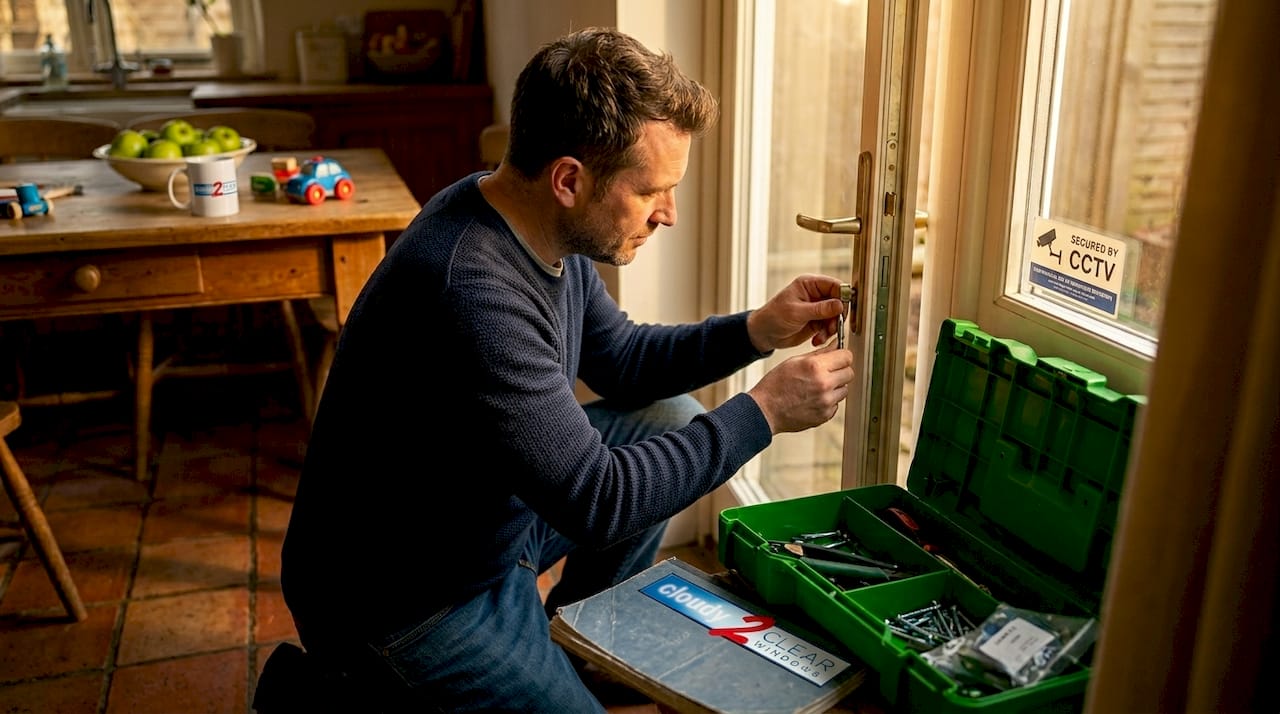
Multi-point locking mechanisms are one of the most impactful upgrades you can make. Traditional single-point locks leave most of the window frame unsecured and can be levered open with relatively little force. Multi-point locks engage at several points along the frame simultaneously, distributing resistance across the whole unit. For all accessible windows, police advice is to fit key-operated locks to every ground-floor and accessible window, including those on upper floors reachable via a drainpipe or flat roof.
Reinforced frames and reveals prevent attackers from exploiting the gap between the window and the wall. Steel reinforcement within uPVC profiles, or solid hardwood cores in timber frames, makes it far harder to spread or collapse the frame under pressure.
Laminated glazing (two or more glass panes bonded with a plastic interlayer) holds together when struck rather than shattering into fragments. This means a smash-and-grab attempt takes far longer and makes considerably more noise. Toughened glass breaks into small, rounded pieces but does not hold together the way laminated glass does, making laminated the better option for security purposes.
Here is a quick summary of physical security features worth prioritising:
- Multi-point, key-operated locks on all accessible windows
- Steel-reinforced uPVC or solid aluminium frames
- Laminated or laminated-toughened glazing units
- Shoot-bolt hinges that prevent the window being lifted off
- Locking night-vent restrictors for safe ventilation
- Security film applied internally for older single-glazed windows in lower-risk settings
- Internal security bars or grilles for very high-risk commercial premises
For modern secure window styles that combine all these features with contemporary aesthetics, there are options across every frame material and opening type.
Pro Tip: Even a high-specification window is only as secure as its installation. If the frame is not correctly anchored to the reveal or the sealant is poorly applied, the structural integrity is compromised regardless of the product’s certification.
See our dedicated window lock advice for detailed guidance on upgrading existing hardware.
Smart and sensor technologies: electronic window enhancements
Physical upgrades form the backbone of window security, but adding smart sensors can significantly boost both detection and deterrence. Electronic window security has become increasingly accessible and reliable in recent years, making it a practical addition for homes and businesses alike.
Glass-break sensors are among the most useful electronic tools available. They detect the specific acoustic signature produced when glass fractures, triggering an alert or alarm within milliseconds. This gives you early warning even if an intruder does not fully breach the window. Modern sensors like Honeywell’s FG1625, which uses multi-signal analysis and adjustable sensitivity, significantly reduce false alarms while maintaining reliable response. Getting this balance right is critical, as overly sensitive sensors quickly become ignored.
How and where to install sensors correctly:
- Mount glass-break sensors on the ceiling or wall opposite the window, within the manufacturer’s specified detection range (typically four to six metres).
- Avoid placing sensors in areas with high background noise such as kitchens near appliances or rooms with heavy traffic.
- Test each sensor after installation using the manufacturer’s test tool, not by actually breaking glass.
- Integrate sensors with your main alarm panel so that activation triggers both a local siren and a remote notification.
- Review sensor placement if you add new windows or change the room’s layout.
The table below outlines the main types of smart window sensors and what they offer:
| Sensor type | How it works | Key advantage |
|---|---|---|
| Glass-break detector | Detects acoustic frequency of glass fracturing | Early alert before full breach |
| Magnetic contact sensor | Detects when window opens unexpectedly | Simple, reliable, low cost |
| Vibration sensor | Detects impact or tampering on frame or glass | Catches early attempts before breakage |
| PIR window sensor | Detects movement close to a window | Useful for monitoring unoccupied spaces |
| Smart window sensor | Combines contact detection with app notification | Real-time alerts on your phone |
It is worth being clear that sensors do not physically stop an intruder. They work best as a second layer of defence behind strong physical features, not as a replacement for them.
Retrofit versus replacement: choosing the right security upgrade
After considering your options for new features, the choice between retrofitting and full replacement depends on the age and vulnerability of your existing window systems.
Retrofitting means adding security enhancements to windows you already have. This is a cost-effective approach when the core frame and glazing are in reasonable condition and the main weakness is outdated hardware or missing sensors. Retrofit options include:
- Upgrading to multi-point locks
- Adding locking restrictors for night-vent security
- Applying internal security film to existing glazing
- Installing glass-break and magnetic contact sensors
- Fitting external window bars or grilles to high-risk openings
Full replacement is necessary when the existing frame is structurally weak, the design is non-compliant with current standards, or the glazing is single-pane or badly degraded. Replacing old windows with units certified to PAS 24 or SBD not only improves security but also brings thermal performance and Building Regulations compliance up to modern requirements.
As NPSA guidance advises, where possible use products that have achieved LPS 1673, and if retrofitting is not sufficient, consider fitting new windows designed and installed to meet an appropriate forced-entry standard. The goal of any certified window is to delay or deter rather than offer an absolute guarantee. A window meeting forced-entry standards can buy you the vital minutes needed for an alarm to be raised or for an intruder to abandon the attempt.
Use this quick guide to decide which approach suits your situation:
- Choose retrofit if: Your frames are structurally sound, the window is less than fifteen years old, and the primary gaps are in hardware or sensors.
- Choose replacement if: Frames are warped, cracked, or single-glazed, the window fails current Building Regulations, or you need SBD certification for insurance or planning purposes.
For properties considering sustainable window upgrades, full replacement often delivers combined security and energy efficiency benefits that far outweigh the initial cost.
A security expert’s take: don’t underestimate ‘everyday’ vulnerabilities
Here is something that rarely appears in product brochures or certification documents: the majority of residential break-ins in the UK do not involve smashing glass or defeating sophisticated locks. They involve windows that were simply left unlocked, propped open in an insecure position, or fitted with locks that were never actually used. Advanced hardware is genuinely valuable, but its value is zero if the window is not engaged properly.
We have seen properties with SBD-certified windows, laminated glazing, and multi-point locks that were nonetheless vulnerable because the occupant routinely left the night-vent position unsecured. As highlighted in police guidance on window operating states, burglary may occur without any glass breakage at all because the real vulnerability is the window’s operating state, not its specification.
The practical message is this: your security is only as strong as your least consistent habit. A window that is sometimes locked is an unlocked window from a risk perspective.
Pro Tip: Do a window audit of your property. Walk around every room, check every window, and note which ones have functioning locks that are actually used. You may be surprised by what you find, and the fixes are often very simple.
Attention to the ordinary details, such as using locking restrictors every time you open a window for ventilation, checking older fixing window locks before relying on them, and replacing any hardware that feels loose or difficult to operate, consistently delivers more real-world security value than any single product upgrade. Awareness and consistency are security features too.
Enhance your property’s window security with professional solutions
If you are ready to upgrade your physical and practical security, tailored professional services can help you find the right solution for your specific property.

At Cloudy2Clear Windows, we have been helping homeowners and businesses across England and Scotland improve their glazing since 2005. Whether you need to repair broken windows to restore security functionality, explore replacement glazing options that bring your windows up to current standards, or arrange commercial security window repairs for your business premises, our experienced team is ready to help. We ensure every installation and repair meets the security, compliance, and performance standards your property deserves.
Frequently asked questions
What is the difference between PAS 24 and Secured by Design for windows?
PAS 24 is the mandatory minimum required by UK Building Regulations, while Secured by Design is a higher police-preferred standard with more rigorous forced-entry testing and police endorsement, making it the better choice for higher-risk properties.
How effective are glass-break sensors as window security features?
Modern sensors such as the Honeywell FG1625, which uses multi-signal analysis and adjustable sensitivity, provide reliable early alerts and are most effective when used as a second layer of protection alongside strong physical window security.
What type of window locks are recommended by UK police for home security?
UK police recommend key-operated locks on all ground-floor and accessible windows, as these significantly increase resistance to both opportunist and planned break-in attempts.
Should I retrofit or replace old windows to improve home security?
If existing frames are structurally sound and hardware is the main weakness, targeted retrofits can boost security cost-effectively. However, NPSA guidance advises replacing windows entirely when the core design is weak or non-compliant with current forced-entry standards.