Window ironmongery is one of those terms that trips people up. Most homeowners and business owners think of window hardware as just locks, maybe handles if they’re being thorough. But the reality is far broader, and those gaps in knowledge lead to poor purchasing decisions, avoidable repairs, and missed opportunities to improve how your property looks and performs. This article breaks down exactly what window ironmongery means, which parts matter most, how to choose the right finish, and how to keep everything in good working order for years to come.
What is window ironmongery and why does it matter?
Window ironmongery is the collective term for all the metal fittings and hardware components attached to a window. That includes everything involved in opening, closing, securing, and ventilating a window. Handles, hinges, locks, stays, restrictors, and trickle vents all fall under this category. If it moves, fastens, or seals a window, it’s ironmongery.
“Window fittings are one part of the wider category of metal items used in buildings for decoration and function.”
People often assume ironmongery is just about security. That’s understandable. Locks are the most visible and talked-about component. But ironmongery also shapes ventilation, accessibility, child safety, and even the fire escape compliance of your building. Getting it wrong doesn’t just look bad. It can create real problems with insurance claims, building regulations, and the long-term durability of your windows.
Here’s why window ironmongery matters so much for your property:
- Security: Locks and multi-point locking systems protect your home or business from forced entry.
- Weatherproofing: Correctly fitted hinges and seals keep wind and rain out.
- Ventilation: Trickle vents and stays allow controlled airflow without compromising safety.
- Accessibility: Lever handles and low-force mechanisms improve usability for all occupants.
- Compliance: Building regulations in England and Scotland require specific hardware in certain settings, particularly around fire escape windows and child safety.
- Property value: Quality fittings signal a well-maintained property to buyers and tenants.
If you’ve ever struggled with a window that won’t close properly or a lock that sticks, you’ve already experienced what happens when window ironmongery is worn, mismatched, or low quality. Exploring common window faults can help you identify whether the hardware is the root cause before spending money on the wrong fix.
Now that we’ve cleared up what window ironmongery is, let’s look at the specific types involved and how they work in practice.
Types of window ironmongery: parts you need to know
Understanding the individual components helps you make confident decisions when replacing, upgrading, or specifying hardware. Here are the main parts you’ll encounter:
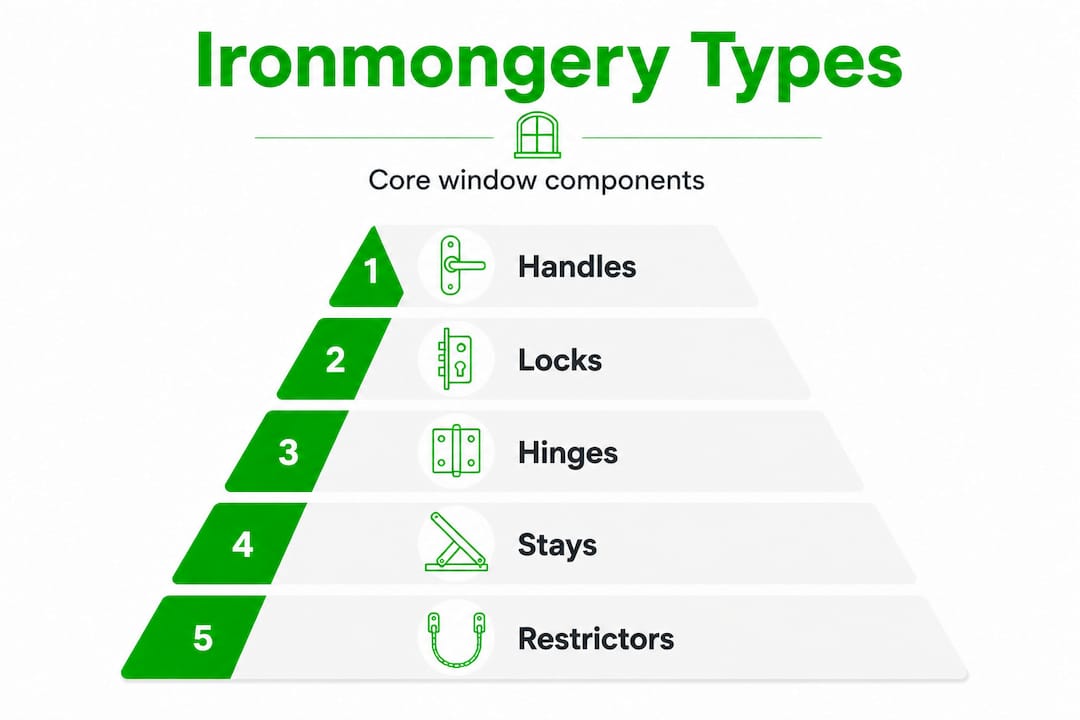
- Handles: The most visible piece of ironmongery. They come in cockspur, espagnolette, and tilt-and-turn styles depending on window type. Cockspur handles are common on older uPVC casement windows, while espagnolette handles engage multi-point locking systems.
- Locks: Including surface-mounted sash locks, window restrictors with locks, and key-operated systems. The right lock depends on your window profile and security requirements.
- Hinges: Hold the window in place and determine how it opens. Friction hinges are standard on modern casement windows and can be adjusted to control how far the window opens.
- Stays: Also called casement stays or window stays. These bar-shaped fittings prop open a window at a fixed position and can double as a restriction device.
- Trickle vents: Small, slot-based ventilators built into the frame or glazing bead that allow a controlled flow of fresh air even when the window is closed. They are increasingly required under Part F of the Building Regulations.
- Restrictors: Limit how far a window opens, typically to 100mm for child safety in upstairs rooms. Some restrictors can be overridden by an adult in a fire emergency.
| Component | Primary function | Compliance note |
|---|---|---|
| Handle | Operation and locking | Should suit window profile |
| Lock | Security and intruder resistance | Meets insurance requirements |
| Hinge | Supports sash movement | Must match window weight/size |
| Stay | Ventilation control | Can restrict opening width |
| Trickle vent | Background ventilation | Often required under Building Regs |
| Restrictor | Child safety | Required at heights over 2m |
Each of these parts interacts with the others. A stiff hinge puts more strain on a handle. A worn restrictor means a stay takes on more load than it should. Thinking of window ironmongery as a system, not a collection of individual parts, is the mindset that leads to better outcomes.
When you’re selecting hardware, it’s essential to match ironmongery to your window material. Timber, uPVC, and aluminium frames all have different profiles, screw spacings, and surface requirements. Getting advice on choosing window frames before committing to hardware can save you from costly mismatches. You’ll also find it useful to review the wider window materials guide to understand how material choice shapes your ironmongery options.
Pro Tip: Before ordering replacement ironmongery, photograph every existing component and note the screw spacing, handle spindle size, and frame thickness. These measurements are often more reliable than visual identification alone.
Having covered the types of window ironmongery you’ll encounter, it’s important to understand how different styles and finishes influence both performance and design.
Styles, finishes and trends: choosing the right look
Function comes first, but finish and style matter more than most people realise. The wrong finish can look out of place on a period property or seem dated in a newly renovated commercial space. The right one ties your windows together with your doors, architraves, and interior hardware.
Popular finishes currently available in the UK include:
- Polished chrome: Clean, modern, and easy to maintain. Suits contemporary homes and offices particularly well.
- Satin chrome: A softer, less reflective version of chrome. Versatile and widely used in both residential and commercial settings.
- Matte black: Very popular right now, especially in modern and industrial style interiors. Works well with grey window frames and minimalist design schemes.
- Antique brass: A warm, traditional finish that suits Georgian, Victorian, and Edwardian properties. Requires occasional polishing to maintain its appearance.
- Antique bronze: Darker than brass and highly popular for heritage restorations. More forgiving on maintenance than polished brass.
- Polished brass: Striking but high maintenance. Better suited to formal or period settings where regular upkeep is feasible.
Statistic callout: Interior design surveys consistently show that matte black hardware finishes have seen a significant rise in demand across UK residential projects over the past five years, driven largely by the growth of contemporary and Scandi-inspired interiors.
| Finish | Style suitability | Maintenance level | Corrosion resistance |
|---|---|---|---|
| Polished chrome | Modern, contemporary | Low | High |
| Satin chrome | Modern, transitional | Low | High |
| Matte black | Industrial, minimalist | Medium | Medium |
| Antique brass | Period, traditional | High | Medium |
| Antique bronze | Heritage, rustic | Medium | Medium |
| Stainless steel | Commercial, coastal | Very low | Very high |
Coastal properties in particular need to prioritise corrosion resistance. Salt air accelerates the deterioration of lower-quality finishes, and you can find yourself replacing ironmongery far sooner than expected if you choose style over suitability. Stainless steel and high-grade chrome are often the wiser choice in those environments.
For period properties, it’s worth researching which styles would have been used originally and selecting reproductions or sympathetic modern alternatives. A Georgian sash window fitted with a sleek chrome cockspur handle loses a great deal of its character. Browsing modern window styles can help you understand which hardware trends fit which architectural contexts. You should also consider how the finish interacts with frame materials by reading about window frame efficiency, and if sustainability matters to you, it’s worth exploring sustainable window hardware options.
Once you’ve chosen the right look and material for your window ironmongery, regular maintenance is key to keeping everything working and looking its best.
Care and maintenance: keeping your window ironmongery working for years
Well-chosen ironmongery can last decades. Poorly maintained ironmongery, regardless of quality, can fail in a handful of years. The good news is that basic upkeep takes very little time and prevents the vast majority of problems.
“Ironmongery that covers both decorative and functional roles in buildings needs regular attention to maintain safe and effective performance.”
Here is a straightforward routine maintenance process you can follow:
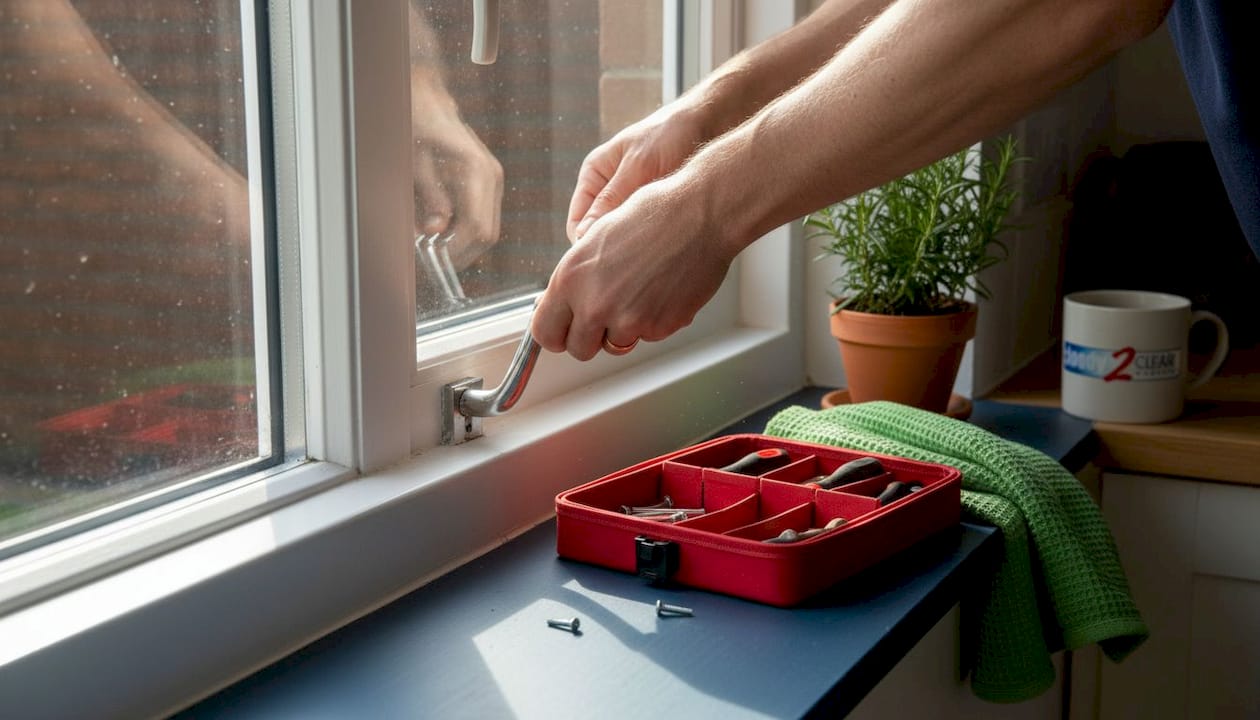
- Clean all surfaces. Use a damp, soft cloth and mild detergent to remove dirt and grease from handles, locks, and hinges. Avoid abrasive cleaners, which scratch protective coatings.
- Lubricate moving parts. Apply a light machine oil or specialist ironmongery lubricant to hinges, lock mechanisms, and any sliding components. Do this every six months at minimum.
- Check and tighten fixings. Screws in handles and hinge plates work loose over time with repeated use. A quick check with a screwdriver takes minutes and prevents bigger problems later.
- Inspect for corrosion. Look closely at exposed metal surfaces for early signs of rust or pitting, particularly after winter. Catching it early means treating rather than replacing.
- Test each component’s operation. Open, close, and lock every window. If anything feels stiff, grates, or doesn’t seat properly, investigate before it worsens.
- Check restrictors and stays. Ensure child safety restrictors engage correctly and that stays hold the window open at the intended angle without slipping.
Common issues to watch for include:
- Sticking handles: Often caused by a worn spindle or a locking mechanism that needs lubrication.
- Windows that won’t close flush: Usually a hinge alignment problem or a worn keep (the strike plate the lock engages with).
- Corroding hinges: Frequently a sign that moisture is getting in around the frame, or that the finish was poorly suited to the environment.
- Rattling windows: Often a stay that’s no longer holding, a worn handle, or a seal problem rather than a glass issue.
Pro Tip: Take a seasonal approach to maintenance. Check everything in autumn before cold weather arrives, and again in spring after winter stress. Two rounds of upkeep per year is far more effective than occasional irregular attention.
For more detailed guidance, our advice on maintaining double-glazed windows covers the broader picture. If your locks specifically need attention, step-by-step advice on repairing window locks is available, and for hands-on repairs covering locks, hinges, and handles together, our lock, hinge and handle repair service is there when you need professional support.
Understanding maintenance leads naturally into expert perspectives. Let’s reveal what most guides miss about window ironmongery choices in the UK.
The truth most guides miss about window ironmongery
Most articles about window ironmongery talk about style and price. That’s where the conversation usually ends. But in our experience at Cloudy2Clear, the properties that end up with the most ironmongery problems are those where the original choices were made based purely on appearance or budget.
Here’s what we see repeatedly: a homeowner fits cheaper handles and hinges to save money during a renovation. Within three years, the hinges are sagging, the locks are stiff, and the handles are pitting. The replacement cost, including labour and repeat disruption, easily exceeds what quality hardware would have cost in the first place.
The more overlooked issue is future-proofing. UK building regulations around ventilation, fire escape windows, and accessibility requirements do evolve. If you install ironmongery today that meets current standards, but choose the bare minimum, you may find it needs replacing sooner than expected when regulations tighten. Insurers are also increasingly scrutinising window security standards, and sub-standard locks can affect your cover.
Our honest advice: look at lifespan and warranty before anything else. A reputable brand offering a ten-year guarantee on ironmongery is almost always a better investment than a cheaper alternative with no warranty. You should also consider certifications such as Secured by Design accreditation for locks and hardware, which is recognised by police forces and insurers across England and Scotland.
Understanding window materials also plays into this. The ironmongery that performs best over the long term is always specified with the frame material in mind. Mismatched combinations cause accelerated wear, galvanic corrosion where dissimilar metals meet, and operational problems that become frustrating daily realities.
Think of ironmongery as an investment in the smooth running of your property, not an afterthought once the glass is fitted.
Get expert help with your window ironmongery
Knowing what you need is a strong start. But matching the right hardware to your specific windows, frames, and compliance requirements takes experience that goes beyond a product catalogue.

At Cloudy2Clear Windows, we’ve been helping homeowners and businesses across England and Scotland with window repairs, replacements, and upgrades since 2005. Whether your ironmongery is worn out, non-compliant, or simply not doing its job, our team can assess the situation and recommend the right solution. Our commercial window repairs service handles everything from single handles to full-building hardware upgrades. If you’re based in the Midlands, our Milton Keynes glazing repairs team is ready to help locally. Get in touch with us to talk through your options with someone who knows windows inside and out.
Frequently asked questions
What does window ironmongery include?
Window ironmongery covers all the metal fixtures and fittings on a window, including handles, locks, hinges, stays, trickle vents, and restrictors. Each component plays a role in the window’s function, safety, and appearance.
Why is quality important in window ironmongery?
High quality ironmongery ensures secure operation, long-term durability, and compliance with building regulations, all of which reduce the total cost of ownership. As metal items used in buildings for both function and decoration, the right choice protects your investment.
How often should window ironmongery be maintained?
Check and lubricate your window ironmongery at least twice a year, ideally in spring and autumn, to prevent sticking and extend the lifespan of all moving parts.
Is window ironmongery suitable for all window types?
Yes, but selection must match your window’s material and profile. There are ironmongery options for timber, uPVC, and aluminium windows, each with specific sizing, fixing, and finish requirements.