Most people think of old windows as merely draughty or unsightly. The truth is the risks of old windows extend far beyond a chilly room in winter. From falls and frame decay to mould, fire hazards, and even legal trouble, aging windows can quietly undermine the safety, health, and comfort of your home. Whether you own an older property or rent one, understanding these dangers gives you the knowledge to act before a minor issue becomes a serious problem.
Physical safety risks of old windows
When windows age, their ability to protect your household drops significantly. Faulty latches, brittle glass, swollen frames, and weakened hinges all combine to create real dangers for the people living in your home.
Children are among the most vulnerable. Around 3,300 children are injured from window falls every year, with children under the age of five at the highest risk. Old windows often lack the modern restrictors that limit how far a sash can open. Safety guidelines recommend restricting any opening to no more than 10 cm to prevent falls, yet many older window locks simply cannot achieve this reliably.
Older adults face a different but equally serious set of dangers. Windows that are stiff, heavy, or difficult to operate can throw someone off balance while attempting to open or close them, contributing to falls. Condensation and water ingress around aging frames can also make windowsills wet and slippery, adding another hazard underfoot.
There are several key physical safety concerns to watch for:
- Faulty or worn latches that no longer close or lock securely
- Brittle or cracked glass panes that can shatter under minimal pressure
- Warped or swollen frames that make windows hard to open in an emergency
- Corroded hinges that fail to hold a window open safely
- Missing or broken window restrictors, especially in upstairs rooms
Pro Tip: Walk through your home once a season and test every window latch and restrictor. If any feel loose, stiff, or unreliable, arrange a repair before the warmer months when windows are opened more frequently.
Regular safety checks take less than 20 minutes and can prevent an incident that no one wants to think about.
Energy efficiency and the true cost of old windows
Draughty windows are not just uncomfortable. They create a chain of problems that affect your energy bills, your health, and surprisingly, your physical safety too.
When window seals fail, the inert gas between double-glazed panes leaks out and moisture enters, causing the familiar foggy or permanently condensated glass. At this point, failed window seals mean your double glazing performs worse than single-pane glass for heat retention, driving up your heating costs considerably.
The knock-on effects are easy to underestimate. Cold rooms caused by drafty windows raise fall risk because occupants respond by adding portable heaters, extension cords, and extra rugs. Each of these is a potential trip or fire hazard, particularly for older adults and young children.
Here is a quick comparison of what you are likely dealing with:
| Feature | Old single or failed double glazing | Modern double glazing |
|---|---|---|
| Heat retention | Poor, high heat loss | Good, significantly lower heat loss |
| Condensation | Frequent on inner pane | Rare with intact seals |
| Heating bills | Higher | Lower |
| Draught risk | High | Minimal |
| Mould risk | Elevated | Low |
Common signs that your windows are costing you more than they should:
- Visible condensation between the panes that never clears
- Cold spots near windows even when heating is on
- Noticeably higher energy bills in winter
- Draughts you can feel when standing near the frame
If you are not ready for full replacement, draught-proofing your windows is a practical and affordable first step that reduces heat loss and lowers reliance on portable heaters.
Pro Tip: Hold a lit candle near the edge of a closed window on a windy day. If the flame flickers, you have a draught worth addressing.
Structural and maintenance issues with aging frames
The structural risks of old windows are often the least visible and therefore the most dangerous. Wood rot, in particular, develops from the inside out. By the time you see peeling paint or softened timber on the surface, decay has often been progressing unseen for years.
Research suggests that around two-thirds of pre-1995 homes have some degree of rot damage in their window frames. This is not just a cosmetic concern. Rotted frames lose their structural integrity, which means glass panes are less securely held and water ingress accelerates into the surrounding wall.
Watch for these warning signs of frame deterioration:
- Soft or spongy areas when you press the frame with a finger
- Peeling or bubbling paint on timber frames
- Water stains on the internal wall directly below or beside a window
- Visible gaps between the frame and the surrounding brickwork
- Mould or damp patches on internal plasterwork near windows
Moisture that penetrates behind window frames can travel through wall cavities and cause damage that is expensive to repair. A small gap in the sealant today can become a saturated wall and a significant repair bill within a couple of seasons.
There is also a legal dimension to consider, particularly if you live in a listed building or a conservation area. Unauthorised window replacements can result in enforcement orders, fines, and the requirement to reinstate the original windows at your own cost. Before making any changes to windows in a historic property, always check with your local planning authority. Guidance on building regulations compliance is worth reviewing before you commit to any work.
Health risks linked to old windows
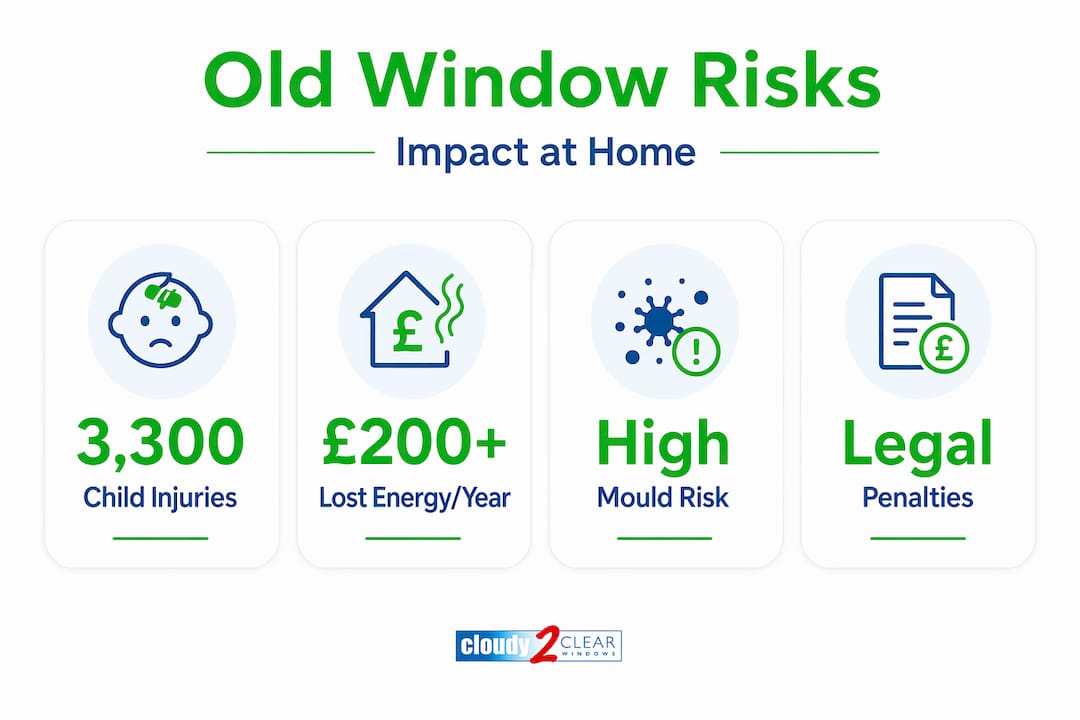
The health risks old windows present are often dismissed or misunderstood. Two of the most common issues are mould and lead paint, and both deserve a clear-eyed look.
Damp and mould around old windows aggravate breathing conditions such as asthma, disrupt sleep, and can cause persistent respiratory problems over time. Mould thrives where condensation collects on cold window frames and glass, and it spreads quickly if the underlying moisture issue is not resolved.
Lead paint is a more nuanced hazard. Many older windows, particularly in homes built before the 1980s, were painted with lead-based paint. The key fact here is that intact lead paint poses little risk. The danger arises from abrasion, sanding, or aggressive removal that creates fine dust particles. Ironically, heavy-handed remediation often spreads lead dust far more widely than leaving the paint undisturbed.
Safe practice when working on old painted windows includes:
- Avoiding dry sanding on any pre-1980s painted surface
- Using damp methods to minimise dust when rubbing down paintwork
- Wearing appropriate respiratory protection during any paint removal
- Disposing of paint debris carefully and in line with local guidance
- Consulting a specialist before undertaking work on heavily painted historic windows
If you are unsure whether your windows contain lead paint and you are planning any maintenance or repair work, seek professional advice before you begin. The risk is manageable with the right approach, but it should not be ignored.
How to assess your windows and manage the risks
Knowing the risks is only useful if you act on them. Here is a practical approach to assessing the condition of your windows and deciding what to do next.
- Carry out a visual inspection of every window frame, seal, and latch. Look for the warning signs covered in this article: rot, condensation, cracks, and failing locks.
- Test functionality by opening and closing each window fully. Any that stick, jam, or feel unstable need attention.
- Check the glazing for permanent fogging between panes, which signals seal failure.
- Look for draughts using the candle method and note any gaps around frames or sills.
- Assess the age and condition together. A window that is 20 years old with minor seal failure may need repair rather than full replacement. One that is 40 years old with rot, failed seals, and a broken latch may have reached the end of its serviceable life.
- Check planning restrictions before arranging any replacement work, particularly if your home is listed or in a conservation area.
- Get a professional assessment for anything beyond straightforward draught-proofing or minor repairs.
Our guide to spotting signs you need new windows can help you interpret what you find and make an informed decision. For a broader picture of what different materials mean for longevity and maintenance, the window materials guide is also worth a read.
Pro Tip: Schedule a brief window inspection every spring and autumn. Catching problems early almost always results in a lower repair cost and a safer home.
Our view on managing the risks of old windows
Over nearly two decades working with homeowners across the UK, I have seen one pattern repeat itself more than any other. People either ignore their old windows entirely or panic and replace everything at once. Both extremes cause unnecessary problems.
The instinct to rush a full replacement is understandable. Once you learn about the dangers of aging windows, the temptation is to act decisively. But wholesale replacement without proper assessment can disturb lead paint, create compliance issues in historic properties, and cost significantly more than targeted repairs would have done. I have seen homeowners face enforcement orders because they replaced windows in a conservation area without checking the rules first.
On the other hand, ignoring visible rot, failed seals, or broken latches in the hope that they will hold out a bit longer is genuinely risky. Water ingress compounds quickly. A frame that looks borderline in October can be structurally compromised by spring.
My honest view is that most old windows benefit from a professional inspection before any decision is made. In many cases, repairing seals, refreshing draught-proofing, and upgrading locks costs a fraction of full replacement and resolves the majority of risks. When replacement is genuinely the right answer, a reputable professional will tell you clearly and explain why.
The goal is not to preserve old windows for their own sake, nor to replace them for the sake of it. The goal is a home that is safe, warm, and efficient. Those outcomes are entirely achievable with the right information and the right help.
— Cloudy2Clear Windows
How Cloudy2Clear Windows can help
Understanding the risks is the first step. Getting them properly addressed is the next.

Cloudy2Clear Windows has been repairing and replacing double glazed windows across the UK since 2005. Whether you have a failed seal causing foggy glass, a rotting frame letting in moisture, or a latch that no longer locks securely, our local teams can assess the problem and recommend the most cost-effective solution. We cover a wide range of areas including Oxford, Leicester and Loughborough, Milton Keynes, and Watford, among many others. Our double glazing replacement service covers everything from individual pane repairs to full window refurbishments, helping you improve safety, energy efficiency, and comfort without unnecessary cost. Contact your nearest branch for a free, no-obligation assessment.
Common questions
How do I know if my old windows are a safety risk?
Check for faulty latches, cracked or brittle glass, warped frames, and any window that cannot be securely restricted to 10 cm or less when open. If you notice any of these issues, arrange a professional inspection promptly.
Can old double glazing be worse than single glazing?
Yes. When seals fail and the inert gas escapes, permanently fogged double glazing insulates worse than intact single-pane glass, leading to increased heat loss and higher energy bills.
Are old windows a health risk?
Old windows with persistent condensation encourage mould growth, which aggravates respiratory conditions. Windows in pre-1980s homes may also have lead-based paint that poses a risk if disturbed through sanding or aggressive repair work.
Do I need planning permission to replace old windows?
In most standard properties you do not, but if your home is listed or in a conservation area, unauthorised replacements can result in enforcement action. Always check with your local planning authority before proceeding.
Is it better to repair or replace old windows?
It depends on the extent of the damage. Minor seal failure, draughts, and lock issues are usually repairable at a fraction of replacement cost. Severe rot, structural failure, or repeated seal problems in very old frames often make full replacement the more practical and cost-effective choice.