Start with the things that cost nothing. Turn off lights in empty rooms, switch computers off at the plug overnight, close doors to retain heat, and check your windows for draughts or misting between panes. Those four actions alone can reduce your office energy bills noticeably within days. Simple measures can cut office energy costs by up to around 20% for many offices, with heating, lighting and equipment as the primary targets.
Your three-priority checklist:
- Within 1 day: Switch off all non-essential equipment at the plug; set heating and cooling to recommended setpoints.
- Within 1 week: Fit timers on shared equipment; check windows and doors for draughts; brief staff on the last-out rule.
- Within 1 month: Audit lighting and upgrade priority areas to LED; commission a glazing inspection if you spot condensation or cold spots.
What are the best energy saving tips for offices right now?
The fastest wins are behavioural and cost nothing. Beyond that, low-cost controls and LED upgrades deliver the next layer of savings.
No-cost actions:
- Switch off lights whenever a room is unoccupied.
- Apply the last-out rule: the final person to leave turns off all lights, monitors and shared appliances.
- Unplug phone chargers, desk fans and kitchen appliances at the socket overnight.
- Close blinds on south-facing windows in summer to reduce cooling load; open them in winter to gain solar heat.
- Use natural daylight wherever possible before switching on overhead lighting.
Low-cost actions (typically under £200 per measure):
- Fit self-adhesive draught-proofing strips to window frames and door edges. Draught-proofing is one of the most overlooked quick wins in office buildings.
- Install plug-in timers on shared equipment such as printers, water boilers and vending machines.
- Swap the most frequently used lamps to LED where they have not already been replaced.
Pro Tip: Brief your cleaning team and security staff as well as your office staff. They are often the last people in the building and can enforce the last-out rule more reliably than a policy document alone.
How should you manage heating and cooling to cut costs?
Set your office heating to 19°C and cooling to no lower than 24°C. The gap between those two setpoints is called the deadband, and keeping it wide enough prevents your heating and cooling systems from fighting each other simultaneously. A deadband control strategy is one of the simplest, most measurable savings you can make.
Programme your heating on a seven-day timer so it comes on 30 minutes before staff arrive and shuts off 30 minutes before they leave. Avoid leaving it running through weekends. Nearly half of business electricity use occurs outside standard operating hours, and heating is a major contributor to that overnight waste.
Maintenance checklist for boilers and air conditioning:
- Bleed radiators annually and check for cold spots.
- Replace air filters in AC units every six months.
- Check that thermostats are not blocked by furniture or equipment generating heat.
- Confirm that heating and cooling zones do not overlap on the same timer programme.
When to call an HVAC specialist:
- Heating and cooling appear to run at the same time despite correct setpoints.
- The system cannot maintain temperature without running continuously.
- You want to explore part-load optimisation and heat recovery, which can deliver substantial savings in larger office schemes.
- Controls are more than ten years old and lack a seven-day programme.
Which lighting changes save the most energy in offices?
Switch to LED and add occupancy sensors. Those two steps together deliver the fastest lighting savings for most offices. Lighting can account for around 20% of business electricity use, so the return on investment is real.
Occupancy sensors alone can reduce lighting energy use by roughly 30% in intermittently occupied areas such as meeting rooms, toilets and corridors. Daylight sensors dim or switch off lights automatically when natural light is sufficient, which suits open-plan areas with good window coverage.
Implementation priority order:
- Meeting rooms and toilets: fit occupancy sensors first as these spaces are empty for long periods.
- Open-plan areas: install daylight-linked dimming controls.
- Corridors and stairwells: motion-activated LED strips with a short time delay.
- External and security lighting: replace with LED and add dusk-to-dawn or PIR controls to avoid lights running through daylight hours.
Payback expectations: LED lamp replacements typically pay back within one to two years through energy savings alone. Sensor installations in meeting rooms often pay back within a similar period given the hours those spaces sit empty.
How can you reduce energy waste from office equipment and IT?
Enable power management settings on every PC and monitor so they drop to sleep mode after ten minutes of inactivity. This single step, applied across a typical office, cuts equipment electricity use during the working day without disrupting anyone. Seven-day timers on shared equipment can reduce energy waste on those devices by up to 70% during overnight and weekend periods.
Steps to apply across your office:
- Set all PCs and monitors to sleep after 10 minutes and hibernate after 30 minutes.
- Fit seven-day plug-in timers to printers, water boilers, monitors and shared kitchen appliances.
- Switch to laptops over desktop towers when replacing devices; laptops typically use significantly less power.
- Choose Energy Star or A-rated appliances when purchasing replacements.
- Turn off the office dishwasher’s heated-dry cycle and run it only when full.
- Switch off vending machines overnight if the supplier permits it.
Pro Tip: Schedule software updates and server maintenance for overnight runs, then use a timed power-down to switch servers to low-power mode once the update window closes. This balances availability with energy savings without requiring manual intervention.
Why do your office windows affect your heating bill?
Failed window seals, single glazing and draughty frames force your heating system to work harder than it should. Fixing draughts and upgrading glazing where U-values are poor reduces heat loss directly and can make a measurable difference to your bills before you touch the boiler or thermostat.
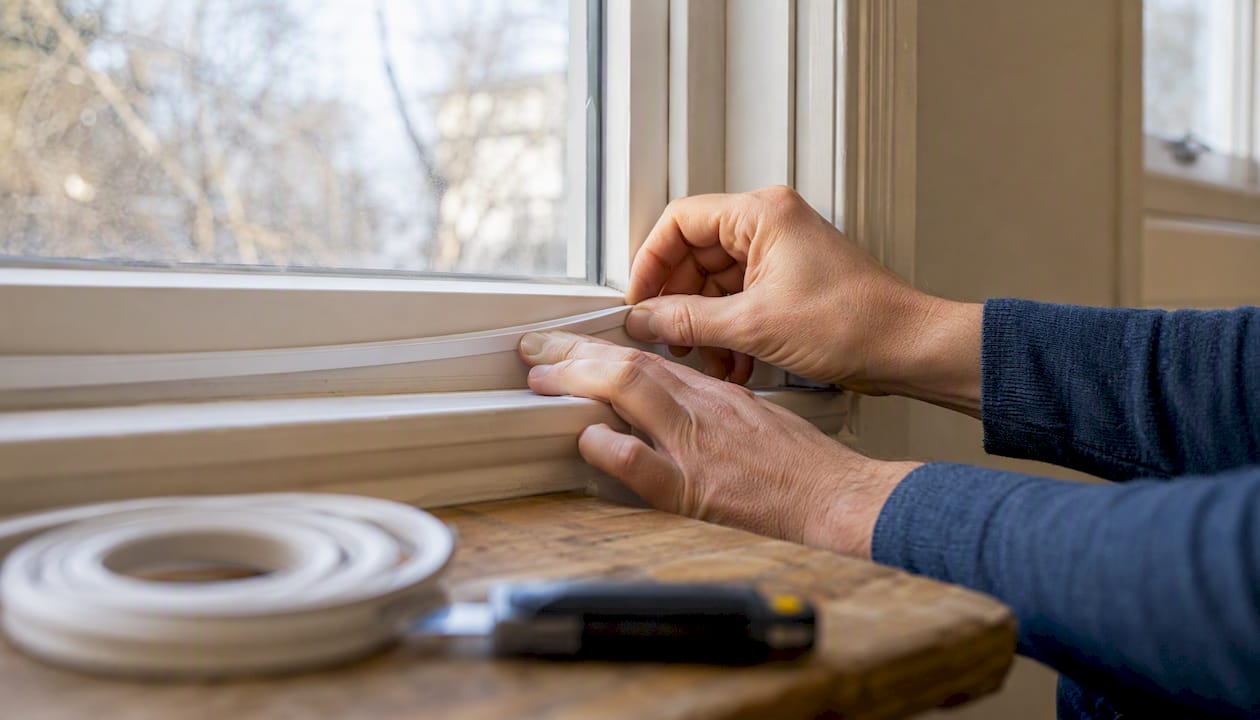
Replacing single glazing with A-rated double glazing can save around £140 per year in a typical GB property. In a commercial building with multiple windows, the cumulative saving is proportionally larger. Low-E glass and double or triple glazing reduce radiant heat loss and cold draughts near window seats, which also improves occupant comfort and productivity.
Signs your glazing is costing you money:
- Condensation or misting between the panes (failed seal, no longer insulating).
- Cold spots near windows even when heating is running.
- Draughts felt at window edges or around door frames.
- Single-glazed units still in place in older commercial premises.
For offices where only the glass unit has failed rather than the frame, a glass-only repair is often the most cost-effective route. Full frame replacement makes sense when frames are structurally compromised or when upgrading to a significantly higher specification. You can read more about commercial glazing and energy efficiency to understand where each option fits.
Draught-proofing doors is equally worthwhile. Winterising door frames with draught seals and brush strips is a low-cost measure that complements window repairs well.
How do you get staff to actually change their behaviour?
Appoint an energy champion for each floor or department. Give them a simple brief: walk the floor at the end of each day, check that equipment is off at the plug, and report back monthly. Staff behaviour is the single largest variable in office energy consumption, and a champion scheme typically outperforms many higher-cost investments in the short term.
Reinforce the message with printed reminders near light switches and sockets, and share a monthly energy reading with the whole team so staff can see the impact of their actions. Practical steps such as using natural light and managing appliances are simple to communicate and quick to embed as habits.
How do you prioritise measures and estimate savings?
Start with no-cost actions, then low-cost controls, then fabric and capital upgrades. The Carbon Trust notes that businesses frequently underinvest in energy efficiency and that a short, evidence-based business case often unlocks budget for medium-term measures.
| Measure | Cost band | Typical annual saving | Rough payback |
|---|---|---|---|
| Switch-off policy and last-out rule | No cost | Up to 10% of equipment energy | Immediate |
| Seven-day timers on shared equipment | Low (£20) | Up to 70% on those devices | Under 1 year |
| LED lamp replacements | Low–medium (£30 per lamp) | around 20% of lighting energy | 1–2 years |
| Occupancy sensors (meeting rooms) | Low–medium (£200 per room) | ~30% of lighting energy | 1–2 years |
| Draught-proofing strips | Low (£10 per window/door) | Reduces heating load | Under 1 year |
| Glass-only glazing repair | Medium (varies by unit) | Reduces heating demand | one to two years |
| Full double glazing upgrade | Capital | Material reduction in heat loss | more than ten years |
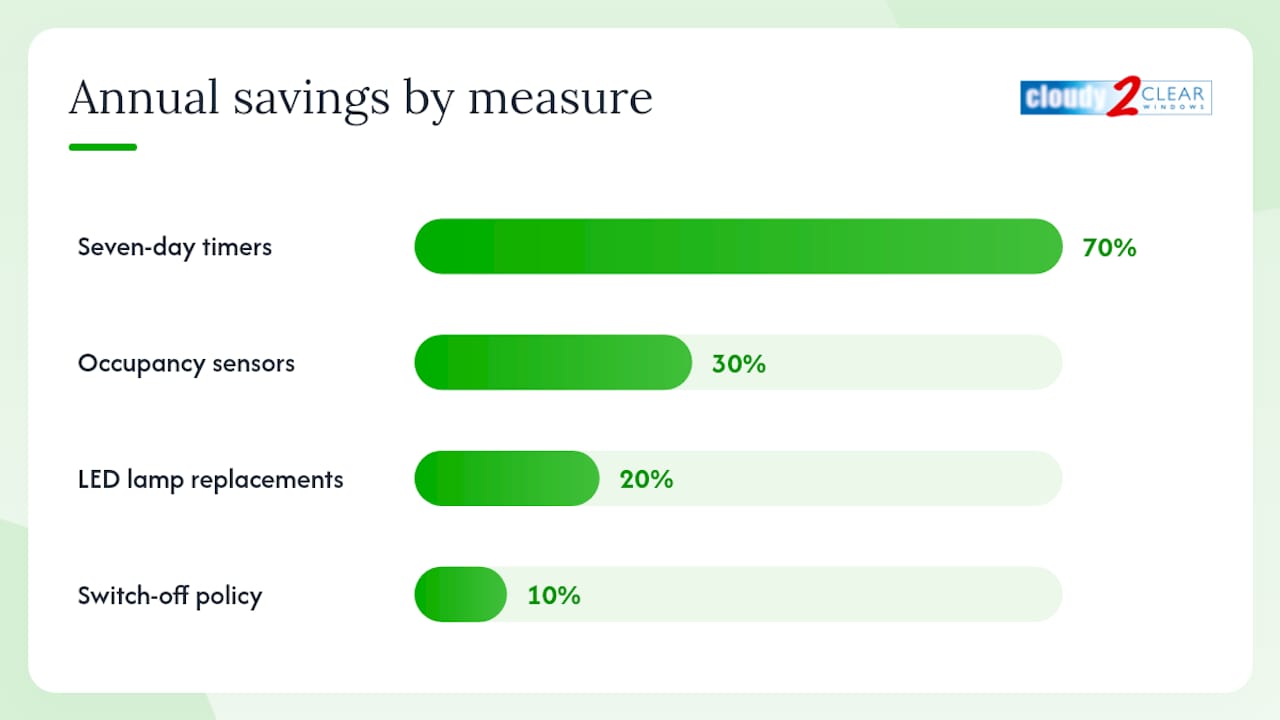
Combine measures for cumulative effect. A switch-off policy costs nothing; add LED lighting and occupancy sensors, and you have addressed the two largest electricity categories before spending significant capital. Glazing repairs sit in the medium-cost band and fit naturally after the quick wins are in place.
How do you audit your office energy use?
Start with a walk-round during and after working hours. Note what is left on, where draughts are felt, and which areas are overheated or underheated. Compare your meter reading for this month with the same month last year to establish a baseline.
Walk-round audit checklist:
- Check all lights are off in unoccupied rooms.
- Feel for draughts at window edges, door frames and any gaps around pipework.
- Confirm heating and cooling setpoints match your policy.
- Check that monitors, printers and kitchen appliances are off at the plug after hours.
- Look for condensation between window panes.
Monitoring steps:
- Read your smart meter data weekly for the first month after implementing changes.
- Set a baseline from the previous year’s bills for the same period.
- Track impact over three months before drawing conclusions.
- Consider sub-metering for large floors or server rooms to identify specific drains.
Pro Tip: If your smart meter is not providing half-hourly data to your energy supplier’s portal, contact your supplier and request access. That granularity shows exactly when overnight waste is occurring and which timer settings need adjusting.
Call a glazing professional when you spot condensation between panes, persistent cold spots near windows, or draughts that draught-proofing strips have not resolved. Call an HVAC specialist when heating and cooling appear to run simultaneously or when the system cannot hold setpoint without running continuously.
Where can UK offices find grants and further guidance?
Check Gov first. It sets out no-cost steps, low-cost measures and signposts to grants for larger investments such as heat pumps. The Energy Saving Trust offers practical guidance on glazing, insulation and controls, along with calculators to estimate savings. The Carbon Trust publishes business-focused resources including sector guides and finance tools.
Key UK sources at a glance:
- gov.uk SME guide: No-cost and low-cost steps plus grant signposting for SMEs.
- Energy Saving Trust: Glazing, insulation and heating calculators; practical advice for commercial and domestic buildings.
- Carbon Trust: Business energy efficiency guides, sector reports and finance case studies.
- Business Energy Efficiency campaign (businessenergyefficiency.campaign.gov.uk): Practical tips and timer guidance for businesses.
- Ofgem: Energy market data and supplier information; useful for tariff reviews.
Immediate steps:
- Ask your energy supplier to activate half-hourly smart meter data.
- Review your tariff annually; switching can reduce unit costs without any physical changes.
- For glazing work, look for installers registered under TrustMark or a relevant competent person scheme to confirm quality and compliance.
Why glazing problems cost offices more than most managers realise
Failed window seals are easy to overlook because the glass still looks intact. But a misted or failed double-glazed unit has lost its insulating gas fill and is performing little better than single glazing. In a commercial building with ten or twenty such units, the heating demand increase is significant and entirely avoidable.
At Cloudy2Clear Windows, we regularly carry out commercial glazing inspections where the brief starts as a general energy review and ends with several failed units identified that the facilities team had not connected to their heating costs. A glass-only repair, where the frame is sound, is typically far more cost-effective than a full window replacement and can be completed with minimal disruption to the working day.
If you are planning a broader energy upgrade, a glazing inspection is a sensible early step. Our guide to energy-efficient window upgrades walks through what to look for and how to prioritise repairs alongside other fabric measures.
Cloudy2Clear Windows can help with your office glazing
Offices with misted, cracked or draughty windows are paying more to heat their space than they need to. Cloudy2Clear Windows offers commercial window repairs and glass replacements for businesses of all sizes, from single failed units to full commercial fenestration programmes.
Our glass-only repair service means you keep your existing frames where they are sound, cutting both cost and disruption. We work across the commercial sector, including offices, housing associations and commercial premises, and our teams are available Monday to Friday, 8:30am to 6:30pm. To arrange a commercial glazing survey or repair, visit our commercial fenestration page or find your nearest branch to book directly.
Sources
- Energy efficient windows and doors – Energy Saving Trust
- The business of energy efficiency – Carbon Trust
- Office energy – Business Wales
- SME guide to energy efficiency – Department of Energy & Climate Change (DECC) advice guide
- Energy advice for businesses – Business Energy Efficiency campaign
- Gov
- Energy efficiency and business guidance – Ofgem (historical report)
- Energy saving at work – University of Dundee
- Design case study: 2 Finsbury Avenue – CIBSE Journal
FAQ
What are the simplest energy saving tips for an office?
Switch off lights and equipment at the plug when not in use, set heating to 19°C on a seven-day timer, and apply a last-out rule for all staff. These no-cost steps can reduce office energy use by up to around 20%.
How can an organisation save energy most quickly?
The fastest route is a combination of a switch-off policy, power management settings on all PCs and monitors, and timers on shared equipment. These require no capital spend and can be implemented within a working week.
Do occupancy sensors make a real difference to lighting bills?
Yes. Occupancy sensors can reduce lighting energy use by roughly 30% in intermittently occupied areas such as meeting rooms and corridors, with payback periods typically under two years.
How does glazing affect office energy costs?
Failed or single-glazed window units allow heat to escape and create cold draughts that push heating demand higher. A glass-only repair on a failed double-glazed unit restores its insulating performance and is often the most cost-effective fix before considering a full replacement.
Where can UK businesses find grants for energy efficiency improvements?
The GOV.UK SME energy efficiency guide signposts grants and funded support for measures including heat pumps and insulation. The Energy Saving Trust and Carbon Trust also publish funding routes and calculators relevant to UK businesses.