Many commercial property managers assume that thicker glass automatically means better insulation, or that glazing is purely about aesthetics. These misconceptions cost businesses thousands in unnecessary energy expenses and missed opportunities for occupant wellbeing. Modern commercial glazing delivers measurable improvements in energy efficiency, natural light quality, acoustic comfort, and productivity. This guide clarifies the real benefits of advanced glazing solutions for commercial properties in England and Scotland, backed by expert research and practical implementation advice. You will learn how to select, install, and maximise the performance of glazing systems that transform your building’s operating costs and workplace environment.
Understanding energy efficiency benefits of commercial glazing
Thermal transmittance, measured as U-values, determines how effectively glazing prevents heat loss. Lower U-values indicate better insulation. You must distinguish between centre-pane U-values, which measure only the glass itself, and whole-unit U-values that include the frame and edge effects. Whole-unit values provide the accurate performance metric for real-world installations.
The coatings and gas fills are critical for insulation, not glass thickness alone. Low-emissivity coatings reflect infrared radiation back into the building whilst allowing visible light through. Hard-coat low-e applications suit high-traffic commercial environments, whilst soft-coat versions deliver superior thermal performance for climate-controlled offices. Argon or krypton gas fills between panes reduce convective heat transfer far more effectively than air.
Several factors determine your glazing’s thermal efficiency. Glass type establishes the baseline, but coatings multiply performance gains. The gas fill between panes affects conductivity, whilst spacer bars at the edges create thermal bridges if poorly designed. Installation quality determines whether the specified U-value translates into actual building performance. Gaps, poor sealing, or incorrect fitting compromise even the best glazing systems.
Pro Tip: Always request whole-unit U-values when evaluating glazing options, as centre-pane figures can be misleading and overstate real-world thermal performance by 20% or more.
Here is how different commercial glazing types compare for thermal performance:
| Glazing type | Typical whole-unit U-value (W/m²K) | Best applications |
|---|---|---|
| Single glazing | 5.0-5.8 | Heritage buildings only |
| Standard double glazing | 2.8-3.2 | Basic commercial retrofits |
| Low-e double glazing | 1.6-2.0 | Most commercial buildings |
| Triple glazing | 0.8-1.2 | High-performance offices |
| Low-e triple with argon | 0.6-0.9 | Premium commercial spaces |
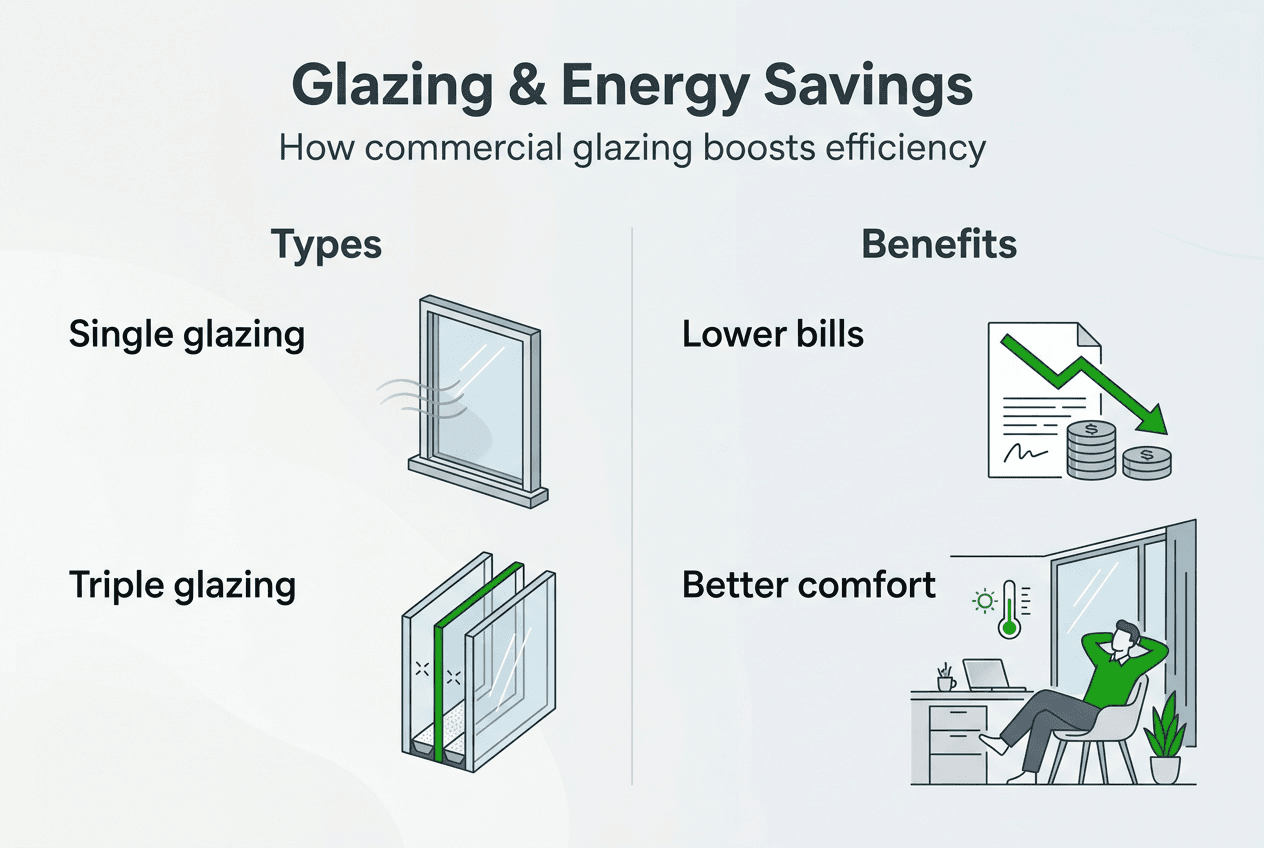
Energy-efficient glazing directly reduces your heating and cooling expenses. Buildings lose significant heat through windows, and upgrading from single to energy efficient double glazing can cut this loss by 60%. The investment pays back through lower energy bills, improved thermal comfort, and reduced carbon emissions. Understanding how double glazing reduces heat loss helps you make informed decisions about which specifications match your building’s needs and budget constraints.
Enhancing occupant wellbeing and productivity with glazing
Natural daylight through commercial glazing transforms workplace environments beyond simple illumination. Exposure to daylight regulates circadian rhythms, improving sleep quality and alertness during working hours. Employees near windows report higher job satisfaction and experience less eye strain than those in artificially lit spaces. Views of the outdoors reduce mental fatigue and provide psychological restoration during demanding tasks.
Commercial glazing designs optimise these benefits through several approaches:
- Maximising glazed area whilst controlling glare with tints or blinds
- Positioning windows to distribute daylight deep into floor plates
- Using high visible light transmittance glass to brighten interiors
- Incorporating clerestory windows or skylights for top lighting
- Specifying low-reflectance coatings to maintain clear exterior views
Research demonstrates measurable productivity gains from improved glazing. The World Green Building Council found that workplaces with abundant natural light and quality views boost employee performance significantly:
Increased natural light and views boost employee productivity by 15% and reduce absenteeism.
These improvements translate directly into business value. A 15% productivity increase in a 50-person office generates substantial annual returns that dwarf the glazing investment cost. Reduced sick days lower operational disruption and recruitment expenses. Better staff retention saves on training and maintains institutional knowledge.
Balancing daylight benefits with glare control requires thoughtful design. Position workstations perpendicular to windows rather than facing them directly. Install adjustable blinds or films that preserve views whilst cutting harsh sunlight. Consider automated shading systems that respond to sun position throughout the day. Specify glazing with appropriate visible light transmittance for your building’s orientation and latitude.
Compliance with window building regulations ensures your glazing meets minimum daylight and thermal performance standards. However, exceeding these baselines delivers the wellbeing and productivity advantages that create competitive workplaces. Investing in superior glazing specifications pays returns through human performance, not just energy savings.
Reducing noise pollution: acoustic advantages of commercial glazing
External noise pollution degrades commercial environments in predictable ways. Traffic rumble, construction activity, and urban bustle penetrate standard glazing, raising stress levels and reducing concentration. Employees in noisy offices make more errors, take longer to complete tasks, and report lower job satisfaction. Customer-facing businesses suffer when external noise interferes with conversations or creates an unprofessional atmosphere.
Acoustic glazing technology addresses these challenges through specialised construction. Laminated glass incorporates a plastic interlayer that dampens sound vibration between glass sheets. Asymmetric configurations use different glass thicknesses on each side to disrupt sound wave resonance. Insulated glass units with wider cavity spacing and dense gas fills further attenuate noise transmission. The combination creates a barrier that acoustic glazing can reduce noise by up to 40 decibels, transforming harsh urban soundscapes into comfortable work environments.
Typical noise reduction performance varies by glazing specification:
- Standard double glazing: 28-32 dB reduction
- Laminated double glazing: 35-38 dB reduction
- Acoustic laminated double glazing: 40-45 dB reduction
- Triple glazing with acoustic laminate: 45-50 dB reduction
These reductions make substantial differences to perceived noise levels. A 10 dB reduction cuts perceived loudness by half. Upgrading from standard to acoustic glazing can transform a noisy street-facing office into a space as quiet as a suburban residential area. The improvement enhances focus, reduces fatigue, and creates professional environments for client meetings.
Pro Tip: Always verify acoustic glazing carries independent certification for its stated performance rating, and ensure installers use acoustic seals and proper fitting techniques to achieve the full noise reduction potential.
Commercial properties near airports, railways, motorways, or industrial areas benefit most from acoustic glazing investment. However, even moderate urban noise levels justify the upgrade when employee productivity and wellbeing matter. Combining acoustic performance with thermal efficiency creates glazing systems that address multiple building challenges simultaneously. Explore acoustic noise reduction solutions to understand complementary approaches that work alongside glazing improvements.
Choosing and installing the right commercial glazing solutions
Selecting appropriate commercial glazing requires matching performance characteristics to your building’s specific needs and constraints. This comparison helps you evaluate options:
| Feature | Standard double | Low-e double | Triple glazing | Acoustic laminated |
| — | — | — | — |
| Thermal performance | Moderate | Excellent | Outstanding | Good |
| Acoustic performance | Basic | Basic | Good | Excellent |
| Cost (relative) | Low | Medium | High | Medium-high |
| Weight | Light | Light | Heavy | Medium |
| Best for | Budget retrofits | Energy efficiency | Premium builds | Noise control |
Low-emissivity coating types affect both performance and durability. Hard-coat low-e applications bond to the glass surface during manufacturing, creating durable finishes that withstand handling and cleaning in high-traffic commercial settings. Soft-coat low-e coatings apply after glass production, delivering superior thermal performance but requiring protection within sealed units. Gas fills between panes enhance insulation, with argon offering good performance at reasonable cost whilst krypton provides maximum efficiency in narrow cavities.
Follow this process to ensure successful glazing selection and installation:
- Assess your building’s primary needs: thermal efficiency, noise control, solar management, or combination priorities.
- Select glazing specifications that address these needs whilst fitting budget and structural constraints.
- Verify manufacturer specifications include whole-unit U-values, acoustic ratings, and solar heat gain coefficients.
- Hire certified installers with commercial glazing experience and request references from similar projects.
- Ensure comprehensive warranties cover both product performance and installation workmanship for minimum five years.
Pro Tip: Buildings with extensive south or west-facing glazing should prioritise solar control coatings that reduce heat gain by 40-60%, dramatically lowering cooling costs and preventing uncomfortable overheating during summer months.
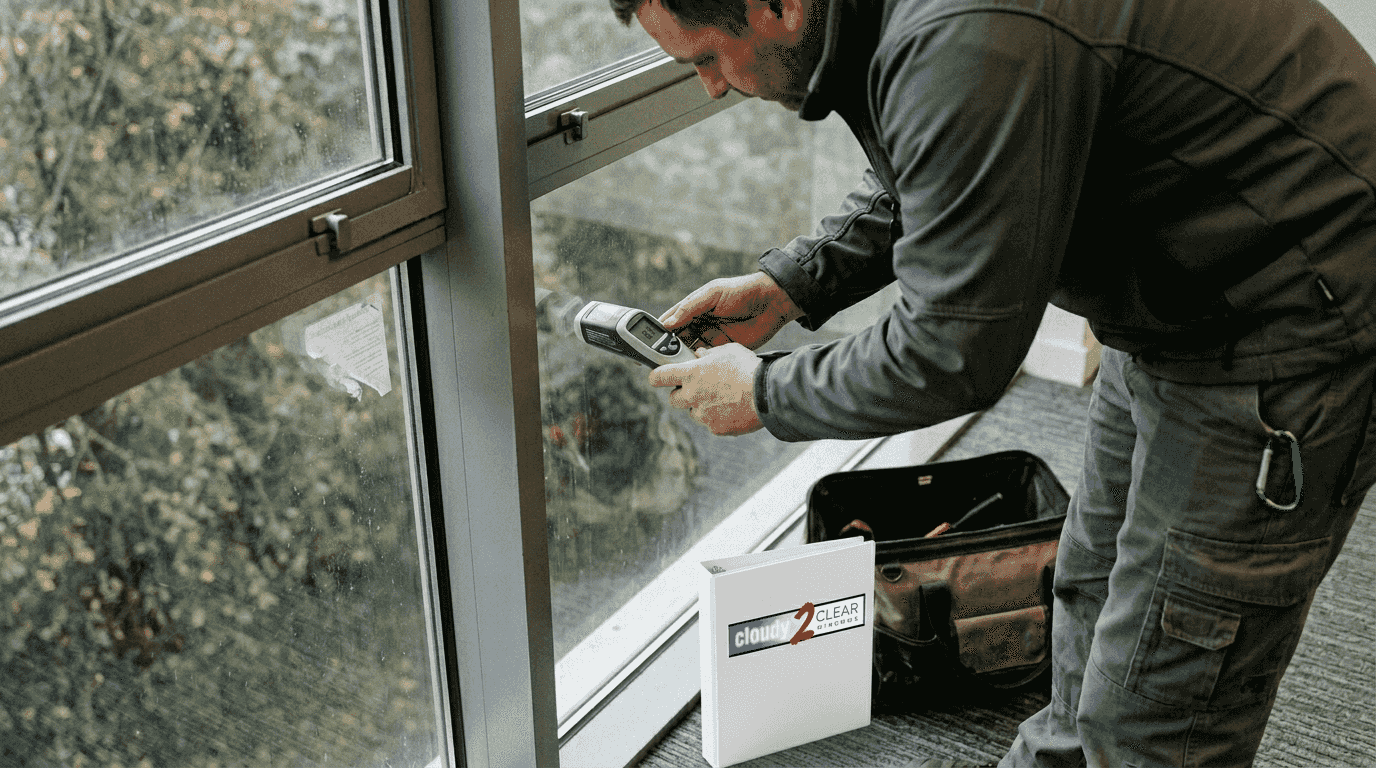
Installation quality determines whether your glazing achieves its specified performance. Proper installation and sealing are critical, as poor workmanship negates even the best glazing benefits. Common mistakes include inadequate weathersealing, incorrect glazing bead installation, thermal bridge creation at fixing points, and poor alignment causing air leakage. These errors reduce thermal performance, create condensation problems, and shorten glazing lifespan.
Understanding glazing installation cost factors helps you budget appropriately without compromising quality. Familiarise yourself with types of safety glass requirements for commercial applications, particularly ground-floor and high-traffic areas where building regulations mandate toughened or laminated specifications. Consult NFRC installation standards and solar control glazing advice to ensure your project meets industry best practices.
Explore expert commercial glazing services at Cloudy2Clear
Transforming your commercial property with advanced glazing requires expertise that extends beyond product knowledge to installation excellence. At Cloudy2Clear Windows, we have delivered commercial glazing repair and replacement solutions throughout England and Scotland since 2005, helping property managers achieve measurable improvements in energy efficiency, occupant comfort, and building performance.

Our experience with energy-efficient and acoustic glazing systems ensures you receive specifications matched precisely to your building’s requirements and budget. Whether you need thermal performance upgrades, noise control solutions, or comprehensive glazing replacement, we provide professional guidance through every decision. Explore our energy efficient double glazing guide to understand how modern glazing technology can reduce your operating costs whilst creating healthier, more productive workplaces. Contact us today for expert advice and professional installation that delivers lasting value.
Frequently asked questions
What types of commercial glazing improve energy efficiency the most?
Low-e triple glazing with argon or krypton fills delivers the best thermal performance, achieving U-values as low as 0.6 W/m²K. However, low-e double glazing offers excellent efficiency at lower cost for most commercial applications. The optimal choice depends on your building’s heating and cooling demands, budget, and structural capacity to support heavier units.
How does commercial glazing impact noise levels inside office buildings?
Acoustic laminated glazing reduces external noise by 40-45 decibels, cutting perceived loudness by more than half compared to standard windows. This transformation creates comfortable work environments even in noisy urban locations. The improvement enhances concentration, reduces stress, and creates professional spaces for client interactions.
Why is professional installation so important for glazing performance?
Poor installation creates air leakage, thermal bridges, and moisture problems that negate your glazing’s specified performance. Gaps around frames, incorrect sealing, and inadequate weatherproofing reduce thermal efficiency by 20-30%. Professional installers ensure proper fitting, comprehensive sealing, and correct alignment that delivers the full benefits of your glazing investment.
What role do solar control coatings play for commercial windows?
Solar control coatings reflect infrared radiation whilst allowing visible light through, reducing heat gain by 40-60% in buildings with high solar exposure. This prevents uncomfortable overheating, lowers air conditioning costs, and protects furnishings from UV damage. Buildings with extensive south or west-facing glazing benefit most from these specifications.
Can upgrading glazing really improve employee productivity?
Research demonstrates that improved natural light and views through quality glazing boost productivity by 15% and reduce absenteeism. These gains result from better circadian rhythm regulation, reduced eye strain, and psychological benefits of outdoor views. The productivity increase typically generates returns that exceed glazing costs within 2-3 years. Understanding double glazing energy efficiency helps you quantify both energy and human performance benefits.