Steamed up windows occur when warm, moist indoor air meets cold glass, causing water vapour to condense into droplets on the surface. This process, known technically as surface condensation, is one of the most common complaints in UK homes, particularly during the colder months from october through to march. Poor ventilation, high indoor humidity, and temperature differences between inside and outside are the three main drivers. The good news is that most cases respond well to simple, low-cost changes you can make today.
What causes windows to steam up inside UK homes?
Window condensation forms when indoor air holds more moisture than the cold glass surface can support. The air releases that moisture as water droplets the moment it touches the glass. Understanding where that moisture comes from is the first step to fixing the problem.
The most common sources of indoor moisture include:
- Cooking without lids. A boiling pan releases a significant amount of steam into the air within minutes.
- Showering and bathing. Hot showers generate large volumes of water vapour that spread quickly through an unventilated home.
- Drying clothes indoors. Hanging laundry on radiators or airers pushes moisture directly into the room air.
- Breathing. Each person in a home releases moisture overnight. Persistent overnight condensation is mainly caused by moisture from occupants and poor bedroom ventilation. That explains why bedroom windows are often the worst affected by morning.
- Poor ventilation. When humid air cannot escape, it builds up and settles against cold surfaces.
- Single glazing and poorly insulated frames. These allow glass surfaces to drop much closer to outdoor temperatures, making condensation far more likely.
Temperature fluctuations make the problem worse. Rooms that cool down significantly overnight create ideal conditions for moisture to settle on glass. Bedrooms with closed doors and no trickle vents are particularly vulnerable. If your home has older window frames with gaps or failing seals, cold air enters and chills the glass further, lowering the temperature at which condensation forms.
How to improve ventilation to prevent steamed up windows
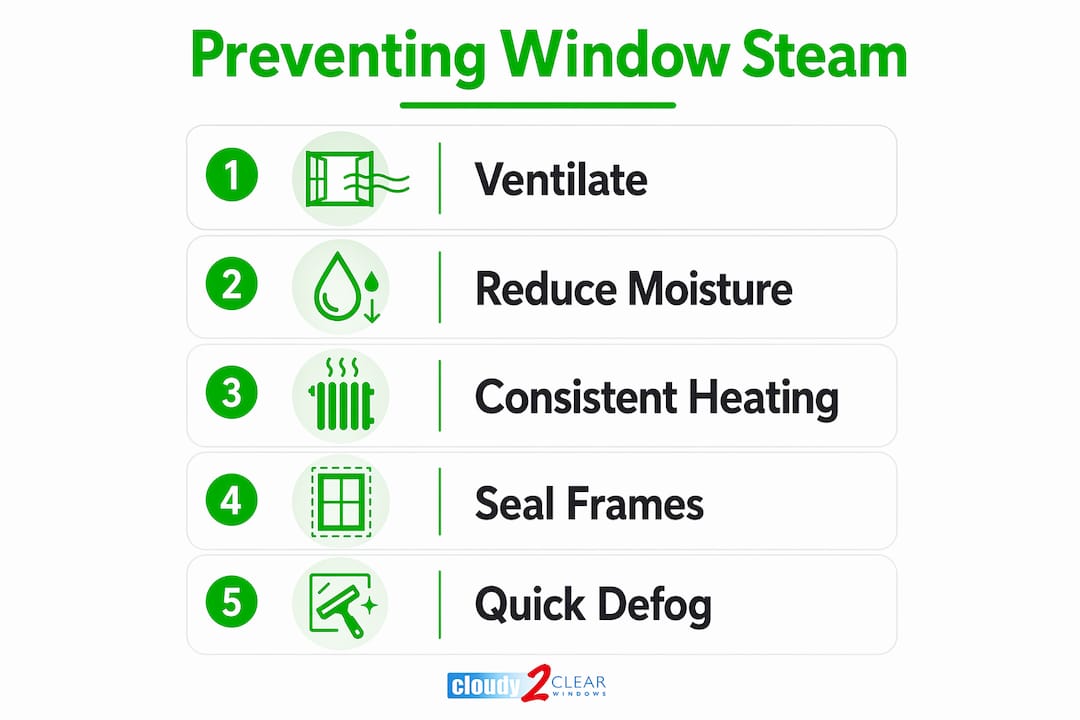
Ventilation is the single most effective tool for reducing window condensation. Moving moist air out of the home before it reaches cold glass breaks the cycle at its source.
- Open windows briefly each morning. Even 5–10 minutes of fresh air circulation reduces moisture buildup significantly. This is especially useful in bedrooms, where overnight breathing raises humidity levels.
- Keep trickle vents open. Trickle vents are the small slots built into modern window frames. Many homeowners close them to keep warm, but keeping them open allows a gentle, continuous exchange of air that prevents moisture from accumulating.
- Use extractor fans during cooking and showering. Run the fan for at least 15 minutes after you finish. This removes moisture before it spreads to other rooms.
- Leave internal doors open occasionally. Closed doors trap humid air in kitchens and bathrooms. Opening them allows air to circulate and moisture to disperse more evenly, reducing the concentration near cold glass.
- Check that air bricks and vents are not blocked. Furniture, insulation, or debris can obstruct these, reducing the natural airflow your home relies on.
For a more detailed daily routine, Cloudy2Clear Windows has published a step-by-step condensation guide that covers ventilation habits alongside other practical measures.
Pro Tip: Open the window in the kitchen or bathroom for just a few minutes while cooking or showering, rather than waiting until the room is already full of steam. Acting early removes moisture before it spreads through the rest of the house.
Managing indoor humidity and moisture sources
Reducing the amount of moisture you produce indoors is just as important as improving ventilation. Small behavioural changes have a measurable impact on how often your windows fog up.
- Avoid drying clothes indoors or on radiators. Indoor drying is one of the leading causes of high indoor humidity. Use a tumble dryer where possible, or dry clothes outside when the weather allows.
- Use lids on pans when cooking. A lid traps steam inside the pan rather than releasing it into the kitchen air.
- Close the bathroom door when showering. This contains moisture in one room, where the extractor fan can deal with it directly.
- Remove damp towels and wet laundry promptly. Leaving them in a room adds moisture to the air for hours.
- Consider a dehumidifier in problem areas. Dehumidifiers are effective in homes with limited ventilation or persistent condensation, particularly in poorly ventilated flats or rooms used for indoor drying.
The principle here is straightforward. Every litre of moisture you prevent from entering the air is one less litre that can settle on your windows. You do not need to make dramatic changes. Consistent small habits, applied daily, produce a noticeable reduction in condensation within a few weeks.
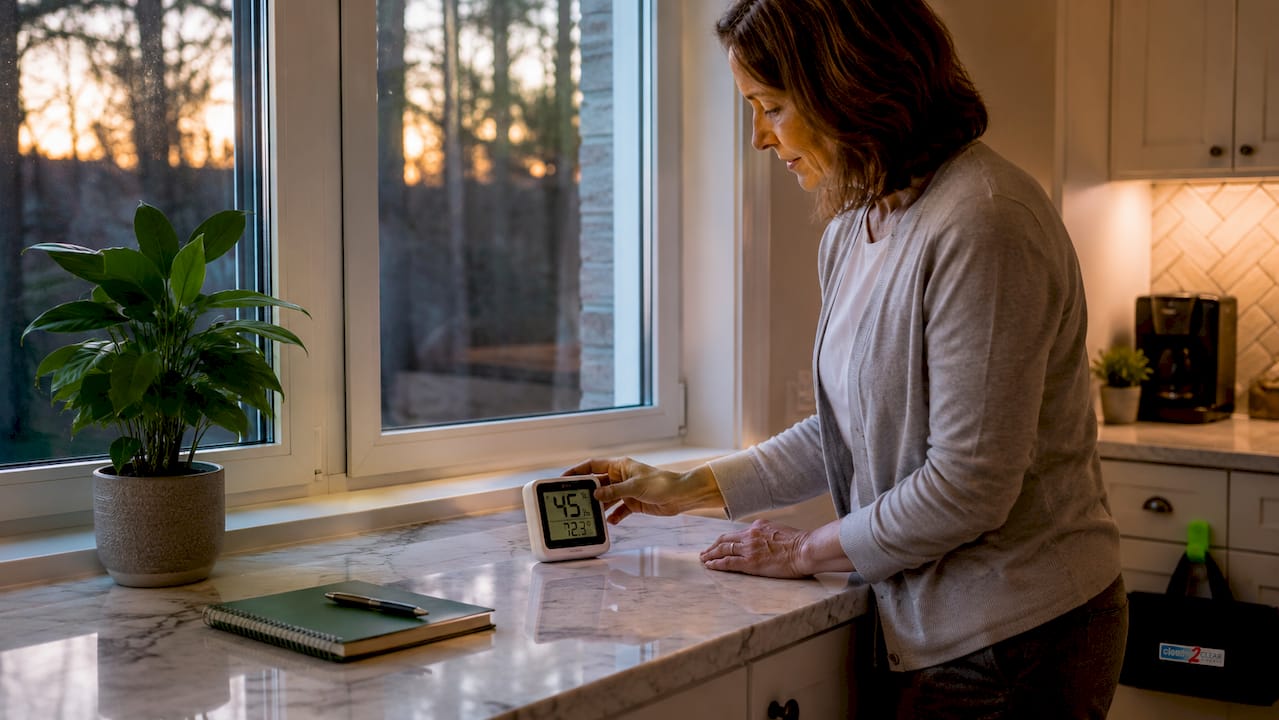
Pro Tip: Place a hygrometer (a simple humidity monitor, available from most hardware shops) in the rooms most affected by condensation. Aim to keep indoor humidity between 40% and 60%. If it regularly exceeds that range, you know exactly where to focus your efforts.
Maintaining consistent heating and sealing window frames
How you heat your home affects condensation as much as ventilation does. Steady, even room temperature reduces condensation more effectively than intermittent heating. When a room cools down sharply overnight and then heats up quickly in the morning, the glass surface spends more time below the dew point, which is the temperature at which moisture in the air turns to liquid.
The table below summarises the key structural and heating measures, along with their effect on condensation risk:
| Measure | How it helps | Difficulty |
|---|---|---|
| Consistent background heating | Keeps glass above dew point overnight | Low |
| Sealing gaps around frames | Blocks cold air ingress, warms glass surface | Low to medium |
| Replacing failed window seals | Restores insulation, removes cold spots | Medium |
| Fitting thermal curtains or blinds | Adds insulation layer without blocking airflow | Low |
| Upgrading to double or triple glazing | Significantly raises glass surface temperature | High |
A few practical points on each of these:
- Keep room temperature steady. A low background heat overnight, rather than switching heating off entirely, keeps surfaces warmer and reduces the risk of condensation forming.
- Use curtains or blinds for added insulation. Keep them open slightly at the bottom so air can still circulate around the glass. Trapping air between a closed curtain and the window can actually make condensation worse.
- Inspect and seal gaps around window frames. Sealing cracks around frames blocks cold air ingress and prevents the glass from cooling excessively. Use a silicone sealant or draught-excluding tape for a quick fix.
- Check window seals regularly. Failed or perished seals create cold spots on the glass that attract condensation. Replacing them is a straightforward repair that Cloudy2Clear Windows carries out as part of its double glazing service.
Good home insulation also plays a supporting role. A better-insulated home retains heat more evenly, which means glass surfaces stay warmer for longer.
Simple tricks and tools to defog windows quickly
When condensation has already formed, you need a fast way to clear it and protect the glass and frame from moisture damage.
- Wipe windows down each morning. Removing moisture daily prevents mould growth and protects window frames and paintwork from damp-related damage. A microfibre cloth works well and leaves no streaks.
- Use a window vacuum. These handheld devices suck up condensation quickly and are particularly useful on large panes or in rooms with heavy overnight moisture.
- Apply shaving foam to the glass. A thin layer of shaving foam, buffed off with a clean cloth, leaves an invisible film on glass that stops water droplets from clinging to the surface. It is a temporary measure, but it works well between deeper cleaning sessions.
- Monitor humidity with a hygrometer. Placing one in each affected room helps you identify which spaces need more ventilation or heating attention.
- Consider professional glass replacement if condensation appears between panes. Misting between the two panes of a double-glazed unit means the sealed unit has failed. No amount of wiping or ventilation will fix this. It requires a professional repair or replacement.
For guidance on preventing condensation in double glazing specifically, Cloudy2Clear Windows covers the topic in detail, including when a repair is the right call versus a full replacement.
Pro Tip: Rub a small amount of washing-up liquid onto the glass with a damp cloth, then buff it dry. Like shaving foam, it creates a thin barrier that reduces how quickly moisture clings to the surface. It is a useful daily habit during the winter months.
What I have learned from years of dealing with condensation in UK homes
After nearly two decades working with homeowners across the UK, the pattern I see most often is this: people focus on the symptom rather than the cause. They wipe the windows every morning, which is the right thing to do, but they never address why the moisture is there in the first place.
The homes with the worst condensation problems are almost always the ones where heating is switched off overnight and clothes are dried on radiators. Those two habits alone create conditions that no amount of wiping can fully overcome. When we advise clients to keep a low background heat running and move laundry outside or to a tumble dryer, the improvement is usually visible within a week.
I also think the role of trickle vents is underestimated. Homeowners close them because they feel draughty, which is understandable. But a small, controlled flow of fresh air is far less damaging than the mould and frame rot that follows persistent condensation. Keeping trickle vents open, even in winter, is one of the simplest and most effective changes you can make.
Finally, if you see misting between the panes of a double-glazed unit, do not delay getting it assessed. That is a failed seal, and it will not improve on its own. Early repair is always cheaper than leaving it until the frame or surrounding wall is affected by damp.
— Cloudy2Clear Windows
When to call in professional help for persistent condensation
If you have tried the ventilation and humidity measures above and condensation keeps returning, the problem may lie with the windows themselves.

Cloudy2Clear Windows has been repairing and replacing double glazed units since 2005, helping homeowners across the UK restore clarity and seal integrity without the cost of a full window replacement. Whether you are in Milton Keynes, Watford, Oxford, Leicester, or further afield, the team offers free assessments and honest advice on whether a repair or a glass replacement is the right solution. Failed sealed units, perished seals, and cold-spot frames are all straightforward repairs when caught early. Get in touch with Cloudy2Clear Windows for a free quote and take the first step towards clearer, drier windows.
FAQ
Why do my windows steam up every morning?
Overnight condensation forms because breathing releases moisture into a closed room, and cool glass surfaces cause that moisture to settle as water droplets by morning. Improving bedroom ventilation, such as leaving a trickle vent open, reduces this significantly.
Does drying clothes indoors make window condensation worse?
Yes. Drying clothes indoors or on radiators is one of the leading causes of high indoor humidity, which directly increases condensation on windows. Using a tumble dryer or drying clothes outside removes this moisture source entirely.
What is the quickest way to defog windows?
Wipe the glass with a microfibre cloth to remove moisture immediately, then run an extractor fan or open a window briefly to reduce humidity in the room. Applying a thin layer of shaving foam and buffing it off creates a temporary barrier that slows future fogging.
Should I keep my heating on overnight to prevent condensation?
A low, steady background temperature overnight is more effective than switching heating off entirely. Consistent heating keeps glass surfaces above the dew point, which is the temperature at which moisture in the air turns to liquid on cold surfaces.
When does condensation mean my double glazing needs replacing?
Condensation on the inside surface of a room is a ventilation and humidity issue. Condensation appearing between the two panes of a double-glazed unit means the sealed unit has failed and requires professional repair or replacement.
Recommended
- Steamed-Up Double Glazing? Here’s How to Get the Right Repair Without Replacing Your Windows – Cloudy2Clear Windows
- Steamed-Up Double Glazing: Why Unit Replacement Beats Full Window Replacement – Cloudy2Clear Windows
- What causes cloudy windows: a homeowner’s guide
- Why windows become cloudy and how to restore clarity