Scotland’s window safety regulations require safety glazing in impact-risk locations, safe cleaning access for glazing above 4 m, fire-proximity controls near boundaries, and security measures for ground-floor windows. The rules sit within the Building (Scotland) Regulations 2004, Schedule 5 Part 4, and the Scottish Government Technical Handbooks explain precisely how to meet each functional standard. The two sections you need most are Section 4.8 (danger from accidents, including safe cleaning) and Section 4.13 (security).
The single most useful thing you can do right now: measure the height of every window above adjacent ground level, measure the distance from each window to your nearest boundary, and note whether your planned work replaces the frame or the glass only. Those three facts determine which rules apply and whether you need a building warrant.
Three quick actions before you read further:
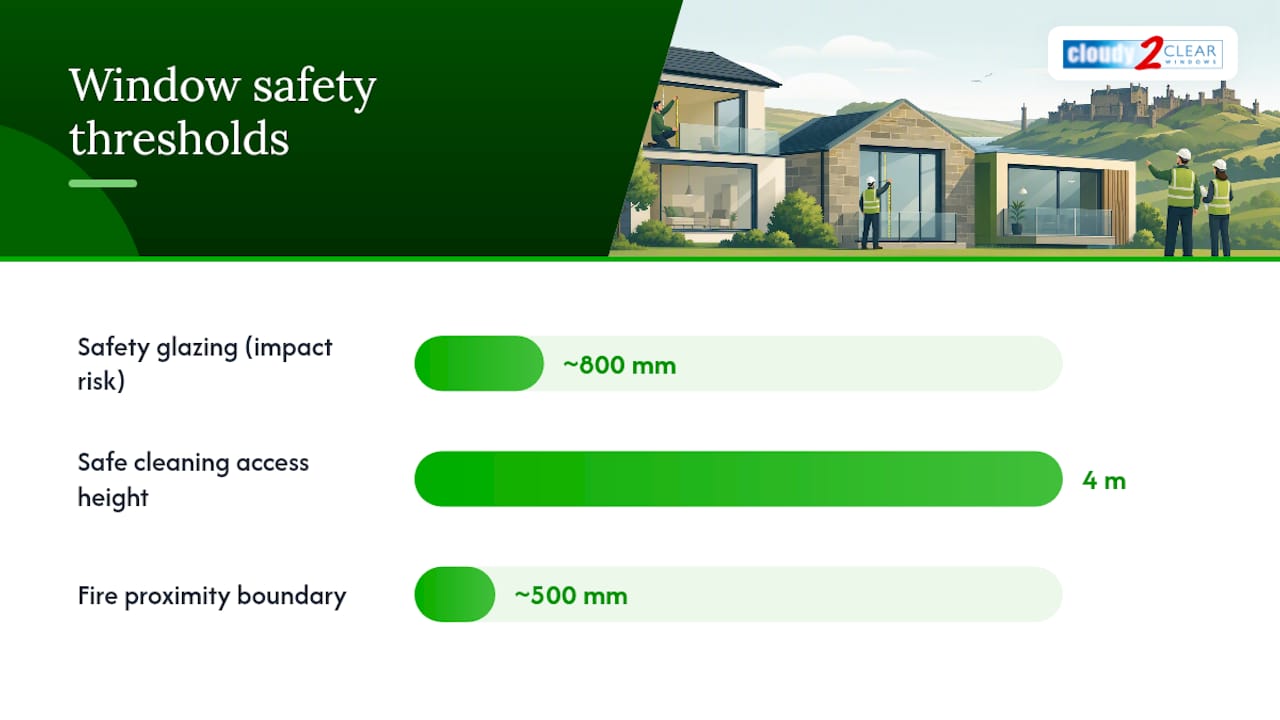
- Check whether any glazing sits within 800 mm of floor level — safety glass is required there.
- Measure the distance from each window to the nearest boundary — anything close to 500 mm triggers fire-resistance calculations.
- Contact your local authority Building Standards team to confirm whether your project is a type 20 full replacement or a glass-only repair.
What do Scotland’s building standards actually cover for windows?
The Building (Scotland) Act 2003 gives Scottish Ministers the power to set functional standards. Those standards are written into the Building (Scotland) Regulations 2004, and the Technical Handbooks translate each functional standard into practical guidance. Critically, the Handbooks are not optional commentary — they are the recognised route to demonstrating compliance.
Section 4 of the Handbooks covers safety. Within it, Standard 4.8 addresses danger from accidents (including safe glazing and cleaning access) and Standard 4.13 covers security. Fire spread is handled separately in Section 2.
Which edition applies to your project? Compliance is judged against the Handbook edition current at the date your building warrant application is submitted, or at the date work commences for projects that do not require a warrant. Getting this wrong is a common source of dispute, so confirm the edition with your Building Standards officer before work starts.
The scope distinction that catches most people out is the difference between repair, glass-only replacement, and full frame replacement. Replacing glass within an existing frame is generally treated differently from replacing the entire window unit. A full frame replacement is classified as type 20 works and must meet current standards in full. Like-for-like retention may be permitted for certain historic buildings, but you must confirm this with the local authority and document the case before proceeding.
What are the key technical thresholds you must meet?
Safety glazing
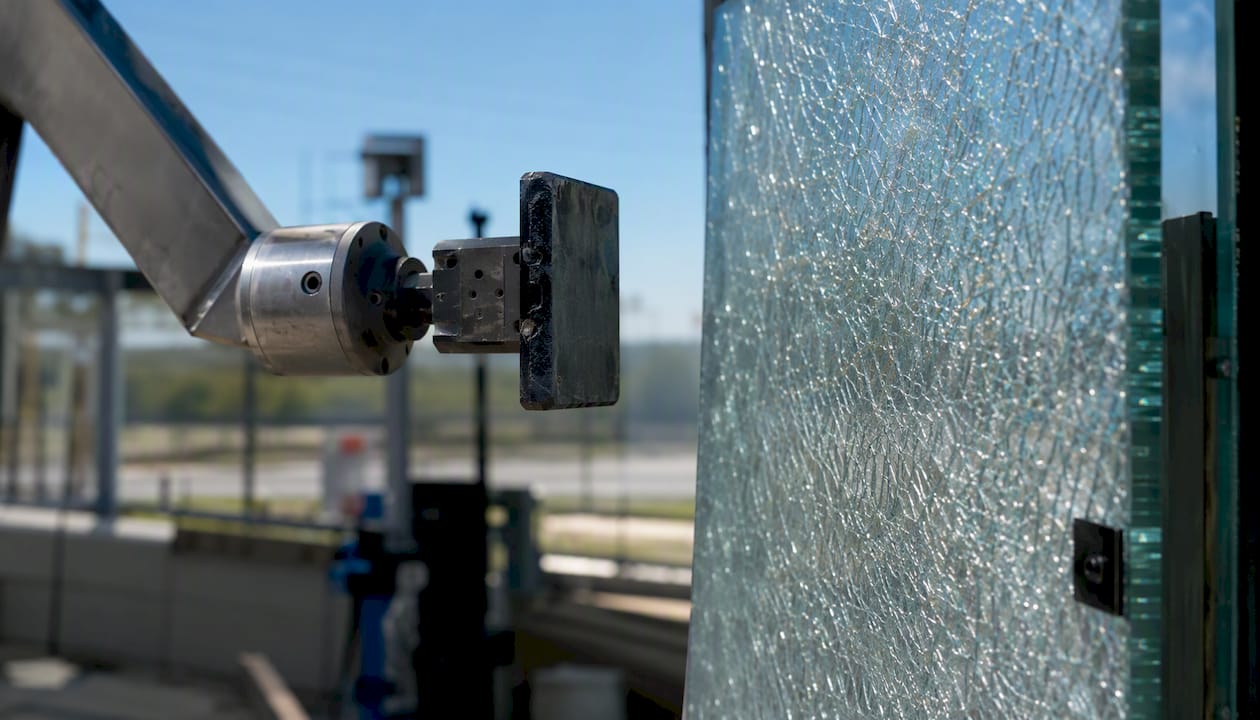
Toughened or laminated safety glass is required wherever glazing poses an impact risk. The most common trigger is glazing within approximately floor level, including low-level panels in doors and sidelights. The glass must break safely if struck, reducing the risk of serious laceration. Relevant product standards include BS EN 12600 (pendulum impact test for flat glass) and BS 6206 (impact performance for safety glazing materials).
Safe cleaning and access
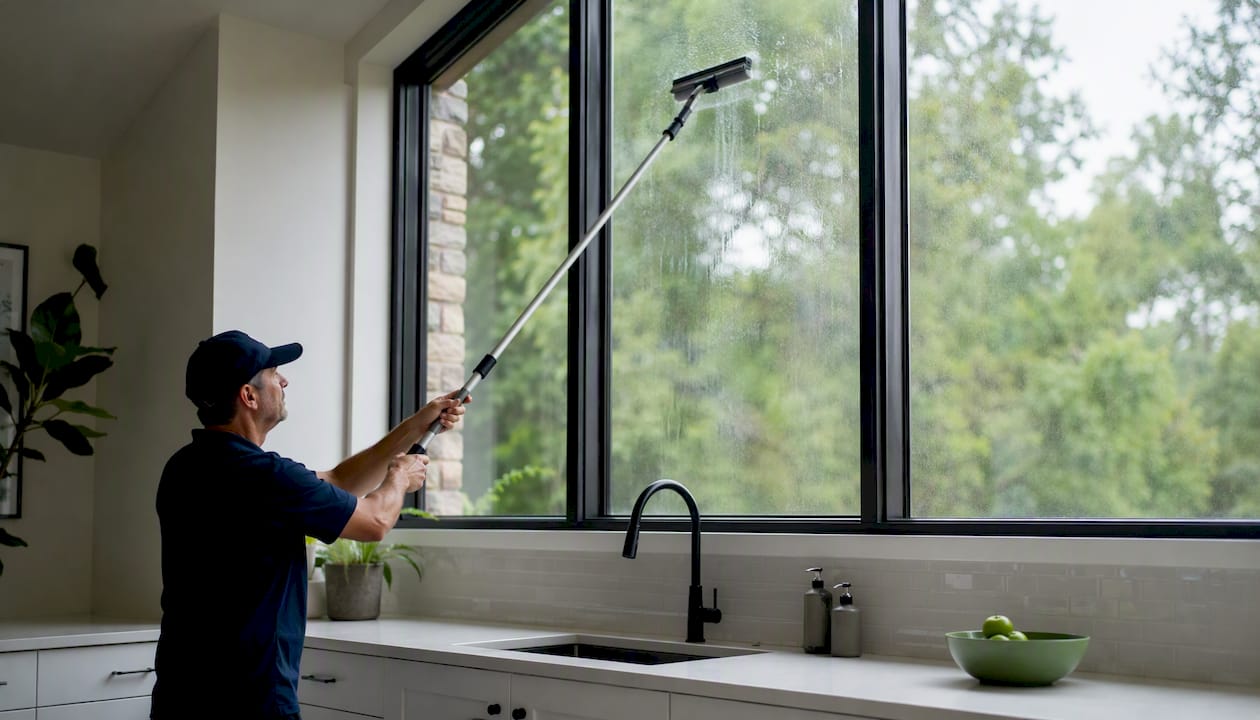
Standard 4.8 requires that both faces of any window or rooflight positioned more than 4 m above adjacent ground or floor level must be cleanable without the cleaner sitting or standing on the sill. A practical design check is the “reach test”: the cleaner must be able to clean the full pane while standing firmly on the internal floor. At two storeys or more, if cleaning is done from inside, guarding to at least a safe height is required to prevent falls. This requirement is frequently overlooked on upper-floor extensions and dormer windows.
Fire proximity
Section 2.6 of the Technical Handbook introduces the concept of “unprotected area.” Windows form part of the external wall calculation, and windows positioned close to a boundary can affect the required fire resistance of the wall and the permitted spread of flame to neighbouring buildings. If your window sits close to a boundary, you may need to upgrade the fire resistance of the surrounding wall or reposition the opening.
Security
Standard 4.13 requires that windows and glazing at ground-floor level, or otherwise easily accessible, are designed and installed to deter unlawful entry. The standard places equal weight on fixings and installation method as on the glass or frame specification. A high-quality window fitted poorly into a weak surround does not meet the standard. Specifying a product tested to PAS 24 (enhanced security performance for doors and windows) is a recognised way to demonstrate compliance, but correct fixing into sound structure remains critical.
Ventilation and security must be balanced. Section 3.14 notes that windows providing background ventilation must not compromise security when left partially open. Trickle ventilators are often the practical solution, allowing controlled airflow without leaving a window ajar.
| Requirement | Trigger | Key threshold |
|---|---|---|
| Safety glazing | Impact-risk location | Within ~800 mm of floor level |
| Safe cleaning access | Window height | Above 4 m from adjacent ground |
| Internal guarding | Upper-floor cleaning from inside | safe height guarding required |
| Fire proximity | Distance to boundary | ~500 mm triggers calculations |
| Security | Ground floor or accessible | Fixings and product both assessed |
When do the regulations apply to your project?
The key question is whether your project triggers the Building (Scotland) Regulations at all, and if so, which edition of the Handbook governs it.
A building warrant is required for most structural work and for full window replacements. The date you submit the warrant application fixes the applicable Handbook edition. For works that do not require a warrant, compliance is judged from the date work commences, so starting promptly after confirming the scope is in your interest.
Glass-only repairs — replacing a failed sealed unit within an existing, sound frame — are generally treated as maintenance rather than type 20 works, and they do not typically trigger a full compliance assessment. However, if the frame is damaged, corroded, or being replaced at the same time, the entire window becomes a type 20 replacement and full standards apply. This distinction matters enormously in practice: many homeowners assume a glass swap is always minor work, only to find the local authority treats it as a full replacement because the frame was also disturbed.
Contact your local Building Standards officer early. A brief conversation about project scope before work starts can save significant rework costs later.
Who enforces the rules and how is work approved?
Local authority Building Standards officers are the primary enforcement body. They check plans, issue building warrants, carry out site inspections, and issue completion certificates. Without a completion certificate, you may face difficulties when selling the property.
Scotland also operates an Approved Certifier system. An Approved Certifier of Design can certify that a design meets the functional standards, and an Approved Certifier of Construction can certify that work has been built to the approved design. Using an Approved Certifier can speed up the process, particularly on commercial projects or where a local authority has a backlog. Your local Building Standards team can advise whether this route is appropriate for your project.
Secured by Design is a voluntary police-backed scheme that sets security standards for windows and doors. Meeting Secured by Design criteria is a useful trust signal and may satisfy the security intent of Standard 4.13, but it is not a regulatory substitute. Always confirm with your local authority what evidence they require.
Key enforcement points:
- Completion certificates are issued by the local authority after a satisfactory final inspection.
- Approved Certifiers operate under a licensing scheme administered by approved bodies.
- Failure to obtain a building warrant where one is required is a criminal offence under the Building (Scotland) Act 2003.
Your practical compliance checklist
Follow these steps before and during any window project in Scotland.
- Measure glazing heights. Record the height of each window above adjacent ground or floor level. Flag any above 4 m for cleaning access review.
- Measure boundary distances. Record the distance from each window to the nearest boundary. Flag anything within 500 mm for fire-resistance review.
- Identify impact-risk glazing. Note any glazing within 800 mm of floor level. Confirm it is toughened or laminated safety glass.
- Classify the work scope. Decide whether the project is glass-only, frame replacement, or full unit replacement. Confirm type 20 status with your Building Standards officer if unsure.
- Submit a building warrant application (where required) before work starts, and note the submission date as the applicable Handbook edition date.
- Collate documents. Gather product datasheets (including BS EN 12600 or PAS 24 test evidence), fixing details, and an installation statement from the installer. Absence of these documents commonly delays sign-off.
- Book a final inspection with the local authority and retain the completion certificate.
Pro Tip: When describing your project scope to the local authority, specify clearly whether the frame is being retained or replaced. Phrasing it as “glass-only replacement within existing frame” versus “full window unit replacement including frame” determines which standard edition and which compliance route applies — and getting this right at the outset avoids a reclassification mid-project.
For commercial properties, the window safety tips for businesses checklist covers additional obligations relevant to property managers.
What do installers and owners frequently get wrong?
FENSA does not apply in Scotland. FENSA is an England and Wales competent person scheme. Scotland has its own building warrant and Approved Certifier system. If an installer quotes FENSA registration as evidence of Scottish compliance, that is a red flag.
Assuming glass-only work never triggers standards is another common mistake. As explained above, disturbing the frame during a glass replacement can reclassify the job as type 20 works. Confirm scope in writing before work begins.
Safe cleaning requirements are routinely overlooked on upper-floor extensions and dormer conversions. Designers focus on the glazing specification and miss the reach test entirely, only for the Building Standards officer to require guarding at the inspection stage. For child safety considerations, the child-safe windows guide covers guarding and opening restrictors in more detail.
Security failures are rarely about the glass. Correctly specifying a PAS 24 window and then fixing it into a rotted timber surround with undersized screws negates the security performance entirely. Standard 4.13 is explicit: installation fixings are part of the compliance assessment.
Where can you find official guidance and who should you contact?
- Scottish Government Technical Handbooks (Sections 4.8 and 4.13 for safety and security; Section 2.6 for fire): Gov
- Local authority Building Standards: each council publishes its own submission guidance and contact details. Edinburgh’s planning and building pages are at Edinburgh; search “[your council name] building standards” to find your local team.
Your immediate next steps:
- Measure, photograph, and record all relevant dimensions before any work starts.
- Confirm in writing with your Building Standards officer whether the project is type 20.
- Decide whether to submit a building warrant application or appoint an Approved Certifier.
- Retain all completion certificates and product datasheets after the work is finished.
A note from Cloudy2Clear Windows on what we see on site
The compliance gaps we encounter most often are not obscure technical failures. They are straightforward oversights: safety glass that has been replaced with standard float glass during a previous repair, upper-floor windows with no guarding provision, and ground-floor units fixed with too few fixings into a frame that has softened over time. These are all correctable, but they are far easier to address before a Building Standards inspection than after.
When Cloudy2Clear Windows carries out a compliance check or a glass replacement, we assess the existing installation against current standards, supply product datasheets and fixing details as standard, and flag any issues that would prevent sign-off. Our window installation standards guide explains what a compliant installation record looks like.
How Cloudy2Clear Windows can help you meet Scottish window standards
Compliance work does not have to be complicated when you have the right team. Cloudy2Clear Windows offers glass-only repairs, full double glazing replacements with compliant safety glazing, hardware upgrades (locks, hinges, and fixings), and on-site compliance checks for residential and commercial properties. Every job comes with product datasheets and installation records, so your Building Standards officer or Approved Certifier has everything needed for sign-off.

To book a survey or discuss your project scope, contact Cloudy2Clear Windows Monday to Friday, 8:30am to 6:30pm. Bring your measurements and a note of whether the frame is being retained or replaced — that single detail shapes the entire compliance conversation. Visit the double glazing replacement service page to get started.
This article is general information, not a substitute for advice from a qualified lawyer. Consult a qualified legal professional about your own circumstances before acting on anything here.
Sources
FAQ
Does FENSA apply to window replacements in Scotland?
No. FENSA is an England and Wales competent person scheme and has no legal standing in Scotland. Window replacements in Scotland are governed by the Building (Scotland) Regulations 2004 and the Technical Handbooks; compliance is demonstrated through the building warrant or Approved Certifier route.
When does replacing a window require a building warrant in Scotland?
A building warrant is required when the work constitutes a type 20 full replacement, meaning the frame is being replaced rather than just the glass. Glass-only repairs within a sound existing frame generally do not require a warrant, but you should confirm the classification with your local authority Building Standards team before starting.
What is the 4-year rule in Scotland for building work?
Scotland does not operate the same four-year enforcement rule that applies in England. Under the Building (Scotland) Act 2003, local authorities retain enforcement powers for a longer period, and unauthorised work can be required to be removed or remedied. Always obtain the correct approvals before work begins rather than relying on a time-based exemption.
What glazing standards apply to windows near floor level in Scotland?
Glazing within approximately 800 mm of floor level in a critical location must be safety glass, typically toughened glass tested to BS EN 12600 or laminated glass. This applies to low-level panels, door sidelights, and any other glazing where a person could impact the pane if they fell or stumbled.
Do security requirements in Scotland cover fixings as well as the glass?
Yes. Standard 4.13 explicitly includes installation fixings as part of the security assessment. A window that meets PAS 24 as a product but is fixed inadequately into the surrounding structure does not satisfy the standard.