Windows are one of the most exploited entry points in residential burglaries, yet they rarely receive the same attention as front door locks or alarm systems. Following clear home window security steps can close that gap and significantly reduce your risk. This guide walks you through a structured approach: assessing your vulnerabilities, upgrading your hardware and glass, adding smart detection, and keeping everything in working order. Whether you live in a Victorian terrace or a modern new-build, these steps apply directly to your home.
Assessing your windows for security weaknesses
Before you spend a penny on upgrades, you need to know exactly what you are working with. A thorough home security assessment of your windows takes less than an hour and will tell you where to focus your efforts first.
Work through these steps methodically:
- Walk the perimeter of your home. Look at every window from outside. Which ones are hidden by hedges, fences, or poor lighting? These are your highest-risk windows because a burglar can work at them without being seen.
- Test every lock by hand. Push and rattle each window. A surprising number of window latches offer very little resistance. If you can create movement in a locked window, so can someone with a screwdriver.
- Inspect the glass. Single glazing, older double glazing with seal failure (the cloudy or misted look), and any cracked panes all present weak points. Standard glass can be broken completely in under two seconds, so condition matters.
- Check the frames. Wooden frames with rot, warped uPVC, or loose aluminium sections are a problem. Even the best lock fails if the frame around it gives way under pressure. Learning why window frames matter to overall security is often the step homeowners skip.
- Prioritise your list. Ground-floor windows, basement windows, and any window hidden from the street or neighbouring properties should sit at the top of your upgrade list. Prioritising vulnerable windows and reassessing every six months is good practice to keep your security current.
Pro Tip: Do your walk-around after dark with a torch. Shadows and blind spots become immediately obvious, and you will often spot lighting gaps you never noticed in daylight.
Step-by-step window security upgrades
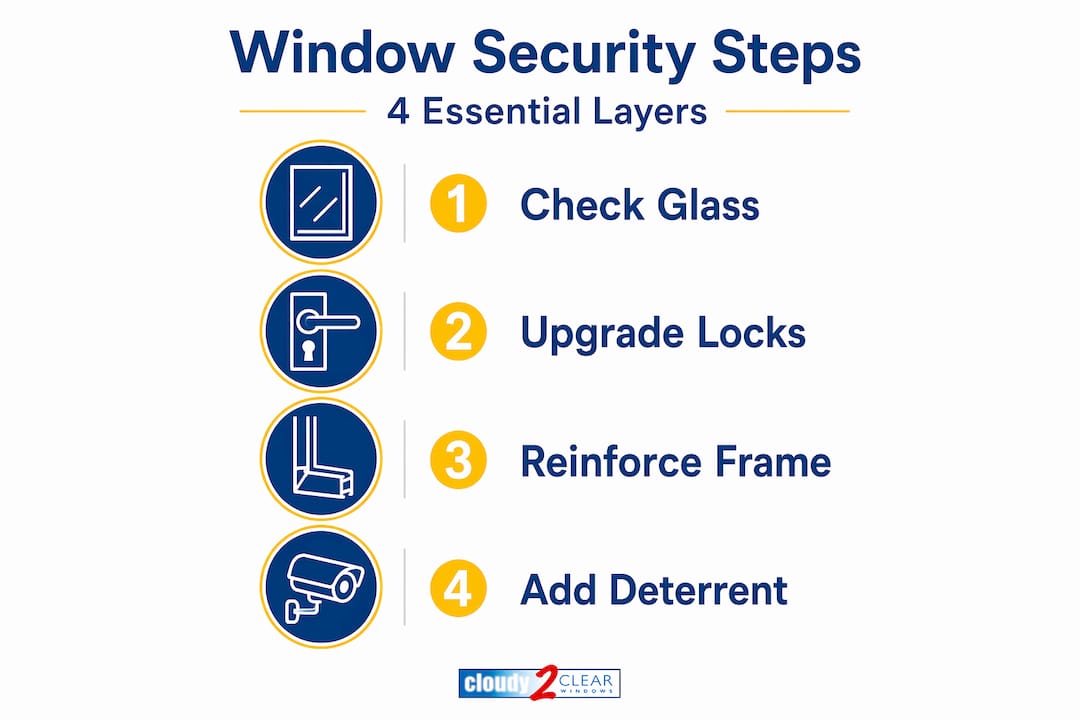
Once you know your weak points, it is time to act. Effective window security requires addressing four layers: the glass, the locks, the frame, and the detection. Skipping any one of them leaves a gap that a determined burglar can exploit.
Upgrading your locks
The standard latch fitted to most windows is not enough on its own. These additional lock types make a real difference:
- Pin locks. You drill a downward-angled hole through the inner sash into the outer frame and drop a steel pin in. They are cheap, simple, and highly effective. Pin locks prevent opening even after the original latch has been defeated.
- Keyed sash locks. These bolt-style locks require a key to release and are far more resistant to forced entry than push-button latches.
- Track bars for sliding windows. A length of steel bar placed in the track physically prevents the window from sliding open, even if the latch is bypassed.
Pro Tip: Drill a second hole at a partial-open position so the pin can sit there. This ventilation-position lock allows airflow while keeping the window secure, which matters on warmer nights when you need air but still want protection.
Strengthening the glass
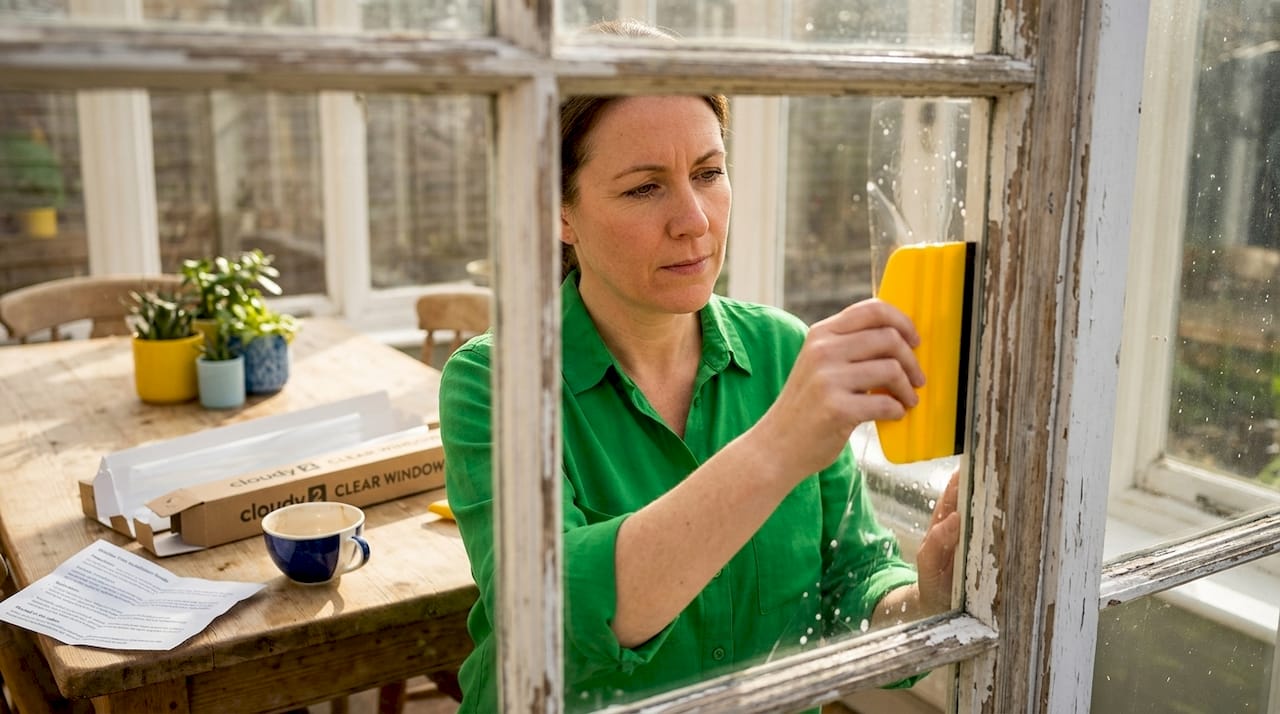
Replacing glass is not always necessary, but reinforcing it is often a smart move. Security film holds shattered glass together after impact, making it noisier and significantly slower to breach. It is applied directly to existing panes and costs far less than replacement. For windows you are already planning to upgrade, look at the right glass options for your property. Laminated glass bonds two panes with an interlayer and is considered a strong choice for ground-floor windows.
Reinforcing frames and adding physical barriers
Frame integrity is the foundation. Glass or lock upgrades are genuinely ineffective if the surrounding frame can be forced away from the wall. Check for rot, gaps, or loose fixings and repair or replace problem frames before adding other security measures.
Where appropriate, window bars or security grilles add a physical barrier that no amount of lock-picking can bypass. However, bars must be anchored into structural wall studs or masonry, not just the window frame itself, otherwise they pull out under load. On any window in a sleeping room, fit bars with a quick-release mechanism for emergency egress. This is not optional. It is a basic safety requirement.
Here is a quick comparison of the main upgrade options:
| Upgrade | Cost level | Best suited for | Key consideration |
|---|---|---|---|
| Pin locks | Low | Sash and casement windows | Easy DIY installation |
| Keyed sash locks | Low-medium | Timber sash windows | Requires key management |
| Security film | Medium | Any existing pane | Does not replace damaged glass |
| Laminated glass | Medium-high | Ground-floor windows | Professional fitting advised |
| Window bars | Medium-high | High-risk or hidden windows | Must have egress release |
Community break-in reports back this up. Reinforcing aluminium frames and adding burglar bars are among the most consistently recommended responses when organised break-in patterns emerge in a neighbourhood.
Integrating technology: sensors and deterrents
Physical upgrades are the foundation, but technology adds a layer of early detection that changes the outcome of an attempted break-in. A window alarm system does not just alert you; it creates noise and commotion that most burglars are not willing to risk.
The main sensor types worth knowing about are:
- Magnetic contact sensors. These are the most common window sensors. One part sits on the frame, the other on the moving sash. Contact sensors detect open, close, and tilt movements by measuring the separation and orientation of the magnet. When the window moves unexpectedly, the alarm triggers.
- Glass-break sensors. Placed on walls or ceilings near windows, these pick up the specific acoustic frequency of breaking glass. They work even if an intruder cuts through a pane rather than forcing the frame open.
- Smart lighting. Motion-activated lights around ground-floor and hidden windows are one of the most cost-effective deterrents you can add. A burglar working in sudden bright light is a visible burglar.
- Cameras. Position cameras to cover the approach to vulnerable windows, not just the window itself. Footage of someone scoping out a window is far more useful than footage of a hand already inside.
Wireless magnetic sensors trigger alerts when the gap between sensor parts exceeds roughly 6mm, sending notifications to a control panel or monitoring station. Make sure any sensors you buy are compatible with your existing alarm system before purchasing.
Pro Tip: Sensor placement matters as much as sensor quality. A poorly aligned sensor causes nuisance alarms from normal vibration, which leads homeowners to disable them entirely. Follow the manufacturer’s alignment guide carefully and test before relying on it.
Integrating your sensors into a monitored alarm system, rather than a standalone sounder, means that even if you are asleep or away from home, a response is triggered. That distinction is worth paying for.
Verifying and maintaining your window security
Security measures degrade over time. Locks seize up, film peels at the edges, sensor batteries drain, and the bush you planted last year has now grown tall enough to hide a window you thought was visible from the street. Regular checks keep your protection real rather than just theoretical.
Follow this schedule to stay on top of things:
- Monthly. Test all window sensors by opening each protected window and confirming the alarm triggers. Replace any batteries showing a low-power warning on your control panel.
- Every three months. Work through every window lock by hand. Apply a small amount of lubricant to any that feel stiff. A stiff lock is one that might not fully engage next time you close the window in a hurry.
- Every six months. Reassess your windows and the surrounding landscape with fresh eyes. Check security film edges for peeling or bubbling. Trim back any vegetation that has grown to shield a window from view. Check external lighting is still angled correctly.
- After any property work. If you have had building work, a new extension, or changes to fencing and gates, reassess your window security from scratch. New blind spots or structural changes can invalidate your previous security setup.
Pro Tip: Keep a simple written checklist on your phone or pinned inside a kitchen cupboard. Noting the date of each check takes ten seconds and means you will always know when something was last tested, rather than guessing.
Reviewing our how to secure your home guide alongside your regular checks gives you a broader perspective on where windows fit within your overall home security solutions.
What experience has taught me about window security
After years of working on windows across the UK, I have seen the same pattern repeat itself. Homeowners invest in a new lock after a scare, feel reassured, and assume the job is done. What they often miss is that the lock is only as good as the frame holding it and the glass beside it.
I have walked into properties where a perfectly good multi-point lock was fitted into a rotting wooden frame. One firm shoulder and the whole thing would have given way. The lock was never the weak point. The frame was.
My honest view is that most homeowners underestimate glass reinforcement and overestimate the deterrent value of locks that are visible from outside. A burglar does not pick your lock. They break the glass beside it or force the frame. Applying security film to existing panes is one of the highest-value, lowest-cost steps I consistently recommend, and it is the one most people skip because it is not as obvious as fitting a new lock.
Layering physical upgrades with sensors and smart lighting is where you get real protection. Neither alone is as effective as both together. And none of it matters if you are not checking it regularly.
— Cloudy2Clear Windows
How Cloudy2Clear Windows can help

If your window assessment has turned up damaged frames, failed double glazing seals, or locks that need replacing, professional repair is the most reliable way to address those vulnerabilities. Cloudy2Clear Windows has been repairing and upgrading double-glazed windows across the UK since 2005, with local teams who understand the window types common to homes in your area.
Whether you need broken glass repaired, frames reinforced, or locks replaced, our teams in Milton Keynes, Watford, Bury St Edmunds, and Oxford are ready to help. We work around your schedule and always aim to leave your windows more secure than we found them.
FAQ
What are the most effective home window security steps?
The most effective approach combines strong locks, reinforced glass or security film, sound frame integrity, and window sensors connected to a monitored alarm. Addressing all four layers together provides significantly better protection than any single measure alone.
How do window contact sensors work?
Magnetic contact sensors work by detecting the separation between two parts: one fixed to the frame, one to the moving window. When the window opens unexpectedly, the gap triggers an alert to your alarm panel or monitoring service.
Can security film really prevent a break-in?
Security film will not stop a determined attacker indefinitely, but it holds broken glass together and slows forced entry considerably. The added noise and time required to breach a filmed window deters most opportunistic burglars who want a quick, quiet entry.
How often should I test my window locks and sensors?
Test sensors monthly and inspect locks every three months. Reassess your full setup every six months or after any changes to your property or surrounding landscape that may create new blind spots.
Do window bars need a quick-release mechanism?
Yes. Bars over sleeping rooms must have a quick-release mechanism to allow emergency exit in the event of a fire. Anchoring must go into wall studs or masonry, not just the window frame, to withstand sustained force.