Most people think of window locks as a one-time purchase. You fit them, forget them, and assume they are doing their job. The truth is that window locks wear out, corrode, and fail gradually, often without obvious signs until a problem becomes serious. Understanding why replace window locks matters goes well beyond preventing break-ins. Faulty locks affect your energy bills, your family’s safety, and your insurance cover. Whether you own a home in Edinburgh or run a business in Birmingham, this guide gives you the practical knowledge to make the right call about your window security.
Why replace window locks: the signs you cannot ignore
Knowing when your window locks need replacing is the first step to protecting your property. The problem is that the signs are easy to dismiss as minor inconveniences rather than genuine warnings.
Here are the key indicators to look out for:
- Difficulty locking or closing: If you need to apply excessive force to get a window to close or the lock to engage, that is not normal wear. It signals that something inside the mechanism has shifted or broken.
- Lock fails to catch: A window that appears closed but does not actually lock is a serious security risk. The lock failing to catch is one of the clearest signs replacement is overdue.
- Grinding or clicking noises: These sounds point to internal corrosion or structural wear. Attempting to repair corroded internal components is rarely worthwhile.
- Visible gaps at the corners: Gaps between the sash and frame compromise both security and thermal efficiency. A worn lock that no longer compresses the seal properly is often the cause.
- Handle turns with no resistance: This frequently signals a broken internal gearbox, not a surface-level handle fault. Replacing just the handle in this case leaves your window entirely unsecured.
Age matters too. Older locks on windows installed more than fifteen to twenty years ago may no longer meet current British security standards. If your repair costs exceed 50% of the replacement cost, a full replacement delivers far better long-term value.
Pro Tip: Check your window locks every six months. A quick test of the locking action and a visual inspection for gaps or corrosion takes less than five minutes and can prevent much larger costs down the line.
Security and safety benefits of new window locks
Replacing old or faulty window locks does more than deter burglars. The benefits reach into child safety, ventilation control, and your home’s overall security framework.
“Modern window restrictors can withstand force equivalent to five adult males, providing genuine security while allowing controlled ventilation.” Jackloc
This matters enormously if you have young children. Restrictor technology allows you to keep windows partially open for fresh air without creating a fall risk. It is a detail many homeowners overlook until there is a near-miss. The best home security window features now combine restrictors, multi-point locking, and certified hardware into a single system that works quietly and reliably.
Window locks also form part of a layered security approach. On their own, they slow an intruder down. Paired with a monitored alarm, security lighting, and good quality glazing, they become part of a genuinely effective deterrent. Here is how updated locks contribute across multiple areas:
- Intruder prevention: Multi-point espagnolette locks engage at several points along the frame, making forcing a window significantly harder.
- Child safety: Restrictors prevent windows opening beyond a safe distance, typically 100mm, without removing ventilation.
- Controlled access: Keyed locks give you control over which windows can be opened and by whom, useful in commercial premises.
- Insurance compliance: Many home insurance policies in England and Scotland require windows to meet specific security standards. Outdated locks may affect your cover.
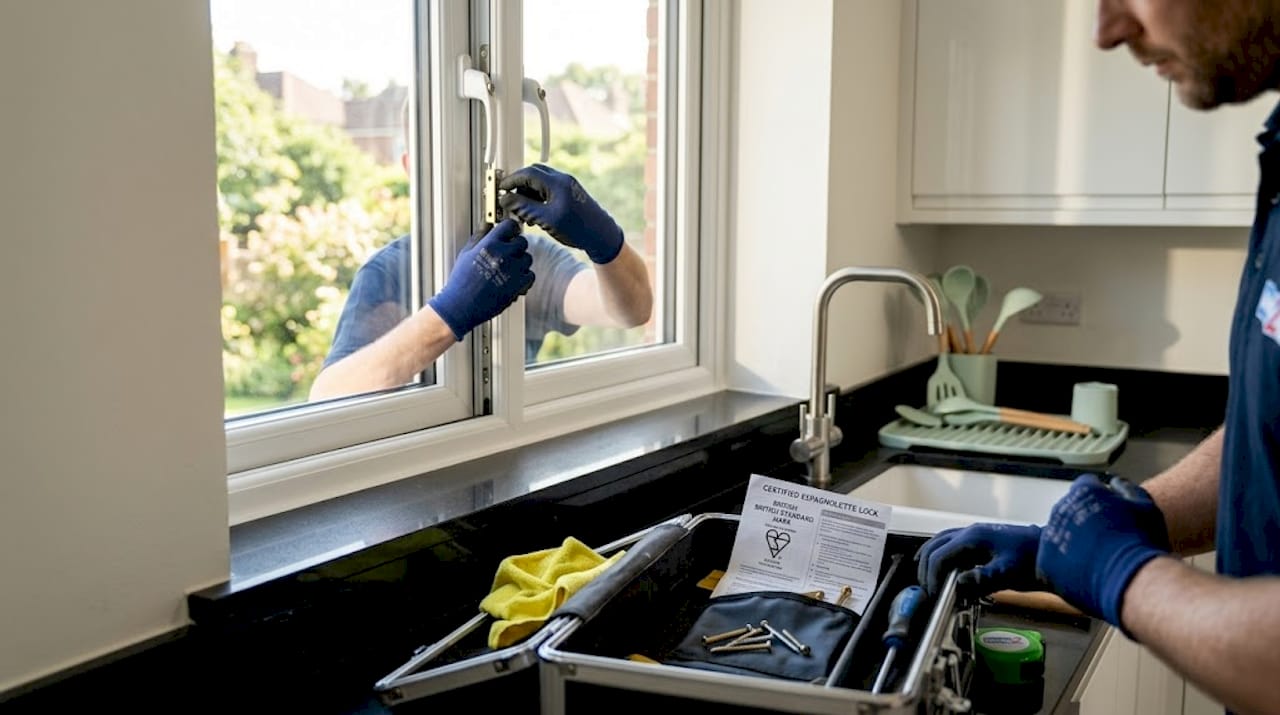
Material and certification matter here too. Look for locks that carry British Standard BS 7950 or PAS 24 certification. These certifications confirm the hardware has been tested under realistic attack conditions.
Understanding window lock mechanisms
Not all window lock problems look the same, and knowing the difference between a handle fault and an internal mechanism failure is critical before you spend any money.
A standard uPVC window uses an espagnolette locking system. This consists of three main components: the handle, the gearbox (the mechanism inside the frame that translates handle movement into locking action), and the locking points (the bolts or hooks that engage with the keep on the outer frame). Each component can fail independently, and each failure has a different fix.
| Symptom | Likely cause | Recommended action |
|---|---|---|
| Handle turns but window does not lock | Broken gearbox | Replace gearbox mechanism |
| Handle feels stiff or grinds | Corrosion or structural wear | Replace mechanism; lubrication alone is insufficient |
| Window locks but gaps remain | Worn locking points | Replace locking points and check seal |
| Handle is loose or wobbly | Handle spindle worn | Replace handle only |
| Window will not close fully | Frame misalignment or hinge wear | Professional assessment required |
The most common mistake is treating a gearbox failure as a handle problem. A broken internal gearbox leaves the window unsecured even when the handle appears to engage. Equally, stiff or grinding locks that seem to need only lubrication often have corrosion running through the internal components, making full replacement the only reliable solution.
Worn locking points are worth paying specific attention to. When these fail to compress the window seal properly, you lose both security and thermal performance. This directly contributes to draughts and heat loss, raising your energy bills in a way that is easy to miss until you replace the locks and notice the difference.
Pro Tip: When ordering replacement parts, measure your existing gearbox length precisely before purchasing. A gearbox that is even a few millimetres too short or too long will not engage the locking points correctly, leaving gaps in the seal and the security.
How to replace window locks: DIY or professional?
Once you have identified that your window locks need replacing, the next decision is whether to tackle it yourself or call in a specialist.
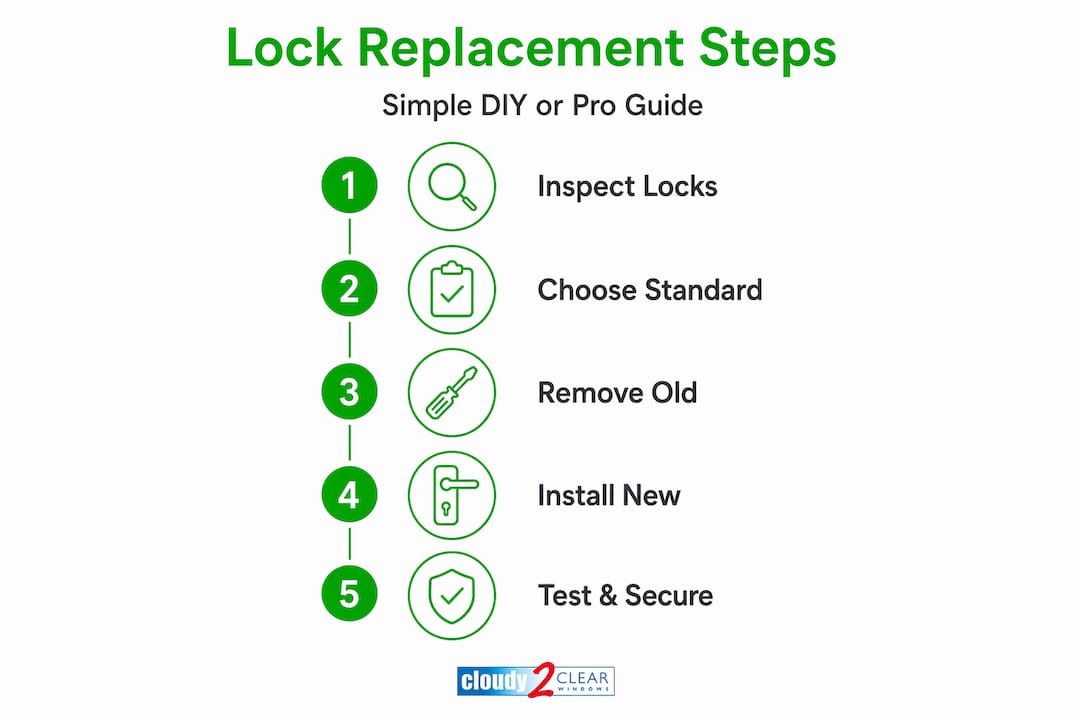
Here is a straightforward process for DIY replacement on a standard uPVC window handle:
- Remove the old handle by unscrewing the two fixing screws on the face of the handle plate.
- Note the spindle size (usually 7mm or 8mm) and the distance between fixing holes (typically 43mm or 70mm) before ordering a replacement.
- Remove the old gearbox by unscrewing the fixing screws along the edge of the frame. Keep note of the orientation.
- Fit the new gearbox, ensuring it aligns with the existing locking points. Test the action before fitting the handle.
- Fit the new handle, connect it to the gearbox spindle, and test the full locking action before closing the window.
The risks of getting this wrong are significant. An improperly fitted gearbox may not engage the keeps correctly, giving you a false sense of security. It can also void your window warranty or affect your home insurance cover. For anything beyond a straightforward handle swap, professional help is the smarter choice.
On costs, replacing window locks typically runs between £100 and £180 per window when professionally installed, depending on lock type and accessibility. DIY parts alone can be considerably less, but the saving is not worth the risk if you are uncertain about the mechanism type.
Choosing professional assessment also means someone will evaluate your entire window assembly: locks, hinges, seals, and frame condition. A new lock fitted to a window with worn hinges or a failing frame still leaves you exposed. Timely lock replacement alongside a broader maintenance check extends the life of your windows and prevents the kind of secondary damage that becomes expensive quickly.
Our perspective on window lock replacement
I have spent years working with homeowners and commercial clients across England and Scotland on window repairs and replacements. What I have seen consistently is that window lock replacement gets treated as an afterthought, something people do reactively after a break-in attempt or when a window refuses to close entirely.
What I have learned is that the real damage happens quietly. A gearbox that has been worn for two years has been letting cold air in and making your heating system work harder the entire time. Focuses solely on fitting a new lock without auditing the frame and hinges is one of the most common mistakes I see. The lock looks new. The underlying problem remains.
The cases that stand out to me are the ones involving window restrictors. Families who update their locks and add restrictors as part of the process gain something that goes beyond security statistics. They gain real peace of mind with children in the house. That is a practical, tangible outcome that rarely gets mentioned when people talk about why they upgraded their locks.
My advice: build window lock checks into your routine home maintenance schedule. Twice a year is enough. Catching a failing gearbox early costs a fraction of what you pay when the frame has also been affected.
— Cloudy2Clear Windows
Let Cloudy2Clear Windows handle it for you

At Cloudy2Clear Windows, we have been helping homeowners and businesses across England and Scotland repair and replace window locks since 2005. If your windows are showing any of the signs covered in this article, a professional assessment is the most reliable next step. Our specialists evaluate the full window assembly, not just the lock, so you get a complete picture of what needs attention.
Whether you need a straightforward lock and handle repair or a full mechanism replacement, we provide expert advice with no obligation. We cover a broad range of locations, including our dedicated team serving Milton Keynes and surrounding areas. Get in touch today for a free quote and professional assessment from a team you can trust.
FAQ
When should I replace my window locks?
Replace your window locks when they fail to catch, require excessive force to engage, produce grinding noises, or show visible corrosion. If repair costs exceed half the replacement cost, full replacement is the more practical choice.
Can I replace window locks myself?
Basic handle replacements on standard uPVC windows are manageable for a competent DIYer, but internal gearbox replacement carries risks if measurements or orientation are incorrect. Professional fitting is recommended for anything beyond a simple handle swap.
Do new window locks improve energy efficiency?
Yes. Worn locking points fail to compress the window seal properly, causing draughts and heat loss. Replacing the locks restores the seal and can reduce your heating costs noticeably.
What types of window locks are most secure?
Multi-point espagnolette locks with BS 7950 or PAS 24 certification offer the strongest protection for uPVC windows. They engage at multiple points along the frame, making forced entry significantly more difficult.
Will replacing window locks affect my home insurance?
In many cases, yes. Home insurers in England and Scotland often require windows to meet specific security standards. Upgrading to certified locks can maintain or improve your cover, and some insurers offer reduced premiums for certified security hardware.