Condensation is defined as the process by which water vapour in the air converts to liquid water droplets when it cools to its dew point temperature upon contacting a colder surface. You see this every day: the mist on a bathroom mirror after a shower, droplets forming on a cold window pane on a winter morning, or water beading on a chilled glass. These are not random occurrences. They are the same physical process at work, driven by temperature, humidity, and surface conditions inside your home. Understanding why this happens is the first step to managing moisture effectively.
How does condensation form at a molecular level?
Condensation, known in physics as a phase change from gas to liquid, occurs when water vapour molecules lose kinetic energy as they cool. Warm air holds more moisture than cold air. When that warm, moisture-laden air meets a surface cold enough to drop the air temperature to its dew point, the molecules slow down and cluster together, forming visible liquid droplets.
The dew point temperature is not a fixed value. It shifts depending on both the humidity level and the air temperature in the room. This means condensation risk can vary daily or even seasonally, even if your household routines stay the same.
Condensation is also exothermic, meaning it releases a small amount of latent heat as vapour transitions to liquid. This release of energy is fundamental to larger weather systems globally, though indoors its effect is negligible. What matters at home is the surface temperature relative to the dew point.
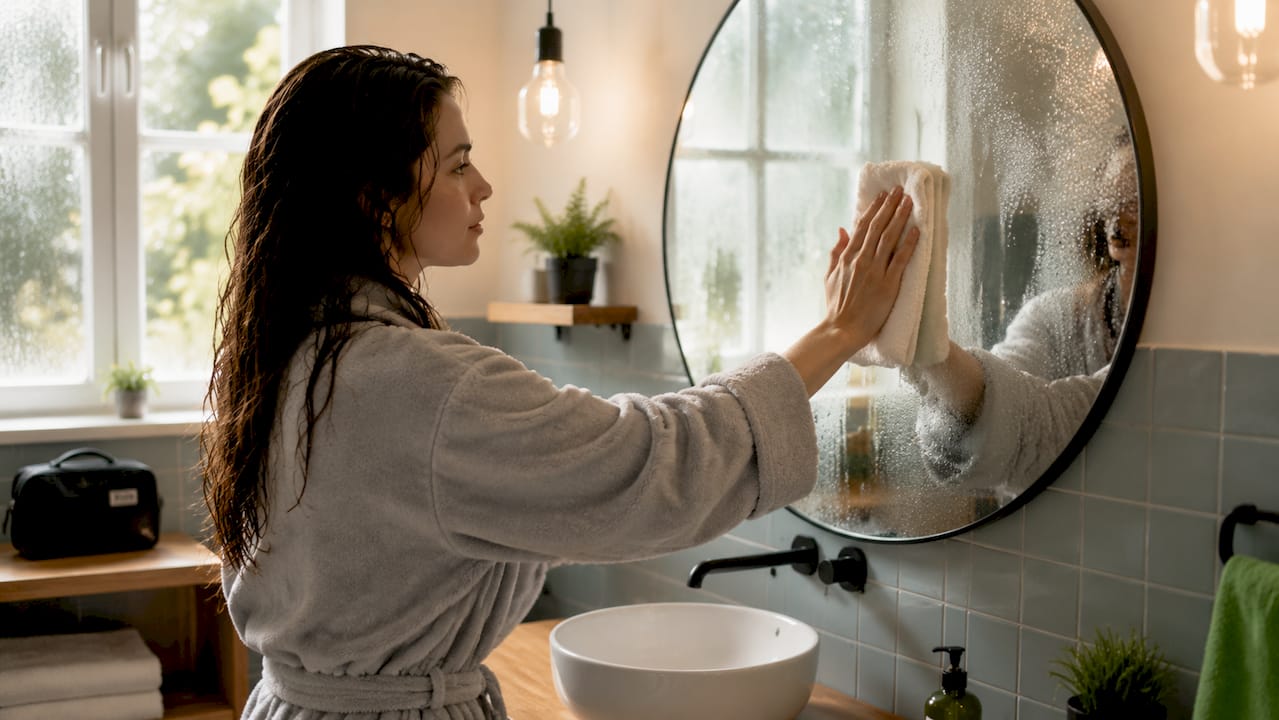
A bathroom mirror fogs up because the glass surface is cooler than the steam-filled air around it. A cold drink can sweats in summer because the metal surface is well below the dew point of the warm, humid room air. Both examples follow the same rule: when surface temperature falls below dew point, water droplets form.
Pro Tip: Use a hygrometer, available from most DIY retailers, to monitor indoor humidity. Keeping relative humidity below 60% significantly reduces the conditions needed for condensation to appear on surfaces.
What causes condensation to build up indoors?
Several everyday activities generate large amounts of water vapour inside a property. Understanding these sources helps you identify where your moisture is actually coming from.
- Cooking: Boiling water, frying, and using a kettle release significant steam. A single pot of boiling pasta can add hundreds of millilitres of moisture to the air.
- Showering and bathing: Hot showers produce dense steam that spreads quickly through a bathroom and into adjacent rooms if doors are left open.
- Drying clothes indoors: This is one of the largest single sources of indoor moisture. A full load of laundry can release up to 2 litres of water into the air as it dries.
- Breathing and perspiration: A family of four releases roughly 10 litres of moisture into the air each day simply through normal activity.
- Houseplants: Transpiration from plants adds a steady, often overlooked, source of humidity.
Condensation appears visibly when indoor humidity exceeds 60% and warm, moist air contacts a cold surface. Windows are the most common site because glass is typically the coldest surface in a room during winter.
Cold bridging makes this worse. Cold bridges are areas such as window frames, wall corners, and poorly insulated junctions where heat conducts away more rapidly, leaving those surfaces colder than the surrounding wall. These spots reach dew point first, even when the rest of the room feels dry. You may notice damp patches in corners or around window frames long before the main wall surface shows any moisture.
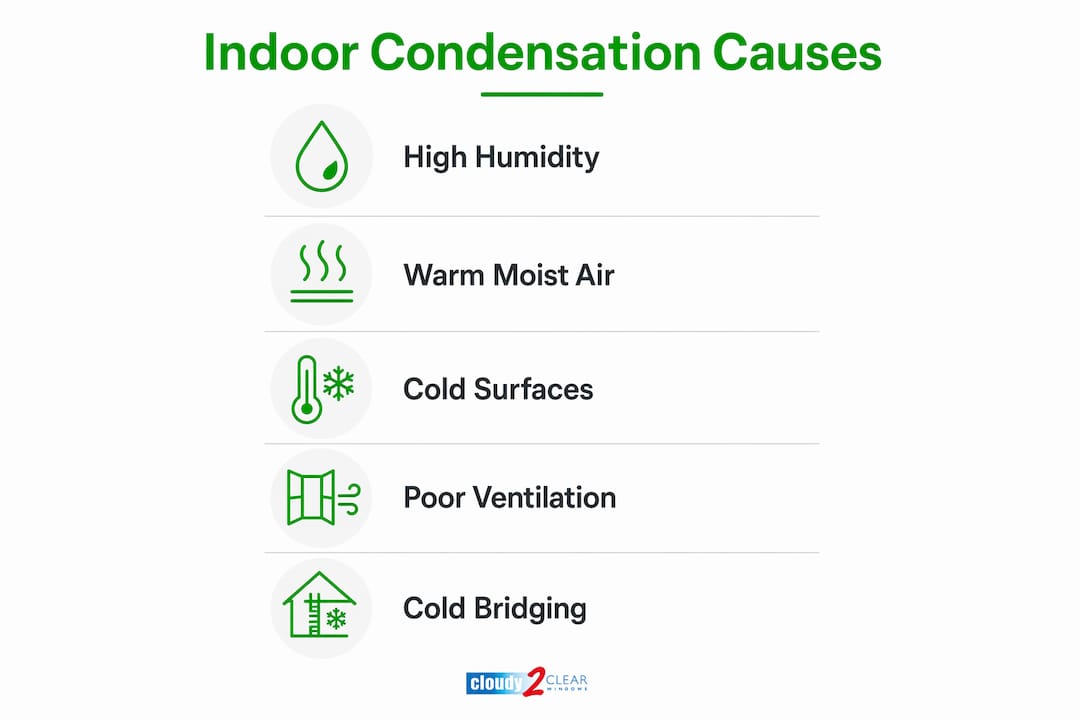
Modern, airtight, energy-efficient homes trap moisture indoors more readily than older, draughtier properties. This is not a building defect. It is a natural consequence of reducing heat loss. The trade-off is that moisture produced inside has fewer escape routes, raising the overall humidity level and increasing condensation risk on cold surfaces.
How do insulation and ventilation control condensation?
Managing condensation comes down to two principles: raise surface temperatures above the dew point, and remove excess moisture from the air before it settles. Insulation and ventilation each address one of these directly.
Here is a practical sequence for reducing condensation in your home:
- Improve insulation at cold spots. Adding insulation to external walls, around window frames, and in loft spaces raises the temperature of interior surfaces. When surfaces stay warmer, they are less likely to drop below the dew point. Double glazing is particularly effective here because the inner pane stays significantly warmer than single glazing.
- Use extraction fans in kitchens and bathrooms. Ventilation expels moisture before it can condense on surfaces. An extraction fan running during and for 15 minutes after cooking or showering removes the bulk of steam produced.
- Open windows briefly each morning. A ten-minute cross-ventilation in the morning flushes overnight moisture from bedrooms and living spaces. This is especially useful in winter when condensation on windows is most visible.
- Keep internal doors open where possible. Airflow between rooms carries heat to cold surfaces and prevents moisture from accumulating in one area.
- Maintain a consistent background temperature. Allowing rooms to cool significantly overnight creates colder surfaces that are more vulnerable to condensation when the heating comes back on.
One important caution: incorrectly installed insulation can make condensation worse, not better. Blocking ventilation paths in loft spaces or wall cavities traps moist air and creates cold pockets where moisture accumulates unseen. Condensation moisture can build up inside wall cavities if vapour barriers and insulation are improperly specified, leading to hidden mould or structural rot. Always use a qualified installer when adding insulation to existing buildings.
Pro Tip: Trickle vents fitted to window frames allow a continuous, low-level exchange of air without draughts. They are one of the most cost-effective ways to reduce background humidity in a home.
For more detailed advice on ventilating your home to manage moisture, Cloudy2Clear Windows has a dedicated guide worth reading.
How can you spot the signs of a condensation problem?
Recognising condensation early prevents it from developing into a more serious and costly issue. The table below outlines the most common signs, what they indicate, and how serious each one is.
| Sign | What It Indicates | Urgency |
|---|---|---|
| Droplets on window glass | Surface below dew point; normal in cold weather | Low: monitor and ventilate |
| Persistent misting between panes | Failed double glazing seal | Medium: unit replacement needed |
| Damp patches on walls or ceilings | Moisture condensing on cold surfaces or cold bridges | Medium: investigate insulation |
| Mould growth in corners or on walls | Sustained high humidity and condensation | High: address moisture source immediately |
| Peeling wallpaper or paint | Repeated wetting and drying of wall surfaces | Medium: improve ventilation |
| Musty smell without visible damp | Hidden condensation in wall cavities or behind furniture | High: professional assessment advised |
Visible condensation on windows is the most common early sign and is often dismissed as normal. It is normal in cold weather, but if it persists throughout the day or appears on internal walls, it signals that humidity levels are consistently too high.
Humidity and condensation are related but distinct. Humidity is moisture held in the air. Condensation is what happens when that moisture settles on a surface. A room can have high humidity without visible condensation if all surfaces remain warm enough. Conversely, condensation can appear at moderate humidity levels if a surface is particularly cold, such as a single-glazed window or an uninsulated external wall.
For a thorough breakdown of the different types of window condensation and how to address each one, the Cloudy2Clear Windows guide on window condensation issues covers the topic in practical detail.
What we have learned after two decades of dealing with condensation
After more than 20 years of visiting homes and businesses across the UK, we at Cloudy2Clear Windows have seen one misconception come up repeatedly. Most property owners assume condensation means something is wrong with their building. In the vast majority of cases, it is not a structural fault. It is physics.
What does cause real damage is ignoring it. A damp patch in a corner that appears each winter and is painted over rather than investigated will eventually lead to mould, and mould leads to health problems and expensive remediation work. The science is straightforward: proactive ventilation combined with suitable insulation is the most reliable defence. Simple changes, such as running an extraction fan consistently or fitting trickle vents, make a measurable difference.
We also see a lot of condensation blamed on windows when the real culprit is lifestyle. Drying clothes indoors through winter, keeping internal doors closed, and running heating intermittently all raise condensation risk significantly. Windows show the problem first because they are the coldest surface. They are the symptom, not always the cause.
That said, failed double glazing seals do make things worse. When the sealed unit fails, the insulating gas between the panes is lost, the inner pane gets colder, and condensation appears between the glass. That is a window problem, and it is one we can fix.
Is condensation affecting your windows? we can help
If you are seeing persistent condensation on or between your window panes, it may be time to look at the condition of your double glazing. Well-maintained, properly sealed double glazed units keep the inner pane warmer, reducing the likelihood of condensation forming on the glass surface.

Cloudy2Clear Windows has been repairing and replacing double glazed units since 2005, helping homeowners across the UK tackle condensation at its source. Whether you need a double glazing repair in Watford or a replacement glazing unit in Milton Keynes, our local teams are ready to help. Get in touch with your nearest branch to arrange an assessment.
FAQ
What is the dew point and why does it matter?
The dew point is the temperature at which air becomes saturated and water vapour begins to condense into liquid. When a surface in your home falls below this temperature, condensation forms on it.
Why does condensation appear on windows first?
Window glass, particularly single glazing or older double glazing, is typically the coldest surface in a room. Cold surfaces reach the dew point before walls or ceilings, so condensation appears there first.
Is condensation a sign of a damp problem?
Not always. Surface condensation is caused by warm, moist air meeting a cold surface and is a physical process, not a structural defect. Persistent condensation that leads to mould growth does require attention, as it indicates consistently high indoor humidity.
How can i reduce condensation in my bathroom?
Preventing damp in bathrooms relies on running an extraction fan during and after showering, keeping the door closed while showering to contain steam, and opening a window briefly afterwards to expel residual moisture.
Can double glazing reduce condensation?
Yes. Double glazed windows keep the inner pane warmer than single glazing, making it less likely to fall below the dew point. A failed double glazing seal, however, allows the inner pane to cool, which increases condensation risk on the glass surface.