Cloudy windows are defined as glass panes that appear hazy, foggy, or opaque due to condensation, mineral deposits, or failed seals in double-glazed units. The location of the cloudiness tells you almost everything: surface fog wipes away, trapped moisture between panes does not, and each cause demands a different fix. Getting the diagnosis right saves you time, money, and the frustration of cleaning a window that will never come clear with a cloth. Cloudy2Clear Windows has been helping homeowners and property managers across the UK resolve exactly these problems since 2005.
What causes cloudy windows? Condensation explained
Condensation is the most common reason your windows go cloudy. It forms when warm, moisture-laden air meets a cooler glass surface and the water vapour turns to liquid. You will see it most often on cold mornings, particularly in kitchens, bathrooms, and bedrooms.
Indoor condensation is driven by everyday household activity. A family of four adds over 18 gallons of water to indoor air each week through cooking, bathing, and drying clothes. That is a significant moisture load, and in a well-insulated UK home with limited airflow, it has nowhere to go except onto your glass.
Persistent interior condensation signals high indoor humidity combined with poor ventilation. Modern airtight construction, common in UK new-builds and retrofitted homes, traps humid air inside and makes the problem worse.
Exterior condensation behaves differently. It forms on the outside of the glass when the surface is cooler than the outdoor air, typically on clear autumn mornings. Exterior condensation is actually a sign that your window is insulating well. Industry experts treat it as a positive indicator of window performance, not a defect.
Key signs of condensation-related cloudiness:
- Fog appears on the room-facing surface of the glass
- Cloudiness clears as the room warms up or ventilation improves
- Droplets or streaks are visible on the glass surface
- Problem is worse in winter or after cooking and showering
Pro Tip: Run the wipe test before doing anything else. If the cloudiness wipes away with a dry cloth, you are dealing with surface condensation. If it does not, the problem is between the panes and requires a different approach entirely.
How does window seal failure cause permanent fogging?
Double-glazed units consist of two panes of glass separated by a spacer bar and sealed at the edges. The sealed cavity between the panes is filled with air or an inert gas such as argon, which provides thermal insulation. When that seal breaks down, outside air and moisture enter the cavity. The result is permanent fogging between panes that no amount of cleaning will resolve.
Double-pane window seals typically last between 10 and 25 years. That range is wide because environmental conditions play a large role. Coastal properties in the UK, where salt air accelerates material degradation, often see seals fail at the lower end of that range. Homes in areas with significant temperature swings face repeated expansion and contraction of the frame and glass, which stresses the seal over time.
The table below shows how seal failure compares to surface condensation across the key diagnostic factors.
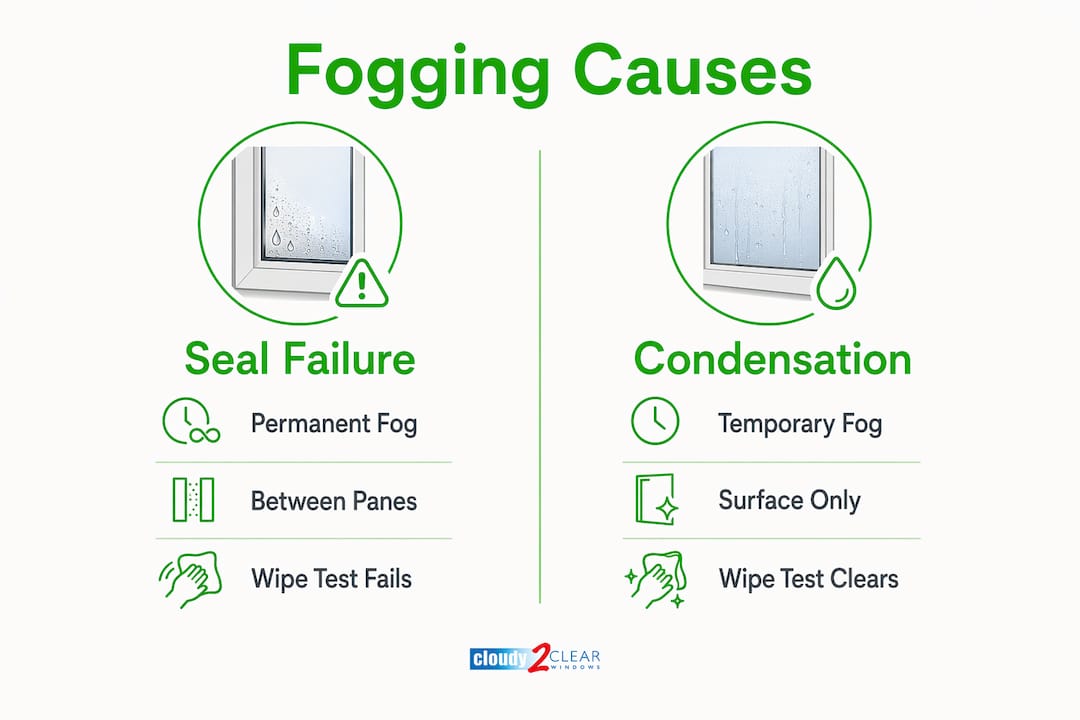
| Factor | Surface condensation | Seal failure |
|---|---|---|
| Location of fog | On the glass surface | Between the panes |
| Wipes away? | Yes | No |
| Clears during the day? | Often yes | No |
| Cause | Indoor humidity or cold air | Degraded edge seal |
| Fix required | Ventilation or cleaning | Professional repair or replacement |
Common causes of seal failure:
- Age: seals degrade naturally over 10–25 years of use
- Temperature cycling: repeated expansion and contraction weakens the bond
- Coastal salt air: accelerates corrosion of the spacer bar and sealant
- Poor original installation: incorrect fitting shortens seal life significantly
- Physical damage: chips or cracks near the edge compromise the seal
Understanding why window seals fail helps you spot the early signs before the fogging becomes severe. A slight haze that appears only in certain light is often the first indicator that moisture has begun to enter the unit.
Can mineral deposits and dirt make windows look cloudy?
Hard water mineral deposits cause a white or grey film on glass that looks similar to condensation but behaves very differently. Hard water contains dissolved calcium and magnesium. When water evaporates from the glass surface, those minerals are left behind and bond to the glass over time.
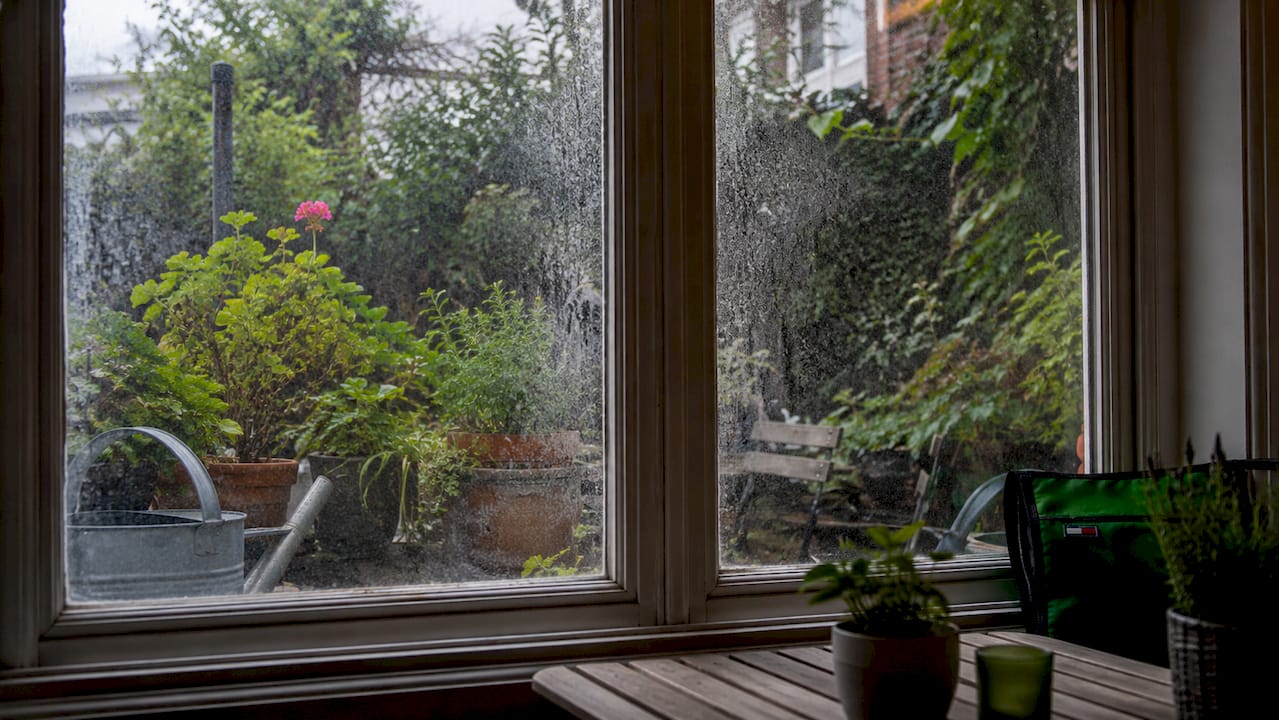
Hard water affects a large proportion of UK households, particularly in the South East, East Anglia, and the Midlands. Rain, garden sprinklers, and even some window cleaning products leave residues that build up with each application. The result is a dull, cloudy surface that does not respond to standard glass cleaners.
The diagnostic difference is straightforward. Surface mineral deposits feel slightly rough or chalky to the touch. They do not shift with a dry cloth but do respond to acidic cleaning solutions. Cleaning with a vinegar and water solution is effective where cloudiness is caused by hard water deposits. Mix equal parts white vinegar and water, apply with a soft cloth, leave for a few minutes, then rinse thoroughly.
Pro Tip: Never use abrasive pads or scouring products on glass. They create microscopic scratches that trap dirt and make the surface appear permanently cloudy, even after cleaning.
Common environmental sources of surface buildup:
- Hard water from rain or garden irrigation
- Cleaning product residues left on the glass
- Traffic pollution and airborne dust in urban areas
- Sea spray in coastal locations
- Building work debris such as cement or paint splatter
How to diagnose, prevent, and fix cloudy windows
Fixing cloudy windows starts with identifying which of the three causes you are dealing with. The steps below give you a clear process to follow before spending money on cleaning products or calling a professional.
Step 1: Perform the wipe test. Run a dry cloth across the cloudy area. If the fog clears, you have surface condensation or mineral deposits. If it does not, the moisture is trapped between the panes and you have a seal failure.
Step 2: Check the location. Interior surface fog points to high indoor humidity. Exterior fog that clears by mid-morning is normal. Fog between the panes that never clears is seal failure.
Step 3: Manage indoor humidity. Maintaining indoor humidity within 30–50% prevents interior condensation from forming. A basic hygrometer, available from most DIY retailers, lets you monitor levels accurately.
Step 4: Improve ventilation. Open windows briefly each morning, use extractor fans in kitchens and bathrooms, and avoid drying clothes indoors where possible. Trickle vents on window frames are designed for exactly this purpose and should be kept open.
Step 5: Clean surface deposits correctly. For mineral buildup, use the vinegar and water method described above. For general grime, a microfibre cloth with warm soapy water works well. Avoid ammonia-based products, which can damage window frames and seals.
Step 6: Know when to call a professional. If the wipe test confirms moisture between the panes, the sealed unit needs repair or replacement. Attempting to drill into the unit to dry it out is a temporary measure at best and voids any remaining warranty. Professional double glazing glass replacement restores both clarity and thermal performance.
Signs that professional repair is needed:
- Fog between panes that does not clear at any time of day
- Visible water droplets or staining inside the unit
- Noticeably colder glass compared to other windows in the property
- Condensation forming on the inside of the room more than usual, suggesting lost insulation
What we have learned after two decades of repairing cloudy windows
The most common misconception we encounter is that all cloudy windows are the same problem. Homeowners spend hours cleaning a window that will never come clear because the fog is sealed inside the unit. The wipe test takes ten seconds and saves a great deal of wasted effort.
The second thing we have noticed is that people wait too long. A failed seal does not just look bad. It means the insulating gas between the panes has escaped, and your window is no longer performing as it should. You are losing heat through that pane every day, and your energy bills reflect it. Acting early, when the fogging is still mild, usually means replacing just the glass unit rather than the entire frame.
We have also seen a pattern with newly renovated or draught-proofed homes. Improving insulation without improving ventilation pushes indoor humidity up sharply. The windows show it first. If you have recently had loft insulation, cavity wall insulation, or new doors fitted and your windows have started fogging up, that is almost certainly the reason.
The honest advice is this: surface fog is a maintenance issue you can manage yourself. Fog between the panes is a structural issue that needs a professional. Knowing the difference is the most useful thing you can take from this article.
When your windows need professional attention
Cloudy2Clear Windows has been repairing and replacing double-glazed units across the UK since 2005. If your wipe test confirms moisture between the panes, the sealed unit has failed and cleaning will not resolve it.

Cloudy2Clear Windows offers glass unit replacement for failed double-glazed panes without the need to replace the entire frame in most cases. The service covers both residential and commercial window repair across a wide network of UK locations, including Milton Keynes, Oxford, Leicester and Loughborough, and Watford. Contact Cloudy2Clear Windows to arrange an assessment and get your windows performing clearly again.
FAQ
What is the quickest way to tell if my window seal has failed?
The wipe test is the fastest method. If the cloudiness does not wipe away with a dry cloth, moisture is trapped between the panes and the seal has failed.
Is exterior condensation on windows a problem?
No. Exterior condensation indicates that the window is insulating well, as the outer glass surface is cooler than the outside air. It clears naturally as temperatures rise.
How long do double-glazed window seals last?
Double-pane seals last between 10 and 25 years, depending on environmental conditions. Coastal properties and homes with significant temperature variation tend to see shorter seal lifespans.
Can I fix foggy windows between the panes myself?
No. Fog between the panes means the sealed unit has failed, and professional repair or replacement is required. DIY drilling into the unit is a temporary fix that damages the unit permanently.
What humidity level prevents window condensation indoors?
Keeping indoor humidity between 30% and 50% prevents most interior condensation. Use a hygrometer to monitor levels and improve ventilation if readings consistently exceed 50%.