If your shopfront glass is smashed, secure people first, call the police if a crime is suspected and arrange an emergency make-safe with a professional glazing contractor. Move staff and customers away from the glass, cordon off the area and, if anyone is hurt or a suspect is still nearby, call 999. Otherwise, report to police on 101 or online, request a crime reference number, save your CCTV footage and get a glazier out to board or temporarily glaze the opening.
What to do at the scene: safety, evidence and police reporting
Once everyone is safely away from the broken glass, resist the urge to tidy up. Anything a suspect may have touched, thrown or left behind could matter to an investigation, and the National Business Crime Centre advises against handling items that might carry forensic evidence until police have had the chance to look.
Your CCTV footage is often the single most useful piece of evidence you hold. Save the full recording covering the incident, not just a clip, and back it up in more than one place before any repair work begins, since footage is sometimes overwritten automatically within days.
When you call 101 (or 999 in an emergency), be ready to give:
- Your exact address and the nature of the damage.
- Whether anyone is injured or at immediate risk.
- Whether a suspect is still on scene, along with any description of them or weapons involved.
- A direct contact number for follow-up.
Ask for your crime reference number during that call. You will need it both for your insurer and to complete an Impact Statement for Business, a short form that records the financial and operational effect of the crime on your business and can support the case against an offender if one is caught. Start drafting it while details are fresh, covering lost trade, repair costs and any stock damage.
Temporary make-safe options and when to call a professional
A smashed shopfront needs securing fast, but how you secure it matters almost as much as how quickly you do it. The Commercial burglary guidance from the NBCC notes that a properly executed make-safe protects your premises without destroying evidence, while a rushed or poorly fitted board can draw criticism from insurers and even hamper a police investigation.
Three options are commonly used, roughly in order of speed:
- Boarding: plywood or steel screwed into the frame is the fastest way to weatherproof an opening, but it needs to be fitted without damaging the surrounding frame or covering areas police may still need to examine.
- Temporary glazing or polycarbonate sheeting: this lets natural light in and can allow you to keep trading with the shopfront looking presentable while a permanent repair is arranged.
- Security film: applied to remaining glass, film can hold shattered fragments together and buy you time, though it is rarely a long-term fix on its own.
Attempting any of this yourself carries real risk. Broken glass hides sharp edges you cannot always see, frames may be structurally compromised, and getting it wrong can invalidate an insurance claim. A commercial window repair specialist will check the frame’s condition, confirm what fixings are sound and make sure the temporary fix will hold until permanent glazing goes in.
Pro Tip: Photograph the opening before boarding goes up. Once it is covered, you lose the chance to capture the damage as it was found.
Choosing a permanent repair: types of glass and security upgrades
Once the site is safe and documented, the next decision is what replaces the broken pane. The right choice depends on your shopfront’s location, its exposure to risk and, in some cases, planning restrictions you may not expect.
- Toughened glass shatters into small, blunt fragments rather than sharp shards, making it a sound safety choice, though it is not the strongest option against a deliberate smash-and-grab attempt.
- Laminated glass holds together on impact because of the interlayer bonding the panes, and the Commercial burglary guidance recommends it specifically for resisting repeat attacks on retail premises.
- Double-glazed safety units combine security with thermal performance, while slimmer double-glazing profiles are worth asking about if your shopfront sits in a conservation area or older building where bulkier units would look out of place.
- Security films, internal grilles and demountable barriers offer extra protection without a full glass upgrade, and can often be added to existing units.
Before committing to shutters or a visibly different frame, check with your local planning authority. Councils frequently restrict solid external roller shutters and non-like-for-like frame changes in conservation areas, and listed buildings can require formal consent even for glass replacement, as outlined in guidance from local authority planning teams. For historic shopfronts, secondary or slim double glazing can improve thermal performance without altering the appearance planners want preserved.
Cloudy2Clear Windows’ guides on toughened safety glass and the full range of safety glass types go into more depth on which option suits which situation, and our piece on upgrading shopfront security covers films and grilles in more detail.
Costs, timescales and what affects the price
Every shopfront is different, so a written quote from a contractor who has actually inspected your frame will always be more useful than a generic figure. That said, a few patterns hold across most jobs.
- Emergency make-safe call-outs are typically charged as a same-day fee, with the cost of boarding depending on the size of the opening and how accessible your premises are.
- Stock glass replacement, using standard toughened or laminated sizes, can often be fitted within a few days once the frame has been assessed.
- Bespoke units, such as shaped panes, oversized shopfronts or specialist laminated glass, can take several weeks to manufacture and fit.
- Cost drivers include the glass specification chosen, whether the frame itself needs repair, any listed-building or planning constraints, and whether an insurer-appointed surveyor needs to sign off the work before it proceeds.
If your building is listed or in a conservation area, expect the process to take longer, since consent for anything beyond a straight glass swap has to be sought before work can start.
How to choose a repairer and what to check on-site
Not every glazier is set up for commercial emergency work, so it pays to check a few things before you commit.
- Confirm the contractor has genuine commercial glazing experience and current public liability insurance, ideally with examples of shopfront work they have completed before.
- Ask how quickly they can attend, whether they offer a glass-only replacement rather than swapping the whole frame, what guarantee applies, and whether they handle broken glass disposal themselves.
- Find out whether they will liaise directly with your insurer or loss adjuster, which can save you a considerable amount of back-and-forth.
When the contractor arrives, a proper assessment should include an inspection of the frame’s condition, a clear statement on whether the glass alone can be replaced or whether frame repair is also needed, and a written quote specifying the glass type and expected lead time. Anyone unwilling to put this in writing before starting work is worth being cautious about.
Pro Tip: Ask specifically whether the quote is for glass-only replacement. Swapping just the pane, where the frame allows it, is almost always faster and less disruptive than a full unit replacement.
Health, safety and regulatory considerations to avoid fines or injuries
Safety obligations do not disappear once the immediate danger has passed. The Health and Safety Executive expects safe systems of work wherever broken or falling glass is being handled, including correct personal protective equipment for anyone removing shards or fitting a replacement.
- Contractors should use a documented safe system of work when removing or replacing glass, not an improvised approach.
- Visible changes to a shopfront, including external shutters or frame alterations that are not like-for-like, may need planning permission or listed-building consent before work proceeds.
- A recent case shows the stakes of getting this wrong: a business was fined £266,666 after a falling shard of glass injured a child, a reminder that inadequate control over glazing and fixtures carries real financial and human consequences.
Treat every repair, however small, as a job that needs proper risk assessment rather than a quick patch. It protects your customers and staff, and it protects you from the kind of penalty that dwarfs the cost of doing the job properly in the first place.
How to handle customer and staff safety immediately after the incident
Your first responsibility after glass has been smashed is the people on site, not the shopfront itself. Clear the immediate area of staff and customers, keeping them well back from any glass that is still in the frame or scattered on the floor, since it can continue to fall or shift after the initial break.
Check for anyone who might have been struck by flying glass, even superficially, and treat any cuts before they are dismissed as minor. If your premises has a first aider, bring them in early rather than waiting for symptoms to become obvious.
Once everyone is accounted for and safe, close the affected area to foot traffic entirely rather than trying to keep trading around it. A taped-off cordon or a simple “temporarily closed” sign at the door does more to prevent a second injury than any amount of verbal warning, and it gives your team room to focus on reporting the incident properly rather than managing customers around broken glass.
Steps to document damage thoroughly for insurance and legal purposes
Good documentation makes the difference between a smooth insurance claim and a drawn-out dispute. Photograph the damage from several angles before anything is moved, including wide shots that show the full shopfront and close-ups of the point of impact.
Write a short account of what happened while it is fresh: the time you discovered the damage, what was visible, who was on site and what actions you took. This written record, alongside your crime reference number, forms the backbone of both your insurance claim and your Impact Statement for Business.
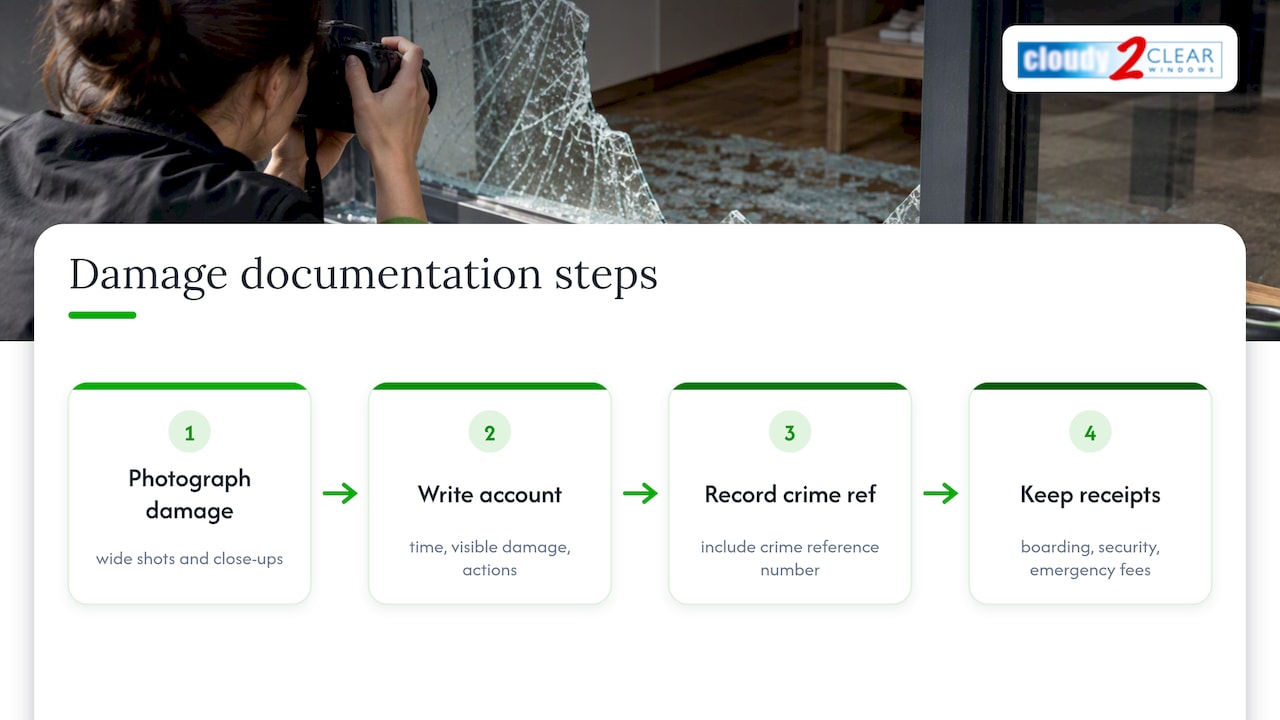
Keep receipts for any temporary boarding, security measures or emergency call-out fees, since insurers will usually want evidence of costs incurred in making the premises safe. A partner service such as BRCKS specialises in logging this kind of site evidence in a way that fits neatly alongside an insurance claim, which can be worth exploring if you are managing a larger or more complex loss.
Common causes and prevention tips to avoid future incidents
Shopfront glass is smashed for a range of reasons, from deliberate break-ins and vandalism to accidental impacts from vehicles, trolleys or falling objects nearby. Retail premises face a persistent risk of theft and burglary, and the Commercial Victimisation Survey points to the time spent managing repairs and claims as a real cost on top of the damage itself.
A few habits reduce the odds of it happening again. Laminated glass, discussed earlier, is one of the more effective deterrents against smash-and-grab attempts because it resists giving attackers a clean opening. Good external lighting removes the cover of darkness that makes many attacks easier to attempt. Visible CCTV, kept in obvious working order, discourages opportunistic damage as much as it helps after the fact.
Reviewing your shopfront’s condition periodically, rather than only after an incident, catches ageing frames or weakened fixings before they become a point of failure.
Guidance on communicating with neighbours and the community during repair
A smashed shopfront rarely affects only you. Boarding, scaffolding or a temporary closure can disrupt footfall for neighbouring businesses and change how your street looks to passers-by, so a short conversation with adjoining traders goes a long way.
Let neighbouring shops know roughly how long the repair is expected to take, so they can manage their own customers’ expectations if your frontage looks untidy for a few days. A simple sign explaining that you are open despite the temporary boarding, and giving an expected completion date, reassures regular customers who might otherwise assume you are closed for good.
If the incident drew attention locally, a brief, calm update on your shopfront or social media, stating that the matter is in hand and trading continues, does more to protect your reputation than silence does.
Legal responsibilities of property owners regarding damaged shopfronts
As the property owner or occupier, you carry a duty to keep the site safe for anyone passing or entering, and that duty does not pause just because the damage was not your fault. Broken glass, unstable boarding or trip hazards from repair materials left on a public pavement can expose you to liability if someone is hurt.
Clear hazard signage should go up immediately, even before boarding is complete, warning of broken glass or uneven surfaces. If any part of the pavement or shopfront needs to be fenced off, check with your local council on any notification requirements, since obstructing a public footway sometimes needs a permit.
Keep a record of when hazard notices were put up and when the area was made safe. This ties directly into the health and safety obligations covered earlier, and it strengthens your position if a claim is ever made against you for an injury connected to the damaged shopfront.
Author perspective: practical tips from a commercial glazier
The businesses that reopen fastest are the ones that treat safety and evidence as the first job, not an afterthought squeezed in around the repair. Call it in properly, save your footage, and let a professional make the opening safe while you deal with the paperwork. One habit worth adopting now: back up your CCTV off-site on a rolling basis, so you are never relying on footage that a break-in itself might destroy.
How Cloudy2Clear Windows can help with your shopfront repair
Cloudy2Clear Windows has been repairing and replacing glazing for homes and businesses since 2005, and our glass-only approach means we replace the pane rather than the whole frame wherever possible, which keeps costs down and gets your shopfront back to normal faster. For a smashed shopfront, that means less time boarded up and less disruption to your trading.
We can help with:
- Emergency make-safe and temporary boarding to secure your premises quickly.
- Permanent broken window repairs and commercial window repair once the site is safe.
- Liaison with your insurer to help move your claim along.
Our team operates Monday to Friday, 8:30am to 6:30pm. Get in touch through our contact page to arrange an assessment and a written quote for your repair.
Sources
For further guidance beyond this article, the Impact Statement for Business guidance explains how to record the effect of a crime on your business, while the NBCC’s business crime advice covers scene preservation and evidence in more depth. The HSE’s workplace safety guidance sets out what safe systems of work look like when broken glass is involved. Keep these to hand when preparing an insurance claim, since insurers often expect evidence gathered in line with this kind of official guidance.
- Impact statements for business (guidance)
- Policing business crime (College of Policing / NBCC advice)
- The law on workplace health and safety (HSE)
- Emma Bridgewater fined after falling shard of glass injures child (HSE press release)
FAQ
What should I do first if my shopfront glass is smashed?
Get people away from the glass and call 999 if anyone is injured or a suspect remains on site. Otherwise call 101 or report online, then arrange an emergency make-safe with a professional glazing contractor.
Do I need a crime reference number for insurance?
Yes, most insurers require a crime reference number before they will process a claim for smashed shopfront glass, and it is also needed for an Impact Statement for Business. Request it directly from the police when you report the incident.
Can I board up the shopfront myself?
You can, but it is not advisable given the safety risks and the chance of disturbing evidence or damaging the frame. A professional contractor can secure the opening correctly while also assessing whether the frame itself needs repair.
How long does a permanent glass repair take?
Standard toughened or laminated glass in common sizes can often be fitted within a few days, while bespoke or shaped units may take several weeks to manufacture. Listed buildings or conservation areas can add further time if consent is required.
Will laminated glass stop another break-in?
Laminated glass is harder for attackers to break through cleanly because the interlayer holds the panes together on impact, and it is recommended by the NBCC’s commercial burglary guidance for improving shopfront security. It is not guaranteed to stop every attempt, but it raises the effort needed considerably.