For most homeowners, the best route is to keep the original leaded glass where possible and add secondary glazing, then only consider slim-profile sealed units or full replica double glazing when the frame or glass is beyond repair. Both listed building consent and Article 4 restrictions can apply, so check before you commit to any work. Cloudy2Clear Windows and Historic England are useful starting points for a proper survey and specialist advice.
Practical options: slim units, vacuum glazing and secondary glazing compared
Three routes cover almost every leaded window project, and each suits a different set of circumstances.
Slim-profile sealed units are double-glazed panes manufactured thinner than standard units, often between 10mm and 14mm overall, so they fit into the sightlines of a traditional frame without bulking it out. Glazing bars can be integral, meaning they sit within the sealed unit itself, or applied, meaning strips are stuck to the glass surface afterwards. Applied cames often look wrong on leaded lights because they sit proud of the glass and catch the light differently to a true lead came, and local conservation guidance flags this as a common reason for refused consent.
Vacuum and ultra-slim units remove the air gap almost entirely, using a vacuum seal instead. This keeps sightlines close to a single-glazed pane while improving thermal performance, but the units cost more and some homeowners report edge-seal problems leading to misting over time. They suit windows where appearance is critical and budget is less of a constraint.
Secondary glazing means fitting a discreet second pane or frame on the inside of the original window, leaving the historic glass and frame untouched. It is reversible, which conservation officers tend to favour, and it can deliver strong acoustic and draught-reduction benefits. Historic England’s guidance on secondary glazing notes that secondary glazing with low-E coatings can meet or exceed Part L centre-pane U-value targets in many cases, making it a genuinely compliant option rather than a compromise.
A full replica double-glazed replacement, rebuilding the window as a new unit with matching lead pattern, is worth considering only when:
- The existing frame is rotten or structurally unsound beyond economic repair.
- The window is not historic or listed and there is no Article 4 restriction on replacement.
- The homeowner wants uniform thermal performance across all windows and is prepared for a higher cost and a longer lead time.
Planning permissions and what conservation officers expect
Before ordering any glazing work, check whether the property sits within an Article 4 direction area, which removes some permitted development rights for window replacement, and whether it carries a national listing. Local planning authority websites usually hold an Article 4 register, and it is worth checking this alongside the listing description itself.
If the building is listed, replacing the glazing in a historic window will usually require listed building consent, even if the change looks minor from the street. Carrying out work without consent can lead to enforcement action, so it is far cheaper to ask first than to correct the work later.
Standard 24mm sealed units are usually unacceptable in traditional multi-paned or listed windows, according to local authority conservation guidance, which favours units in the 10mm to 14mm range with integral bars instead. This single figure explains why so many double glazing quotes for period homes fail at the consent stage.
Conservation officers typically expect:
- Thin overall unit thickness, generally 10mm to 14mm, to preserve the frame’s original proportions.
- Integral glazing bars rather than cames applied to the glass surface.
- A putty finish, or a close imitation of one, rather than a visible plastic bead.
- Spacer bars in a colour that matches the original lead or glazing bar, not a bright silver strip.
Where original glass survives, repair, draught-proofing and secondary glazing are usually the preferred, and sometimes the only accepted, options.
Costs, guarantees and realistic timelines
Costs vary widely depending on the number of lights, the complexity of the lead pattern, frame condition and whether the property is listed. Checkatrade’s cost guide for leaded window work notes that specialist leaded repairs and purpose-made double-glazed leaded units carry a premium over standard glazing because of the bespoke skills involved, and prices should be treated as a starting point for comparison rather than a fixed figure.
The main cost drivers are:
- The number of individual panes or “lights” within each window, since more lead joints mean more manufacturing time.
- Whether the frame needs repair or replacement alongside the glass.
- Listed status, which often adds the cost of drawings and a consent application.
- The chosen glazing type, with vacuum units typically costing more than standard slim-profile sealed units.
Sealed units usually carry a manufacturer’s guarantee against seal failure, separate from the installer’s workmanship guarantee, and it is worth checking both before signing. The most common failure mode is edge-seal breakdown, which lets moisture in and causes the misting most homeowners associate with failed double glazing.
Timelines from survey to completion typically stretch when consent applications, bespoke lead pattern replication or frame repairs are involved, so build in extra weeks for listed properties. When comparing quotes, insist on measured drawings, a written specification and sample details for the glazing bars and finish, since a verbal estimate rarely reflects the real cost of bespoke leaded work. Our guide to window insulation covers complementary measures that can reduce costs further.
Choosing an installer: checklist, questions and red flags
Picking the right installer matters more with leaded glass than with standard double glazing, because the margin for a poor match is small and highly visible.
- Look for membership of a recognised glazing or fenestration trade body, since this indicates a baseline of technical competence and accountability.
- Ask directly whether they have experience with leaded lights specifically, not just standard double glazing.
- Request photographs or examples of completed leaded glazing projects in similar properties.
- Confirm whether glazing bars will be integral or applied, and ask to see a sample of the finish before ordering.
- Check what guarantee covers the sealed unit itself and what separately covers the installation.
- Confirm the installer carries appropriate insurance for working on listed or historic properties.
Red flags include a firm that only offers applied cames, refuses to supply section drawings when the property is listed, cannot show previous case studies, or offers a noticeably short warranty compared with competitors.
Pro tip: Always ask for a proper site survey rather than a quote based on photographs or a phone description, and request references from at least one previous leaded glazing project.
Step-by-step homeowner checklist: from survey to sign-off
- Survey: Book a conservation-aware survey that produces measured drawings and proposed section details for each window.
- Decision: Compare the options against appearance impact, U-value improvement, reversibility and total cost before choosing a route.
- Consent: If the property is listed or sits within an Article 4 area, prepare a heritage statement and drawings, and speak to the conservation officer before ordering materials.
- Installation day: Check the sealant or putty finish, glazing-bar detail and site protection as work progresses, and ask for a full explanation of the warranty terms at handover.
Conservation best practice and how Cloudy2Clear Windows approaches leaded-glass retrofits
Historic England’s own guidance favours repair and secondary glazing where original glass survives, reserving double glazing for cases where it can replicate historic detailing closely. This preference exists because secondary glazing is reversible and leaves the historic fabric untouched, while poorly detailed double glazing can permanently alter a window’s character.
Some companies work on a glass-only replacement basis, focusing on restoring clarity and performance without replacing sound frames. This approach can keep disruption and cost lower than a full window replacement, and some providers offer long-term guarantees.
When arranging a survey, ask for:
- Measured drawings showing how the new glazing will sit within the existing frame.
- A written specification confirming glazing thickness, spacer colour and bar detail.
- Clear warranty terms covering both the sealed unit and the installation itself.
Health and safety when handling and removing leaded glass
Old leaded glass and its surrounding cames can contain lead, so removal and disposal need care rather than a casual approach. Anyone handling the material should wear gloves and avoid touching the face after contact, then wash hands thoroughly before eating or drinking. Cutting, grinding or heating old leadwork can release dust or fumes, so this kind of work is best left to a specialist rather than attempted as a DIY job.
Broken panes should be collected carefully rather than swept, since shards mixed with lead came fragments are both a cut and a contamination risk. Keep children and pets away from the work area while panes are being removed, and cover surrounding surfaces to catch dust and offcuts. A reputable installer will already follow safe handling procedures as standard practice, which is one more reason to use an experienced specialist rather than attempt removal yourself.
Once removed, leaded glass should be stored away from where food is prepared or eaten, and any offcuts or waste should be bagged separately from general household rubbish ahead of proper disposal.
Types of glass suited to leaded double glazing retrofits
The right glass depends on how closely you need to match the original appearance. Slim-profile sealed units built with float glass and either integral bars or genuine lead cames sandwiched between the panes give the closest visual match to traditional leaded lights. Low-emissivity, or low-E, coated glass improves thermal performance by reflecting heat back into the room, and it can be specified within a slim unit without changing its appearance from the outside.
For secondary glazing, a single pane of low-E glass fitted in a discreet internal frame adds insulation while leaving the original leaded pane completely undisturbed, which is why Historic England so often recommends it for historic windows. Where acoustic performance matters as much as thermal performance, laminated glass within either a slim unit or a secondary pane adds sound dampening without a significant visual change.
Toughened safety glass is worth specifying for windows at low level or near doors, in line with general building safety practice, though this should be discussed with your installer since it can affect how a leaded pattern is reproduced. Whatever combination you choose, ask your installer to confirm the exact glass specification in writing, since “energy efficient glass” alone is not a specification.
Maintenance tips to protect your new glazing
New leaded double glazing needs relatively little upkeep, but a few habits extend its life considerably. Clean glass with a soft cloth and a mild, non-abrasive cleaner, avoiding anything acidic that could damage lead cames or applied bars over time. Check putty lines or sealant beads once a year for cracking or shrinkage, since a failed seal is often how draughts and moisture find their way back in.
Keep an eye on the edge seals of any sealed unit for early signs of misting between the panes, which usually signals seal failure rather than a cleaning issue. Lubricate hinges, handles and any opening lights annually to keep them working smoothly and to avoid strain on the frame. If the window includes secondary glazing, check the internal frame’s seals and runners periodically, since these see more daily handling than the fixed outer pane. Our glazing bars guide covers finish care in more detail for anyone with a bar or came detail to maintain.
Environmental impact and disposal of old leaded glass
Removing old leaded glass raises two separate environmental questions: what happens to the lead, and what happens to the glass. Lead came is a recyclable material, and specialist installers typically arrange for it to be collected separately and sent for recycling rather than disposed of with general waste. Because lead is a controlled substance, it should never go into a standard household bin.
Glass itself can often be recycled, though leaded and coated glass sometimes needs separate handling from plain float glass because of the different melting properties and any metal content. A reputable installer will be able to explain how they dispose of removed materials, and it is reasonable to ask this question directly as part of vetting them.
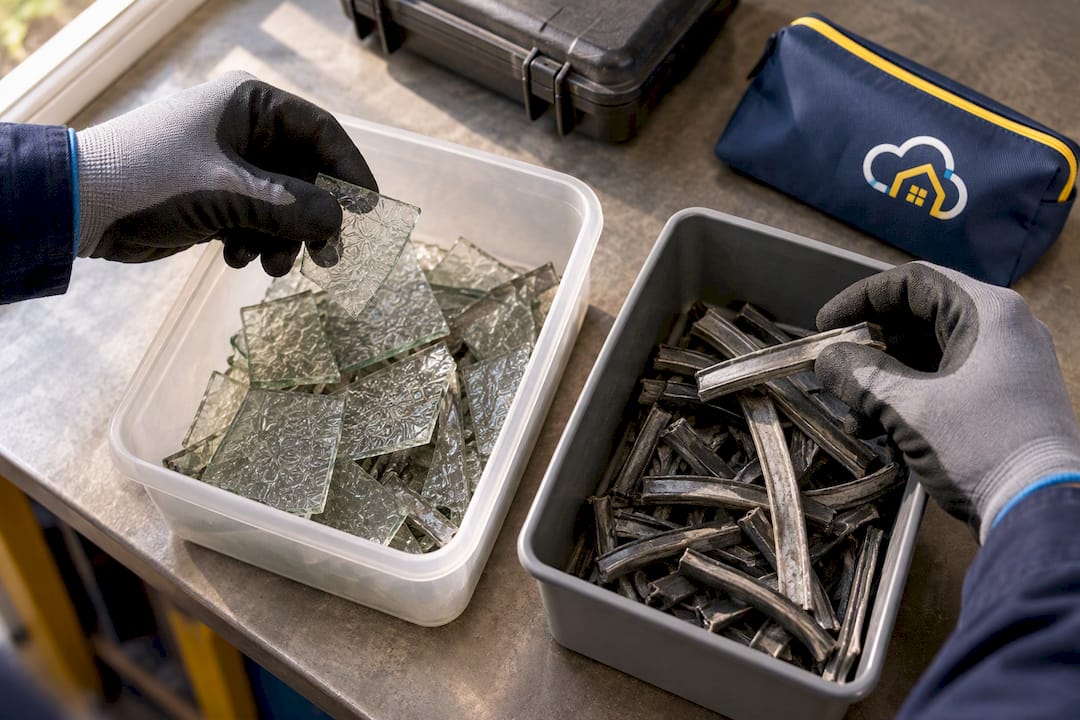
Choosing repair or secondary glazing over full replacement also has a smaller environmental footprint in itself, since it avoids manufacturing an entirely new unit when the original glass and frame remain serviceable. This is one more reason conservation-first approaches sit well with both heritage and environmental priorities.
Balancing heritage value against thermal performance
Minimal intervention, meaning repair plus secondary glazing, is the responsible default whenever original glass and frames survive in reasonable condition. It preserves the visual depth and character that make leaded windows distinctive, while still delivering a genuine improvement in warmth and quiet.
Slim-profile retrofits or, in limited cases, full replica double glazing become reasonable once the frame is beyond sensible repair or the window has no historic or listed status to protect. Even then, the goal should be to match the original detailing as closely as possible rather than accept a generic double-glazed unit because it is cheaper or quicker.
Whatever route you take, document the existing window thoroughly and speak to your local conservation officer early. A short conversation before ordering materials avoids far more expensive corrections later.
Getting a survey and quote from Cloudy2Clear Windows
If you would rather have a specialist handle the assessment than guess at options yourself, some service providers offer glass-only replacements, slimline retrofits and secondary glazing installation, all built around keeping your existing frame rather than replacing the whole window.
At survey, you can expect measured drawings, sample finishes for glazing bars and putty detail, and written warranty terms before you commit to anything.
- Glass-only replacement to reduce cost and disruption compared with a full window swap.
- Slimline and secondary glazing options suited to period and listed properties.
- A written specification covering thickness, spacer colour and bar detail.
To arrange a site visit, request a survey through our double glazing replacement page, and have your window’s approximate age and any listed or conservation area status ready to share with the surveyor.
Sources
For planning matters, check your local authority’s Article 4 direction register before assuming permitted development rights apply. For conservation principles, Historic England’s guidance on windows sets out when repair or secondary glazing is preferred. For thermal standards, Approved Document L explains U-value expectations for windows.
- Double glazing in listed buildings (Chelmsford guidance)
- Leaded window repair costs (2026 UK) — Checkatrade
FAQ
Can you remove lead from double-glazed windows?
Lead cames sit on the surface or within the sealed unit of a leaded double-glazed window, and a specialist can remove and replace them as part of a refurbishment. This is skilled work best left to an experienced glazier, since disturbing lead requires careful handling and disposal.
Is it worth replacing 20-year-old double glazing?
Sealed units often show reduced thermal performance and are more prone to seal failure, so many homeowners find replacement glass worthwhile at this stage. Whether it is worth it for you depends on whether the unit is misting, draughty or simply older, alongside your budget and the property’s conservation status.
What is the 25% glazing rule?
This term is not a recognised standard in current UK building regulations guidance, and definitions circulating online vary. If you have seen it referenced for a specific project, it is best checked directly against Approved Document L or with your local building control team.
How long does a guarantee on new leaded glazing typically last?
Guarantee lengths vary by installer and by whether the cover applies to the sealed unit or the installation itself. Some installers offer guarantees of extended length on glass-only replacement work.
Do I need planning permission to replace leaded windows?
If the property is listed, replacing historic glazing usually requires listed building consent, and Article 4 directions can also remove permitted development rights in some areas. Check your local authority’s Article 4 register and, where the building is listed, speak to the conservation officer before ordering any materials.