Window condensation is defined as moisture that forms on glass surfaces when warm, humid indoor air meets a cold pane and cools below its dew point. Left unmanaged, it causes mould growth, rotting window frames, and persistent damp that damages walls and ceilings. The good news is that a structured prevent window condensation workflow gives you a clear, repeatable method to control indoor humidity, improve ventilation, and protect your windows year-round. Ideal indoor relative humidity sits at 35–40% during winter. Keeping it there, using tools like hygrometers and Energy Recovery Ventilators (ERV), is the foundation of every effective condensation prevention plan.
What tools and measurements do you need to monitor condensation risk?
Accurate monitoring is the starting point for any window condensation solution. Without knowing your current indoor humidity and surface temperatures, you are guessing at the cause rather than fixing it.
A hygrometer measures relative humidity (RH) in real time. Basic models cost very little and give you an immediate reading of whether your home sits within the safe 35–40% RH range. Place one in each room where condensation appears most often, particularly kitchens, bathrooms, and bedrooms.
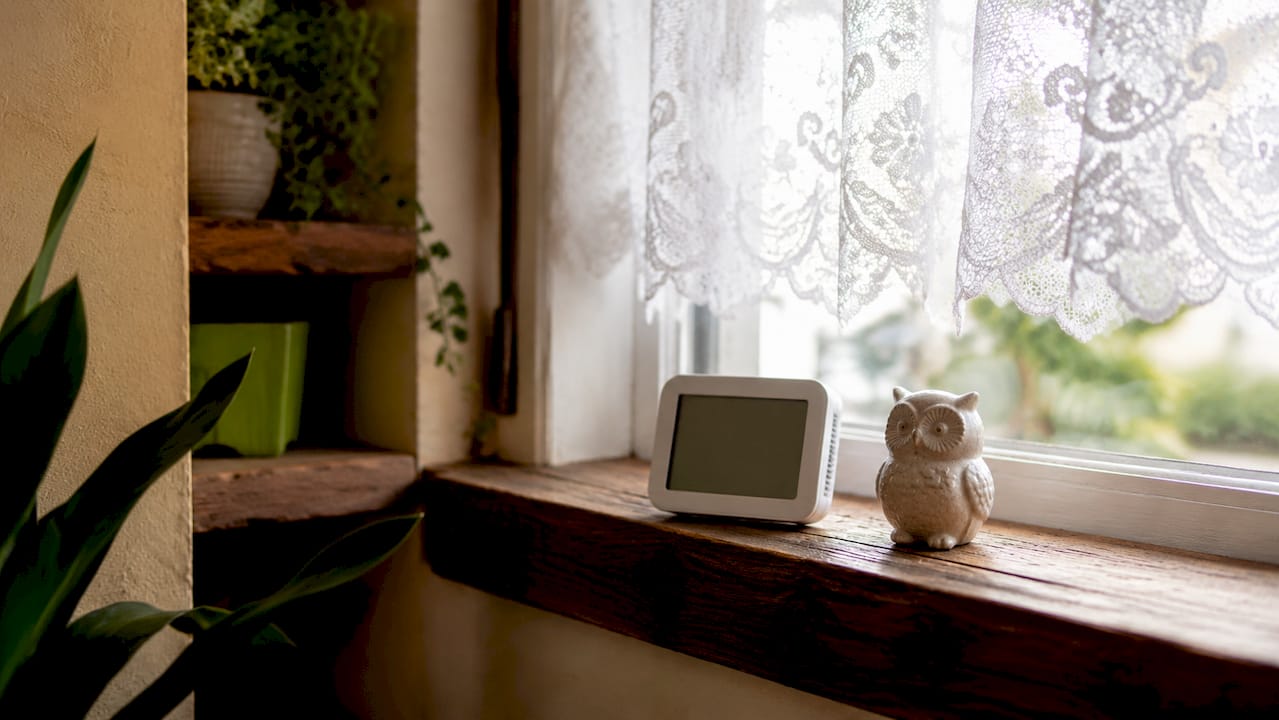
Temperature monitoring matters just as much. When glass surface temperatures drop below the dew point of the indoor air, condensation forms. A simple infrared thermometer lets you check glass temperatures directly. Smart home sensors go further, logging data over time so you can spot patterns, such as humidity spiking every morning after showers.
One important caveat: smart sensors can read RH 4–5% higher than the actual level. That means a reading of 50% might only be 45–46% in reality. Using thermal comfort integrations, such as those available through Home Assistant, helps offset this inaccuracy and lets you automate humidity control based on outdoor temperature forecasts.
| Tool | Approximate cost | Key feature |
|---|---|---|
| Basic hygrometer | £5–£15 | Real-time RH reading |
| Infrared thermometer | £15–£30 | Glass surface temperature |
| Smart humidity sensor | £25–£60 | Logging, alerts, automation |
| ERV/HRV system monitor | Included with unit | Whole-house air exchange data |
Pro Tip: Place a hygrometer on your windowsill overnight in winter. If it reads above 50% RH by morning, your ventilation is insufficient for the current outdoor temperature.
Step-by-step prevention workflow: ventilation, humidity, and temperature
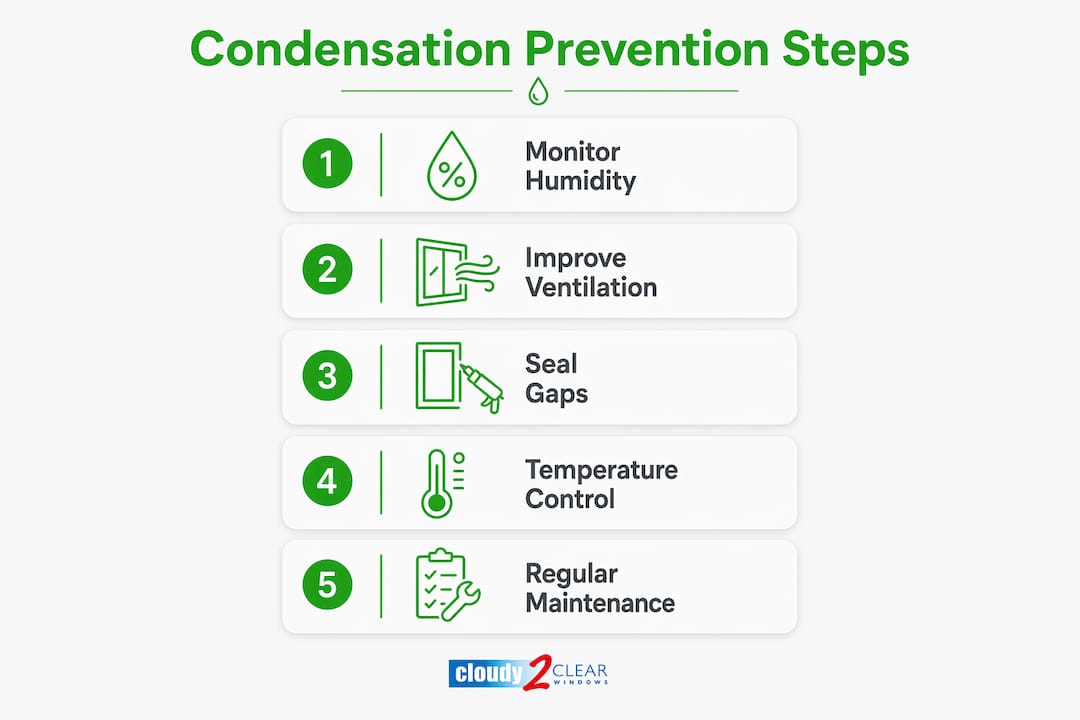
A structured approach to how to stop window condensation combines behaviour, technology, and physical improvements. Follow these steps in order, as each one builds on the last.
- Ventilate first. Open windows wide for 10–15 minutes each morning. Rapid air exchange removes overnight moisture build-up with minimal heat loss, more effectively than leaving trickle vents open all night.
- Run extractor fans correctly. Switch on bathroom fans before you shower, not after. Run them for 15–20 minutes after you finish. Standard bathroom fans move 50–110 CFM, which is enough to clear shower moisture quickly if used consistently.
- Set your dehumidifier to 35–40% RH. Place it in the rooms with the highest moisture output. Check the reading on your hygrometer after 24 hours to confirm the target is being met.
- Reduce moisture sources. Cover pots when cooking. Avoid drying clothes on radiators. Drying clothes indoors without ventilation adds 10–15 litres of moisture to your home each week. That single habit is one of the most common causes of persistent condensation.
- Maintain indoor heating. Keep rooms at a consistent temperature rather than letting them cool overnight. Cold surfaces attract condensation. A steady 18–20°C prevents the sharp temperature drops that cause dew point to be reached on glass.
- Check trickle vents. Make sure they are open and unblocked. Many homeowners close them to reduce draughts, which traps moisture inside.
- Inspect window seals. Damaged or missing seals allow cold air to reach the glass edge, lowering surface temperature and increasing condensation risk. Learn more about maintaining window seals to keep your frames in good condition.
A common mistake is sealing every gap in a property without maintaining any controlled ventilation. Sealing all draughts without extractor fans or trickle vents traps moisture inside, making condensation and mould significantly worse.
Pro Tip: Before choosing any intervention, walk through your property with your hygrometer and note which rooms read highest. Map these moisture ‘hotspots’ on a simple floor plan. You will spend your time and money where it actually matters.
How do you maintain window sealing and ventilation together?
Window sealing and ventilation are not opposites. They work together, and neglecting either one undermines the other. The goal is to seal unwanted gaps while keeping controlled airflow routes open.
Re-caulking window perimeters once or twice a year is one of the most cost-effective maintenance tasks you can do. Windows expand and contract with temperature changes throughout the year, which gradually opens small gaps in the sealant. Flexible caulk, such as Vulkem, handles this thermal movement better than rigid alternatives.
Draught-proofing focuses on sealing gaps around the window frame, not through the ventilation openings. The distinction matters. Sealing the frame reduces cold air infiltration, which keeps glass surfaces warmer and above the dew point. Blocking trickle vents or extractor fans removes the only route for moist air to escape.
Key maintenance steps to follow:
- Inspect caulk lines each autumn before cold weather arrives.
- Replace cracked or shrinking sealant promptly. Gaps as small as 1mm allow cold air to chill the glass edge significantly.
- Keep trickle vents clean and fully open during winter months.
- Check that extractor fan grilles are free of dust and debris.
- Review draught-proofing techniques annually to catch any new gaps caused by settling or thermal movement.
Over-sealing is a real risk in older properties that have been progressively upgraded. Each improvement reduces natural air exchange. Without a compensating ventilation strategy, the result is a tightly sealed building with nowhere for moisture to go.
Pro Tip: Run your hand around window frames on a cold, windy day. Any cold air you feel is a gap that needs sealing. Do this before re-caulking so you know exactly where to focus.
What are the long-term structural solutions for persistent condensation?
Behavioural changes and maintenance address the symptoms. Structural upgrades address the cause by keeping glass surfaces permanently warmer and improving whole-house air quality.
Energy Recovery Ventilators (ERV) and Heat Recovery Ventilators (HRV) recover 70–80% of heat from outgoing air while bringing fresh air in. They maintain continuous, controlled ventilation without the heat loss associated with simply opening windows. Installation costs typically fall between £1,500 and £3,500, making them a significant but durable investment for properties with chronic condensation problems.
Double and triple glazing, combined with loft insulation and internal wall insulation, raises glass and wall surface temperatures above the dew point. This directly reduces the conditions that cause condensation to form. For property managers overseeing multiple units, these upgrades also reduce heating costs and improve tenant comfort. You can read more about condensation prevention in double glazing to understand which glazing specification suits your property type.
Adequate roof ventilation also plays a role. Moisture that accumulates in loft spaces can migrate downward, raising whole-house humidity and contributing to window condensation on upper floors.
| Solution | Approximate cost | Effectiveness | Maintenance required |
|---|---|---|---|
| Window insulation film | £10–£30 per window | Moderate, temporary | Annual replacement |
| Re-caulking | £5–£20 per window | High for gap sealing | 1–2 times per year |
| Double/triple glazing | £400–£900 per window | High, permanent | Seal inspection annually |
| ERV/HRV system | £1,500–£3,500 | Very high, whole-house | Filter cleaning quarterly |
Temporary solutions like window insulation film are useful for renters or as a short-term fix during a cold winter. Permanent structural upgrades deliver consistent results over decades and add measurable value to a property.
How do you troubleshoot condensation hotspots and common mistakes?
Condensation is primarily a moisture source issue, not a window fault. Recognising this changes where you look for solutions. Most persistent condensation problems trace back to a handful of repeated behaviours.
Common mistakes that worsen condensation:
- Drying clothes on radiators without opening a window or running a dehumidifier.
- Leaving curtains closed against windows overnight, which traps cold air between the curtain and glass and accelerates condensation.
- Turning off extractor fans immediately after cooking or showering.
- Pushing furniture against external walls, which restricts airflow and creates cold, damp patches.
- Closing trickle vents to reduce noise or draughts.
To identify your hotspots, walk through the property on a cold morning with your hygrometer. Note every room where readings exceed 50% RH or where visible condensation appears. Rank them by severity and address the highest-moisture rooms first.
Verify that your interventions are working by re-measuring RH in the same locations one week after making changes. If readings have not dropped, the moisture source is still active. Common overlooked sources include unvented tumble dryers, fish tanks, and large numbers of houseplants in small rooms.
Pro Tip: Cover pots when cooking and run the kitchen extractor fan for at least ten minutes after you finish. Kitchen steam is one of the fastest ways to spike indoor humidity to condensation-causing levels.
Why ventilation always comes before sealing, in my experience
After working with homeowners across the UK since 2005, Cloudy2Clear Windows has seen the same pattern repeat itself. A homeowner notices condensation, seals every gap they can find, and then calls us six months later because the mould is worse than before. Sealing without ventilation is the single most common mistake we encounter.
The instinct to seal makes sense. Draughts feel like the problem. But draughts are also the only unplanned ventilation many older homes have. Remove them without replacing that airflow, and moisture has nowhere to go.
The properties that manage condensation best are not the most tightly sealed. They are the ones where the owner has invested in controlled ventilation, whether that is a well-maintained extractor fan, a trickle vent left open year-round, or an ERV system. Sealing then follows as a complement, not a substitute.
Smart humidity monitoring has changed what is possible for homeowners willing to engage with it. Automating a dehumidifier or ERV based on real-time RH data removes the guesswork entirely. The technology is affordable and the results are measurable. That combination is rare in home maintenance, and worth taking seriously.
The other thing worth saying plainly: condensation on the inside of your glass is rarely a sign that your windows are broken. It is a sign that your home is producing more moisture than it is releasing. Fix the moisture balance first, then assess whether your windows need attention.
How Cloudy2Clear Windows can help with your window maintenance
If you have worked through your condensation prevention steps and your windows are still showing persistent moisture, the frames or seals may need professional attention.

Cloudy2Clear Windows has been repairing and replacing double glazed windows across the UK since 2005. Our engineers assess window seal integrity, identify failed units, and carry out repairs that restore the thermal performance your glazing was designed to deliver. Whether you are a homeowner in Milton Keynes or a property manager in Oxford, we cover a wide range of locations. Contact us for a double glazing repair assessment in your area, or visit our Oxford repairs page to find your nearest team.
FAQ
What is the ideal indoor humidity to prevent condensation?
Ideal indoor relative humidity during winter is 35–40%. Keeping RH within this range prevents moisture from reaching the dew point on cold glass surfaces.
Does sealing windows stop condensation?
Sealing gaps reduces cold air infiltration, but sealing without ventilation traps moisture indoors and worsens condensation. Always maintain extractor fans or trickle vents alongside any draught-proofing work.
How much moisture does drying clothes indoors add?
Drying clothes indoors without ventilation adds 10–15 litres of moisture to your home each week. This is one of the leading causes of persistent window condensation in UK homes.
How long should I run a bathroom extractor fan?
Run your bathroom fan during your shower and for 15–20 minutes afterwards. This removes the bulk of shower moisture before it can settle on windows and walls.
When should I call a professional about window condensation?
Call a professional when condensation appears between the panes of a double glazed unit, as this indicates a failed seal that ventilation and humidity control cannot fix. Cloudy2Clear Windows can assess and repair failed units across many UK locations.