Water between the panes of a double glazed window means the sealed unit has failed, and it will not clear by itself. The good news is that you rarely need a whole new window: if the frame is sound, only the glass unit needs replacing. That is what we do at Cloudy2Clear Windows, and we have been doing it since 2005. This guide shows you how to tell where the water is, why it appears and what to do next.
First, find out where the water is
“Water in double glazing” can mean three different things, and only one of them is a fault with the glass. A quick wipe test tells you which. Try it on a dry, mild day so the mist has time to settle.
- Wipe the inside surface of the glass. If the water comes off, it is room-side condensation. It comes from moisture in your home’s air.
- Wipe the outside surface. If the water comes off from outside only, it is condensation on the outer face of the glass.
- If neither side wipes clear, the water is inside the sealed unit. The Damp Guy’s guide describes this as the point where the unit’s drying agent is saturated and the unit has failed.
The table sets out what each result means.
| Where the water is | What it usually means | What to do |
|---|---|---|
| Inside surface of the room-side pane | Moisture in the room air meeting a cold surface | Improve ventilation and heating habits |
| Outside surface | Glass is cooler than the outdoor dew point | Nothing: it is normal |
| Between the panes | Failed seal on the sealed unit | Replace the glass unit |
Water on the outside of the glass is normal
It can look alarming to see droplets or a film on the outer pane on a clear, cold morning. The Glass and Glazing Federation (GGF) explains in its condensation guidance that external condensation forms when the outside surface of the glass falls below the outdoor dew point. It is most common in humid, clear, cold spring and autumn conditions.
The GGF describes it as strong evidence that heat is not escaping from your house through the glass. The more thermally efficient the glazing, the more likely it is. It clears as the day warms up, and it needs no repair.
Water on the inside surface: a moisture problem in the room
Condensation on the room-side surface is a different matter. It forms when warm, moist air meets a surface that is too cold to hold that water vapour. Pilkington’s installer guidance gives bathrooms as the obvious example.
The GGF lists four factors behind it: the water vapour in the air from washing, cooking and bathing, the room temperature, the outside temperature, and the difference between the two. Double glazing insulates, but it is not a heat source and cannot control the moisture in your air.
The GGF advises these steps to reduce it:
- Ventilate without creating draughts, by opening windows slightly or using trickle vents (the small slots in the window frame that let in a little air).
- Check that trickle vents are actually open.
- Keep wall vents clear.
- Keep draught-proofed internal doors closed, so steam stays out of colder rooms.
- Keep some heating on in cold weather, and place radiators under windows.
- Hang curtains 15 to 20cm from the glass, with gaps at the top and bottom.
Huntingdonshire District Council’s damp and condensation leaflet adds practical habits: dry windows and sills, wring out cloths instead of drying them on radiators, cover saucepans, use extractor fans and heat the home to 18 to 21°C. If mould has appeared, it recommends an HSE-approved fungicidal wash.
We also cover this in more detail in our guide on how to prevent condensation in double-glazed windows.
Water between the panes: why the seal fails
A double glazed unit is two panes of glass held apart by a spacer bar. The spacer contains a desiccant, a drying agent that absorbs the small amount of moisture trapped inside. Around the edge are an inner and an outer seal. The Damp Guy explains that moisture slowly works through the seal from the day the unit is made. When the desiccant can no longer absorb it, mist appears between the panes.
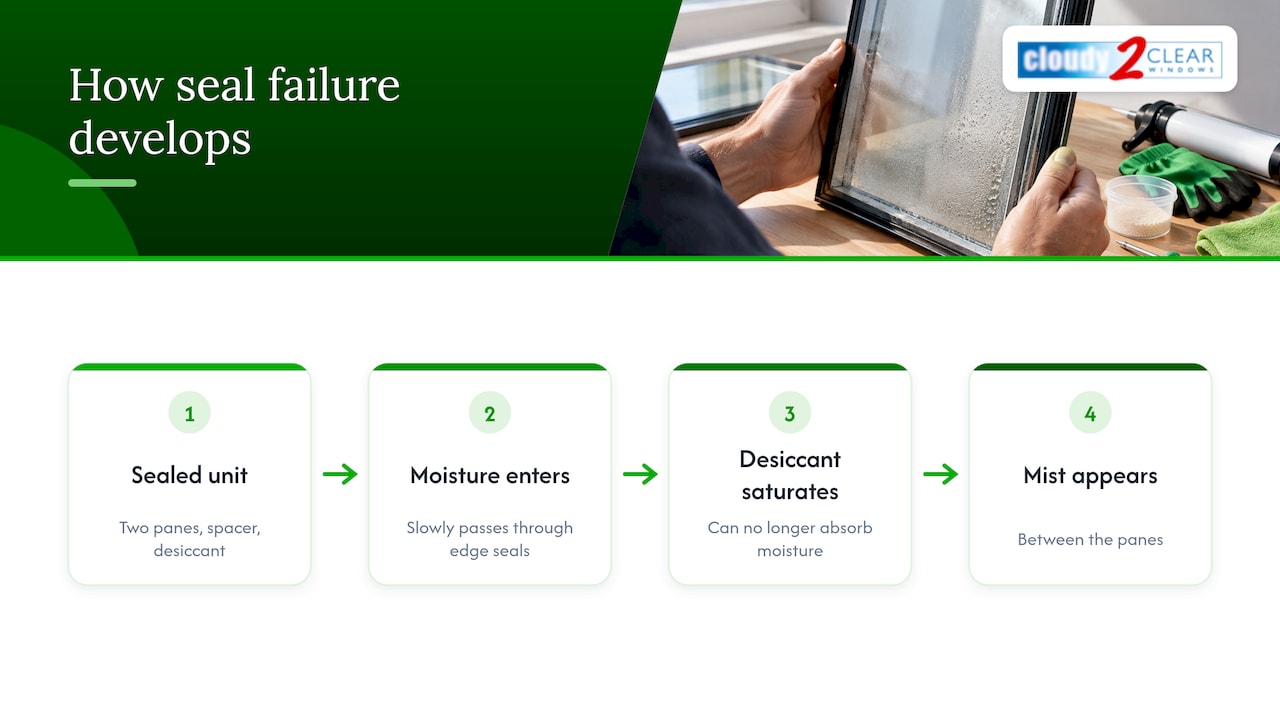
The GGF states that condensation within the cavity of a sealed unit denotes failure of the seal. It also says condensation will not form on the inside of a correctly functioning unit. Nothing about your heating or ventilation causes it, and no amount of airing the room will clear it.
A RICS journal article notes that edge seals tend to fail after 25 to 30 years as they become more porous. Units can fail sooner if they were poorly made or have been knocked or stressed.
What the mist looks like
- A cloudy haze or fogging that is worse in cold weather and thinner in the afternoon.
- Beads of water or a watermarked film that dry into a mineral stain.
- Water pooling at the bottom edge of the unit.
If you see any of these, the unit is the problem, not the room. Our article on why glazed units mist up goes through the causes in more depth.
Will a hair dryer clear the water?
It will not. A hair dryer reaches only the room side of the glass, and the water is inside the sealed cavity. The Damp Guy makes the same point: if you cannot wipe the water from either side, nothing pointed at the glass will reach it. Any clearer spell is short, and the mist returns on the next cold morning. It is a sign the water is trapped, not a repair.
Drilling and “resealing”: why a new unit is the lasting answer
Some firms offer to drill small holes in the unit, add a drying agent and fit vents. Which? says this is likely to be a short-term fix, as the inserted plug often comes loose again within six months. The Damp Guy notes that vents are fitted to control how much air enters the unit, so the unit is vented rather than resealed.
The RICS article says a misted unit with edge seal failure cannot be repaired in place and must be replaced as a whole new unit. Replacing the sealed unit is the route that deals with the cause, which is the failed seal itself.
Replace the glass, not the whole window
Where the frame is in sound condition, only the glass unit needs replacing. Axiom Eco Homes explains that the frame, hinges and handles stay in place. The failed unit is removed, the opening is measured and a new unit is made to fit.
This is exactly how our glass-only service works. We replace the glass and keep the frame, which means less disruption and a faster job than replacing the whole window. Our double glazing replacement service covers misted, cracked and failed panes.
Here is the process from your side:
- Confirm the diagnosis. Use the wipe test above, or ask us to look.
- Check the frame. Sound uPVC, timber or aluminium can usually stay. Our team can advise when you book a quote.
- Measure the unit. The new unit has to match the opening exactly.
- Fit the new sealed unit. The old glass comes out and the new one goes into the existing frame.
We can also fit insulated glass units for energy efficiency and soundproofing glass when we replace the pane. See our insulated glass options.
Different properties, different needs
Homeowners. One misted pane in a bedroom or living room is the typical case. A glass-only replacement restores clarity without disturbing the rest of the window. We also repair conservatory windows, Velux windows and caravan windows.
Business owners. Shopfronts, offices and other commercial premises often have many units. Our commercial window repair service handles failed glass across a site, and our inspection service is available for commercial and housing association properties.
Housing associations. Where you manage many homes, misted units generate repeat reports from tenants. Our inspection service and full replacement work are set up for housing association property managers.
Our perspective
We see water in double glazing as a glass problem first and a window problem second. When the seal on a unit fails, the frame is very often still perfectly good, so replacing the whole window means paying for disruption you do not need.
That is why we replace only the glass. It is designed to cost less, cause less mess and be quicker than a full window replacement. Our work comes with a 25-year guarantee, and we can fit eco-friendly insulated glass options and soundproofing units at the same visit.
If you have worked out that the water is between the panes, you already have your diagnosis. The next step is a quote.
Get a quote from Cloudy2Clear Windows
We have installed, replaced and repaired double glazing for homes and businesses since 2005, with nationwide coverage. If your wipe test says the water is inside the unit, we can replace the glass and leave your frame where it is.

You can call us 24 hours a day, 7 days a week to book a quote. Our operational hours are 8.30am to 6.30pm. See our double glazing replacement page, or visit our home page to find your local branch. We cover areas including Wigan, Gloucester, Stockport and Norwich.
Does a guarantee or FENSA cover a misted unit?
A failed unit is covered by the guarantee that came with the original installation, if it is still valid. The Damp Guy notes that a misted unit is not a FENSA complaint, because FENSA covers only building regulations compliance for approved installers in England and Wales. If you are unsure, check your installation paperwork first. Any replacement we fit comes with our 25-year guarantee.
FAQ
Is it normal to have water on the inside of windows?
Water on the room-side surface is common and comes from moisture in the air meeting cold glass. It is a ventilation and heating matter, not a fault with the glass. Opening trickle vents, using extractor fans and keeping some background heating on all help.
Does condensation mean my house is too cold?
Not necessarily. The GGF says condensation depends on the moisture in the air, the room temperature, the outside temperature and the difference between them. A warm home with lots of steam and little ventilation can still have wet windows.
Can water between the panes dry out by itself?
It can seem to fade in warmer weather, but the seal has failed and the moisture is still inside the unit. The mist returns when the temperature drops. A replacement glass unit is the lasting answer.
Do I need a whole new window if the glass has misted?
Not if the frame is sound. Only the glass unit needs replacing, and the frame, hinges and handles stay in place. This is the glass-only approach we use at Cloudy2Clear Windows.
Can I book a quote outside office hours?
Yes. You can call us 24 hours a day, 7 days a week to book a quote. Our operational hours are 8.30am to 6.30pm.
Sources
- The Damp Guy: Condensation in double glazing
- GGF: Condensation, some causes, some advice
- Pilkington: Top tips for installers on window condensation
- Huntingdonshire District Council: Controlling damp and condensation
- RICS: Knowing your way round glass and glazing systems
- Which?: Double glazing repairs and maintenance
- Axiom Eco Homes: Why double glazed windows mist up inside