Most people assume all glass is broadly the same. It is not. What is toughened safety glass, and why does it matter for your home or business? It is a specially treated product that performs dramatically differently from ordinary glass. Get the specification wrong, and you may be breaching UK Building Regulations without realising it. Get it right, and you have a product that is safer, stronger, and more versatile than anything standard glazing can offer. This guide covers exactly what you need to know.
What is toughened safety glass?
Toughened safety glass, also widely known as tempered safety glass, is ordinary glass that has been put through a controlled thermal treatment process to dramatically change its physical properties. Here is how it works.
The glass is heated in a furnace to around 620°C and then rapidly cooled using a process called quenching, where jets of cool air are blasted across both surfaces simultaneously. This rapid cooling causes the outer surfaces to contract and harden before the inner core has finished cooling. The result is a permanent state of compressive stress on the surface, with tensile stress held in the centre. That internal tension is exactly what gives toughened glass its remarkable mechanical performance.
The practical outcome is significant. Toughened glass is approximately five times stronger than ordinary annealed glass of the same thickness. It also withstands temperatures up to around 250°C, making it far more resistant to thermal stress than standard glazing.
Crucially, when toughened glass does break, it behaves very differently from ordinary glass. Rather than fracturing into long, razor-sharp shards, toughened glass shatters into small blunt cubes. These pieces are far less likely to cause serious lacerations, which is the whole point of calling it safety glass.
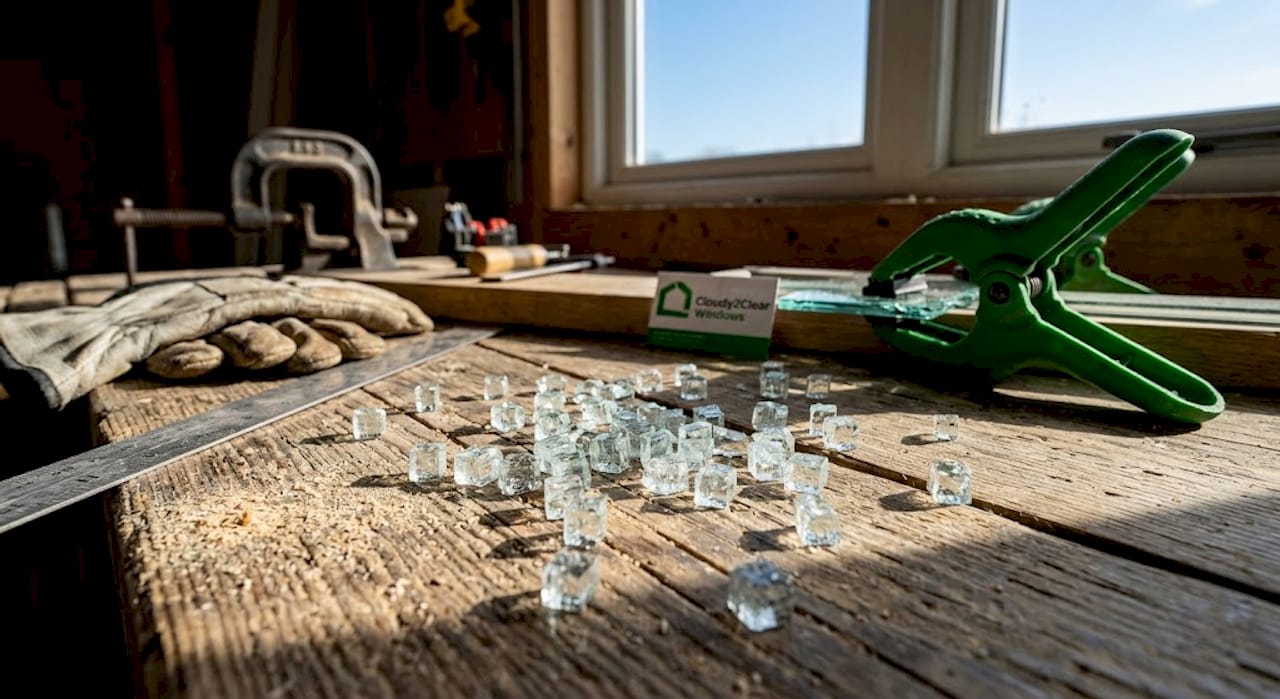
One thing worth knowing before you purchase: all cutting, drilling, and shaping must be done before the toughening process. Once treated, the glass cannot be cut or modified. Any attempt to do so will cause it to shatter completely.
Pro Tip: Always confirm your glass measurements and any required cut-outs for handles or fittings before ordering toughened glass. Changes cannot be made once it has been through the toughening process.
Benefits of toughened glass for UK properties
The advantages of toughened glass go well beyond simply meeting a legal standard. Here is what makes it a genuinely smart choice for homes and businesses across the UK.
- Significantly stronger. At roughly five times the strength of standard glass, toughened glazing resists impact from accidental knocks, flying debris, and everyday use far more effectively.
- Safer when broken. The small, blunt fragments produced on breakage greatly reduce the risk of serious injury, making it the right choice anywhere people are close to glazed surfaces.
- Thermally resistant. With a tolerance of up to 250°C, it handles temperature fluctuations in kitchens, conservatories, and south-facing rooms without warping or cracking under heat stress.
- Versatile for installation. Because of its strength, toughened glass supports frameless designs such as glass balustrades, structural partitions, and shower enclosures, giving architects and homeowners far more flexibility.
- Cost-effective. Compared to laminated safety glass, toughened glass typically costs £15 to £30 more per pane than standard glass, making it the more affordable safety upgrade.
Pro Tip: If you are refurbishing a bathroom or fitting a new shower enclosure, toughened glass is specifically recommended over other glass types. Its safe breakage behaviour is particularly valuable in wet environments where a slip or fall could result in contact with glazing.
The durability of toughened glass also reduces long-term maintenance costs. It is less likely to scratch or chip during installation and handles the kind of incidental contact that would crack or scratch standard glass with relative ease.
UK regulations and where toughened glass is required
UK Building Regulations Approved Document K sets out clear requirements for safety glazing in critical locations. If you are renovating, building, or replacing glass in your property, these rules apply to you directly.
Safety glass is legally required in the following critical zones:
| Location | Critical dimension |
|---|---|
| Glazed doors (full and partial) | Glazing within 1,500mm from floor level |
| Side panels adjacent to doors | Glazing within 300mm of the door frame |
| Low-level windows and panels | Glazing below 800mm from floor level |
In these areas, the glass must either break safely (as toughened glass does) or be robust enough to resist breakage. The regulations do not specify toughened glass by name. UK law requires safe breakage or robustness, not a specific product, meaning laminated glass or a physical barrier can also fulfil the requirement in some circumstances.
That said, toughened glass is by far the most common and cost-effective way to meet the standard, which is why it is the default choice across residential and commercial projects in the UK.
For businesses and commercial premises, the rules are particularly firm. Workplace glazing under UK Regulation 14 requires that doors and partitions use either toughened or laminated glass, and safety glass must be appropriately marked. On larger glazed surfaces, manifestation markings are also required to prevent collisions, such as frosted bands or patterns at eye level.
See our guide on safety glass requirements for a broader breakdown of how these regulations apply to different property types.
Toughened vs laminated glass: which should you choose?
Both toughened and laminated glass qualify as safety glazing under UK regulations, but they are made differently and behave differently in use. Understanding those differences helps you choose the right product for each application.
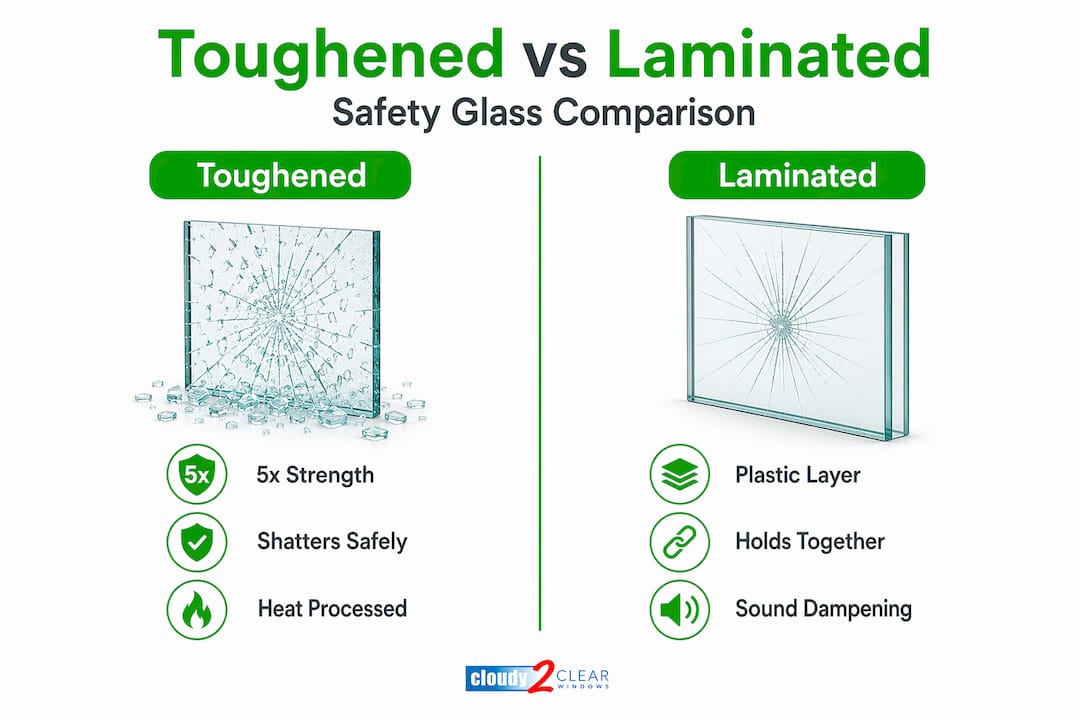
Laminated glass is made from two or more panes bonded together with a polyvinyl butyral (PVB) interlayer. When it breaks, the fragments stay attached to the interlayer rather than scattering. Toughened glass shatters into small blunt cubes, while laminated glass holds the broken pieces together. Neither outcome causes the jagged laceration risk associated with ordinary annealed glass, but the practical results are quite different.
Here is a direct comparison to help you decide:
| Feature | Toughened glass | Laminated glass |
|---|---|---|
| Strength vs standard glass | Up to 5x stronger | Moderate increase |
| Breakage behaviour | Shatters into small blunt pieces | Cracks but stays bonded |
| Post-breakage opening | Yes (glass falls away) | No (interlayer holds fragments) |
| Typical cost premium per pane | £15 to £30 | £30 to £60 |
| Best suited for | Doors, windows, showers, balustrades | Overhead glazing, security, noise reduction |
| Can be cut after manufacture | No | Yes (with care) |
The key consideration is what happens after breakage. In areas where you need the glass to remain in place after an impact, such as overhead rooflights, skylights, or security-sensitive areas, laminated glass is the preferred option. For everything from residential doors and side panels to shopfronts and shower screens, toughened glass delivers the right balance of strength, safety, and value.
For a full breakdown of when laminated glass is the better choice, the laminated glass guide from Cloudy2Clear Windows is worth reading alongside this article.
Choosing and installing toughened glass in your property
Making the right choice about safety glazing starts with an honest assessment of your property and what the regulations require of you.
- Identify your critical zones. Walk through your property and check any glazing near doors, at low level, or in areas with heavy foot traffic. If any of those panes are standard annealed glass, they may not be compliant.
- Check what you are replacing. Replacing annealed glass with more annealed glass in a safety-critical location is a breach of UK Building Regulations. Any like-for-like replacement in a critical zone must use safety glass.
- Budget realistically. Toughened glass costs roughly £15 to £30 more per pane than standard glass. On a whole-house renovation, that is a modest additional spend for a significant safety improvement.
- Always use a qualified installer. Toughened glass must be specified and fitted correctly to perform as intended. An experienced glazier will also select the right glass type and confirm compliance with Approved Document K.
- Look for the kite mark. Compliant toughened safety glass is marked with the British Standards kite mark (BS EN 12150). Always check for this marking when purchasing or verifying installed glass.
- Plan modifications before ordering. Toughened glass cannot be cut or drilled after manufacture. Confirm your exact dimensions, frame specifications, and any hardware requirements before placing an order.
Pro Tip: If you are unsure whether the glazing in your property meets current safety standards, a professional glazing survey is a worthwhile investment. A qualified installer can check each pane against Approved Document K requirements and identify any glazing that poses a risk or breach.
My take on toughened glass after 20 years in the trade
I have visited hundreds of properties across the UK where the glazing around doors and low-level windows was still the original annealed glass from decades ago. The owners had no idea it was non-compliant, and in many cases, no idea how much of a hazard it represented.
What I have learned is that most people do not avoid toughened glass because of cost. They avoid it because nobody has explained what it actually does, or told them clearly that the law requires it in certain locations. Once they understand that replacing annealed glass in critical zones with more of the same breaches Building Regulations, the conversation changes immediately.
My honest opinion: toughened glass is the right call for the vast majority of residential and commercial applications in the UK. It is not just about ticking a compliance box. It genuinely performs better, breaks more safely, and costs less than people assume. The gap between toughened and standard glass in price terms is small. The gap in safety is not.
Where I have seen laminated glass genuinely earn its higher cost is in overhead glazing and situations where security is the priority. For everything else, toughened glass does the job better and for less money. Do not let the slightly higher upfront cost put you off. The cost of not having it in the right place is far greater.
— Cloudy2Clear Windows
How Cloudy2Clear Windows can help
If this article has prompted you to look more closely at the glazing in your home or business, Cloudy2Clear Windows is ready to help.
Established in 2005, Cloudy2Clear Windows has been installing, replacing, and repairing double glazed units across the UK for over two decades. The team works across both residential and commercial properties, covering areas including Milton Keynes, Watford, Oxford, Leicester, and Bury St Edmunds, among many others. Whether you need a single pane replaced in Milton Keynes, safety glass fitted at your Watford commercial premises, or a full assessment of your glazing compliance, the team brings the expertise to get it right.
For businesses, Cloudy2Clear Windows also offers a dedicated commercial window repair service covering toughened glass installation, replacement, and compliance work across a wide range of sectors. All work is carried out to UK Building Regulations standards, giving you peace of mind that your glazing is not just safe but fully compliant.
Get in touch with Cloudy2Clear Windows for a quote or a glazing consultation. It is a straightforward conversation that could save you from a costly compliance issue down the line.
FAQ
What is the difference between toughened and tempered glass?
There is no practical difference. Toughened glass and tempered glass are the same product, just referred to by different names. Both terms describe glass that has been heat-treated and rapidly cooled to increase strength and produce a safer breakage pattern.
Is toughened safety glass a legal requirement in UK homes?
Yes, in specific locations. UK Building Regulations Approved Document K requires safety glazing in glazed doors within 1,500mm of the floor, side panels within 300mm of a door, and low-level glazing below 800mm. Toughened glass is the most common way to comply, though laminated glass is also acceptable.
How strong is toughened glass compared to ordinary glass?
Toughened glass is approximately five times stronger than standard annealed glass of the same thickness. This makes it significantly more resistant to impact, thermal stress, and everyday wear.
Can toughened glass be cut or drilled after manufacture?
No. All cutting, drilling, and shaping must be completed before the glass undergoes the toughening process. Attempting to modify toughened glass after treatment will cause it to shatter entirely.
What does toughened glass cost compared to standard glass?
Toughened glass typically costs £15 to £30 more per pane than standard glass. Laminated safety glass carries a higher premium of £30 to £60 per pane, making toughened glass the more cost-effective safety glazing option for most applications.