Energy efficient windows are defined as glazing systems engineered to minimise heat transfer, reduce air infiltration, and lower the energy demand of a building. For UK home and business owners, the question of why invest in energy efficient windows has a clear answer: reduced energy bills, improved comfort, and a measurable boost to property value. ENERGY STAR-certified windows save homeowners up to 13% on energy bills compared to single-pane alternatives. The UK assesses window performance through Window Energy Ratings (WER) and U-values, both of which account for the whole window, including frame and seals.
Why invest in energy efficient windows: how they reduce heat loss
Understanding how these windows actually work helps you appreciate the value they deliver. The performance gains come from several technologies working together, not from any single feature.
- Multi-pane glazing and gas fills. Double and triple glazed units trap air or inert gas between panes, creating a thermal barrier. Argon and krypton gas fills significantly reduce heat transfer through glazing, with argon being the more cost-effective choice and krypton offering superior performance in thinner profiles.
- Low-emissivity coatings. A low-e coating is a microscopically thin metallic layer applied to the glass surface. Low-e coatings reduce heat transfer by 30% to 50%, reflecting radiant heat back into the room during winter while limiting solar heat gain in summer.
- Insulated and thermally broken frames. The frame contributes significantly to overall window performance. Wood, uPVC, composite, and fibreglass frames all offer better thermal resistance than standard aluminium. Thermally broken frames include a non-conductive barrier that interrupts the path heat takes through the frame material.
- Warm edge spacers. The spacer bar separating the panes is often overlooked. Warm edge spacers minimise condensation and enhance thermal performance at the glass edges, reducing cold spots that cause discomfort near windows.
- Air leakage control. Windows and doors account for approximately 20% of household air infiltration. Reducing this leakage means your heating system works less hard, which cuts both energy use and wear on the equipment.
In the UK, performance is measured using WER bands and U-values, which range from A++ down to G and factor in heat transfer, solar gain, and air leakage across the whole window unit. A window rated A or above is the minimum worth specifying for a meaningful upgrade.
Pro Tip: When comparing quotes, always ask for the whole-window U-value rather than the centre-pane figure. The centre-pane value is consistently better and does not reflect real-world performance.
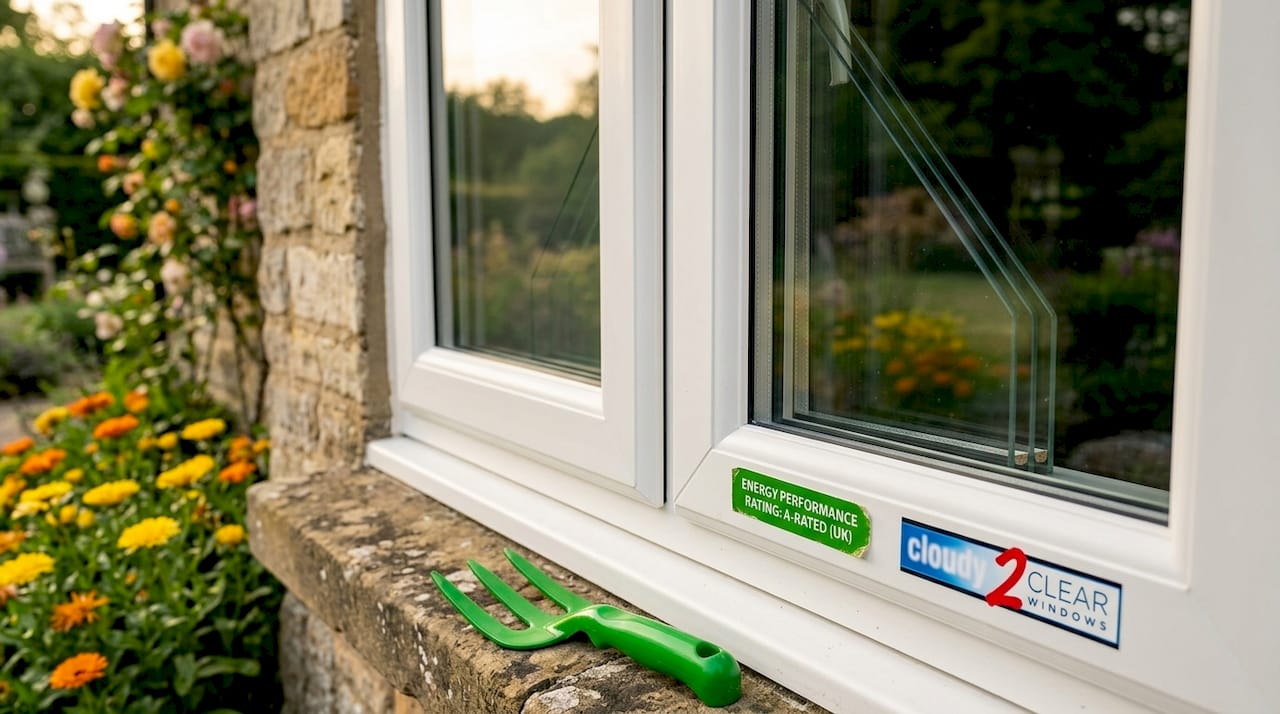
Double vs triple glazing: which is right for your property?
Choosing the right window type depends on your climate, budget, and building type. The table below compares the most common options available to UK buyers.
| Feature | Double glazing | Triple glazing | uPVC frame | Timber frame | Composite frame |
|---|---|---|---|---|---|
| Typical U-value | 1.2 to 1.6 W/m²K | 0.6 to 0.8 W/m²K | Good | Very good | Excellent |
| Cost | Lower | Higher | Lower | Higher | Higher |
| Weight | Moderate | Heavy | Light | Moderate | Moderate |
| Maintenance | Low | Low | Very low | Higher | Low |
| Best for | Most UK homes | Cold or exposed locations | Budget upgrades | Heritage properties | Commercial use |
Triple glazing delivers the lowest U-values and is worth considering for properties in exposed northern locations or those with large glazed areas. For most UK homes, high-specification double glazing with argon fill and a low-e coating achieves a strong balance of performance and cost.
Frame material matters as much as the glass itself. Key considerations include:
- uPVC offers excellent thermal performance, low maintenance, and competitive pricing, making it the most popular choice in the UK residential market.
- Timber suits period properties and offers good insulation, but requires regular painting or staining to maintain performance.
- Composite and fibreglass frames provide the best long-term thermal stability and are increasingly specified for commercial projects.
- Casement and awning windows seal more tightly than sliding types. Sliding windows generally have higher air leakage rates due to their sealing mechanics, which reduces overall efficiency.
The Solar Heat Gain Coefficient (SHGC) is worth understanding if your property has south-facing glazing. A lower SHGC limits solar heat entering the building, which reduces cooling loads in summer. A higher SHGC is preferable for north-facing rooms where passive solar gain helps offset heating costs in winter.
What are the financial and environmental benefits of upgrading windows?
The advantages of energy efficient windows extend well beyond lower energy bills, though the bill savings alone justify the investment for most UK properties.
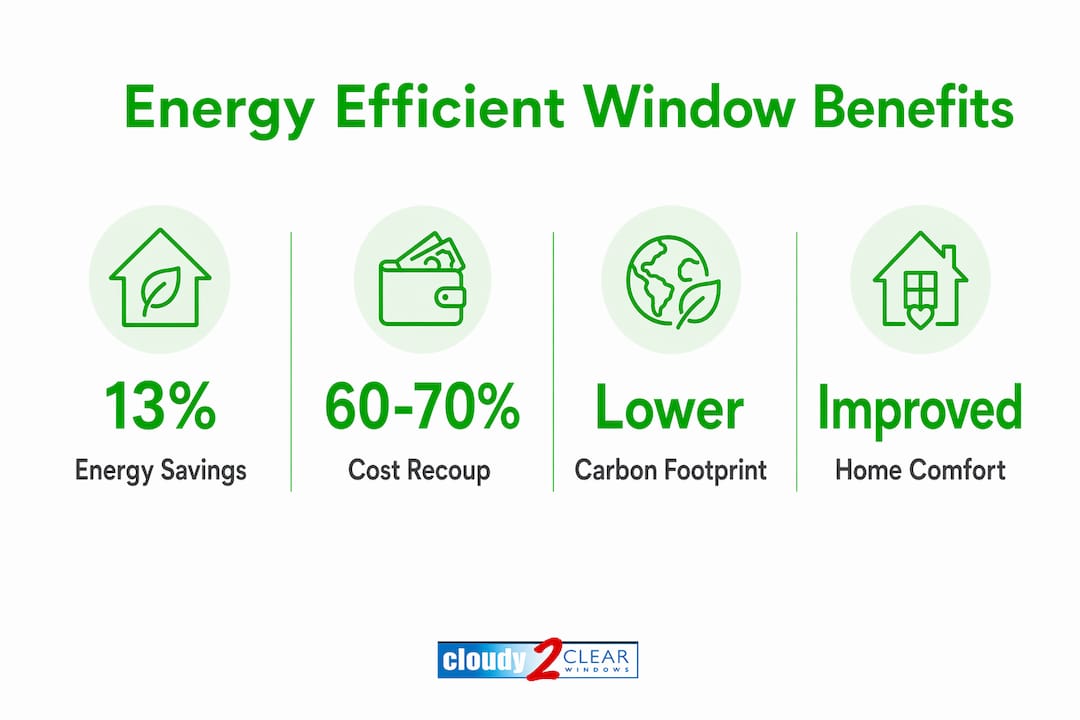
The financial case is straightforward. ENERGY STAR-certified replacement windows deliver up to 13% savings on energy bills, with the benefit felt immediately in the first heating season. Homeowners also recoup around 60 to 70% of window upgrade costs on resale, alongside improved kerb appeal and a stronger Energy Performance Certificate (EPC) rating. A better EPC rating directly affects the marketability and rental eligibility of a property, particularly as minimum EPC standards for rental properties tighten.
Comfort improvements are equally significant. Many owners find that eliminating drafts and temperature swings is the benefit they notice first, before any bill reduction appears. Cold spots near windows disappear, condensation reduces, and rooms feel consistently warmer without the heating running at full capacity.
The environmental case is also compelling. Reducing your heating demand directly cuts your property’s carbon footprint. For businesses, this contributes to sustainability reporting and can support compliance with corporate environmental targets. You can read more about energy saving window benefits on the Cloudy2Clear Windows website.
Pro Tip: Do not expect to recoup the full investment through energy savings alone within five years. The real return combines bill savings, comfort gains, reduced HVAC maintenance costs, and the uplift to your property’s sale or rental value.
UK regulations and funding schemes for window upgrades
The UK has a clear regulatory framework governing window performance, and several funding routes exist to reduce the upfront cost of upgrading.
- Approved Document L sets the minimum thermal performance standards for replacement windows in England. Any replacement window must meet or exceed a WER of Band C or a U-value of 1.4 W/m²K. Fitting below this standard without planning permission is non-compliant.
- EPC implications. Upgrading from single glazing or poor-quality double glazing to A-rated windows can improve your EPC by one or two bands. This matters for landlords facing minimum EPC requirements and for homeowners planning to sell.
- ECO4 scheme. ECO4 grants cover window replacement only as part of a whole-house retrofit package, typically combined with insulation and boiler upgrades. Standalone window funding under ECO4 is not available. The scheme targets households in fuel poverty and requires TrustMark-registered installers.
- HUG2 and GBIS. The Home Upgrade Grant (HUG2) and Great British Insulation Scheme (GBIS) follow similar composite package rules. Windows are funded as part of a broader improvement plan rather than in isolation.
- Sequencing your retrofit. Installing insulation before window upgrades maximises grant eligibility and overall efficiency gains. Replacing windows before other fabric measures can block EPC improvement thresholds required for funding, so the order of works matters.
Pro Tip: Always confirm your installer holds TrustMark registration before signing any contract linked to a government funding scheme. Without it, your installation will not qualify for ECO4, HUG2, or GBIS support.
You can find detailed guidance on UK building regulations compliance for windows on the Cloudy2Clear Windows website.
How to choose an installer and plan your window upgrade
The quality of installation determines whether your windows perform as specified. A well-made window fitted poorly will underperform a mid-range window fitted correctly.
- Get at least three written quotes. Compare whole-window U-values, WER ratings, frame materials, and warranty terms, not just price. A lower quote that omits warm edge spacers or uses a lower-rated gas fill is not a saving.
- Check warranties carefully. A reputable installer will offer a minimum ten-year guarantee on sealed units and a separate guarantee on installation workmanship. Confirm what happens if a seal fails within the warranty period.
- Replace all windows at once where possible. Replacing windows in phases costs more overall due to repeat scaffolding, survey, and call-out charges. A full replacement also delivers a consistent aesthetic and a single, stronger EPC improvement.
- Consider frame maintenance requirements. uPVC requires only occasional cleaning. Timber frames need repainting every five to seven years to maintain their weather seal. Factor this into your total cost of ownership.
- Verify proper installation techniques are used. Correct seals, flashing, and weatherstripping prevent drafts and preserve the window’s energy performance. Incorrect installation can puncture sealed units and cause air leakage that negates the thermal upgrade entirely.
For a practical overview of the upgrade process, the Cloudy2Clear Windows guide on energy efficient window upgrades covers each stage from survey to completion.
Our view on investing in energy efficient windows
After nearly two decades of installing and repairing double glazed windows across the UK, we have seen a consistent pattern. Homeowners who focus only on payback period through energy savings alone often underestimate the full return. The comfort improvement is immediate and tangible. The reduction in HVAC wear is real but invisible until a boiler or heat pump lasts two or three years longer than expected. The property value uplift only becomes visible at sale or remortgage.
The misconception we encounter most often is that energy efficient windows are only worth it if energy prices stay high. That is the wrong frame for the decision. A well-specified, properly installed window will perform for 20 to 25 years. Over that period, the combination of bill savings, comfort, reduced maintenance, and property value makes the investment straightforward for the vast majority of UK properties.
We also see owners make the mistake of upgrading windows before addressing loft or cavity wall insulation. If you are eligible for ECO4 or GBIS funding, sequence your retrofit correctly. Insulation first, then windows. You will access more funding and achieve a better overall result.
The right window for your property depends on orientation, exposure, frame type, and budget. There is no single answer, but there is always a right answer for your specific situation. That is where experience matters.
— Cloudy2Clear Windows
Upgrade your windows with Cloudy2Clear Windows
Cloudy2Clear Windows has been installing, replacing, and repairing double glazed windows across the UK since 2005, serving both residential and commercial customers.

Whether you need a full window replacement programme for a commercial property or a single unit repaired in a family home, Cloudy2Clear Windows provides certified products, experienced installation teams, and honest advice tailored to your building and budget. Our double glazing replacement service covers everything from survey to completion, with products rated to meet or exceed UK building regulations. If you are based in the Milton Keynes area, our local glazing team is ready to assess your property and provide a no-obligation quote.
FAQ
What makes a window energy efficient?
An energy efficient window uses multi-pane glazing, inert gas fills such as argon or krypton, low-emissivity coatings, and insulated frames to reduce heat transfer and air leakage. In the UK, performance is measured by WER band and U-value, with A-rated windows or a U-value of 1.4 W/m²K or better required for compliance under Approved Document L.
Are energy efficient windows worth the investment?
Yes. ENERGY STAR-equivalent windows save up to 13% on energy bills and homeowners typically recoup 60 to 70% of the upgrade cost on resale, alongside immediate comfort improvements and a stronger EPC rating.
Can I get a grant for energy efficient windows in the UK?
Window replacement is funded under ECO4, HUG2, and GBIS only as part of a whole-house retrofit package. Standalone window grants are not available under these schemes, and all work must be carried out by TrustMark-registered installers to qualify.
Does the order of home improvements affect grant eligibility?
Yes. Installing insulation before window upgrades maximises your EPC improvement and preserves eligibility for government funding schemes. Replacing windows first can block the EPC threshold gains required to access ECO4 or GBIS support.
How long do energy efficient windows last?
A well-specified and correctly installed double or triple glazed window will perform reliably for 20 to 25 years. Sealed unit failure before ten years is typically covered by installer warranties, provided the installation was carried out to the manufacturer’s specification.