Old windows fail primarily because their edge seals deteriorate, allowing moisture to enter the space between panes and destroying the unit’s insulating performance. This process, known in the glazing industry as sealed unit failure, is the single most common cause of window deterioration in UK homes and commercial properties. Frame decay, operational wear, and weatherstripping breakdown compound the problem over time. Understanding the mechanisms behind these failures helps you decide quickly whether a repair or a full replacement is the right call.
Why old windows fail: the seal breakdown explained
Seal failure is the leading cause of deterioration in double-glazed windows. The edge seal is a thin but critical barrier bonding the two panes of glass together and retaining the insulating gas, typically argon, between them. When this seal breaks down, moisture enters the cavity and the desiccant material inside the unit becomes saturated. Once the desiccant is overwhelmed, you see the tell-tale sign: a persistent mist or fogging between the panes that cannot be wiped away.
Misting between panes is not a temporary humidity effect. It is a direct indicator of edge seal breakdown, and it will not clear on its own. Two forces accelerate this process in the UK climate: UV exposure, which degrades the sealant material over years of sun exposure, and thermal cycling, the repeated expansion and contraction of the frame and glass as temperatures change between seasons. Both forces stress the seal bond until it fails.
It is worth distinguishing between two types of condensation you might notice:
- Between the panes: Caused by sealed unit failure. The moisture is trapped inside the unit and cannot be removed by ventilation or heating.
- On the inner glass surface: Caused by high indoor humidity and poor ventilation, not by a failed sealed unit. Improving airflow in the room can resolve this type.
- On the outer glass surface: Normal in cold weather and not a sign of failure.
Getting this distinction right matters because indoor surface condensation responds to ventilation improvements, whereas between-pane misting requires unit replacement.
Pro Tip: Drilling small holes into a misted unit to ventilate it is a common DIY suggestion, but it does not restore the original thermal performance. The insulating gas is already lost, and the unit will continue to perform poorly. Replacement is the only reliable fix.
What other structural and operational problems affect old windows?
Seal failure gets most of the attention, but frame deterioration is an equally serious cause of window failure that often develops alongside it. Both uPVC and timber frames suffer from prolonged UV exposure and moisture damage. uPVC can warp and discolour; timber frames are prone to rot, cracking, and swelling. When a frame warps or rots, it loses its air-tight fit against the wall opening, creating draughts even if the glazed unit itself is intact.
Operational problems are another category of old window issues that homeowners frequently overlook until they become serious. Common faults include:
- Sticking or difficult-to-open windows: Usually caused by frame swelling from moisture absorption, debris build-up in the track, or worn hinges.
- Windows that will not stay open: Typically a sign of failed friction stays or worn hinge arms.
- Latches and handles that are hard to operate: Often caused by frame misalignment or worn locking mechanisms.
- Draughts from around the frame: Frequently the result of degraded weatherstripping or perimeter seal failure rather than a failed glazed unit.
Drafts from old windows often stem from perimeter fit issues and worn weatherstripping rather than the sealed glass itself. This is an important distinction because it changes the repair approach entirely.
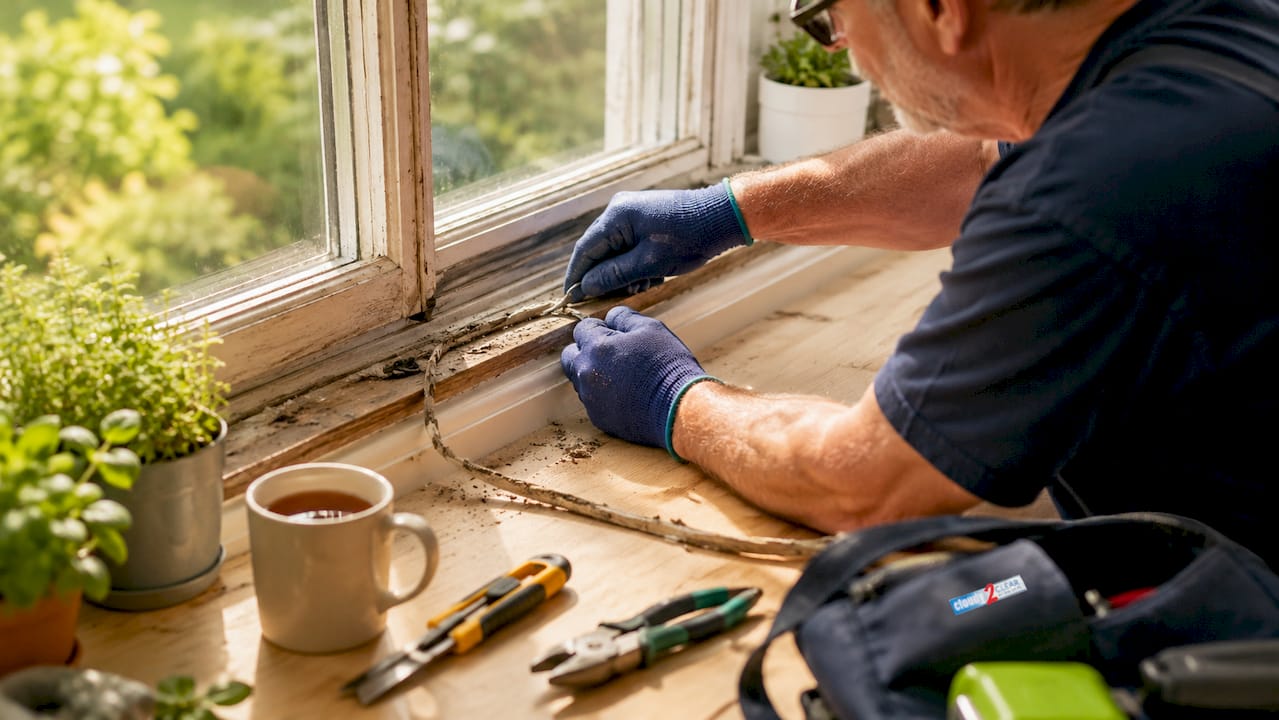
Pro Tip: If your window is draughty but the glass is clear with no misting, check the weatherstripping around the frame before assuming you need a new unit. Replacing worn weatherstripping costs a fraction of a sealed unit replacement and can noticeably reduce heat loss.
Repair or replace? How to tell the difference
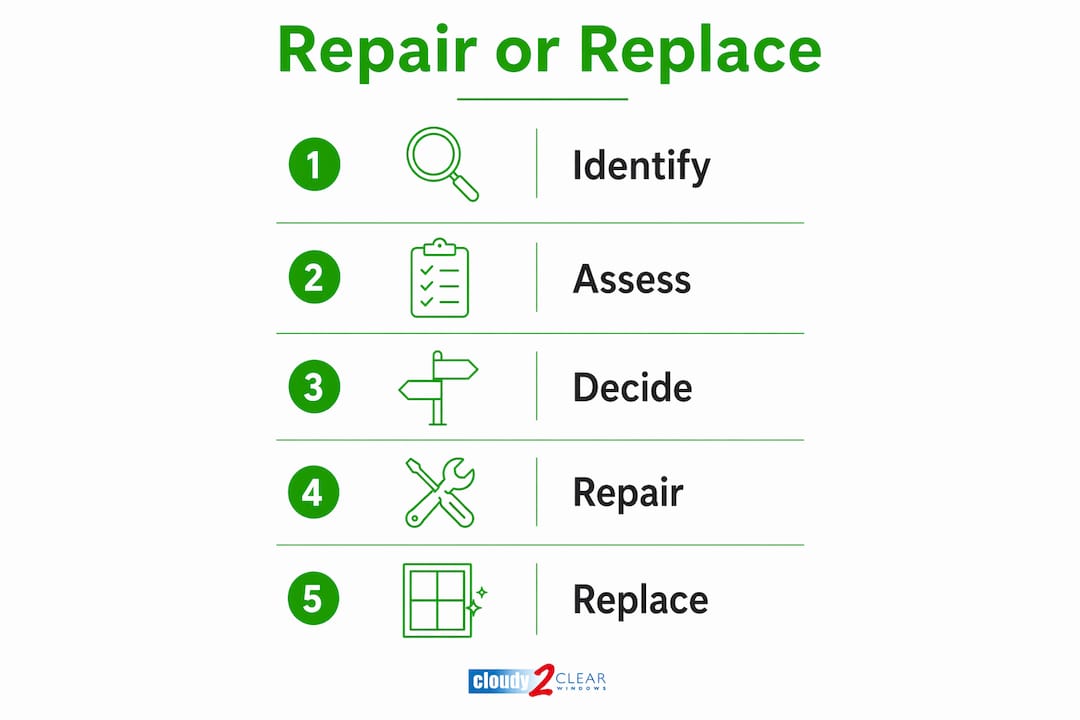
Knowing whether a window needs a full replacement or a targeted repair can save you significant money. The table below summarises the most common fault types and the typical response for each.
| Problem | Likely cause | Typical solution | Approximate UK cost (2026) |
|---|---|---|---|
| Misting between panes | Sealed unit failure | Sealed unit replacement | £120 to £250 per unit |
| Draught around frame | Worn weatherstripping | Weatherstripping replacement | £10 to £30 DIY |
| Sticking or warped frame | Moisture damage or wear | Frame repair or replacement | Variable |
| Broken hinge or handle | Hardware wear | Hardware replacement | £20 to £80 |
| Rotting timber frame | Long-term moisture damage | Frame repair or full replacement | Variable |
Sealed unit replacement costs typically £120 to £250 in the UK, including labour and VAT. This is the correct fix when the internal seal has failed and misting is present. Weatherstripping reseals are cheaper and appropriate only when the glazed unit itself is intact but the perimeter seal has degraded.
A professional assessment is the most reliable way to confirm which type of failure you are dealing with. This matters beyond cost. Replacement windows in the UK must comply with Building Regulations, specifically Part L on energy efficiency and Part N on glazing safety. A qualified installer will specify the correct unit and handle compliance documentation, which is particularly relevant for property managers with multiple units to maintain.
If you manage a property with several windows showing signs of failure, treating them as a batch is worth considering. Multiple failing windows in a property usually indicate a broader end-of-life issue, and phased replacement planned in advance is more cost-effective than dealing with each failure individually as it occurs.
What are the signs of failing windows to check for?
You do not need specialist tools to carry out a basic window health check. The following steps give you a reliable starting point before calling a professional.
- Look at the glass from outside and inside. Any persistent cloudiness, streaking, or fogging between the panes points to sealed unit failure.
- Check for condensation patterns. Moisture on the inner surface of the glass in the morning is a ventilation issue. Moisture trapped between the panes is a unit failure.
- Run your hand around the frame edge on a cold or windy day. A noticeable draught indicates weatherstripping wear or frame misalignment rather than glazing failure.
- Open and close each window. Sticking, grinding, or resistance suggests frame swelling, debris in the track, or worn hardware.
- Inspect the frame visually. Look for cracks, discolouration, soft spots in timber, or gaps between the frame and the wall.
- Test the locking mechanism. Handles and latches that feel loose or require force to engage are a sign of hardware wear or frame movement.
- Check for visible frame rot or mould. Soft or discoloured patches on timber frames, or persistent mould at the frame corners, indicate moisture ingress at the perimeter.
If you identify misting, significant draughts, or frame damage, the next step is a professional inspection. Early identification of window seal deterioration prevents the problem from progressing into structural frame damage, which is considerably more expensive to address.
What happens if you ignore failing windows?
Ignoring the early signs of window failure has a direct and measurable impact on your energy bills and the structural integrity of your property. A failed sealed unit loses its argon gas fill and its low-emissivity coating effectiveness, meaning the window transmits heat far more readily than a functioning unit. The result is higher heating costs and reduced comfort, particularly in rooms facing north or exposed to wind.
The table below shows how different failure types affect performance over time if left unaddressed.
| Failure type | Short-term impact | Long-term impact if ignored |
|---|---|---|
| Sealed unit failure | Misting, reduced insulation | Ongoing heat loss, higher bills |
| Frame rot or warping | Draughts, sticking | Structural damage, costly repair |
| Weatherstripping wear | Minor draught | Worsening heat loss, damp ingress |
| Hardware failure | Operational difficulty | Security risk, frame stress |
Weatherstripping degradation causes draughts that can cost you £30 to £50 annually in unnecessary heat loss. That figure compounds across multiple windows and multiple years. Frame rot, if left unaddressed, spreads and can compromise the structural integrity of the window opening itself, turning what would have been a straightforward unit replacement into a more involved and expensive frame repair job.
The practical advice here is straightforward. Carry out a visual and functional check of your windows once a year, ideally before winter. Address weatherstripping and hardware issues promptly. Book a professional assessment as soon as you notice misting between panes or significant frame damage.
What we have learnt from two decades of window assessments
At Cloudy2Clear Windows, we have been assessing and repairing double-glazed windows since 2005, and the pattern we see repeatedly is this: the homeowners and property managers who act on early signs save considerably more money than those who wait. A misted unit caught early is a straightforward sealed unit replacement. The same unit ignored for two or three winters often sits in a frame that has begun to warp or rot from the moisture, turning a £150 job into something far more involved.
The other thing we notice is that people frequently misdiagnose the problem. They assume a draughty window means the glass has failed, or they assume misting is just condensation that will clear. Getting the diagnosis right is the most important step, and it genuinely requires someone who knows what they are looking at. We would always recommend a professional inspection before committing to either a repair or a replacement, not because we want the work, but because the wrong fix wastes money and leaves the underlying problem unsolved.
If you manage multiple properties or a building with ageing windows, plan replacements in batches where possible. The cost and disruption savings from treating windows as a group rather than reacting to each failure individually are real and worth planning for.
How Cloudy2Clear Windows can help
If your windows are showing any of the signs covered in this guide, Cloudy2Clear Windows offers professional assessment and repair services across the UK.

Established in 2005, Cloudy2Clear Windows specialises in double glazing replacement and repair for both residential and commercial properties. Our teams operate from multiple regional branches, so you get a local service backed by national expertise. Whether you need a single sealed unit replaced or a full assessment of ageing windows across a property portfolio, we can advise on the most cost-effective and compliant solution. Contact your nearest local branch to arrange an inspection.
FAQ
What is the most common reason old windows fail?
Sealed unit failure caused by edge seal deterioration is the most common cause. Moisture enters between the panes, the desiccant becomes saturated, and persistent misting appears that cannot be cleared.
Can misted double glazing be repaired without replacing the unit?
No. Misted glass between panes requires sealed unit replacement. DIY methods such as drilling ventilation holes reduce the visible symptom but do not restore thermal performance.
How do I know if my draught is from the glass or the frame?
If the glass is clear with no misting, the draught is almost certainly coming from worn weatherstripping or frame misalignment rather than a failed sealed unit. Run your hand around the frame edge on a cold day to locate the source.
How much does sealed unit replacement cost in the UK?
Sealed unit replacement typically costs £120 to £250 per unit in the UK, including labour and VAT. Weatherstripping replacement is considerably cheaper at £10 to £30 for DIY materials.
When should I replace windows rather than repair them?
Replace rather than repair when the sealed unit has failed, the frame shows significant rot or warping, or multiple windows are failing across the property. A professional assessment will confirm the most cost-effective course of action.