A window draught is the unwanted movement of cold air through gaps around a window frame, seal, or surrounding structure. This is distinct from the chill you feel near cold glass, which creates a convection current but is not a true draught. UK homes lose around 8% of their total heat through windows, making draught control one of the most cost-effective improvements you can make. Understanding the difference between cold glass and actual airflow is the first step to fixing the right problem.
What is a window draught and how do you spot one?
A window draught is confirmed by actual airflow, not just a cold feeling near the glass. The simplest test is the tissue test: hold a thin piece of tissue near the window frame edges and watch for movement. If the tissue flutters, you have a draught. If it stays still but the area feels cold, the issue is likely cold glass radiating chill rather than air entering the room.
Cold glass creates a convection current as warm room air cools against the pane and drops to the floor. This mimics the sensation of a draught but requires a different fix, typically better glazing rather than gap sealing. Knowing which problem you have saves you time and money.
The tissue test works best on a windy day when pressure differences are greatest. Run it along the full perimeter of the frame, not just the centre of the glass. Pay particular attention to corners, where gaps are most common.
What causes window draughts in UK homes?
Window draughts arise from several distinct failure points, and identifying the correct one is critical before you buy any materials. The most common causes include:
- Worn or flattened opening seals. The rubber or brush pile seal around an opening sash compresses over time and stops forming a tight closure.
- Failed perimeter sealant. The mastic or silicone bead between the window frame and the surrounding wall cracks and shrinks, leaving a gap for air to enter.
- Poor or degraded installation. Installation gaps are a frequent cause of draughts that weatherstripping alone cannot fix. If the frame was never properly bedded into the opening, air finds its way through regardless of how good the seals are.
- Misaligned sashes or casements. A window that no longer closes squarely leaves an uneven gap around the opening edge.
- Gaps between trim and wall. The decorative architrave or window board can pull away from the wall, creating a channel for air to travel from outside.
- Nearby structural leaks. Gaps in floorboards, wall cavities, or surrounding structure can channel air that appears to come from the window but originates elsewhere in the room.
Pro Tip: Before buying any draught-proofing products, spend ten minutes with a lit incense stick on a still day. The smoke will drift toward any gap, pinpointing the exact source far more reliably than touch alone.
Systematic inspection matters because a misdiagnosed draught leads to wasted money. Sealing the frame perimeter will not help if the problem is a worn sash seal, and vice versa.
How do window draughts affect your energy bills and comfort?
The energy impact of window draughts is measurable and direct. UK homes lose approximately 8% of their total heat through windows. That figure represents a consistent drain on your heating system every winter, regardless of how efficient your boiler is.
“Draught-proofing is one of the cheapest and most effective ways to save energy and money at home.” — Energy Saving Trust
Cold air entering through gaps forces your heating system to work harder to maintain the set temperature. The result is a room that feels cold at floor level even when the thermostat reads 20°C. This is particularly noticeable in older UK properties with timber sash windows or single-glazed frames.
There is an important distinction between unwanted draughts and necessary ventilation. Trickle vents, the small slots built into modern window frames, are designed to provide background airflow for air quality. Sealing gaps must never include blocking trickle vents, as this can lead to condensation and poor indoor air quality. The goal is to stop uncontrolled air movement while preserving controlled ventilation.
Rooms with persistent draughts also suffer from uneven temperatures. One side of a room can be noticeably colder than the other, making furniture placement and daily comfort a genuine issue rather than a minor inconvenience.
Window draught solutions compared: cost and effectiveness
Choosing the right fix depends on your window type, budget, and the severity of the draught. The table below compares the most common options available to UK homeowners.

| Solution | Approximate Cost | Best For | Limitations |
|---|---|---|---|
| Foam strip seals | From £5 per window | Fixed casement windows | Not suitable for sliding sashes; compresses quickly |
| Brush pile seals | From £5–£15 per window | Sliding sash windows | Requires careful fitting to avoid friction |
| Secondary glazing | £200–£600 per window | Period properties, listed buildings | Higher upfront cost; requires professional fitting |
| Full double glazing replacement | £800–£1,500 per window | Severely damaged frames | Often unnecessary if seals are the only issue |
DIY draught-proofing materials start at around £5 per window, making them the most accessible starting point. For sliding sash windows, brush pile seals are the correct choice. Foam strips are not effective for this window type because the sliding action compresses and dislodges them quickly.
Secondary glazing involves fitting a second pane inside the existing frame. It is particularly useful in listed buildings or conservation areas where replacing the original windows is not permitted. The cost is higher, but it also improves thermal performance and reduces noise.
Full replacement is rarely the first answer. If the frame is structurally sound and the draught comes from a failed seal or perimeter gap, targeted repairs deliver most of the benefit at a fraction of the cost. You can read more about sealing windows effectively to understand when repair is the smarter choice.
Pro Tip: For sash windows, ask a supplier for self-adhesive brush pile in a width that matches your existing channel. Fitting it yourself takes under an hour per window and can make an immediate difference to comfort.
How to diagnose and fix window draughts step by step
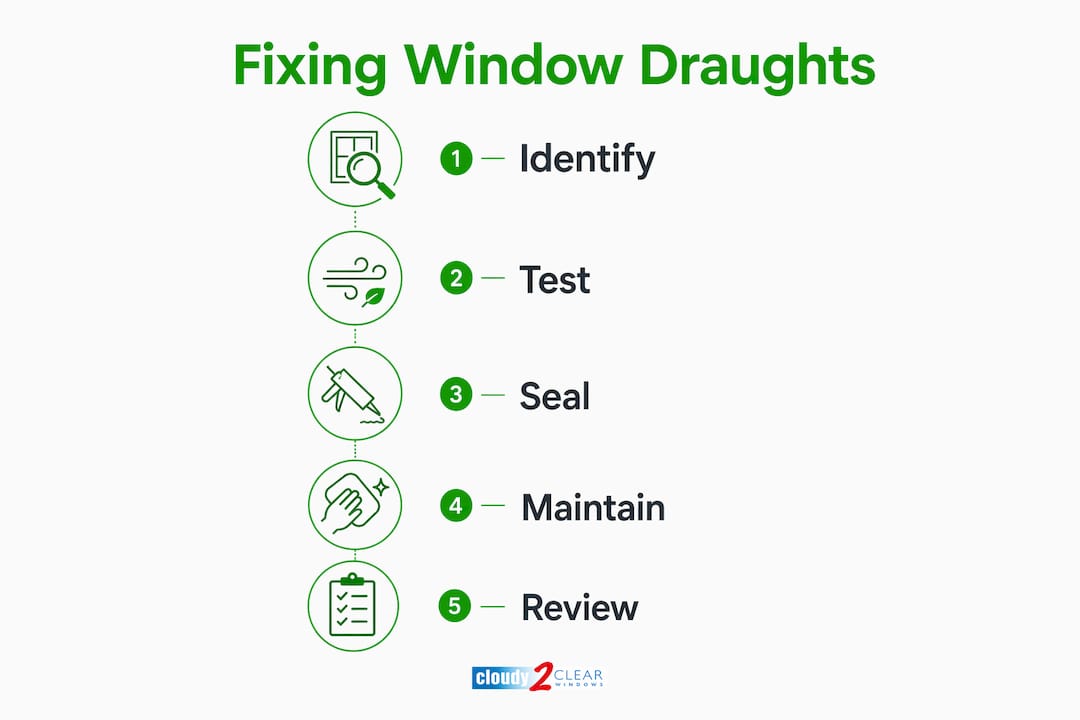
A methodical approach prevents you from sealing the wrong gaps or missing hidden leaks. Follow this checklist before buying any materials.
Step-by-step inspection
- Visual check. Look along the full frame perimeter for visible cracks, gaps in sealant, or daylight showing through.
- Tissue or smoke test. Hold a tissue or lit incense stick near frame edges, corners, and the junction between frame and wall. Mark any movement with masking tape.
- Check the opening seals. Close the window and run your hand around the sash or casement edge. Feel for cold air or visible compression gaps in the rubber seal.
- Inspect the perimeter sealant. The bead of mastic or silicone around the outside of the frame should be continuous and flexible. Cracked or missing sections need resealing.
- Check the surrounding structure. Gaps in floorboards and wall-to-frame junctions near the window can channel air that appears to originate from the window itself.
Grouping repairs for efficiency
Once you have identified all draught sources, group them by type. Replace all worn seals in one session, then address perimeter sealant in a second pass. This avoids repeated trips to the hardware shop and makes it easier to track what you have fixed.
Key materials to have ready include:
- Self-adhesive foam or brush pile strips for opening seals
- Silicone or low-expansion foam filler for perimeter gaps
- Decorator’s caulk for internal trim gaps
- A draught excluder strip for the base of the frame if needed
Pro Tip: Never seal trickle vents. They are there by design to provide background ventilation. Over-sealing in moisture-prone rooms like kitchens and bathrooms can trap humidity and lead to condensation and mould on walls and ceilings.
If the draught persists after addressing seals and perimeter gaps, check the room more broadly. Gaps around pipes, electrical sockets on external walls, and gaps under skirting boards can all feed cold air into the same space, making the window appear to be the source. A room-wide check, rather than a window-only fix, often resolves stubborn cases. For a full overview of preventing window leaks, Cloudy2Clear Windows has a dedicated checklist worth working through.
Revisit your windows annually. Seals degrade with age and temperature cycling, and a window that was fine last winter may develop a draught after a harsh freeze. Periodic re-inspection costs nothing and catches problems before they become expensive.
What we have learned after two decades of window repairs
The most common mistake we see at Cloudy2Clear Windows is homeowners buying draught-proofing products before they have confirmed the source of the problem. A bag of foam strips applied to a frame where the real issue is a failed perimeter sealant will make no difference at all. The product is not the problem. The diagnosis is.
We have also seen the opposite error: homeowners who seal every gap they can find, including trickle vents, and then wonder why condensation appears on the walls. Trapping moisture in a well-sealed room without background ventilation creates conditions for mould growth. Draught-proofing and ventilation are not opposites. They need to work together.
The other thing worth saying plainly is that full window replacement is rarely necessary for a draught problem alone. In our experience, the majority of draughty windows in UK homes have sound frames and simply need new seals or fresh perimeter sealant. Targeted repairs cost a fraction of replacement and deliver most of the comfort benefit. We would always rather help you fix what you have than sell you something you do not need.
How cloudy2clear windows can help you fix window draughts
If you have worked through the checks above and still cannot locate the source of your draught, or if the repair is beyond a straightforward DIY fix, Cloudy2Clear Windows is here to help.

Cloudy2Clear Windows has been repairing and replacing double glazed windows across the UK since 2005. Our engineers carry out professional draught assessments, replace worn seals, re-bed perimeter sealant, and advise on secondary glazing where full replacement is not appropriate or permitted. We cover a wide range of locations, including double glazing repairs in Milton Keynes and window repairs in Watford. If you are unsure whether your windows need repair or replacement, get in touch with your local Cloudy2Clear Windows branch for an honest assessment.
FAQ
What is the difference between a window draught and cold glass?
A window draught is actual airflow entering through gaps in the frame or seal. Cold glass creates a convection current as warm air cools against the pane, which feels similar but requires a different fix.
How can i tell if my window has a draught?
Hold a thin tissue near the frame edges and corners. If it moves, you have a draught. Carry out the test on a windy day for the clearest result.
What causes window draughts in older UK homes?
The most common causes are worn opening seals, cracked perimeter sealant, and poor original installation. Timber sash windows are particularly prone to seal wear over time.
Can i draught-proof my windows without replacing them?
Yes. DIY materials such as brush pile strips and silicone sealant cost from around £5 per window and resolve the majority of draught problems without any need for replacement.
Is it safe to seal all gaps around a window?
You should seal uncontrolled gaps but never block trickle vents. Trickle vents provide essential background ventilation. Blocking them in kitchens and bathrooms can cause condensation and mould.