Timber and uPVC windows are the two dominant frame materials in the UK residential market, and the difference between wood and uPVC frames goes far deeper than appearance alone. Timber frames offer superior thermal performance, a lifespan of 60 years or more, and a natural aesthetic that uPVC cannot replicate. uPVC frames cost less upfront, typically £550–£800 per frame supplied and fitted, and require almost no maintenance. The right choice depends on your budget, your property type, and how long you plan to stay. This guide covers costs, energy efficiency, maintenance, and property value so you can decide with confidence.
What are the upfront costs and expected lifespans of timber vs uPVC windows?
Price is usually the first thing homeowners look at, and the gap is real. As of 2026, uPVC frames cost £550–£800 per frame supplied and fitted, while timber frames command £850–£1,400 per frame. That is an initial difference of roughly £450–£700 per opening.
The lifespan figures change the calculation significantly. Modern uPVC windows last 20–25 years under typical UK conditions. Well-maintained engineered timber windows can last 60 years or longer, with some manufacturers offering warranties of up to 50 years. Over a 60-year period, you may replace a uPVC installation two or three times before a timber frame needs replacing at all.
| Feature | uPVC | Timber |
|---|---|---|
| Supplied and fitted cost | £550–£800 per frame | £850–£1,400 per frame |
| Typical lifespan | 20–25 years | 60+ years |
| Warranty period | 10 years (typical) | Up to 50 years |
| Replacement cycles (60 years) | 2–3 replacements | 1 installation |
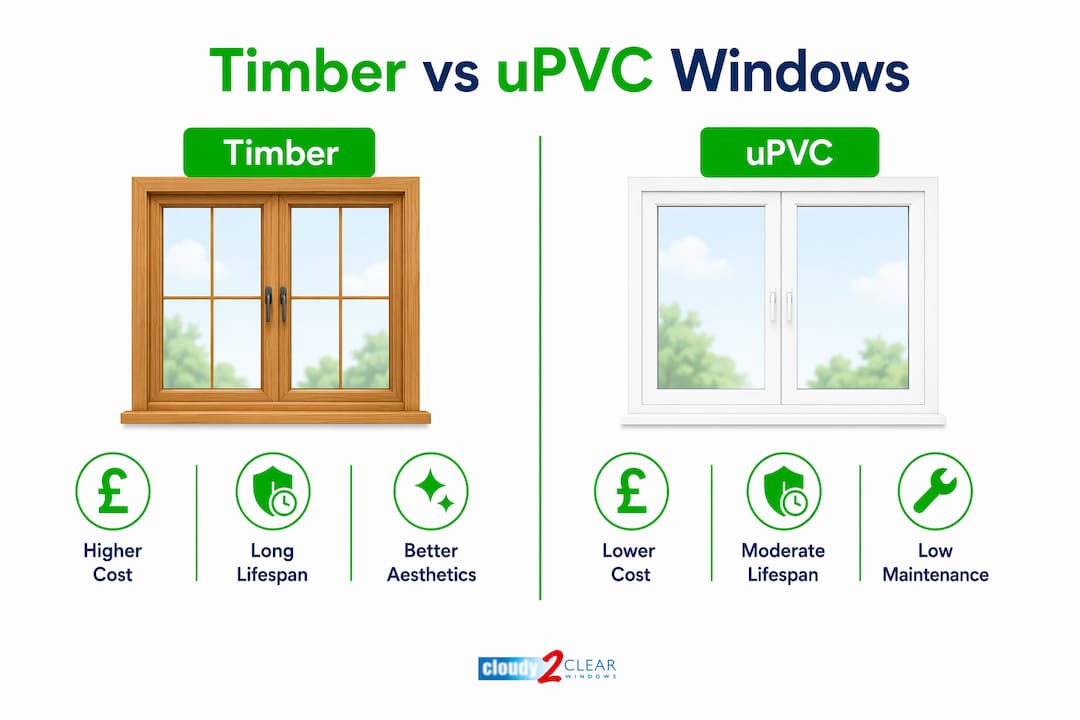
Over a 25-year period, timber windows often cost similar to or less than repeatedly replacing uPVC frames. That makes timber the more economical choice for homeowners who plan to stay in their property for 15 years or more.
Pro Tip: If you are buying a property you intend to keep long term, calculate the total cost over 40–60 years rather than the purchase price alone. Timber’s lower replacement frequency frequently makes it cheaper in the long run.
How do timber and uPVC windows compare on energy efficiency?
Thermal performance is where timber genuinely surprises people. The U-value measures how much heat a window loses: the lower the number, the better the insulation. Modern double-glazed timber casements achieve U-values of 1.4 W/m²K, and triple-glazed timber units can reach below 1.0 W/m²K. That outperforms many standard uPVC frames.
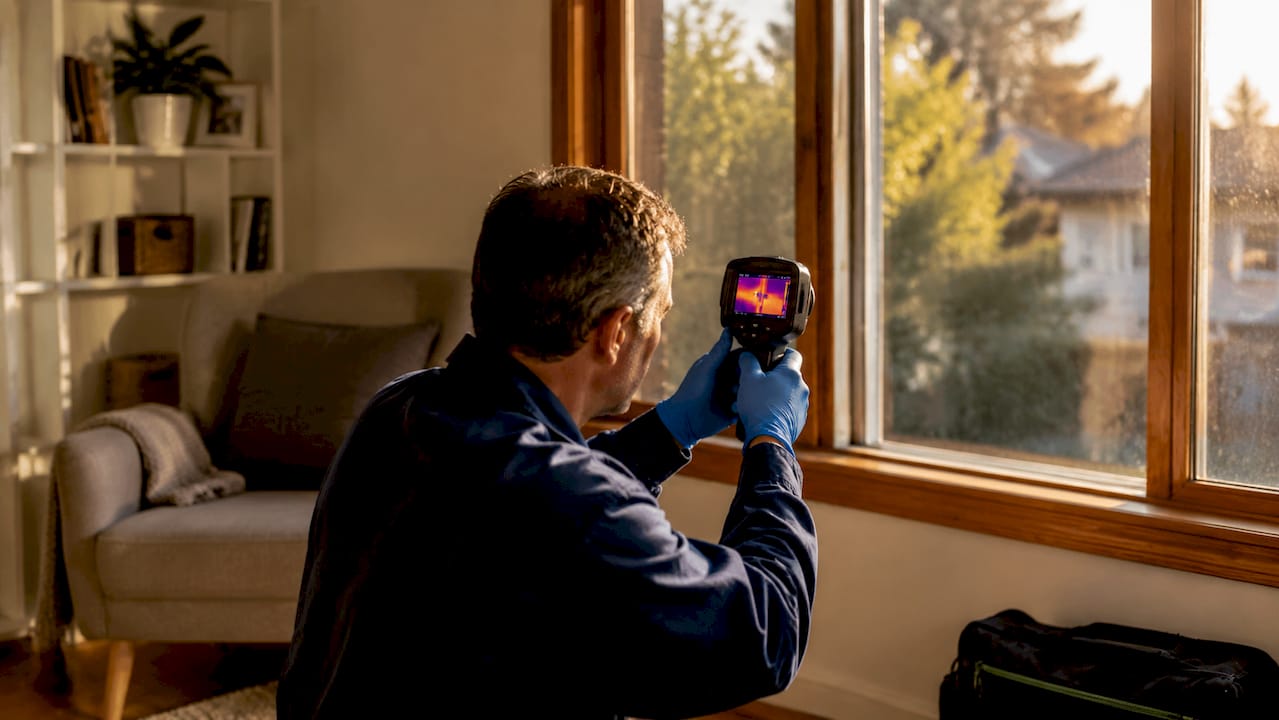
The reason lies in the material itself. Timber has inherently low thermal conductivity, which means the frame itself acts as an insulator. uPVC requires additional thermal breaks built into the profile to achieve comparable performance. Those breaks add cost and complexity to the manufacturing process.
Key energy efficiency facts for UK homeowners:
- Double-glazed timber frames achieve U-values of 1.4 W/m²K as standard.
- Triple-glazed timber units reach below 1.0 W/m²K, meeting Passivhaus-adjacent standards.
- uPVC frames with thermal breaks can match timber double-glazing but rarely exceed it without upgrading to premium profiles.
- Upgrading either frame type to triple glazing delivers the most significant reduction in heating bills.
- You can read more about sustainable window performance and how U-values affect running costs on the Cloudy2Clear Windows resource pages.
The environmental picture matters too. Timber windows sequester carbon during their service life, locking roughly 50 kg of CO₂ equivalent per frame. uPVC has higher embodied carbon and presents recycling challenges at end of life. For homeowners prioritising eco-friendly window materials, timber is the clearer choice.
What are the maintenance requirements for timber versus uPVC?
Maintenance is the area where uPVC wins most clearly. uPVC requires only occasional cleaning with mild soap and water. There is no painting, no sealing, and no specialist treatment needed across its entire service life.
Timber asks more of you. Here is what a realistic maintenance schedule looks like:
- Every 1–2 years: Clean frames with a mild detergent and inspect for any cracks, peeling paint, or signs of moisture ingress.
- Every 8–12 years: Repaint or reseal the frames fully. This is the single most important task for preserving timber longevity.
- As needed: Sand back any localised damage, apply a wood preservative, and refinish. Timber frames can be repaired, sanded, or refinished rather than replaced entirely.
- After severe weather: Check seals and glazing beads for any movement or gaps, particularly after a harsh winter.
- Annually: Lubricate hinges and locking mechanisms to prevent stiffness and wear.
The repairability point is significant. If a uPVC frame cracks or warps badly, the entire unit must be replaced. A damaged timber frame can often be restored by a skilled joiner at a fraction of the replacement cost. That repairability is one of the strongest timber window advantages for older properties.
Pro Tip: Book your timber window repainting in late spring or early summer. Dry, warm conditions allow paint and sealant to cure properly, giving you the best protection before autumn rain arrives. You can find practical guidance on maintaining double-glazed windows on the Cloudy2Clear Windows website.
How do timber and uPVC windows affect property value and aesthetics?
Aesthetics and property value are closely linked, and timber holds a clear advantage in both areas for many UK properties. Estate agents report that installing timber windows can increase property values by 5–10%, particularly in heritage or conservation areas. That uplift reflects the perceived quality and kerb appeal that timber delivers.
uPVC has improved considerably in recent years. Manufacturers now offer woodgrain foils, anthracite grey finishes, and slim sightlines that mimic traditional frames. However, the imitation has limits. Planning authorities and conservation officers can usually distinguish between authentic timber and a uPVC substitute, and that distinction matters legally.
Key considerations for property value and planning:
- Conservation area regulations often mandate timber windows, as uPVC cannot replicate authentic finishes or sightlines to the standard required by local planning authorities.
- Listed buildings almost always require timber frames. Installing uPVC without consent can result in enforcement action and a requirement to reinstate original materials at your own cost.
- For new builds and modern properties, uPVC is widely accepted and often preferred by developers for its cost efficiency and low maintenance burden.
- Timber’s aesthetic flexibility means frames can be repainted to match changing interior or exterior colour schemes, making them genuinely future-proof.
“Timber windows are not just a style choice. In conservation areas and listed buildings, they are frequently the only compliant option.” For guidance on heritage properties specifically, the Cloudy2Clear Windows article on heritage glazing compliance is worth reading before you commit to any frame type.
For property developers, the calculus is different. On a new build or a buy-to-let, uPVC reduces upfront spend and ongoing maintenance liability. On a period conversion or a property in a conservation area, timber protects planning compliance and supports a higher sale price.
What Cloudy2Clear Windows has learned from 20 years of window installations
After two decades of installing, repairing, and replacing windows across the UK, the pattern is consistent. Homeowners who choose uPVC for the right reasons, primarily low maintenance and tight budgets, are generally satisfied. Those who choose uPVC simply because it is cheaper, without considering their property type or long-term plans, often come back to us when the frames discolour, warp, or need full replacement after 20 years.
The maintenance reality of timber is also frequently overstated. Repainting every 8–12 years is not a significant burden when you consider that the alternative is a full frame replacement. Most homeowners who commit to that schedule find their timber windows look better at 30 years than a uPVC installation does at 15.
For property developers, I would say this plainly: specify timber on any period property or conservation area project. The planning risk of uPVC is real, and the value uplift from timber is consistent. On modern builds, uPVC remains a sensible specification, particularly for buy-to-let where tenant turnover means maintenance needs to be minimal.
The one area where I see homeowners genuinely struggle is the upfront cost of timber. It is a real barrier. But if you are planning to stay in your home for more than 15 years, the lifecycle cost comparison almost always favours timber. The frame you install today could outlast two or three uPVC replacements.
— Cloudy2Clear Windows
Cloudy2Clear Windows: expert help for timber and uPVC installations
Choosing between frame materials is only the first decision. Getting the installation right matters just as much.

Cloudy2Clear Windows has been installing and repairing double-glazed windows across the UK since 2005, working with both timber and uPVC frames in residential and commercial properties. Whether you need a double glazing repair in Oxford, a replacement in Leicester or Loughborough, or advice on the right frame for a conservation area property, our local branches carry the expertise to help. We also cover Milton Keynes, Watford, and many other areas across England. Contact your nearest branch for a no-obligation assessment.
FAQ
Which is cheaper long term: timber or uPVC windows?
Timber windows are typically cheaper over a 40–60 year period because they rarely need full replacement. uPVC frames last 20–25 years, meaning most homeowners face two or three replacement cycles in the same timeframe.
Can uPVC windows be used in conservation areas?
Conservation area regulations frequently prohibit uPVC windows because they cannot replicate the authentic sightlines and finishes of traditional timber frames. Always check with your local planning authority before specifying frame materials on a heritage or listed property.
What U-value do timber windows achieve?
Modern double-glazed timber casements achieve U-values of 1.4 W/m²K. Triple-glazed timber units can reach below 1.0 W/m²K, which outperforms many standard uPVC profiles.
How often do timber windows need repainting?
Timber windows need repainting or resealing every 8–12 years under typical UK conditions. Annual cleaning and hardware lubrication are also recommended to maintain performance and appearance.
Do timber windows add value to a property?
Estate agents report that timber windows can increase property values by 5–10%, particularly in heritage or conservation areas where kerb appeal and planning compliance carry a premium.