A window cleaning checklist is a structured set of steps, tools, and timing guidelines that ensures every window in your home or business is cleaned thoroughly and without streaks. Most homeowners clean their windows without a system, which is why smears, missed corners, and rapid re-soiling are so common. A proper checklist, built around a quality squeegee, microfiber towels, and the right cleaning solution, removes that guesswork entirely. Cloudy2Clear Windows has worked with both residential and commercial properties since 2005, and the difference a structured approach makes is clear every time.
1. Which tools are essential for your window cleaning checklist?
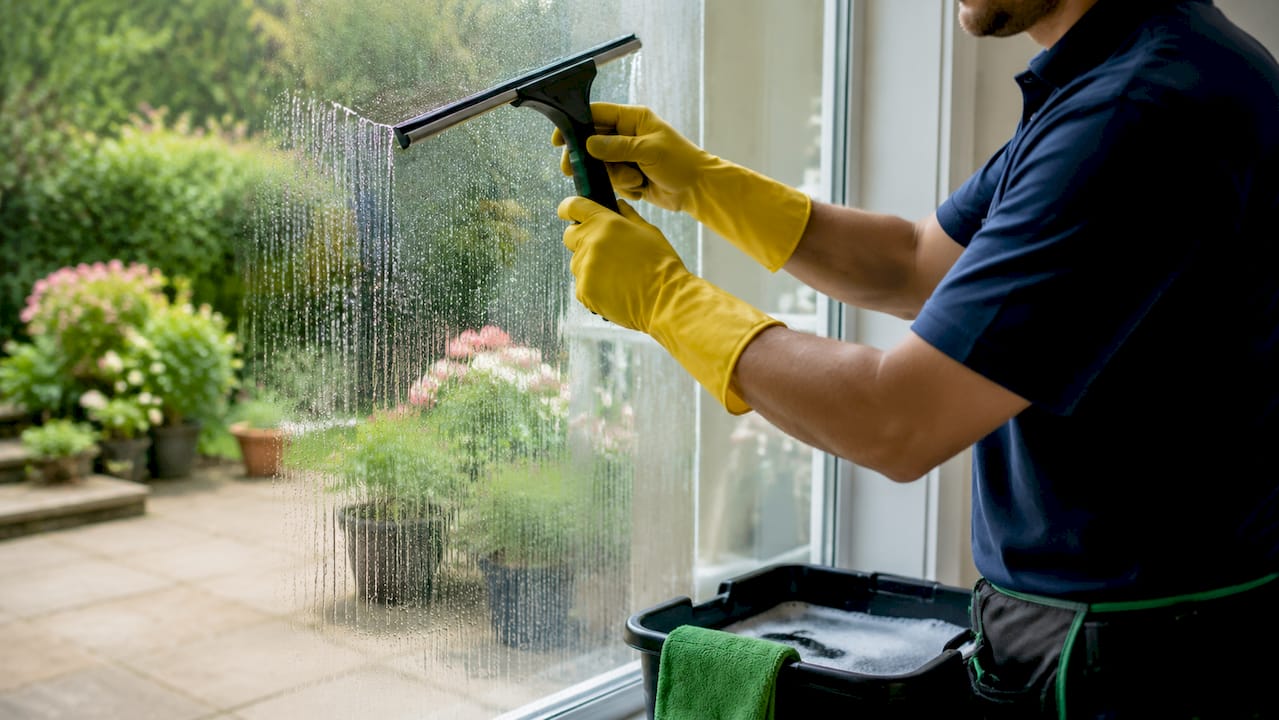
The right tools determine whether you get a streak-free finish or spend twice as long buffing out smears. Cutting corners on equipment is the single most common reason DIY window cleaning fails.
The core toolkit:
- Squeegee: A good quality squeegee with a rubber blade is the most important tool you own. Choose one with a replaceable blade and a handle suited to your window size. A 30 cm blade works well for standard residential windows.
- Microfiber cloths: Microfiber outperforms every alternative for glass cleaning. It lifts dirt without scratching and leaves no lint behind. Keep at least four cloths per session so you always have a dry one ready.
- Cleaning solution: The professional standard is simple. One nickel-sized drop of dish soap per gallon of hot water delivers effective cleaning with minimal residue. Avoid multi-surface sprays with wax additives.
- Scrubber or applicator sleeve: A scrubber pad or sleeve fits over a T-bar handle and applies solution evenly across the glass. It loosens stubborn grime before the squeegee passes.
- Two buckets: Use one for your cleaning solution and one for rinsing your scrubber. This stops dirty water going back onto the glass.
- Soft brush or vacuum attachment: Use these to clear dust and debris from frames and sills before any wet cleaning begins.
- Cotton swabs: Useful for reaching tight corners in window tracks where a cloth cannot fit.
Pro Tip: Never use paper towels or newspaper on glass. Paper towels create static that attracts dust, meaning your windows look dirty again within days.
2. What step-by-step process does a thorough glass cleaning guide follow?
Sequence matters as much as technique. Cleaning glass before frames pushes dirt back onto clean surfaces and forces you to start again.
- Dust frames and sills dry. Use a soft brush or vacuum attachment to remove loose dust and debris from frames, sills, and tracks before any water touches them. Moisture turns dust into mud, which streaks the glass and clogs your squeegee.
- Clean window tracks. Vacuum tracks first, then wipe with a damp cloth. Use cotton swabs for the corners. Do this before washing the glass so debris does not fall onto wet surfaces.
- Mix your solution. One nickel-sized drop of dish soap per gallon of hot water is the correct ratio. Too much soap leaves a film that causes streaks.
- Apply solution to the glass. Use your scrubber or applicator sleeve to coat the entire pane. Work from top to bottom and cover every centimetre, paying attention to the edges where grime builds up.
- Squeegee from top to bottom. Start at the top and use an S-shaped motion, overlapping each pass slightly. Keep the blade at a consistent angle against the glass.
- Wipe the blade after every pass. Wiping the squeegee blade dry after each stroke stops grime being redeposited on clean glass. This step is what separates a professional finish from an amateur one.
- Detail the edges. Use a dry microfiber cloth to wipe any remaining solution from the edges and corners of the pane.
- Clean screens separately. Remove screens, rinse with a hose or in a bath, and allow them to dry fully before replacing.
- Choose the right weather. Overcast, still days slow evaporation and reduce streaking. Avoid cleaning in direct sunlight, as the solution dries on the glass before you can squeegee it off.
Pro Tip: Plan your cleaning to stay ahead of or behind the sun as it moves around your property. Cool glass surfaces are far easier to clean without streaks.
3. How often should windows be cleaned and maintained?
Frequency depends on your location and the type of property you manage. A single schedule does not suit every building.
- Twice per year as a baseline. Most residential properties benefit from a thorough clean in spring and again in autumn. Spring removes winter grime; autumn prepares glass for low winter light.
- Up to four times per year in urban or coastal areas. Properties near busy roads, industrial zones, or the sea accumulate pollution, salt, and debris far faster. Two to four cleanings annually are recommended based on environmental exposure.
- A 30-minute maintenance session as needed. When you notice visible dust or smudges between deep cleans, a focused session is all it takes. A 30-minute routine cleans 4–8 standard windows when your tools are prepared in advance.
- Seasonal checks for frames and seals. Use each cleaning session to inspect frames, seals, and sills for signs of damage, damp, or deterioration. Catching problems early prevents costly repairs later.
For double glazing specifically, the double glazing cleaning steps differ slightly from standard single-pane glass, particularly around the seal edges.
4. What common mistakes does the window washing checklist help you avoid?
Most cleaning errors come down to skipping steps or using the wrong materials. A checklist removes both problems.
- Cleaning in direct sunlight. Solution evaporates before you can squeegee it off, leaving a film of dried soap on the glass. Always clean on overcast days or in the shade.
- Skipping the dry dust stage. Wet cleaning frames and sills before dusting turns loose debris into mud. That mud then smears across the glass and is far harder to remove.
- Using paper towels or newspaper. Both materials create static electricity on the glass surface. That static attracts airborne dust, so windows appear dirty again within a short time.
- Not wiping the squeegee blade. Every pass deposits a small amount of grime onto the blade. If you do not wipe it clean, the next pass redistributes that grime across the glass.
- Washing microfiber cloths with fabric softener. Fabric softener coats microfiber fibres and reduces their absorbency. The result is a cloth that smears rather than lifts moisture, leaving streaks on every pane.
A checklist does not just tell you what to do. It tells you what order to do it in, and that sequence is what makes the difference between a streaky finish and a spotless one.
5. How to tailor the checklist for residential versus commercial properties
The core steps remain the same, but the scale, tools, and safety requirements change significantly between a home and a commercial building.
| Factor | Residential | Commercial |
|---|---|---|
| Window types | Standard double glazing, casement, sash | Large glass panels, curtain walling, shopfronts |
| Cleaning frequency | 2 times per year minimum | Up to 4 times per year, often monthly for retail |
| Tools required | Squeegee, microfiber, bucket | Water-fed poles, professional squeegees, scaffolding or platforms |
| Additional surfaces | Sills, frames, screens | Gutters, downpipes, cladding, signage surrounds |
| Safety considerations | Ground level or low ladders | Working at height regulations, risk assessments required |
| Double glazing care | Standard seal inspection | Specialist inspection for large units and curtain walling |
Commercial property managers should build exterior window maintenance into a scheduled programme rather than treating it as a reactive task. Cloudy2Clear Windows provides commercial window maintenance strategies that cover both cleaning routines and structural checks. For UK managers specifically, commercial property window guidance addresses scheduling, compliance, and contractor selection.
Residential homeowners dealing with double glazing should pay particular attention to the seal between panes. A clean exterior does not compensate for internal condensation caused by a failed seal. If you notice misting between the panes, that is a repair issue, not a cleaning one.
What Cloudy2Clear Windows has learned from two decades of window care
The most consistent mistake I see, whether in a terraced house or a large commercial building, is treating window cleaning as a single task rather than a sequence. People grab a cloth, spray something on the glass, and wipe. Then they wonder why there are streaks.
The preparation stage is where most of the result is decided. Dry dusting frames and sills before any water appears takes two minutes and prevents the majority of streaking problems. Weather awareness is equally underestimated. I have seen perfectly good technique produce poor results simply because someone cleaned in full afternoon sun on a warm day.
Tool maintenance matters more than most people realise. A squeegee blade that has been stored incorrectly or used past its lifespan will drag and skip across the glass. Replace blades regularly and store them flat or hanging, never resting on the rubber edge.
My preferred cleaning mixture remains the professional standard: one small drop of dish soap in a full gallon of hot water. Nothing more. Stronger solutions leave residue; weaker ones do not cut through grime. The ratio matters.
Finally, a checklist works because it removes decision fatigue. When you follow the same sequence every time, you stop forgetting steps. That consistency is what produces reliable, repeatable results across every window on your property.
— Cloudy2Clear Windows
How Cloudy2Clear Windows supports your window maintenance
Regular cleaning keeps glass looking its best, but it cannot fix underlying problems with seals, frames, or glazing units.

Cloudy2Clear Windows has been repairing and replacing double glazed windows across the UK since 2005. If your cleaning routine reveals misted panes, damaged seals, or cracked glass, our team can help. We offer double glazing replacement for failed units and commercial window repair for businesses managing larger glazing systems. Keeping windows clean is the first step. Keeping them structurally sound is what protects your property long term.
FAQ
What is a window cleaning checklist?
A window cleaning checklist is a structured list of tools, steps, and timing guidelines for cleaning windows thoroughly and without streaks. It covers preparation, cleaning order, technique, and maintenance frequency.
How often should I clean my windows?
Most residential properties need a thorough clean twice per year, in spring and autumn. Properties in urban or coastal areas benefit from up to four cleanings annually due to higher pollution and salt exposure.
What is the best homemade window cleaning solution?
One nickel-sized drop of dish soap per gallon of hot water is the professional standard. This ratio cleans effectively while leaving minimal residue on the glass.
Why do my windows streak after cleaning?
Streaks are most commonly caused by cleaning in direct sunlight, not wiping the squeegee blade after each pass, or using paper towels that create static. Switching to microfiber cloths and cleaning on overcast days resolves most streak problems.
Can I use the same checklist for double glazing?
The core steps apply to double glazing, but you should also inspect the seal between panes during each session. Internal misting between the glass layers indicates a failed seal and requires professional repair, not cleaning.