A casement window is defined as a window attached to its frame by side hinges, opening outward or inward like a door. This design is one of the most common in UK residential architecture, valued for its ventilation, tight sealing, and clean sightlines. With 2026 Part L building regulations now requiring whole-window U-values of ≤1.8 W/m²K, choosing the right casement window matters more than ever. Whether you are planning a new build or replacing ageing frames, understanding casement window features from the outset will save you time, money, and compliance headaches.
What is a casement window and what types are available?
Casement windows hinge on one side and swing open on the opposite edge. The sash, which is the moving glass panel, connects to the outer frame via one or more hinges, typically positioned on the left or right. This differs from sash windows, which slide vertically, or tilt-and-turn windows, which pivot on multiple axes.
Two main styles exist in the UK market:
- Standard casement windows: The sash sits proud of the outer frame when closed. This is the most widely fitted style in modern UK housing.
- Flush casement windows: The sash sits level with the outer frame, giving a flat, traditional appearance. These suit period properties and conservation areas where planning restrictions apply.
Frame materials each carry distinct trade-offs:
- uPVC: Low maintenance, good thermal performance, and the most affordable option. Suits most UK climates.
- Timber: Natural appearance, suitable for listed buildings and conservation areas, but requires regular painting or staining.
- Aluminium: Slim sightlines and high durability, though typically a higher upfront cost and lower thermal performance unless thermally broken.
Security is a key casement window feature. Multi-point locking systems and hinge-side security brackets meeting the PAS 24 standard are expected by insurers and significantly improve forced-entry resistance. PAS 24 is a British Standard specifying enhanced security performance for doors and windows.
Pro Tip: Match your frame material to your property type first, then your budget. A timber frame in a conservation area avoids planning refusals; a uPVC frame in a modern semi-detached cuts costs without sacrificing performance.
How do casement windows work to improve energy efficiency?
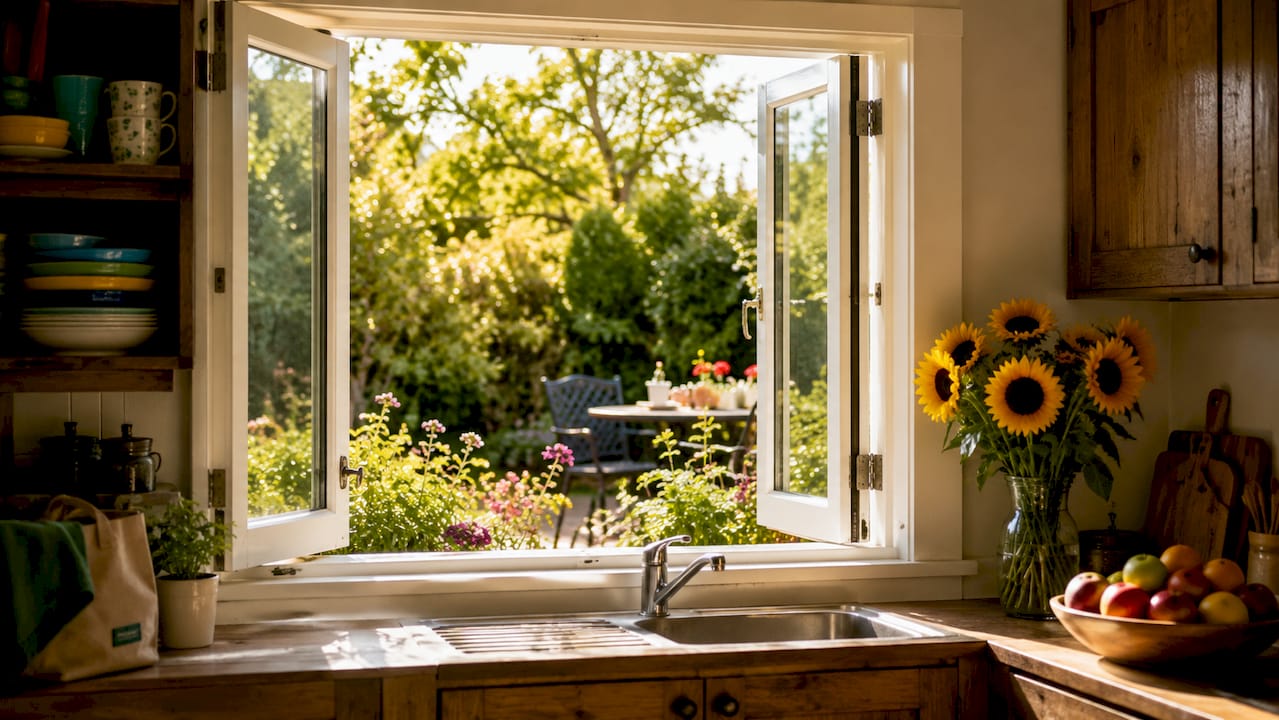
The side-hinge design allows the entire sash to open fully, which maximises airflow. When closed, the sash presses firmly against a continuous rubber or foam seal around the frame perimeter. This tight compression reduces draughts and heat loss more effectively than sliding windows, which rely on brush seals that wear over time.
Energy performance is measured by U-value, which is the rate at which heat passes through a material. A lower U-value means better insulation. Under the 2026 edition of Approved Document L, replacement windows in England must achieve a centre-pane U-value of ≤1.6 W/m²K and a whole-window U-value of ≤1.8 W/m²K. These figures represent the tightest thermal requirements the UK has applied to replacement glazing.
The table below shows typical U-values for common frame and glazing combinations:
| Frame material | Glazing type | Typical whole-window U-value (W/m²K) | Meets 2026 Part L? |
|---|---|---|---|
| uPVC | Argon-filled double glazing | 1.2–1.4 | Yes |
| Timber | Standard double glazing | 1.8–2.2 | Borderline/No |
| Aluminium (thermally broken) | Argon-filled double glazing | 1.6–1.8 | Yes |
| Aluminium (non-thermally broken) | Standard double glazing | 3.0+ | No |
Argon-filled double glazing with uPVC frames achieves whole-window U-values of 1.2–1.4 W/m²K. That combination meets 2026 regulations with headroom to spare, making it the most cost-effective route to compliance for the majority of UK homes. For guidance on glazing options for energy efficiency, the right choice depends on your frame material and budget.
What are the advantages of casement windows for UK homeowners?
Casement windows deliver practical benefits across security, ventilation, energy performance, and cost. Here is what matters most for UK homeowners and builders:
- Security: PAS 24 compliant multi-point locks and hinge-side brackets make casement windows among the most secure window types available. Insurers increasingly require this standard for home contents policies.
- Ventilation: The full-opening sash directs airflow into the room rather than across the face of the building, which is particularly effective in UK summers when cross-ventilation matters.
- Energy savings: Tight compression seals and compliant glazing reduce heating bills. Pairing argon-filled double glazing with a quality frame is the most reliable path to energy saving windows.
- Cost: A typical uPVC casement window installation in 2026 costs between £350 and £600, including FENSA-registered installation and PAS 24 compliance. That price point makes casement windows accessible for most budgets.
- Compliance: Windows installed by a FENSA-registered installer come with a certificate of compliance. Without it, you may face legal and financial difficulties when selling your property.
Failing to certify window replacements through a Competent Person Scheme like FENSA creates legal friction during property sales. Solicitors routinely request building regulation compliance certificates, and missing paperwork can delay or collapse a sale.
Pro Tip: Always ask your installer for their FENSA registration number before work begins. You can verify it on the FENSA website in under two minutes. This one check protects your investment and your property’s saleability.
Casement windows also suit a wide range of UK residential styles, from Victorian terraces to modern new builds. Their versatility in size, material, and configuration makes them a practical choice for home renovation projects where both aesthetics and compliance are priorities.
What should you know about installing casement windows?
Professional installation is not optional. A poorly fitted casement window loses its thermal and security performance regardless of how good the product is. Follow this checklist to protect your investment:
- Verify FENSA registration. Confirm your installer is registered before signing any contract. FENSA-registered installation is required for Building Regulations compliance and protects you legally.
- Check safety glass requirements. Windows positioned below 800mm from floor level, or within 300mm of a door up to 1,500mm high, must use safety glass (toughened or laminated). This is a legal requirement, not a recommendation.
- Specify low-expansion foam. Over-expanding foam bows frames and ruins the perimeter seal. Reputable installers use low-expansion foam as standard. Ask about this before work starts.
- Request an itemised quote. Installation costs vary by up to 40% regionally due to labour rates and unforeseen remedial work. A detailed quote separating removal, disposal, and finishing protects you from surprise charges.
- Inspect the finished installation. Check that the sash opens and closes smoothly, that seals are continuous with no gaps, and that locks engage fully at all points.
- Obtain your compliance certificate. Your FENSA certificate should arrive within 30 days of installation. Keep it with your property documents.
Maintenance requirements vary by frame material. uPVC frames need only an occasional wipe with soapy water and a light application of silicone spray to hinges and locks. Timber frames require repainting or restaining every three to five years to prevent moisture ingress. Aluminium frames are largely maintenance-free but benefit from annual cleaning of drainage channels.
Pro Tip: Architects consistently flag safety glass near doors and floor levels as the most overlooked detail in DIY window installations. If you are managing any part of the project yourself, measure these zones before ordering glass.
How to choose the right casement window for your home
Choosing the right casement window comes down to four factors: architectural compatibility, energy performance, material, and budget. Getting the balance right from the start avoids costly changes later.
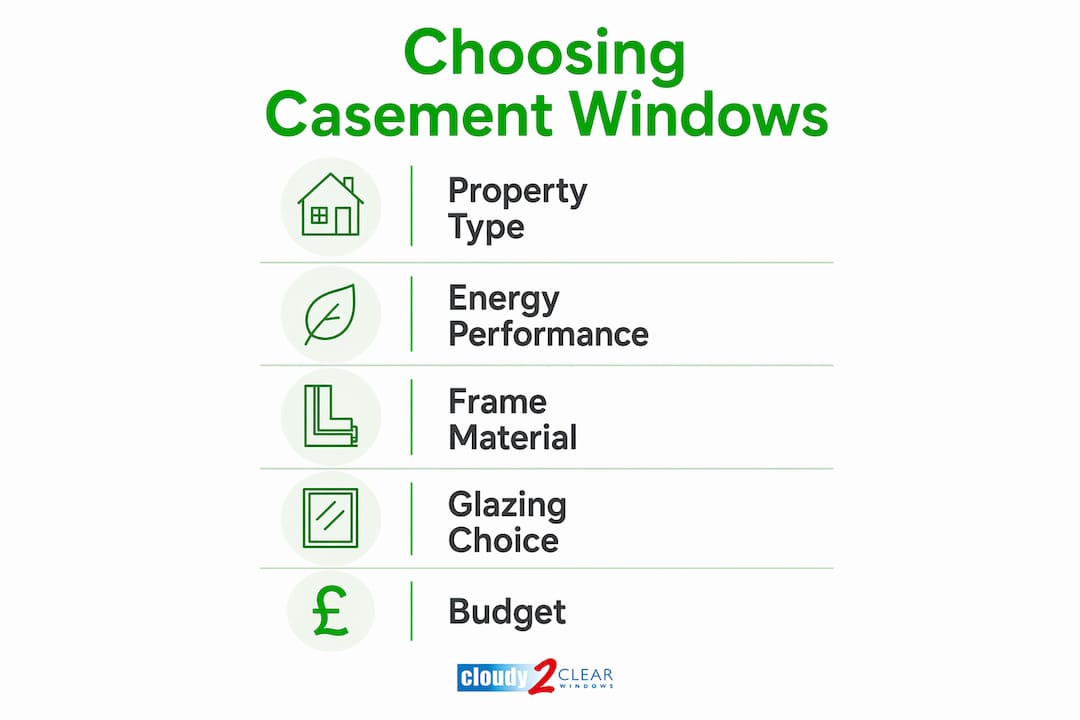
Start with your property type. Listed buildings and conservation areas often restrict uPVC and aluminium frames. Timber or aluminium with a painted finish may be the only approved options. Check with your local planning authority before ordering.
Next, confirm your glazing meets 2026 Part L. The table below summarises key decision factors for typical UK scenarios:
| Scenario | Recommended frame | Recommended glazing | Estimated cost per window |
|---|---|---|---|
| Modern semi-detached, budget-conscious | uPVC | Argon-filled double glazing | £350–£600 |
| Period property, conservation area | Timber | Argon-filled double glazing | £600–£1,200+ |
| Contemporary new build, slim sightlines | Aluminium (thermally broken) | Argon-filled double glazing | £700–£1,500+ |
Certification marks tell you whether a product meets security and energy standards. PAS 24 covers forced-entry resistance. Secured by Design is a police-backed initiative that builds on PAS 24 with additional requirements. Both marks appear on compliant products and give insurers and building control officers confidence in your installation.
For further guidance on choosing double glazing options that balance efficiency and cost, the right combination depends on your property’s age, location, and heating demands.
Why casement windows remain the right choice for most UK homes
After nearly two decades of installing and replacing windows across the UK, Cloudy2Clear Windows has seen every window type come in and out of fashion. Casement windows have never gone out of style, and the reason is straightforward: they work.
The 2026 Part L changes have prompted a lot of anxiety among homeowners about compliance costs. The reality is that a standard uPVC casement window with argon-filled double glazing meets the new regulations comfortably and costs less than most people expect. The compliance challenge is not the product. It is the installation. Uncertified work, wrong foam, missing safety glass: these are the issues that create real problems down the line.
DIY installation is tempting when quotes feel high. Resist it. A window that fails a building control inspection costs more to rectify than the saving was worth. The hidden costs of remedial work, particularly in older properties where reveals are uneven or lintels are compromised, can dwarf the original quote. Detailed, itemised quotes from FENSA-registered installers are the only reliable way to budget accurately.
Casement windows are also well-suited to the UK’s push toward better-insulated homes. Their compression seals outperform sliding alternatives, and the range of compliant glazing options means you can future-proof a property without a premium product. Prioritise certified installers, PAS 24 compliant hardware, and argon-filled glazing. That combination covers security, energy performance, and legal compliance in one decision.
— Cloudy2Clear Windows
Cloudy2Clear Windows: casement window installation you can rely on
Cloudy2Clear Windows has been installing and replacing double glazed windows across the UK since 2005. Every casement window installation meets 2026 Part L building regulations and comes with full FENSA certification, so your property sale is never at risk.
Cloudy2Clear Windows supplies uPVC and timber casement windows with PAS 24 security certification as standard. Homeowners in Oxford and Milton Keynes can access local engineers with same-region knowledge of planning restrictions and labour costs. Every quote is itemised, covering removal, disposal, and finishing work, so there are no surprises. Contact Cloudy2Clear Windows to arrange a no-obligation assessment and get your casement window installation right the first time.
FAQ
What is a casement window?
A casement window is a window hinged on one side of the frame, opening outward or inward like a door. It is the most common window type in UK residential properties.
What U-value do casement windows need to meet in 2026?
Replacement casement windows in England must achieve a whole-window U-value of ≤1.8 W/m²K and a centre-pane U-value of ≤1.6 W/m²K under the 2026 edition of Approved Document L.
Do I need a FENSA certificate for casement window replacement?
Yes. Installation by a FENSA-registered installer provides a compliance certificate required by building regulations. Without it, you may face legal difficulties when selling your property.
What is the cost of a casement window in the UK?
A typical uPVC casement window installation in 2026 costs between £350 and £600, including FENSA-registered fitting and PAS 24 security compliance. Timber and aluminium options cost more.
What is the difference between a casement and a sash window?
A casement window opens on side hinges like a door, while a sash window slides vertically within the frame. Casement windows generally offer better sealing and ventilation control than sash alternatives.