Airtightness in window design refers to a window’s ability to prevent uncontrolled air leakage between inside and outside environments, and it is one of the most direct influences on energy efficiency in windows and thermal comfort. The industry standard for measuring this is EN 12207, which classifies windows from Class 1 (most leaky) to Class 4 (most airtight). Passivhaus certification sets the most demanding target: a q-value of ≤0.05 m³/m·h·Pa at 100 Pa, contributing to a whole-building air change rate of no more than 0.6 ACH50. For UK homeowners and architects, understanding these benchmarks is the starting point for specifying windows that genuinely perform.
What materials and window styles offer the best airtightness performance?
The frame material and opening style you choose set the ceiling on what airtightness is achievable, regardless of how well the window is installed. Not all frames seal equally, and the differences are measurable.
| Frame material | Airtightness potential | Key advantage | Limitation |
|---|---|---|---|
| uPVC | High (Class 3–4) | Low maintenance, good seal retention | Can warp in extreme heat |
| Timber-composite | High (Class 3–4) | Excellent thermal performance | Requires periodic maintenance |
| Thermally broken aluminium | Very high (Class 4) | Dimensional stability, slim sightlines | Higher cost |
Opening style matters just as much as the frame. Casement windows, which hinge at the side and pull shut against a continuous perimeter gasket, consistently outperform sliding sashes for airtightness. Tilt-and-turn windows offer a similar advantage: the inward-opening mechanism compresses the gasket evenly around the entire frame. Sliding windows, by contrast, rely on brush seals that degrade faster and allow more air movement.
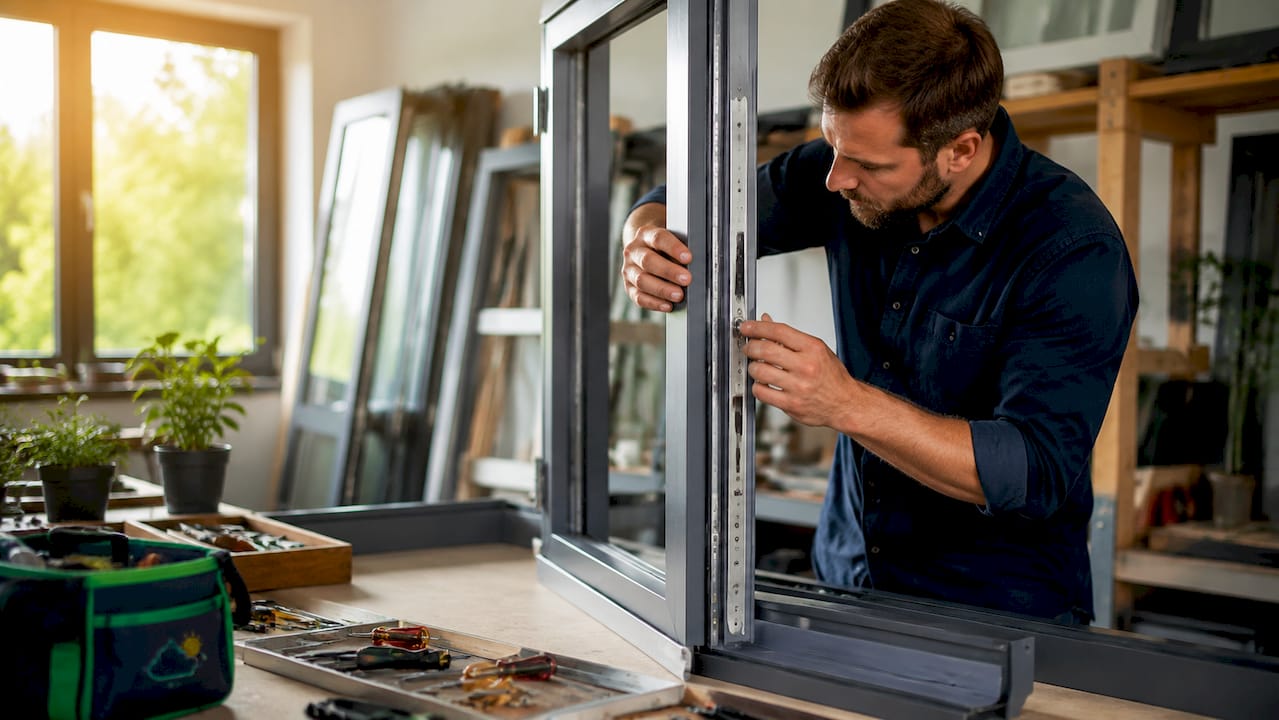
Hardware is the often-overlooked factor. Multi-point locking hardware compresses the perimeter gasket uniformly at multiple points along the frame, reducing leakage significantly compared to single-point latches. This is why Passivhaus-certified windows specify multi-point locks as a minimum requirement, not an optional upgrade.
Pro Tip: When comparing window specifications, ask the manufacturer for the EN 12207 test classification certificate, not just a marketing claim. Class 4 is the benchmark worth targeting for any new build or deep retrofit in the UK.
How do installation techniques impact window airtightness in UK homes?
A well-specified window can still fail to perform if the installation is poor. Building airtightness depends more on installation quality and air barrier continuity than on product specifications alone. This is the part of the process where most performance is lost on UK sites.
The window-to-wall junction is the critical node. The gap between the window frame and the surrounding wall structure must be sealed at both faces, not just one. Interior-only sealing is insufficient in UK climate zones; both the interior and exterior perimeters need attention to manage airtightness and vapour control together.
A professional installation sequence looks like this:
- Prepare the reveal. Remove debris and dust from the structural opening. Any loose render or mortar will compromise adhesion of tapes and sealants.
- Apply pre-compressed expanding foam tape to the exterior face. This tape expands to fill the gap between frame and wall, creating a weather-resistant outer seal. It is vapour-open, allowing any moisture to escape outward.
- Fix the window frame into position and check for level and plumb before any sealant is applied.
- Seal the interior perimeter with a vapour control membrane or tape. This is the airtight layer. It prevents warm, moist internal air from reaching the cold wall structure and condensing.
- Apply sealant to finish both faces. Use neutral-cure silicone on the exterior for UV resistance and weather durability. Use MS polymer sealant on painted timber interiors, as it accepts paint and remains flexible.
“Sealant joint design is as important as product choice. A poorly designed joint leads to early failure despite premium sealants.” — Professional Installation Guide
One mistake that causes significant problems is using standard high-expansion spray foam to fill the perimeter gap. Low-expansion spray foam must be used instead. Standard expanding foam can bow the window frame outward as it cures, distorting the gasket line and creating the very leakage path you are trying to prevent. This is a common site error that is difficult and expensive to correct after the fact.
Pro Tip: Ask your installer to show you the tape-and-membrane specification before work begins. If they cannot name the products they are using at the junction, that is a warning sign worth acting on.
What are the measurable benefits of improving window airtightness?
The case for prioritising tight window design is straightforward when you look at the numbers and the lived experience of occupants.
Improving window sealing with weatherstripping and caulking delivers 60 to 80% of the energy benefits of full window replacement at just 20 to 30% of the installation cost. This means that for many UK homes with older but structurally sound double glazing, targeted sealing work offers far better value than immediate replacement. Full replacement carries a payback period of 25 to 40 years in most cases, which makes the economics of sealing upgrades compelling for the majority of homeowners.
Beyond energy bills, the comfort benefits are direct and immediate:
- Draught elimination. Sealing the window-to-wall junction and replacing degraded gaskets removes cold air infiltration at floor level and around frames, which is the most common comfort complaint in UK homes during winter.
- Noise reduction. An airtight window seal also reduces sound transmission. The same gap that lets cold air in lets traffic and neighbour noise through.
- Moisture control. Uncontrolled air infiltration carries moisture into wall cavities. Sealing windows properly reduces condensation risk and the mould growth that follows.
- Consistent indoor temperatures. Draughty windows create cold spots near glazing that force occupants to overheat the rest of the room. Airtight windows allow thermostats to work as intended.
One consideration architects and homeowners sometimes overlook: airtight windows must be paired with a controlled ventilation strategy. Buildings do not need to breathe through gaps and leaks. Controlled mechanical ventilation with heat recovery (MVHR) manages indoor air quality without sacrificing the energy performance that airtight sealing delivers. Specifying one without the other creates either poor air quality or wasted energy.
How to evaluate and select windows for airtightness: standards and certification
Selecting windows based on airtightness performance requires looking past brochure claims and into documented test data. Here is what to check before specifying or purchasing:
- EN 12207 classification. Request the test certificate showing the class achieved. Class 4 is the highest classification under this standard and the one to target for new builds and retrofits in the UK. Over 74% of windows tested between 2018 and 2025 achieved Class 4, so it is a realistic expectation for modern commercial products.
- Passivhaus Institute (PHI) certification. For projects targeting Passivhaus or EnerPHit standards, look for PHI-certified window units. These have been independently tested to confirm the q-value meets the ≤0.05 m³/m·h·Pa threshold.
- Manufacturer installation guides. A certified window installed without following the manufacturer’s junction detail will not perform to its rated specification. Always request and follow the installation guide, and confirm your installer has read it.
- Installer competence. Ask whether the installer is familiar with tape-and-membrane airtightness details. Membership of bodies such as FENSA or CERTASS indicates compliance with UK building regulations, but does not guarantee knowledge of Passivhaus-level junction detailing. For high-performance projects, ask for evidence of previous airtight installations.
- Post-installation testing. A blower door test (pressure test to BS EN ISO 9972) measures the actual air permeability of the completed building envelope. Commissioning one after window installation gives you objective evidence of performance, not just a specification on paper.
Airtightness and insulation are distinct properties that work together. Airtight seals prevent infiltration. Insulation limits conductive heat loss. Both must be specified and installed correctly for a window to perform as intended.
What we have learned about airtightness after two decades of window installations
At Cloudy2Clear Windows, we have been repairing and replacing double glazing since 2005, and the pattern we see most often is this: the window unit itself is rarely the problem. The failure is almost always at the junction between the window and the wall.
Homeowners are often surprised to learn that a perfectly good sealed unit can be sitting inside a frame that is leaking air around its perimeter. The glass is fine. The gaskets are intact. But cold air is still getting in because the original installation used the wrong foam, or no tape at all, or a sealant that has since cracked and pulled away from the reveal.
The other thing we would push back on is the idea that airtightness is only relevant for new builds or Passivhaus projects. Every UK home with draughty windows is losing heat and money. The fixes are often straightforward and far less disruptive than a full replacement. Improving the seal at the junction, replacing degraded gaskets, and upgrading to multi-point locking hardware can transform the performance of an existing window without touching the glazed unit.
The honest advice we give every customer is this: get the installation detail right before spending money on premium glass. A Class 4 window installed badly will underperform a Class 3 window installed well.
How Cloudy2Clear Windows can improve your window airtightness
If draughts, condensation, or rising energy bills are pointing to a window sealing problem, Cloudy2Clear Windows offers professional assessment and repair across the UK.

Our engineers assess the full window-to-wall junction, not just the glazed unit, identifying where air infiltration is occurring and recommending the most cost-effective fix. Whether that means resealing the perimeter, replacing degraded gaskets, or upgrading to a new airtight double glazing unit, we carry out the work to a standard that meets UK building regulations. We cover a wide range of locations, including double glazing repairs in Milton Keynes and double glazing repairs in Watford. Contact Cloudy2Clear Windows today for a no-obligation assessment.
FAQ
What is the EN 12207 standard for window airtightness?
EN 12207 classifies windows from Class 1 to Class 4 based on air leakage measured at standardised pressure differences. Class 4 is the highest rating and the benchmark for modern UK windows.
How do I test window airtightness in my home?
A blower door test, carried out to BS EN ISO 9972, measures the air permeability of the whole building envelope and will identify whether windows are a significant source of leakage.
Is it worth sealing windows rather than replacing them?
Sealing and weatherstripping delivers 60 to 80% of the energy benefit of full replacement at 20 to 30% of the cost, making it the better value option for most UK homeowners with structurally sound frames.
What causes window airtightness to fail over time?
Gasket degradation, sealant cracking, and frame movement at the window-to-wall junction are the most common causes. Poor original installation, particularly the use of high-expansion foam, accelerates these failures.
Do airtight windows affect indoor air quality?
Airtight windows do not reduce air quality when paired with controlled ventilation such as MVHR. Buildings should not rely on window gaps for fresh air; a designed ventilation strategy manages air quality without energy loss.