Patterned glass is defined as textured or embossed glass that provides privacy while allowing natural light to pass through, making it one of the most versatile materials in modern architecture. Also known as figured glass, rolled glass, or decorative glass, it is produced in standard thicknesses of 4mm or 6mm, though the full range runs from 3mm to 10mm depending on the application. Cloudy2Clear Windows has worked with patterned and decorative glass across residential and commercial projects since 2005, and the demand for it continues to grow as architects and homeowners seek materials that balance openness with privacy.
What is patterned glass and how is it made?
Patterned glass is manufactured through a continuous rolling process. Molten glass is fed between two rollers, at least one of which carries an engraved pattern. The pattern transfers directly onto the glass surface as it cools, producing a consistent texture across the entire sheet. Some products are embossed on both sides for a more pronounced effect.
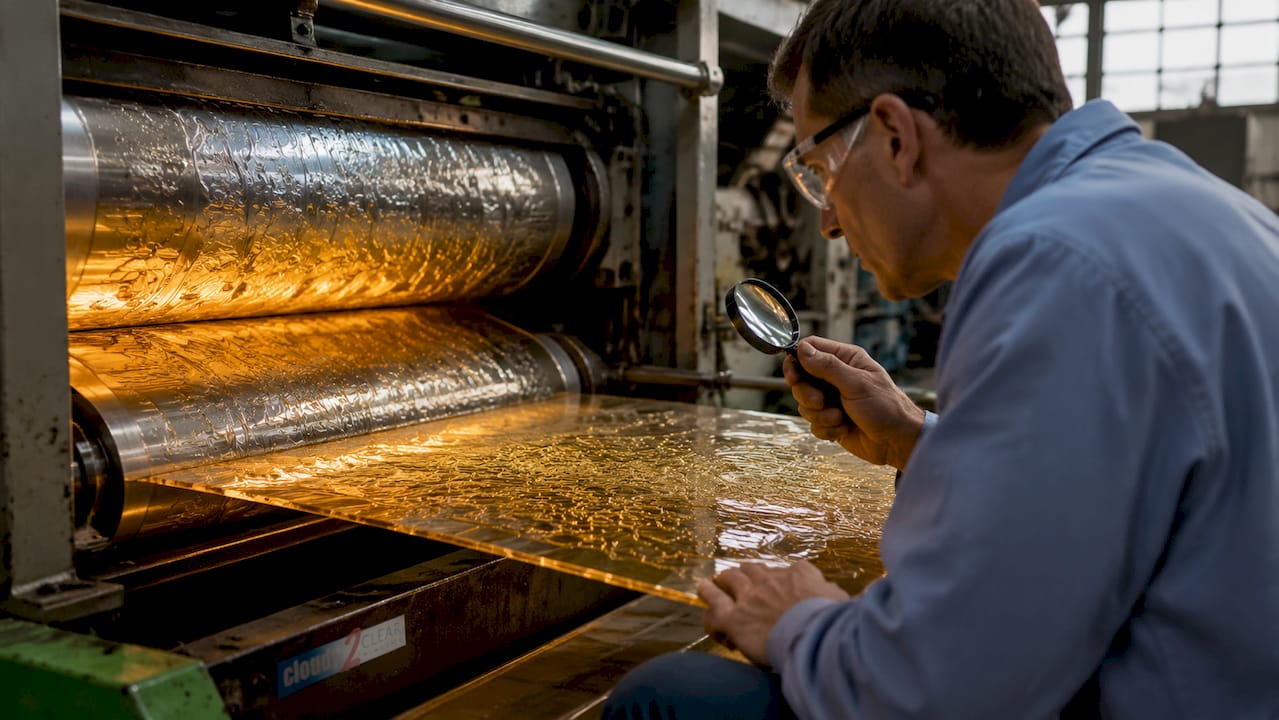
The manufacturing method determines the depth and character of the texture. Shallow textures produce subtle privacy with high light transmission. Deeper textures create stronger obscurity but reduce the amount of light that passes through. Understanding this relationship is the starting point for any good glass specification.
Common patterned glass types
The range of available designs is broader than most people expect. Current categories include:
- Linear patterns such as Reeded and Ribbed, which use parallel vertical or horizontal grooves to create a clean, directional effect
- Organic patterns such as Rain and Floral, which scatter light more randomly and suit traditional or natural interiors
- Geometric patterns including diamond and square textures, which work well in contemporary commercial settings
- Minimalist textures such as Micro Ribbed and Satin, which offer subtle privacy with a near-clear appearance
Modern design trends favour minimalistic patterns like Reeded and Micro Ribbed over traditional busy styles. This shift reflects a broader architectural preference for clean, quiet privacy solutions that do not compete visually with the rest of a space.
Pro Tip: Match pattern depth to your light requirements. A shallow texture like Satin transmits more light and suits rooms where brightness matters. A deeper texture like Floral suits spaces where stronger privacy is the priority.
What are the performance characteristics and benefits of patterned glass?
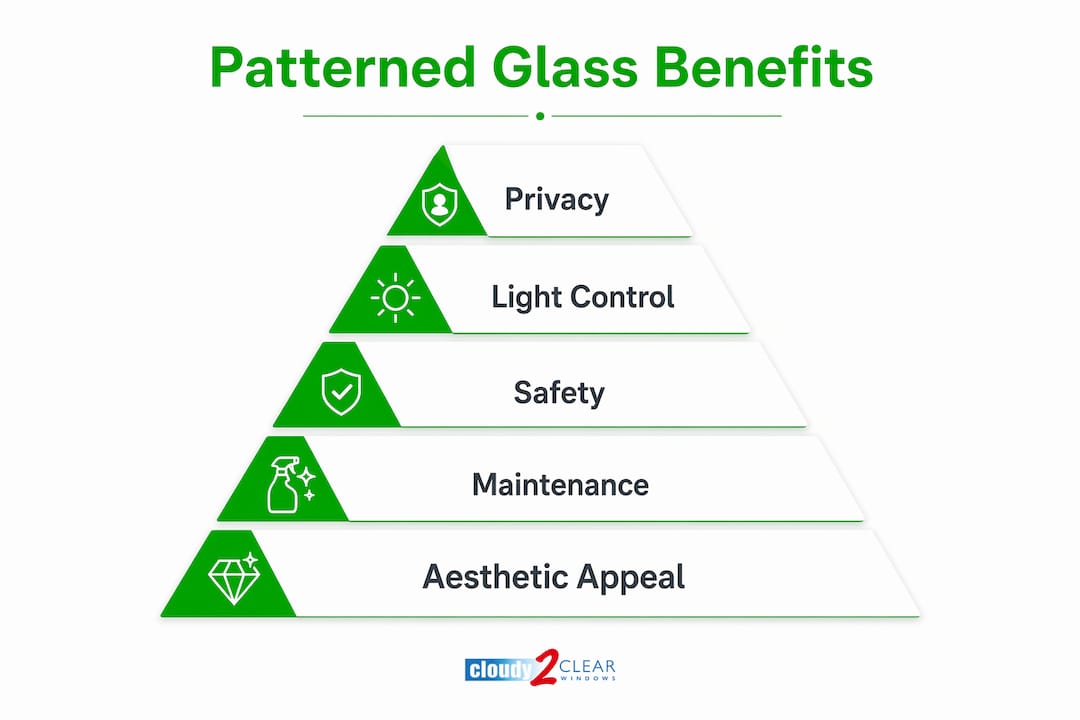
Patterned glass does far more than look good. Its technical performance is what makes it a serious specification choice for architects and designers.
Light transmission and solar performance
Visible light transmission through patterned glass ranges from 50% to 90%, while solar energy transmission sits between 40% and 80%. Both figures depend on texture depth and glass clarity. A shallow, near-clear texture sits at the higher end of both ranges, while a deeply embossed pattern sits at the lower end.
Privacy and obscurity levels
Patterned glass is rated on an obscurity scale from 1 to 5. Level 1 offers minimal obscurity, allowing shapes and movement to be seen clearly. Level 5 is fully obscuring, with no recognisable shapes visible through the glass. This scale gives you a practical tool for matching glass to spatial needs, rather than guessing from a sample.
| Obscurity level | Privacy effect | Typical application |
|---|---|---|
| 1 | Low, shapes visible | Decorative partitions, feature doors |
| 2 | Mild, outlines softened | Internal screens, retail displays |
| 3 | Moderate, shapes blurred | Office partitions, bathroom windows |
| 4 | High, silhouettes only | Shower enclosures, medical facilities |
| 5 | Full, no shapes visible | Maximum privacy glazing |
Maintenance and hygiene
Patterned glass texture masks water spots, fingerprints, and dust far better than clear glass. This makes it a practical choice for high-use areas such as shower enclosures, office partitions, and public-facing retail screens. The surface does not show soiling as readily, which reduces the frequency of cleaning without compromising appearance.
Safety and building compliance
Patterned glass often requires tempering or lamination to meet building safety codes, particularly in hazardous locations such as shower enclosures or low-level glazing. Tempered patterned glass breaks into small, blunt fragments rather than sharp shards. Laminated versions hold together on impact. Both treatments are available across most pattern types. For guidance on which treatment suits your project, the types of safety glass guide covers the key distinctions clearly.
Pro Tip: Specify low-iron patterned glass for high-end projects. Standard glass contains iron oxide, which gives edges and deeper textures a greenish tint. Low-iron glass eliminates this, producing truer colours and a cleaner appearance.
What are the common uses of patterned glass in architecture and design?
Patterned glass appears across a wide range of settings, from domestic bathrooms to large commercial interiors. Its ability to combine privacy with daylight makes it useful wherever you need to divide or screen a space without blocking light entirely.
Typical applications include:
- Shower enclosures and bathroom windows, where privacy is non-negotiable but natural light remains desirable
- Office partitions and conference rooms, where visual separation supports focus without creating a closed, oppressive environment
- Healthcare interiors, where patterned glass enables zoning and privacy without blocking daylight, improving occupant comfort
- Retail and hospitality environments, where decorative glass adds character while managing sightlines
- Internal doors and furniture, where glass panels add lightness to solid structures
- Facade elements, where textured glass creates visual interest on building exteriors
The use of frosted glass in residential applications increased by 15% in 2025. That figure reflects a wider trend: homeowners are choosing decorative glass options not just for bathrooms but for room dividers, kitchen splashbacks, and entrance doors. The material has moved well beyond its traditional role.
Patterned glass also performs well in commercial glazing applications where energy efficiency and natural light management matter. In open-plan offices, ribbed or reeded glass partitions allow daylight to travel deeper into the floor plate while still giving individual workspaces a degree of visual separation.
How to choose patterned glass: key considerations
Selecting the right patterned glass requires you to balance privacy needs, aesthetic goals, and technical requirements. Working through these points in order makes the decision straightforward.
- Define your privacy requirement. Use the obscurity scale (1 to 5) as your starting point. A bathroom window needs at least a level 3. A shower enclosure typically needs a level 4 or 5.
- Choose a pattern style that suits the space. Linear patterns like Reeded suit contemporary interiors. Organic patterns like Rain suit traditional or period properties. Geometric textures work well in commercial settings.
- Select the right thickness. Most residential applications use 4mm or 6mm glass. Thicker options up to 10mm suit structural or high-traffic applications. Thinner glass at 3mm is limited to low-load decorative uses.
- Specify the correct safety treatment. Shower enclosures, low-level glazing, and doors require tempered or laminated glass to meet building regulations. Tempered patterned glass is the standard choice for most hazardous locations.
- Consider glass clarity. Standard glass works well for most applications. Low-iron glass is worth specifying where colour accuracy matters, such as in high-end residential projects or premium commercial interiors.
- Check compatibility with insulated glass units. Patterned glass can be incorporated into double-glazed units for energy efficiency. The texture faces inward in most configurations to protect the embossed surface. Cloudy2Clear Windows can advise on the correct configuration for your specific installation.
Pro Tip: Always check your local building regulations before specifying patterned glass for structural or safety-critical locations. Cloudy2Clear Windows specialists can confirm compliance requirements and recommend the right product for your project.
Why patterned glass deserves more credit than it gets
After nearly two decades of working with glazing across homes and commercial buildings, I have noticed that patterned glass is consistently underestimated. Most people think of it as a bathroom material. The reality is that it is one of the most technically capable and design-flexible glazing options available.
The shift towards minimalist textures like Reeded and Micro Ribbed is significant. These patterns give architects a tool for creating privacy without visual noise. A Reeded glass partition in an open-plan office does not shout for attention. It simply does its job quietly, letting light through while giving people a sense of separation.
What I find most interesting is the untapped potential in sustainable design. Patterned glass in insulated units can manage solar gain, reduce glare, and support natural daylighting strategies, all without sacrificing privacy. That combination is genuinely useful in a world where energy performance and occupant wellbeing are both priorities.
My advice: treat patterned glass as a technical specification decision first and a decorative choice second. The aesthetics will follow naturally once you have matched the obscurity level, thickness, and safety treatment to the space.
Patterned and decorative glass services from Cloudy2Clear Windows
Cloudy2Clear Windows has been installing and repairing double-glazed windows across residential and commercial properties since 2005. That experience extends to patterned and decorative glass across a wide range of applications, from bathroom windows to office partitions and facade elements.
Whether you need a double glazing replacement with a specific patterned glass type, or professional advice on obscurity levels and safety treatments, the Cloudy2Clear Windows team is ready to help. Local branches across the UK offer repair and installation services tailored to your property. Readers in the Milton Keynes area can contact the Milton Keynes branch directly for a consultation. Get in touch today and let the team help you find the right glass for your space.
FAQ
What is patterned glass used for?
Patterned glass is used in shower enclosures, bathroom windows, office partitions, internal doors, and facade elements. Its primary function is to provide privacy while allowing natural light to pass through.
How does patterned glass differ from clear glass?
Patterned glass has a textured or embossed surface that scatters light and obscures visibility. Clear glass transmits light without distortion and offers no privacy.
What obscurity level do I need for a shower enclosure?
A shower enclosure typically requires an obscurity level of 4 or 5 on the standard scale of 1 to 5. Level 5 provides full obscurity with no recognisable shapes visible through the glass.
Does patterned glass need to be toughened?
Patterned glass in hazardous locations such as shower enclosures, low-level glazing, and doors must be tempered or laminated to comply with building safety regulations. Standard untreated patterned glass is not suitable for these applications.
What thickness of patterned glass should I choose?
Most residential applications use 4mm or 6mm patterned glass. Thicker options up to 10mm suit structural or high-traffic settings, while 3mm is limited to low-load decorative uses.