Condensation is the most common form of damp in UK homes, yet it is regularly confused with penetrating or rising damp. Getting that distinction wrong leads to expensive repairs that fix nothing. Condensation forms when warm, moisture-laden indoor air meets a cold surface and water droplets appear. Damp, by contrast, enters a property from outside or rises from the ground through the building fabric itself.
Here is a quick comparison to help you tell them apart:
| Feature | Condensation | Rising damp | Penetrating damp |
|---|---|---|---|
| Source | Indoor moisture | Ground moisture | External water ingress |
| Location | Windows, corners, behind furniture | Low wall levels, ground floor only | Any wall or ceiling near a defect |
| Visual signs | Water droplets, black mould | Tidemark up to 1–1.2 metres, salt deposits | Damp patches worsening after rain |
| Smell | Musty near affected areas | Musty with salt staining | Musty, often localised |
| Fix | Ventilation, heating balance, behaviour | Damp-proof course repair | Structural repair to building fabric |
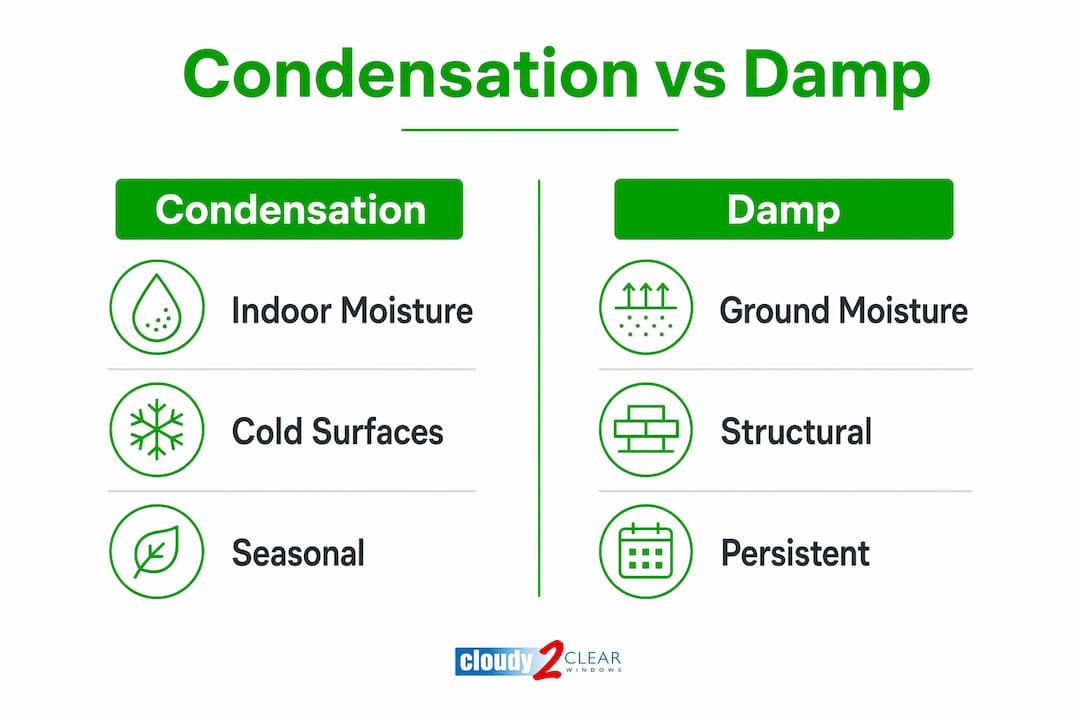
Misdiagnosing these problems is surprisingly easy, and the consequences can be costly. A rising damp misdiagnosis can send you down the path of unnecessary damp-proofing work when the real culprit is condensation or a structural bridge. Knowing which you are dealing with is the first step to solving it properly.
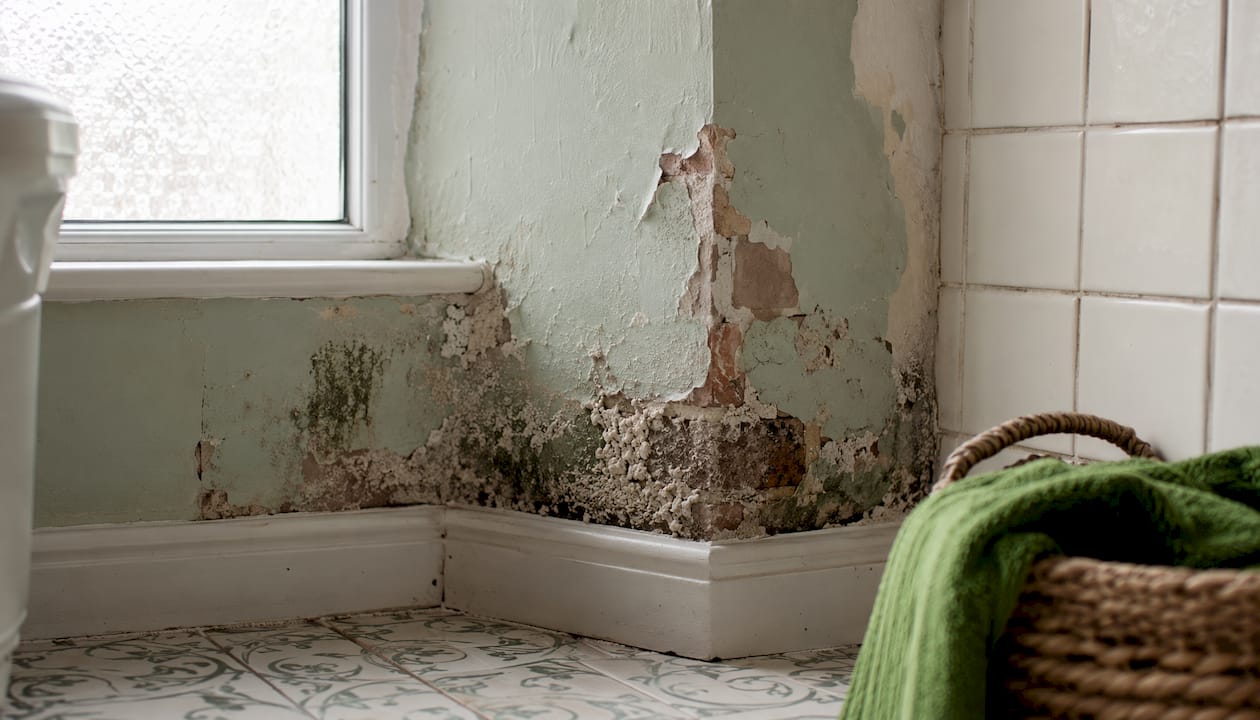
What causes condensation in your home?
Condensation forms when three factors combine: too much indoor moisture, surfaces that are cold enough for water to settle on, and insufficient ventilation to carry that moisture away. Everyday activities generate more moisture than most people realise. Cooking, showering, and drying laundry indoors all push water vapour into the air, and without a way out, it settles on the coldest surfaces it can find.
Common signs of condensation include:
- Water droplets on windows, mirrors, or cold water pipes, particularly in the morning
- Black mould growing in corners, behind wardrobes or sofas, or around window frames
- A persistent musty smell in rooms with poor airflow
- Peeling wallpaper or deteriorating plasterwork near external walls
- Condensation worsening noticeably during colder months
Thermal bridging makes things worse; according to the Emergency Steps for Water Leaks: NJ Homeowner Guide, insulating and upgrading windows can help mitigate condensation-related problems. Where window frames, wall ties, or poorly insulated sections create a cold spot, moisture gravitates there first. Energy efficiency upgrades such as airtight double glazing can actually increase condensation risk if ventilation is not improved at the same time, because the home retains more moisture with fewer natural air gaps.
Pro Tip: If your condensation appears mainly on external walls and in corners rather than just on windows, thermal bridging is likely involved. Check whether insulation is consistent across those wall sections before assuming ventilation alone is the answer.
How to prevent condensation effectively
Prevention comes down to balancing three things: the amount of moisture you produce indoors, the temperature of your home, and how well air circulates. No single measure works in isolation. Turning the heating up without improving ventilation, for example, simply creates warmer damp air rather than drier air.
Condensation prevention checklist:
- Open windows in kitchens and bathrooms during and after cooking or showering.
- Use extractor fans consistently, not just occasionally, in high-moisture rooms.
- Avoid drying clothes on radiators indoors; use a vented tumble dryer or dry outside when possible.
- Keep indoor temperatures above 16°C at a minimum, with an ideal range of 18°C–21°C.
- Leave a small gap between furniture and external walls to allow air to circulate.
- Fit trickle vents on windows to allow background ventilation without draughts.
- Address thermal bridging by improving insulation at wall junctions and around window frames.
Mechanical extraction is particularly effective in kitchens and bathrooms, where moisture production is highest. Opening windows may not be enough on its own, especially in winter when people are reluctant to let cold air in. A whole-house ventilation approach that combines trickle vents, extractor fans, and consistent background heating tends to produce the best results.
Heating increases the air’s capacity to hold moisture, but only combined with ventilation and reduced moisture production does it actually control condensation sustainably. Relying on the boiler alone is one of the most common mistakes homeowners make.
How to treat mould caused by condensation and damp
Mould is a fungus, not a type of damp. It grows wherever moisture sits long enough on a surface, whether that moisture comes from condensation or from penetrating or rising damp. Treating mould with a spray alone is a temporary fix. Without resolving the underlying moisture source, it will return within weeks.
Safe mould removal steps:
- Wear gloves, a face mask, and eye protection before cleaning.
- Work in a ventilated space; open windows and close internal doors to contain spores.
- Use a fungicidal wash rather than bleach, which can damage surfaces without killing the root.
- Bag and dispose of any soft furnishings or materials that cannot be cleaned thoroughly.
- Dry the area completely after cleaning and monitor for regrowth.
Pro Tip: Check behind large furniture pieces and inside built-in wardrobes against external walls. These are the spots where mould establishes itself quietly for months before becoming visible on the surface you can see.
Mould poses real health risks, particularly for people with asthma, respiratory conditions, or weakened immune systems. The GOV.UK guidance on damp and mould health risks is clear: visible mould or a mould odour is sufficient reason to act, not to wait and monitor. Structural damage follows too. Left untreated, persistent moisture causes woodwork to rot and plasterwork to deteriorate over time.
Rising damp and penetrating damp: what sets them apart?
These two damp types are less common than condensation but more damaging to the building fabric, and they require structural repairs rather than changes to ventilation or behaviour.
Rising damp:
- Ground moisture wicks upward through brickwork and masonry, typically in older properties without a functioning damp-proof course.
- The characteristic tidemark appears up to 1–1.2 metres from the floor.
- Salt deposits and flaking plaster at low wall levels are strong indicators.
- Affects ground floor rooms only; never appears above the first floor.
- True damp-proof course failure is rarer than commonly assumed; what looks like rising damp is often condensation or structural bridging.
Penetrating damp:
- Water enters through defects in the building envelope: damaged guttering, cracked render, loose roof tiles, or gaps around windows and doors.
- Damp patches worsen noticeably after heavy rain, which is the clearest diagnostic clue.
- Can appear at any height on a wall or ceiling, unlike rising damp.
- Common causes include leaking pipes, failed pointing, and poorly sealed window frames.
- Requires repair of the specific building defect, not damp-proofing treatments.
Both types can occur alongside condensation, which complicates diagnosis. A professional assessment is advisable when you cannot confidently identify the source, particularly before committing to any remedial work.
Using dehumidifiers and moisture meters to manage indoor humidity
Dehumidifiers can reduce indoor humidity where ventilation alone is insufficient, particularly in rooms that are difficult to ventilate, such as basements or north-facing bedrooms. They work by drawing air over a cold coil, collecting the condensed water in a reservoir. Used consistently, they can make a noticeable difference to comfort and reduce the risk of mould forming.
Moisture meters are a useful diagnostic tool, but they require careful interpretation. Surface salts and hygroscopic materials can produce false positive readings, making a wall appear wetter than it actually is internally. A reliable assessment compares surface readings with internal wall readings and considers the building context.
Practical guidance on using these tools:
- Use a dehumidifier in rooms where condensation is persistent and ventilation options are limited.
- Empty the reservoir regularly; a full tank stops the unit working.
- When using a moisture meter, take multiple readings at different depths and locations rather than relying on a single surface reading.
- Treat a high moisture meter reading as a prompt for further investigation, not a definitive diagnosis.
- Consult a professional surveyor when readings are ambiguous or when you suspect penetrating or rising damp rather than condensation.
Moisture meters are a starting point, not a conclusion. A professional will compare readings with visible signs, building history, and construction type before recommending any treatment.
What Cloudy2Clear Windows recommends for window condensation
Windows are the most visible site of condensation in most homes, and they are also one of the most manageable. Cloudy2Clear Windows has been advising homeowners on window condensation prevention since 2005, and the consistent finding is that thermal bridging at the frame is the primary culprit in properties with persistent window condensation.
Well-maintained double glazing significantly reduces the cold surface area available for moisture to settle on. When the seal between panes fails, the insulating gas escapes and the inner pane becomes much colder, creating exactly the conditions condensation needs. Addressing common window faults early prevents a minor issue from becoming a recurring moisture problem.
Cloudy2Clear Windows recommends the following steps for homeowners dealing with window condensation:
- Inspect window seals annually for signs of failure, such as fogging between panes or water ingress at the frame.
- Ensure trickle vents are open and unobstructed; many homeowners block them unknowingly.
- Choose frames with thermally broken profiles, which reduce the transfer of cold from outside to inside.
- Wipe condensation from window surfaces promptly to prevent water tracking down into the frame and causing rot.
- Consider upgrading single-glazed or failed double-glazed units to modern double glazing replacement units with low-emissivity glass.
Pro Tip: Condensation on the outside of a window is actually a sign that your glazing is working well. It means the inner pane is retaining heat effectively. Condensation on the inside surface, or between the panes, is the problem to address.
If you are dealing with persistent steamed-up windows, the issue is rarely the glass alone. Frame condition, ventilation, and indoor humidity all play a part, and addressing them together produces lasting results.
The mistake most homeowners make with condensation and damp
Most homeowners reach for the heating dial first. It feels logical: a warmer home should be a drier home. But heating increases the air’s capacity to hold moisture without removing any of it. Without ventilation, you simply create a warmer, more humid environment that still condenses on cold surfaces.
The other common error is treating the symptom rather than the cause. Wiping condensation off windows every morning helps prevent mould in the short term, but it does not address why the moisture is there. The same applies to mould sprays: they remove the visible growth but leave the conditions that produced it entirely intact.
A few lessons that come up repeatedly in real cases:
- Blaming lifestyle alone is rarely fair or accurate. Building deficiencies, poor insulation, and inadequate ventilation are usually the primary drivers.
- Diagnosing rising damp without professional assessment leads to unnecessary and expensive damp-proofing treatments that do not resolve the actual problem.
- Condensation and penetrating damp can occur simultaneously, which means fixing one without investigating the other leaves the property vulnerable.
- Consistent, moderate heating combined with background ventilation outperforms intermittent high heat every time.
Successful moisture management is a balance, not a single fix. The properties that stay dry are the ones where ventilation, heating, and moisture control work together rather than in isolation.
Is your window condensation a sign of a bigger problem?
If condensation around your windows is persistent or you are seeing signs of damp in your walls, Cloudy2Clear Windows can help you identify whether your glazing is contributing to the problem. With over two decades of experience in double glazing repairs and replacement across the UK, the team can assess your windows and recommend the right solution, whether that is a seal repair, unit replacement, or frame upgrade.

Cloudy2Clear Windows serves homeowners across the country, including Watford and the surrounding area. Get in touch to arrange an assessment and take the guesswork out of your moisture problems.
FAQ
How do I know if it’s damp or condensation?
Condensation typically appears on cold surfaces such as windows and external walls, worsens in winter, and is linked to indoor activities like cooking and showering. Damp from penetrating or rising sources tends to appear in fixed locations regardless of season, often with tidemarks, salt deposits, or patches that worsen after rain.
Is black mould caused by damp or condensation?
Black mould is caused by persistent moisture on surfaces, which can come from either condensation or damp. It is a fungus that grows wherever humidity remains high enough for long enough, and treating it requires fixing the underlying moisture source, not just removing the visible growth.
Does putting the heating on get rid of condensation?
Heating alone rarely solves condensation. Indoor temperatures between 18°C and 21°C help, but only when combined with adequate ventilation and reduced moisture production. Heating without ventilation simply creates warmer humid air that still condenses on cold surfaces.
Should you wipe off condensation?
Yes, wiping condensation promptly helps prevent mould from forming on that surface. It is a useful short-term measure, but it does not address the cause. Improving ventilation and reducing indoor moisture production are the steps that produce lasting results.