For most existing windows, high quality secondary glazing or acoustic laminate glass units give you the best balance of noise reduction and minimal disruption. Secondary glazing suits historic or sensitive frames because it is reversible, while acoustic laminate units work well when replacing the glazing itself is acceptable. Later sections cover installation steps, permissions and how to brief an installer.
What an acoustic glass retrofit involves and your main options
An acoustic glass retrofit means upgrading existing windows to reduce noise transmission without a full window replacement. There are two broad routes: fitting a secondary glazing system behind your existing window, or replacing the glazing unit itself with an acoustic laminate or thicker sealed unit while keeping the original frame.
Which option suits you depends on your priorities, your frame type and how much disruption you can accept.
- Magnetic or removable inserts: a lightweight acrylic or glass panel held in place with a magnetic strip, easy to remove for cleaning or ventilation, and a practical starting point for renters or budget-conscious retrofits.
- Acrylic secondary panels: fixed or hinged panels that offer better sealing than magnetic inserts and suit windows you rarely need to open.
- Fitted secondary glazing: slimline, sliding or hinged secondary units built into the reveal, offering the strongest seal and the best acoustic result of the secondary options.
- Acoustic laminate glass: a replacement glazing unit with an interlayer designed to dampen sound, fitted into your existing frame where the frame itself is sound.
- Replacing with thicker or slimline sealed units: a straightforward swap for frames in good condition, useful where secondary glazing is not wanted for aesthetic reasons.
How acoustic performance is measured and what actually matters
Glazing performance against noise is expressed as the weighted sound reduction index, or Rw. The higher the Rw value, the more sound the glazing assembly blocks, and this is the figure to ask any installer for rather than a vague decibel promise, as Newcastle-under-Lyme Borough Council’s guidance sets out.
A well-specified secondary glazing unit with a sufficiently large air gap can achieve substantial sound insulation, a significant improvement over a single glazed, unsealed window, according to Historic England’s secondary glazing guidance.
A few factors drive that result:
- Glass mass and thickness: heavier, thicker panes resist vibration and transmit less sound.
- Mismatched pane thicknesses: pairing panes of different thickness, such as 4mm with 6mm, reduces resonance across a wider range of frequencies, as the GGF technical guidance on window acoustics explains.
- Air gap size: a wider gap between panes generally improves performance, though gains level off beyond around 200mm.
- Sealing quality: gaps around the frame undermine even the best glazing, since sound finds the weakest path first.
Retrofit options: how each is installed and what to check afterwards
Installation steps differ by option, but the checks that matter afterwards are broadly similar.
- Removable inserts and magnetics: your installer measures each reveal precisely, fits the magnetic strip or frame, and checks the panel seats flush with no visible gap. These suit windows that need occasional opening and rooms where storage of the panel is practical.
- Fitted secondary glazing: the reveal is prepared, a slimline, sliding or hinged frame is fixed in place, and seals are checked around the full perimeter. Trickle vents or a ventilation gap are built in where needed, and access for cleaning between the panes is confirmed before sign-off.
- Replacing the glazing unit: where the frame is sound, the existing sealed unit is removed and the new acoustic or thicker unit fitted without touching the frame. Sash windows need careful handling, since a heavier unit changes the balance and can affect how smoothly the window opens.
- Final checks: every installation should finish with an airtightness check around the frame, confirmation that ventilation routes remain open, and a look for any condensation risk between panes.
Pro Tip: Ask your installer to test for draughts with a simple smoke pencil or incense stick before they specify glazing, since sealing a leaky frame often delivers a bigger noise improvement than the glass itself.
Conservation, listed buildings and permissions you need to check first
If you live in a period or listed property, secondary glazing is usually the preferred route because it sits behind the original window without altering or removing historic fabric, and it can be removed later without trace. Historic England’s guidance notes that secondary glazing is frequently recommended for this reason, alongside its acoustic and thermal benefits.
Before you start work, check whether you need listed building consent or whether an Article 4 direction restricts changes to your windows. Our guidance on double glazing for listed buildings covers sympathetic upgrade options in more detail.
- Confirm listed status and any Article 4 restrictions with your local planning authority before ordering materials.
- Ask your installer for photographs, specifications and drawings that support a consent application.
- Keep secondary glazing fully reversible wherever consent is uncertain, since this avoids conflict with conservation requirements.
How to choose an installer and the questions worth asking
A reputable installer should be able to answer technical questions without hesitation, and their answers tell you a great deal about the quality of the job.
- Ask for the Rw value of the proposed assembly rather than a general noise reduction claim, and request any manufacturer or laboratory test reference behind it.
- Confirm they have specific experience with secondary glazing or acoustic retrofits, not just standard window replacement.
- Check how they approach sealing and ventilation, since both affect whether the finished result performs as specified.
- Ask what maintenance the system needs and what guarantee covers the glazing and the installation.
- Request a post-installation check to confirm the seal and performance match what was agreed.
- Make sure the initial survey assesses frame condition and existing draughts, since glazing specified without this can under-deliver, as the GGF guidance makes clear.
If permissions are uncertain for a London property, this overview of planning permission versus permitted development is a useful starting point before you book a survey.
Cloudy2Clear Windows: practical experience applied to retrofits
We have been repairing and replacing double glazing across various types of properties. Our approach to replacement means we swap the failed or underperforming unit without disturbing the existing frame, which keeps disruption and mess to a minimum.
We also offer soundproofing and noise reduction services alongside standard glazing work, backed by aftercare and a guarantee on completed installations.
What the research actually tells you to prioritise
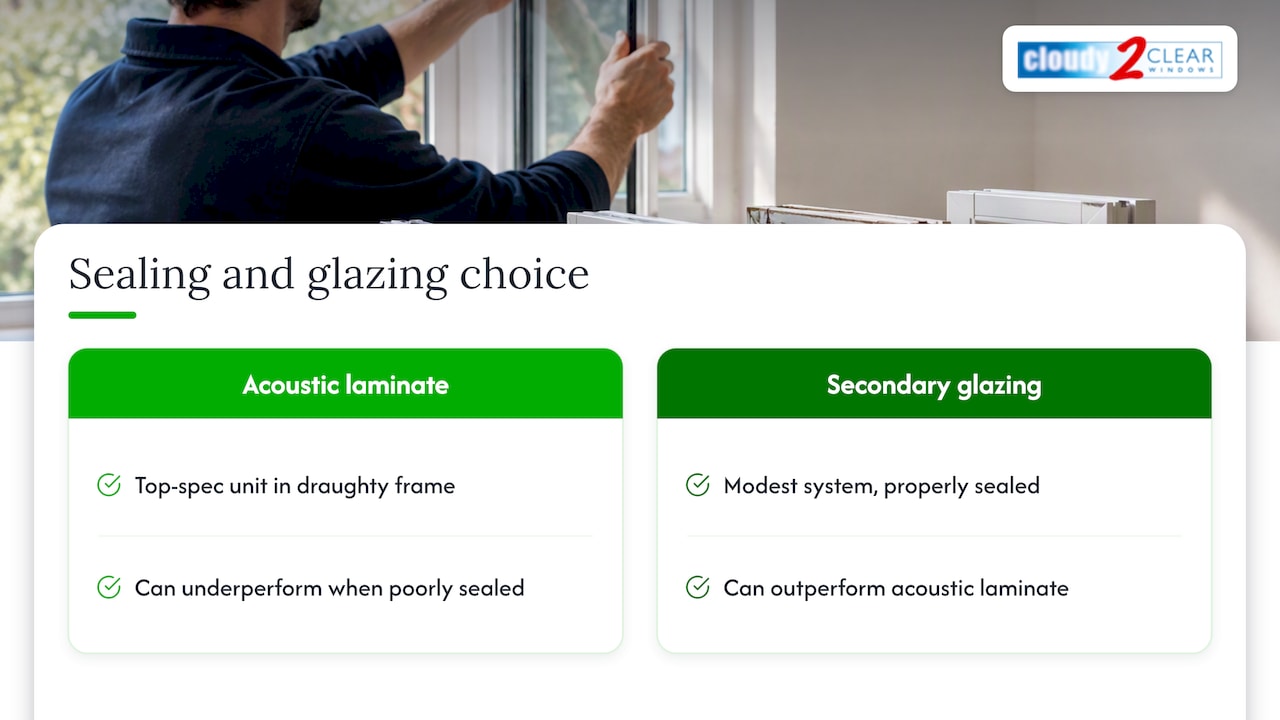
The conventional advice tends to treat glazing choice as the whole answer, when sealing quality usually decides whether a retrofit succeeds or disappoints. A top-spec acoustic laminate unit fitted into a draughty frame will underperform a modest secondary glazing system that is properly sealed, which is why we would push any homeowner to insist on a draught check before choosing glass.
Secondary glazing is also underrated outside conservation circles. It gets framed as the fallback option for listed buildings, but its reversibility, strong acoustic performance and lower disruption make it worth considering on its own merits for any window, not just a protected one.
Noise rarely enters through glass alone. Historic England’s wider retrofit guidance rightly points out that walls, roofs and ventilation routes all play a part, so treat glazing as one piece of a wider noise strategy rather than a single fix.
Ready for a site survey? Here’s what Cloudy2Clear Windows checks
Years of fitting and repairing glazing across homes and businesses mean we know what makes an acoustic retrofit succeed, and what makes one fail within a year. A site survey with us covers:
- Measurements of each window and reveal to confirm which retrofit option fits.
- A draught and seal assessment to identify where sound and heat are actually escaping.
- A check for condensation risk between panes before any glazing is specified.
Pro Tip: Book your survey before ordering any glazing, since the frame condition often changes which option makes sense.
You will come away with a tailored recommendation and a written quote, with no obligation to proceed. Get in touch through our soundproofing and noise reduction page to arrange a visit.
FAQ
Is glass good for sound insulation?
Glass can reduce noise significantly when it is thick, laminated, or paired with an air gap, but a single pane alone offers limited sound insulation. The weighted sound reduction index (Rw) is the figure to check when comparing glazing options.
How much does acoustic glass cost?
Pricing depends on your window size, the retrofit option chosen and your property type, so we would recommend requesting a written quote after a site survey rather than relying on a generic figure. Our soundproofing and noise reduction page has more detail on what is involved.
How can I block traffic noise from entering my window?
Sealing draughts around the frame first often makes the biggest difference, since installation quality and airtight sealing are critical to how much noise gets through. Adding secondary glazing or an acoustic laminate unit on top of good sealing gives the strongest result, and our guide to reducing traffic noise covers practical tactics.
What is acoustic auto glass?
Acoustic auto glass is a laminated glazing used in vehicles to reduce road and wind noise inside the cabin, and it works on the same principle as acoustic laminate units used in home windows. It is not something fitted to domestic windows, where secondary glazing or acoustic laminate units designed for buildings are the relevant options.