The single biggest improvement you can make to a glazed door is to replace vulnerable toughened glass with laminated glass rated to BS EN 356:2000 class P1A, or fit certified security film as a short-term measure. Pair that with DHF TS 007 3-star cylinders, or a 1-star cylinder combined with 2-star handles, and then reinforce the frame and hinges. Together, these three changes close the gaps that opportunistic burglars rely on.
Why laminated glass is the upgrade priority
Toughened glass is designed to shatter into small, blunt fragments when struck. That is good for cuts and injuries, but it also means a determined knock with a hammer or elbow can clear an opening fast, giving an intruder reach to a thumb-turn lock or a clear route inside. Laminated glass behaves differently: a plastic interlayer bonds the fragments together, so the pane holds its shape even when cracked. There is no handhold, no gap, and far less chance of reaching through.
Police guidance recommends laminated glazing to at least BS EN 356:2000 class P1A for vulnerable door glass, particularly where a panel sits close to a thumb-turn lock. This rating is the entry point for genuine security glazing: it confirms the glass has been tested to resist a specific impact and still hold together.
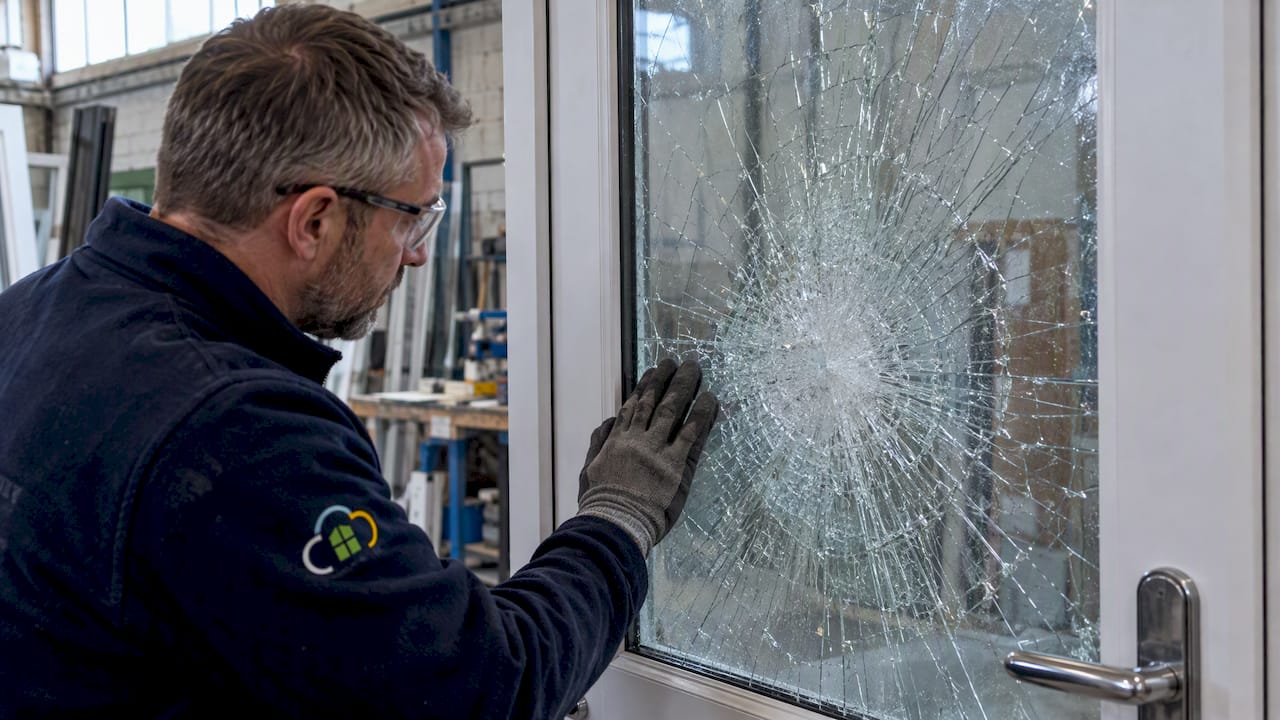
Most patio door glass fitted in UK homes is toughened rather than laminated, according to Avon and Somerset Police, which helps explain why patio doors remain such a common entry point for burglars.
Where full replacement is not possible right away, certified security film offers a stopgap:
- Film must be edge-sealed and tucked under the glazing beading, not just stuck to the surface, or an intruder can simply peel it back.
- It adds impact resistance but does not match the structural performance of a true laminated unit.
- It works best as a bridge measure while you arrange proper glass replacement, not as a permanent substitute.
Pro Tip: Check any film product’s certification before fitting. An uncertified film gives a false sense of security and can fail at the first real impact.
Locks and hardware every glazed door needs
Glass is only half the equation. A door with laminated glazing and a basic euro cylinder is still an easy target if the lock can be snapped or bumped in seconds. Hardware needs to match the glass upgrade, not trail behind it.
- Fit a DHF TS 007 3-star cylinder where the door allows it. This single component resists snapping, bumping and picking far better than a standard cylinder.
- Where a 3-star cylinder is not available for your door type, combine a 1-star cylinder with 2-star rated handles. Police guidance treats this pairing as an equivalent practical upgrade.
- Check that the door has multi-point locking, engaging at several points along the frame rather than a single latch, since this spreads load and resists forcing.
- Look for anti-snap and anti-bump features stamped or labelled on the cylinder housing; genuine products carry visible certification marks.
- Ask whether the doorset meets PAS 24 if you are considering full replacement. PAS 24:2022 added a three-minute hardware and cylinder attack test, which matters for insurers and for Secured by Design recognition.
PAS 24 testing covers the whole doorset, not just the lock, because a strong cylinder fitted into a weak frame still fails under attack. That link between hardware and structure is exactly why Secured by Design.pdf) specifications treat glazing, locks and frames as one system rather than separate purchases, a point we return to when discussing home security window features.
Pro Tip: If your existing cylinder protrudes more than 2mm beyond the handle, it is vulnerable to snapping. A simple cylinder swap often costs far less than people expect, and it closes one of the most common attack routes.
Before deciding between a cylinder swap and a full hardware upgrade, check: does the cylinder protrude past the handle, does the door have multi-point locking, and are the handles rated or unmarked? Those three answers tell you whether you need a quick fix or a more thorough review.
Frame, hinges and installation: stop the weak link
New glass fitted into a tired frame solves only part of the problem. The most common failure points are not the glass at all: they are the jamb, the hinges and the beading that holds the pane in place.
Jamb pull-out happens when screws securing the frame to the brickwork are too short or too few, letting the whole frame flex away from the wall under force. Hinge attacks target the opposite edge, prising the door off its hinges rather than forcing the lock. Loose or externally fitted glazing beads let an intruder lever the pane out entirely, bypassing the glass upgrade altogether.
- Fit hinge bolts on the opening edge of the door to stop it being forced off even if hinges are attacked.
- Replace short fixing screws with longer security screws that bite properly into the frame structure, not just the liner.
- Fit a reinforced strike plate so the multi-point lock has something solid to engage with.
- Check that glazing beads sit on the internal side of the door, not externally, so they cannot be popped from outside. Before ordering replacement glass, it is worth checking your door frame to confirm the rebate can properly seat a laminated unit.
- Confirm the laminated pane sits on a secure rebate deep enough to hold it under impact.
If a frame shows signs of rot, repeated past forcing or a shallow rebate that cannot safely hold a thicker laminated unit, it makes more sense to consider full doorset replacement to PAS 24 or Secured by Design standard than to keep patching an ageing frame.
Patio, sliding and French doors: targeted fixes
Sliding and French doors fail in predictable ways, which means the fixes are equally predictable once you know what to look for.
- Fit an anti-lift device to the sliding door’s top track, or fix a timber batten into the track itself; both stop the moving sash being lifted clear of its runners, a method West Yorkshire Police flags as a common attack on patio doors.
- Add a surface-mounted or mortice-style patio lock alongside anti-lift screws for a second layer of resistance beyond the standard latch.
- On French doors, fit shoot-bolts to the passive leaf, top and bottom, and consider a Patlock-style internal bar on the active leaf for extra reinforcement.
- Protect any thumb-turn lock sitting near a glazed panel: replace that adjacent pane with laminated glass to P1A, or fit certified film under the beading, so nobody can reach through and turn it from outside.
- In higher-risk locations, consider internal security grilles as an additional layer rather than a replacement for the above.
Pro Tip: Test your sliding door by lifting the handle side while it’s locked. If it rises more than a few millimetres in the track, an anti-lift device should be a priority, not an afterthought. Our guide to patio door glass replacement walks through assessing glass, frame and hardware together.
A short inspection covers most vulnerabilities: check the track for lift, check the glass for a toughened stamp etched into the corner, check the thumb-turn’s distance from the nearest pane, and check whether shoot-bolts actually engage when the handle is lifted.
Temporary and low-cost options while you arrange professional upgrades
Not every fix needs to wait for a tradesperson. While you schedule proper glass and hardware work, a few measures reduce risk straight away.
- Fit certified, edge-sealed security film to the most exposed panes as an interim measure.
- Add an internal glass shock alarm; it will not stop an attempt, but it adds noise and deters anyone hoping for a quiet entry.
- Display visible security signage, which on its own can discourage opportunistic attempts.
- Batten the top track of sliding doors with timber, and add extra internal bolts to French doors’ passive leaf.
- A security bar or wedge can help, but check it does not block an escape route required for fire safety before relying on it.
- Keep spare keys out of sight from any glazed panel, and let your insurer know about any interim measures, since some policies ask for specific standards before a claim is honoured.
When to call a specialist and what a professional check should include
Some of this work is straightforward for a confident homeowner. Full glass replacement to a security rating, or structural work on frames and hinges, is best left to someone who fits laminated and security-rated glazing regularly.
A proper inspection should cover:
- Confirming the current glass type and rating, since toughened glass is not always obvious without checking the etched corner stamp.
- Testing locks and cylinders for snap resistance and confirming whether multi-point locking actually engages correctly.
- Assessing the frame and fixings for rot, flex or undersized screws.
- Advising honestly on whether PAS 24 compliance is realistic for the existing doorset or whether full replacement makes more sense.
- Providing a short written summary of findings and recommended next steps.
We have carried out double glazed door repairs and glass-only replacements since Cloudy2Clear Windows was established in 2005, which means we have seen most of the ways a frame, lock or pane can let a household down. When commissioning any upgrade, ask the installer for product certificates and any PAS 24 or Secured by Design claims in writing. That paperwork is what confirms the glass or hardware performs as described, rather than simply being sold as “security rated.”
Practical perspective: balancing security, usability and accessibility
Security hardware that is hard to use quickly becomes security hardware nobody bothers with. A 3-star cylinder paired with a stiff, two-handed handle is a poor fit for anyone with limited grip strength or reduced mobility, and a door that is awkward to lock often ends up left unlocked.
Where a household includes anyone with mobility needs, it is worth consulting an access specialist and considering Approved Document M guidance alongside the security standards above, rather than treating the two as separate problems.
Before committing to major changes, check with your insurer what they expect in writing, and keep a record of exactly which standards were installed. That record matters far more at claim time than most homeowners expect.
Cloudy2Clear Windows: how we help upgrade door glass security
We focus on the part of this job most installers treat as an afterthought: the glass itself. Rather than replacing a whole door when the frame is sound, we fit laminated and security-rated glazing into your existing doorset wherever possible, which keeps disruption and cost down compared with a full unit swap.
A typical visit starts with us checking your current glass, locks and frame against the standards covered above, then recommending exactly what needs changing, whether that is:
- A glass-only upgrade to laminated security glazing.
- A hardware upgrade through our locks, handles and hinges repairs service.
- A combined repair through our double glazed door repairs service where glass, frame and hardware all need attention.
If you would like a straightforward assessment of your doors, book an inspection with Cloudy2Clear Windows and we will tell you plainly what needs upgrading and what does not.
FAQ
How to make a glass front door more secure?
Replace any toughened glass panel near the lock with laminated glass rated to BS EN 356 P1A, or fit certified security film under the beading as an interim step. Pair that with a DHF TS 007 3-star cylinder, or a 1-star cylinder with 2-star handles, and check the frame fixings are sound.
How can I make my uPVC door more secure?
Start with the cylinder: swap it for a DHF TS 007 3-star cylinder if one protrudes past the handle, since that is the easiest point for a snapping attack. Add hinge bolts and longer security screws into the frame, and confirm the multi-point lock actually engages at every point when you lift the handle.
How can I make my patio doors more secure?
Fit an anti-lift device or a timber batten into the top track to stop the sash being lifted from its runners, a fix West Yorkshire Police highlights as effective. Add a dedicated patio lock and replace any toughened glass with laminated glazing to P1A where budget allows.
How do you burglar proof a sliding glass door?
Combine an anti-lift device on the top track with a secondary patio lock, since sliding doors are most commonly defeated by lifting the sash clear rather than forcing the latch. Check the glass itself: most patio door glass fitted in UK homes is toughened rather than laminated, so replacing it adds meaningful resistance on top of the mechanical fixes.
Is laminated glass worth it for an existing door?
Yes, where the frame and rebate can support it, since laminated glass to BS EN 356 P1A resists the reach-in attacks that toughened glass cannot stop. Have the rebate checked first; a shallow or damaged rebate may need attention before it can safely hold a thicker laminated unit.