Your next step is simple: book a measured survey and ask for a written, itemised quote from a competent installer. Prices vary with glass type, size and site access, so no two balcony or patio doors cost the same to glaze. In the UK, safety glazing rules under Approved Document K apply to most door glazing, so your quote should state the glass type, whether it is glass only or a full unit, the lead time and the guarantee.
What drives the cost of balcony door glass replacement
A handful of practical factors decide why one quote for balcony door glazing lands higher than another. Understanding them helps you compare quotes properly instead of judging on the bottom line alone.
Glass type is the biggest variable. Toughened safety glass is the standard choice for most doors, while laminated glass adds a protective interlayer that holds together if it breaks, which matters for ground-floor doors and higher-risk locations. Laminated glass also tends to perform better for noise reduction, and low-E coatings or acoustic interlayers add further cost on top of the base pane.
Size and shape matter too. A standard rectangular panel is straightforward to manufacture, but bespoke shapes, oversized panes or widths that push into a different safety classification bracket all raise the price and the lead time.
Labour is rarely a flat fee. Time on site depends on access, whether the door is at ground level or requires scaffolding or a mobile elevating work platform, and how fiddly the removal is. Several other details shape the final figure:
- Whether the whole sealed unit is replaced or only the inner or outer pane, which affects parts needed such as beading and gaskets.
- Disposal of the old glass, which some installers charge separately.
- VAT, which should always be shown as a separate line on your quote.
- Any additional hardware work, such as resetting beading or replacing failed seals around the frame.
Pro Tip: Ask every installer to quote for the same scope, glass type and standard, otherwise you are not comparing like for like.
UK safety rules you need to know for door glazing
Door glazing in the UK is governed by Approved Document K, which sets out where safety glazing is mandatory. Glazing counts as a “critical location” when it sits within 800mm of floor level, or within 300mm of a door edge up to 1,500mm high, which covers nearly every balcony and patio door panel in a typical home.
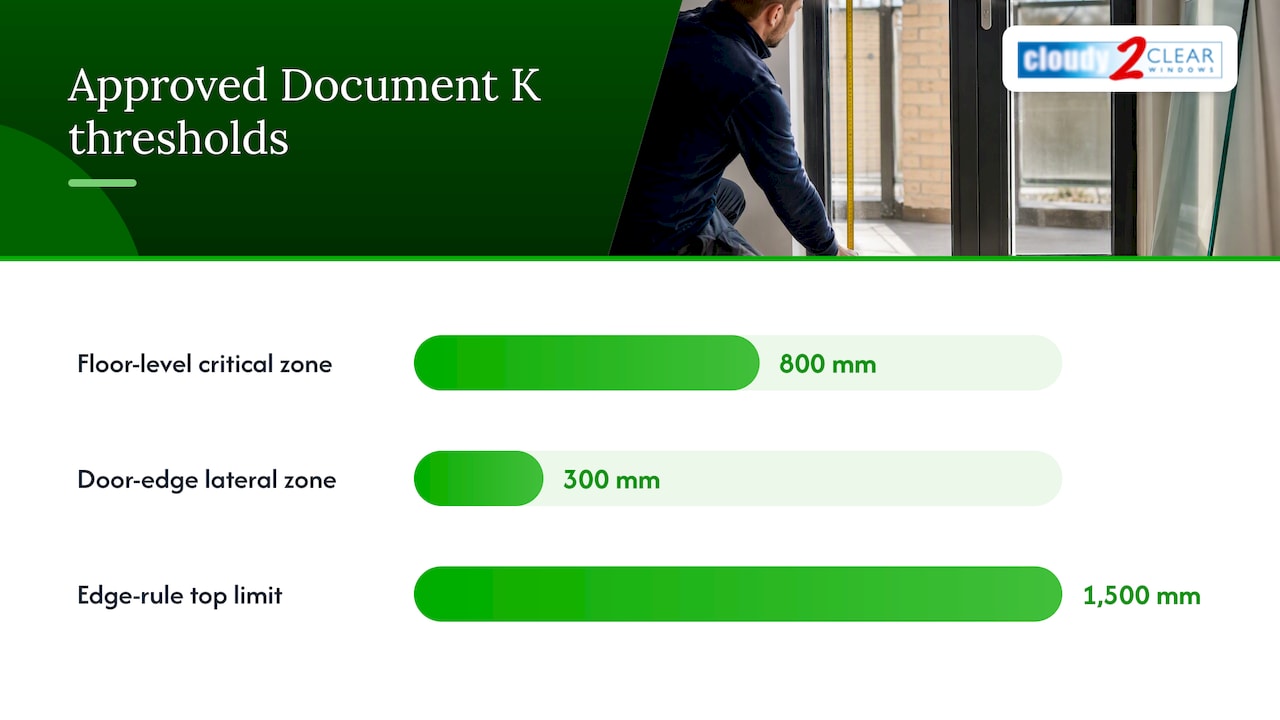
Approved Document K requires glazing in these critical locations to meet recognised safety standards, commonly BS EN 12600 or BS 6206, which is why toughened or laminated glass is specified rather than ordinary annealed glass.
A few distinctions are worth holding onto:
- Replacing the glass within an existing, sound frame is generally not classed as building work, according to Gov.
- Replacing a whole unit or frame can fall under building regulations, which may mean notifying building control or using an installer registered under a competent person scheme.
- Using an installer registered under a competent person scheme lets them self-certify the work, saving you a separate building control application.
Confirming which category your job falls into before work starts avoids delays and unexpected paperwork later.
Should you repair the glass or replace the whole unit?
Deciding between a glass-only repair and a full unit replacement comes down to the condition of the frame, not just the glass. A clear-headed check saves you paying for more than you need, or less than you should.
- Inspect the frame for rot, twist or loss of squareness; any of these usually point towards full replacement rather than a simple pane swap.
- Check whether the door still locks and seals properly; a sound frame with a failed seal or misted sealed unit is usually a good candidate for glass-only replacement.
- Look for a single cracked pane or isolated spot damage with no wider frame issues, which almost always means glass-only work is appropriate.
- Weigh up energy performance and security; if the existing unit is old single glazing or the frame has known security weaknesses, full replacement may be worth the extra cost.
- Ask your installer for a measured survey and a written note explaining why they recommend repair over replacement, or vice versa, so you have a record if questions arise later.
Which? notes that repairing rather than replacing the frame is often the more cost-efficient route when the frame itself is sound.
Getting reliable quotes and what to check in each one
Treat quotes as documents you compare line by line, not just numbers you rank. Which? recommends getting at least three written quotes before deciding, which gives you a realistic sense of the local market and flags anything unusual.
Each quote should let you check:
- The glass standard specified, such as toughened or laminated, and the relevant safety class.
- Whether the installer will self-certify the work or whether building control needs notifying.
- Guarantee terms, including what is covered and for how long.
- Whether a survey is included in the price, along with clear photos or diagrams of the proposed work.
- Payment schedule and cancellation terms, set out in writing rather than agreed verbally.
Pro Tip: Walk away from any installer who pressures you to sign on the day, cannot provide a written contract, or is vague about the guarantee.
Which? consumer guidance also points out that you have specific rights if finance is arranged for the work, so it is worth asking how payment is structured before you commit.
What happens on the day and how long it takes
Once you accept a quote, the job typically moves through three stages: survey, manufacture and fitting. Glass is usually made to measure, so there is a lead time between ordering and installation, and the fitting itself for a single door panel is often completed within a day.
- The installer takes final measurements and confirms access requirements, including whether scaffolding or additional safety equipment is needed for upper-floor balcony doors.
- On the day of fitting, the old glass is removed, the frame is checked and cleaned, and the new unit or pane is fitted with fresh beading and seals.
- Before you pay, ask the installer to run through completion checks with you: the door should open and close smoothly, lock correctly, and show no gaps in the sealant or beading.
Cloudy2Clear Windows: how our experience matches this job
We have experience installing, replacing and repairing double glazed windows and doors across private and commercial properties, including balcony and patio door glazing in various frame and access scenarios.
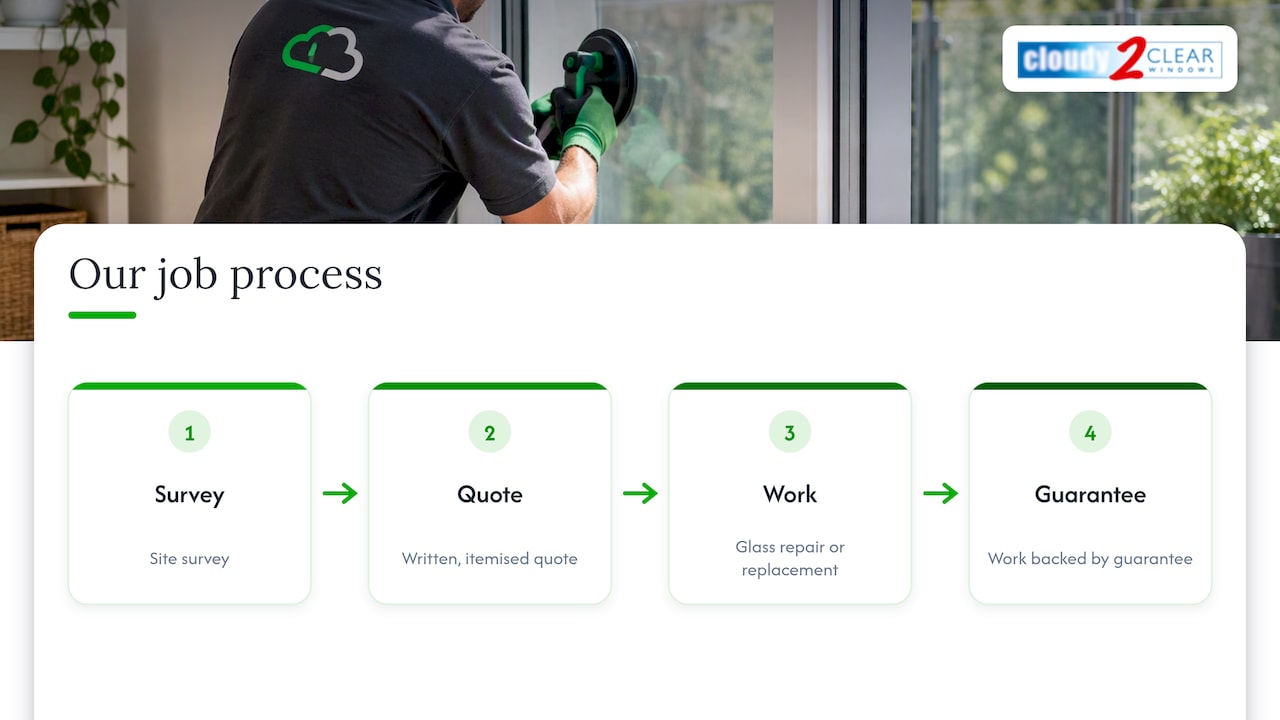
Our double glazed door repairs service covers glass-only replacement as well as full unit work, and we also offer insulating glass upgrades and inspection services for commercial and housing association properties. We start every job with a survey, follow it with a written, itemised quote, and back our glass replacement work with a guarantee.
An installer’s view on getting priorities right
Price matters, but safety glazing compliance and frame condition matter more. A quote that skips the glass standard or skims the frame check is a quote worth questioning, whatever the figure.
A proper measured survey, done before any price is agreed, is what stops a simple glass swap turning into an unplanned full replacement halfway through the job.
Book a survey with Cloudy2Clear Windows
We offer a no-obligation survey and a written, itemised quote for balcony and patio door glass, so you know exactly what you are paying for before any work starts.
To prepare for your survey, it helps to:
- Have the door accessible and know roughly when the glass started misting, cracking or failing.
- Note any lock, handle or hinge issues alongside the glass, since these are often checked together.
- Flag whether the property is a home, a let, or a housing association unit, as access and sign-off can differ.
During the visit, we check the frame condition, confirm the correct safety glass standard for the location, and measure for either a glass-only repair or a full unit where the frame no longer makes a repair sensible. All glass replacement work carries our 25-year guarantee. Get in touch through our double glazing replacement page to arrange your survey.
FAQ
Does a balcony door need safety glass by law?
Most balcony and patio doors count as a critical location under Approved Document K, which means safety glazing to a recognised standard is required. Your installer should confirm the glass standard in writing on your quote.
Is replacing just the glass classed as building work?
Generally, replacing glass within an existing, sound frame is not classed as building work, according to GOV.UK guidance. Replacing a whole unit or frame can fall under building regulations, so it is worth checking with your installer before work starts.
How many quotes should I get before choosing an installer?
Which? recommends getting at least three written quotes so you can compare scope, glass standard and guarantee terms fairly. Avoid any installer who will not provide a written, itemised quote.
Will replacing balcony door glass cut my energy bills?
Which? cautions that replacement glazing tends to bring modest savings unless you are replacing genuinely old single glazing. It is still worth asking about low-E coatings if thermal performance is a priority.
What does Cloudy2Clear Windows guarantee on glass replacement?
We back glass replacement work with a 25-year guarantee, and we always start with a measured survey before confirming scope and price. You can arrange a survey through our double glazed door repairs page.