Yes, in most cases you can replace a failed sealed unit and leave the existing frame in place, provided the frame is sound and the rebate is deep enough for the new unit. The main caveat is condition, not age: rotten, warped, or corroded frames need full replacement instead. Always get a professional survey and compare quoted costs before committing either way.
What glass-only replacement actually means
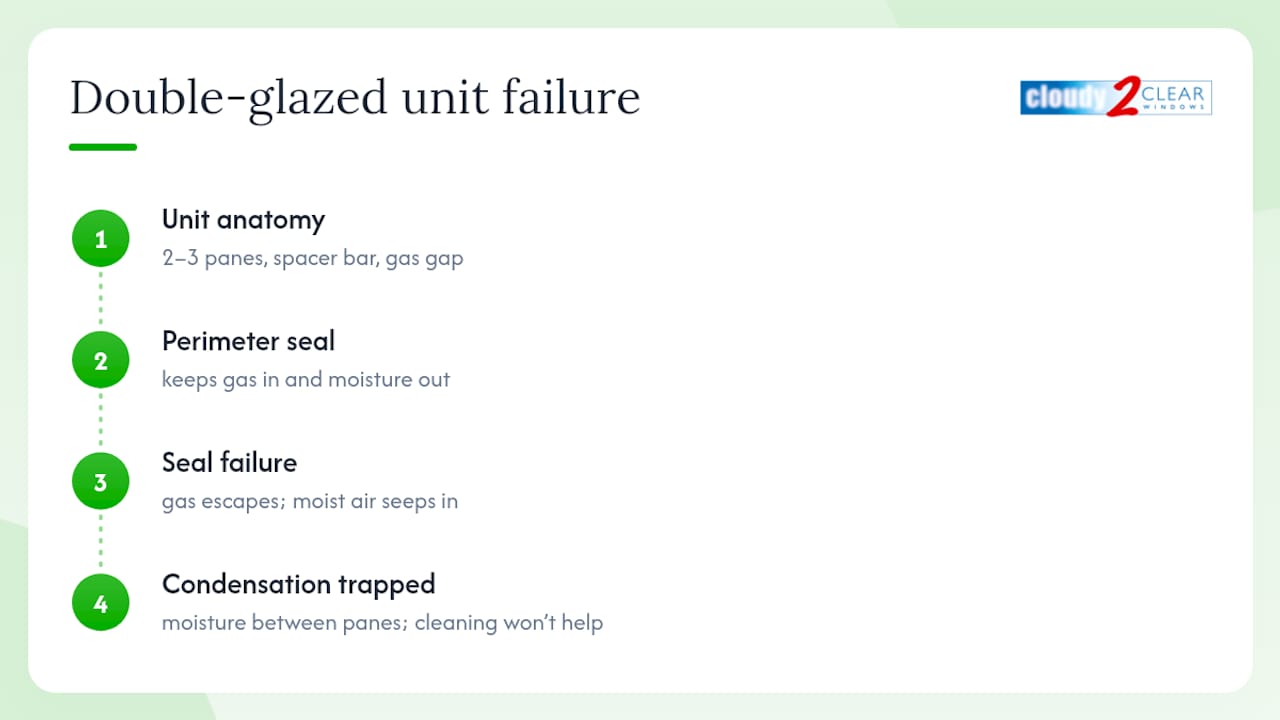
A sealed double-glazed unit is two (or three) panes bonded around a metal or plastic spacer bar, with the gap between them filled with air or an inert gas such as argon. A perimeter seal keeps that gas trapped and moisture out. When that seal fails, gas escapes, moist air seeps in, and you get condensation trapped between the panes that no amount of cleaning will shift.
Replacing just the glass in double glazing without new frames restores the thermal performance because you are swapping the failed unit for a fresh one, not patching it. This is the point of a glass replacement service: the frame carries on doing its job while a new, correctly specified unit does the insulating.
Compatibility matters here. Swapping a tired double-glazed unit for a modern Low-E, argon-filled equivalent is usually straightforward. Moving from double to triple glazing is trickier, since triple units are thicker and may not fit the existing rebate without modification.
Signs your sealed unit has failed
Not every window problem points to the glass. Knowing which symptom means what saves you from paying for the wrong fix.
- Condensation between the panes (not on the inside surface) is the clearest sign a sealed unit has failed and the gas fill has escaped, and demisting treatments only ever mask it temporarily.
- Cracked, chipped, or smashed glass needs replacing regardless of how good the frame looks.
- Draughts, sticking sashes, or difficulty locking usually point to the frame, hinges, or seals around the frame, not the glass unit itself.
- Misting on the room-side surface only is condensation from poor ventilation, not sealed-unit failure, and clears once the room airs out.
If you are seeing persistent misting between the panes rather than on the surface, that unit needs replacing rather than repairing.
How installers check if a new unit will fit
A competent installer does not simply measure the glass and order a replacement. They run a short diagnostic to confirm the job is viable before it goes anywhere near a quote.
- Measure the rebate depth and glass pocket. Standard double glazing generally needs around 18mm of rebate depth to seat a new unit properly.
- Inspect the frame for rot, brittleness, warping, or corrosion, and check the drainage holes are clear and doing their job.
- Check for setting blocks and clearance, confirming there is enough room to reseal and re-bead the unit once it is fitted.
- Request a formal survey if there is any doubt, ideally from an installer registered under a competent person scheme.
Frames built before 2000 sometimes have shallower rebates than modern uPVC, which may call for a thinner unit or a stepped spacer to make it fit properly.
Pro Tip: Keep any paperwork from when your windows were originally installed. It often states the rebate depth and glazing spec, which saves your installer a step during the survey.
How much does it cost to replace glass in a window?
Cost is usually the deciding factor, and the numbers make a strong case for checking the frame before assuming you need a whole new window. A single sealed-unit swap in the UK commonly falls between £80 and £600 depending on size and specification, while a straightforward single-pane replacement tends to run £80 to £200 for the pane plus £40 to £80 in labour. A full window replacement, frame included, typically costs several hundred pounds more per window.
The rule of thumb: if repairing the glass costs more than roughly half the price of a full replacement, a new window usually makes better financial sense.
Lead times from survey to fit tend to run one to three weeks, since most sealed units are made to bespoke measurements rather than kept in stock. Consumer guidance from Which recommends checking what warranty applies to any repair work before you sign off a quote, since a reputable installer should guarantee the new unit and its fitting separately from any existing frame warranty.
What happens on the day of a glass-only replacement
Knowing the sequence helps you judge whether a quote and a timeframe are realistic.
- Survey and order. The installer confirms measurements and orders a bespoke sealed unit to match.
- Removal. Beading is carefully prised away and the failed unit is lifted out, usually without disturbing the frame.
- Preparation. The rebate is cleaned out and setting blocks are repositioned.
- Fitting and sealing. The new unit goes in, is sealed correctly, and the beads are refitted.
- Testing and clean-up. The installer checks the seal and finish, then clears away the old glass and packaging.
A straightforward ground-floor window can often be done in under an hour, though bespoke or oversized units take longer, and upper-floor or hard-to-reach windows may need scaffolding or a tower. DIY guides for replacing a sealed unit exist, but incorrect sealing risks water ingress and can void any manufacturer warranty on the new unit, which is the main reason to leave this to a professional.
When full replacement makes more sense
Glass-only repair is not always the right call. A handful of situations tip the decision firmly towards a new window.
- Visible rot, structural movement, or extensive timber decay in the frame itself.
- Multiple units failing at once, where cumulative repair costs start rivalling full replacement.
- Security, compliance, or heritage requirements that only a new frame can satisfy.
- Frames over roughly 20 to 25 years old, where seals, hardware, and materials are all reaching end of life together.
If your installer’s survey turns up frame problems alongside the glass fault. Treat that as a genuine signal to reconsider, not just an upsell.
Choosing an installer: what to check and ask
The quality of the fit matters as much as the quality of the glass, so vetting the installer is not optional.
- Confirm registration with FENSA, CERTASS, or TrustMark, and ask to see proof.
- Check they carry public liability insurance and offer a written guarantee on both glass and labour.
- Ask whether the job needs a Building Regulations compliance certificate, since registered installers can usually self-certify this under Part L.
- Request a clear answer on warranty length, lead time, and how they measure the rebate before ordering.
Pro Tip: Ask to see a recent job reference or photo of similar work. A confident installer will show you without hesitation; a reluctant one is a red flag.
Be wary of anyone who refuses to confirm registration, gives vague pricing, or pushes you to sign on the spot. Those are the classic marks of a poor-quality outfit, whatever their sales pitch sounds like.
Cloudy2Clear Windows’ approach to glass-only surveys
A professional double glazing company can have decades of experience installing, replacing, and repairing double glazing, across residential, commercial, and housing association properties. That includes glass-only swaps for misted or cracked units, broken window repairs, and full double glazing glass replacement where the frame no longer stacks up.
Every survey follows the same checks covered above: rebate depth, frame condition, drainage, and clearance for resealing, before any unit is ordered. Where the frame passes and only the sealed unit has failed, that is what gets quoted, not a full replacement nobody asked for. Guarantees are issued on both the unit and the fitting, in line with the compliance expectations set out earlier in this guide.
Repair or replace: a practical view on sustainability
Repairing a sealed unit keeps a serviceable frame in use, which matters more than most people assume. Manufacturing a new uPVC or timber frame carries real embodied energy, so swapping only the glass when the frame is sound is usually the lower-waste and lower-cost choice.
That logic flips the moment the frame itself is compromising performance or safety. At that point, patching the glass just delays an inevitable, and often more expensive, full replacement. Survey first, then weigh the short-term saving against how many years of genuine service the frame has left.
Book a survey or get a quote from Cloudy2Clear Windows
If the checks above suggest your frame is sound, Cloudy2Clear Windows can confirm that with a proper survey rather than a guess over the phone. The advantage here is straightforward: you get a specific, glass-only quote rather than being steered towards a full window replacement you may not need. A surveyor measures rebate depth, checks frame condition and drainage, and gives you a realistic lead time, usually between one and three weeks depending on the unit’s specification.
Before you request a quote, have your window’s approximate age, any visible frame damage, and a note of which room and window is affected ready to share. Cloudy2Clear Windows operates through local branches including Milton Keynes, Watford, and Norwich, alongside commercial fenestration services for larger properties. Get in touch to arrange a survey and a written quote before your next heating bill arrives.

Sources
The guidance above draws on UK-focused glazing advice, including Axiom Eco Homes’ guide to replacing glass without new frames for rebate and compliance detail, ExpertSure’s window replacement guide on condensation as a failure sign, Which’s advice on double glazing repairs, and DIY Doctor’s step-by-step on replacing a sealed unit for the mechanics of the job. For a comparable look at frame-versus-fitting decisions outside glazing, see One Day Doors & Closets on replacing doors without frames.
- Can I replace just the glass and keep my frames? | Axiom Eco Homes
- Should I Replace My Windows? UK Guide for 2026 | ExpertSure
- How to replace a sealed double glazed unit | DIY Doctor
FAQ
What is the average cost to replace glass in a window?
A single sealed unit typically costs £120 to £900 depending on size and specification.
Can I just replace the glass in my double glazing?
Yes, provided the frame is structurally sound and has enough rebate depth, generally around 18mm, to seat a new sealed unit properly.
Is it cheaper to just replace glass in windows?
Almost always, since a glass-only swap avoids the cost of a new frame; as a rule, repair only makes sense if the cost stays below roughly half the price of full replacement.
How much does a single pane of glass cost to replace?
Expect roughly £80 to £200 for the pane itself, with labour adding another £40 to £80 depending on access and window size.
How do I know if my frame is too damaged for glass-only repair?
Visible rot, warping, corrosion, or brittle uPVC are all signs the frame itself needs replacing rather than just the glass unit inside it.