For most UK offices, pane-only glass replacement is a modest, order-of-magnitude budget line compared with replacing whole frames, but the firm figure depends on the job. Book a measured site survey and ask for an itemised quote before committing to anything. Building Regulations and workplace safety rules often change the glass specification, and that in turn changes what you pay.
What does office window glass cost in the UK?
Owners often want a number before anyone has visited the site. We cannot give a fixed price for your building here, and no honest supplier can without measuring. What we can offer is a way to think about budgets. Pane-only replacement, where the frame stays and only the sealed glass unit or single pane is swapped, sits at the lower end of commercial glazing spend. Full unit replacement sits well above it.
Treat any figure you find online as an indicator, not a quotation:
- Pane-only replacement is usually the smallest budget band, because frames, seals and fixings are left in place.
- Pane plus frame repair sits in a middle band, where hinges, beads or gaskets need attention at the same visit.
- Full unit replacement is the highest band, because it adds new frames, making good and often longer access requirements.
- Specialist glass such as acoustic laminates or processed panes moves any of these bands upwards.
Public cost guides and online calculators vary widely and serve as order-of-magnitude pointers only. Panes of similar size can still end up with quite different final prices once access, frame condition and specification are known. Our commercial window repair team can explain which band your building is likely to fall into after a survey. Price information is available on request.
What pushes an office glass quote up or down?
The glass itself is rarely the whole story. Logistics and access often shape the total as much as the material, and the same floor area in two buildings can produce very different final figures. Fit-out research makes a similar point: specification and logistics materially influence final project costs and timelines.
- Access and height: upper-floor panes may need scaffolding, mast climbers or a crane, and each adds hire and labour lines to the quote.
- Frame condition: a sound frame allows glass-only replacement. A rotten, corroded or distorted frame can force a whole-unit replacement, which raises both scope and cost.
- Glass specification: toughened, laminated, insulated and acoustic units all carry different material costs. Polished edges, drilled holes and special processing add further lines.
- Logistics and handling: large sealed units are heavy and awkward, so they may need extra labour, special transport or lifting gear.
- Working hours: out-of-hours work protects your tenants or staff from disruption but typically carries a premium.
Pro Tip: Send clear photos of each pane, exact measurements, the floor level and any access notes before the survey. It reduces surprises on the day and helps the surveyor price the job accurately.
Which safety rules and Building Regulations change the specification?
Safety rules are the most common reason a specification, and therefore a quote, changes. Approved Document K covers protection from falling, collision and impact, including marking of large glazed areas and strength criteria for commercial glazing.
- Glazing in critical locations must be safety-grade (laminated or toughened) or suitably protected. Under the Building Regulations, critical locations include glazing within 800mm of floor level and glazing within 300mm of a door up to 1500mm high.
- Large glazed areas usually need manifestation, such as markings or features that make the glass apparent to people walking towards it.
- The Workplace (Health, Safety and Welfare) Regulations 1992 say that where necessary for health or safety, transparent or translucent surfaces in walls or doors should be of safety material or protected, and appropriately marked.
In practice, this means a pane near a door or low in a wall may not be replaceable with ordinary annealed glass. Where safety glass is mandatory, you choose laminated or toughened units and should expect the specification to cost more than a standard pane. Ask any supplier to confirm compliance in writing.
How do you get a firm, comparable, itemised quote?
Remote estimates cannot see frame condition, fixing details or access constraints, so a measured site survey is the only reliable route to a fixed price. A good survey checks the frame, the access route, how the glass is fixed and whether lifting equipment is needed.
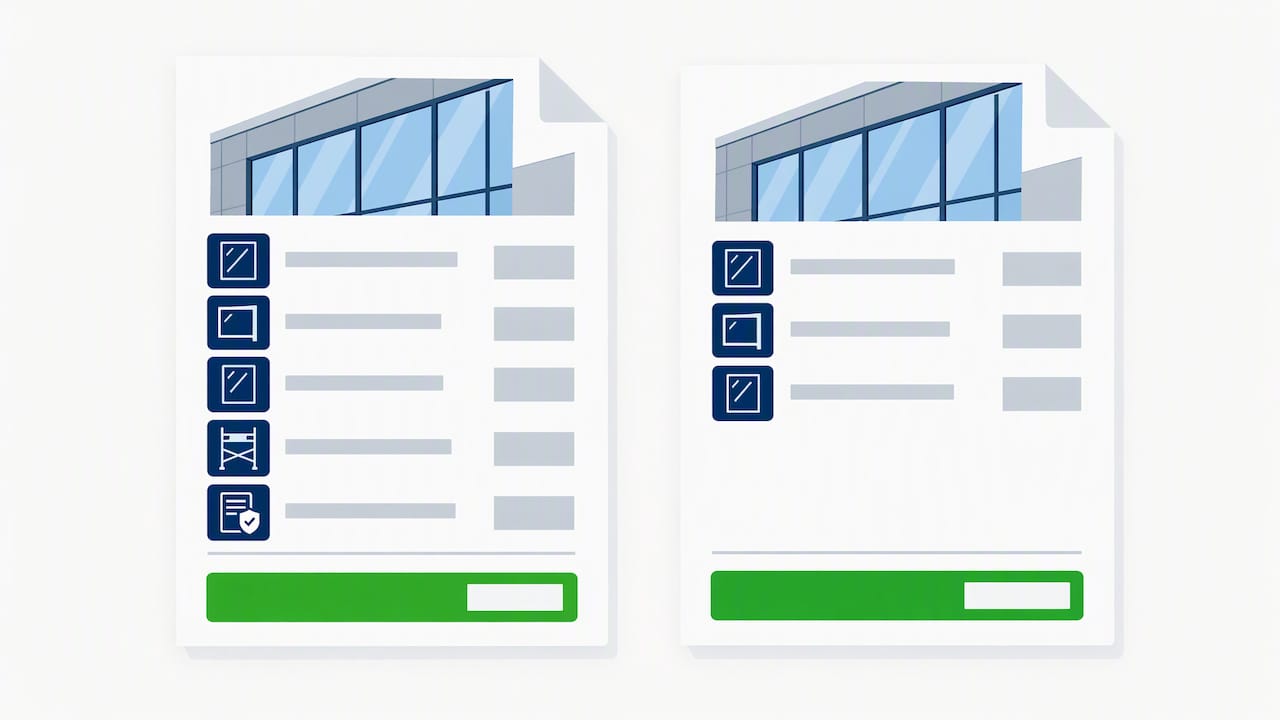
Before the visit, gather photos, exact measurements, floor levels, access notes and any drawings you hold. Then insist that every supplier quotes on the same basis. An itemised quote should show:
- Materials, including glass type, thickness and any coatings.
- Labour for removal, fitting and making good.
- Access equipment hire such as scaffolding, a mast climber or crane.
- Haulage and delivery for large or heavy units.
- Out-of-hours premiums, if you need evening or weekend work.
- Permit or street-works fees where the work affects pavements or roads.
Also confirm the lead time, the warranty period and written confirmation that the specification complies with Building Regulations.
Pro Tip: Compare quotes line by line, not by total. A low headline figure that leaves out access hire or permits often ends up higher than a fully itemised competitor.
How long does installation take and what disruption should you plan for?
A single accessible pane can be swapped in a short visit, while multi-pane or upper-floor jobs take longer. Setting up access is often the longest part of the work, particularly where scaffolding, permits or a crane are involved. Delays are also common when glass is made to measure and needs lead time before fitting.
To keep disruption low:
- Schedule work out of hours where the budget allows.
- Cordon off the work zone and the area below it.
- Give staff and tenants advance written notice of dates and noise.
- Agree access routes for glass deliveries in advance.
How should you budget for VAT, contingency and procurement?
VAT treatment depends on the building. Whether you can recover it turns on the landlord’s position: if the landlord has opted to tax, recovery is often possible, but if letting is exempt the landlord typically bears the full 20% VAT, so the effective cost of the same quote can differ greatly. Speak to your accountant before you commit.
- Compare itemised net prices first, then apply the VAT rules that apply to your specific building.
- Add a contingency for access problems, special handling and permit fees.
- Keep specification changes in writing, so a late safety requirement does not arrive as a surprise invoice.
- Ask each supplier to state what is excluded from the price.
Which glass should you choose for an office?
Start with safety and compliance, then layer on thermal and acoustic performance. Each upgrade solves a particular problem and usually adds cost.
- Toughened glass: heat-treated for strength, and it breaks into small blunt pieces. It suits critical locations.
- Laminated glass: multiple layers bonded with an interlayer, so it holds together when broken. It also helps with security and noise.
- Insulated sealed units (double glazing): multiple panes with a sealed gap, improving thermal performance and reducing condensation risk.
- Low-e coatings: a thin coating that reflects heat back into the room and lowers heat loss.
- Acoustic laminates: a specialised interlayer that cuts traffic and street noise, useful beside busy roads.
Glazing selection can also affect the thermal performance of a building, which the Building Regulations treat separately from safety. Our soundproofing and noise reduction service covers acoustic options for offices.
How do you look after office window glass so it lasts?
Good maintenance extends glass life and helps you spot failure early. Most of it is simple and cheap.
- Clean with a soft cloth or squeegee and mild, non-abrasive cleaner. Harsh scrapers and abrasive pads can scratch the surface.
- Check seals and gaskets twice a year. Perished seals let moisture into sealed units and cause misting.
- Look for misting or condensation between panes. It signals a failed seal, and the unit will need replacing.
- Keep drainage channels and weep holes in frames clear, so water does not sit against the glass edge.
- Fix loose beads and damaged fixings promptly. Movement stresses the glass and can cause cracks.
- Report chips and edge damage early. Small edge flaws often grow into full cracks under thermal stress.
A simple log of inspections, with dates and photos, helps with warranty claims and supports your compliance record. It also tells you when a repair visit can be combined with other planned works, which saves access costs.
How does single glazing compare with double glazing for offices?
Single panes are cheaper to buy and lighter to handle, but they lose heat quickly and give little sound reduction. Double glazed units cost more per pane because they contain multiple sheets of glass, a spacer and a sealed cavity. They usually repay part of that difference through lower heat loss and better comfort.
When you compare quotes, look at what you are really buying:
- Material: a sealed unit has more components and takes more precise manufacture.
- Weight and handling: heavier units may need more labour or lifting gear.
- Frame suitability: an old single-glazed frame may not take a thicker sealed unit. That can force frame work and widen the scope.
- Performance: double glazing improves thermal comfort and reduces condensation on the inner surface.
If your frames are sound, a glass-only upgrade to insulated units can be a practical middle route. Our team can check on the survey whether your existing frames will accept a sealed unit. Our guide to replacing only the glass explains why checking frame condition first matters.
What energy savings can different glass types offer?
Heat escapes through glass faster than through most other parts of a building envelope, so the glass you choose affects heating and cooling demand. Single glazing performs worst. Sealed double glazed units reduce heat loss, and low-e coatings improve that further by reflecting heat back into the room.
We will not put a savings figure on this, because the result depends on the size of the building, the heating system, how many panes you replace and how the office is used. Be wary of any supplier who promises a precise percentage without surveying your premises. What you can expect, in plain terms:
- Warmer glass surfaces in winter, so desks near windows become usable.
- Less condensation on the inside of the glass.
- Reduced cold draughts and radiant chill near the perimeter.
- A steadier internal temperature, which can ease the load on heating.
For more on how thermal performance fits into wider refurbishment, see our post on double glazing replacement costs. Ask for the thermal specification of each quoted unit in writing so you can compare like with like.
What warranty and service options should you expect?
A warranty is part of the price, so compare it as carefully as the glass. Ask how long it lasts, what it covers and whether it applies to the glass, the installation or both. A sealed unit warranty typically addresses seal failure, while workmanship cover addresses the fitting.
Check the following before you accept a quote:
- The warranty period, stated in writing.
- Whether it covers materials, labour or both.
- What voids it, such as unapproved cleaning products or later modifications.
- How you make a claim and who responds.
- Whether the supplier offers follow-up inspection or repair visits.
Ask us about the guarantee available for our work. A long guarantee is only as useful as the firm behind it, so ask any supplier how long it has been trading and how it handles callouts. Keep your quote, specification, compliance confirmation and guarantee paperwork together, as you will need them if you ever claim or sell the building.
What types of office glass are there and how do they affect price?
Each glass type solves a different problem, and the price follows the complexity of manufacture.
- Annealed (standard) float glass: the simplest and usually the lowest cost. It is not suitable in critical locations because it breaks into sharp shards.
- Toughened glass: heat-treated for strength. It costs more than standard glass because of the extra process, and it cannot be cut after treatment, so measurements must be exact.
- Laminated glass: layers bonded with an interlayer. It adds safety, security and sound reduction, and it sits higher in cost than basic glass.
- Insulated glass units: multiple panes with a sealed cavity. They cost more than single panes but improve thermal performance.
- Coated and acoustic units: low-e coatings and acoustic interlayers add further cost in return for energy or noise benefits.
Edge polishing, drilled holes, tints and special sizes all add lines to the quote. A partner guide on toughened or laminated glazing shows how the same safety choice applies to smaller commercial and garden office buildings. For regional installation advice, a North West resource on fixed price double glazing quotes is a useful reference for comparing how suppliers present their prices.
Why we favour glass-only replacement for offices
We have been installing, replacing and repairing double glazed windows for commercial and private customers for many years. Where an office frame is still serviceable, we prefer to replace only the glass. It keeps the project small, shortens the time on site and limits disruption for your staff and tenants. It also keeps the scope clear, which makes quotes easier to compare. Book a measured survey and we will confirm whether it suits your building.
How can Cloudy2Clear Windows help with your office glass?
Our commercial window repair team replaces failed, cracked and misted glass without replacing the frame, so you avoid the disruption of a full refit. We also offer inspection and measured survey services for commercial properties, and you can ask us about the guarantee available for our work. We will check the specification against safety requirements and give you a clear, itemised quote. 
Start with a survey. Visit our commercial window repair page or contact us to book a measured visit. Our hours are Monday to Friday, 8:30am to 6:30pm.
FAQ
How much does it cost to replace office window glass?
It depends on the pane size, glass type, access and frame condition, so a firm figure needs a measured site survey. Pane-only replacement is usually the lowest band, while full unit replacement is the highest. We give price information on request after the survey.
Do I have to replace the frame as well as the glass?
Not if the frame is sound. A glass-only replacement is often possible where the frame is in good condition and can take the new unit. A survey confirms this, and a damaged or distorted frame may need work first.
Does office glass have to be safety glass?
In critical locations, yes. Glazing within 800mm of floor level and glazing near doors must be safety-grade or protected. Large glazed areas also need marking so people can see them.
Can I recover the VAT on commercial glazing?
It depends on the landlord’s VAT position. Recovery is often possible where the landlord has opted to tax the building, but exempt lettings usually mean the landlord bears the full VAT. Check with your accountant.
How long does office glass replacement take?
A single accessible pane can be done in a short visit, while larger or upper-floor jobs take longer. Access set-up is often the longest stage, so plan around it and arrange out-of-hours work if you need to limit disruption.