For most shops dealing with street noise, the best upgrade is an acoustic laminated glass pane built into a sealed insulating glass unit (IGU). Where a full IGU swap is not possible, an acoustic laminated single pane plus better sealing gets you most of the way there. Every specification should match the actual noise source, and the installation and ventilation planning matter as much as the glass itself.
Practical shortlist: which glazing options to consider first
Before you ask for quotes, it helps to know what is actually on the table. Acoustic glazing has moved on from simply adding thickness, and the right choice depends on your noise source, your existing frame, and how much disruption you can tolerate.
- Asymmetric pane pairings or thicker single panes suit shopfronts where replacing the whole IGU is restricted by budget, frame type or a conservation condition.
- Secondary glazing, internal laminated panels or sealing improvements are pragmatic fallbacks when the existing glazing cannot be touched at all, or while a fuller upgrade is being planned.
None of these options works in isolation. A laminated pane fitted into a poorly sealed frame will underperform, and a shop with heavy low-frequency traffic noise needs a different make-up to one dealing with high-pitched delivery vehicle reversing alarms. That is why the shortlist above is a starting point for a conversation with a glazier, not a menu you can tick without a site visit.
How to specify an acoustic shopfront upgrade
A clear brief is what separates a glazing quote that solves your noise problem from one that just swaps panes. Work through these steps before you contact contractors.
- Record the noise source and its character. Note whether it is constant traffic, intermittent deliveries, music from a neighbouring venue or something else, as different frequencies need different glass make-ups.
- Ask for Rw, or Rw plus Ctr, targets. Pilkington’s noise control guidance explains that these metrics, alongside third-octave band data, describe how glass performs across different frequency ranges, not just an average figure.
- List every spec item in the brief, including glass make-up, IGU cavity width, frame condition, seal type, manifestation requirements, ventilation provision and installation tolerances.
- Commission a noise survey where the source is loud or dominated by low frequencies. A survey gives you measured sound pressure levels and frequency data rather than guesswork, which sharpens the glazing spec considerably.
- Compare quotes on lab Rw figures or manufacturer performance data, not marketing claims. Pilkington’s sound simulator is built for this kind of bespoke matching between noise source and glass make-up.
Pro Tip: Keep a written record of the noise source and target Rw figure, and attach it to every quote request, so you are comparing contractors on the same basis rather than on price alone.
Regulations, safety and visible requirements to include in any upgrade
Acoustic performance is only half the brief, and upgrading to double glazing windows can also improve thermal comfort and energy efficiency. Any shopfront glazing project also needs to meet safety and visibility rules, and missing these can mean costly rework.
- Approved Document K sets out protection from impact and collision for large glazed areas, including the glazing classes required in critical locations such as doors and low-level panels.
- Large glazed shopfronts typically need manifestation, meaning visible markings at two heights so people do not walk into clear glass, particularly where panels are frameless or floor to ceiling.
- BS 8233:2014 is commonly used as a design benchmark for internal noise levels, since Building Regulations do not set a fixed figure for external noise ingress into commercial premises.
- Replacing glazing can count as building work in some circumstances, which may bring building control or planning conditions into play, particularly for listed buildings or conservation areas.
Checking these points early avoids a situation where an acoustically excellent pane fails a safety inspection or needs retrofitted manifestation stickers that spoil the look you wanted.
Framed versus frameless shopfronts: acoustic and aesthetic trade-offs
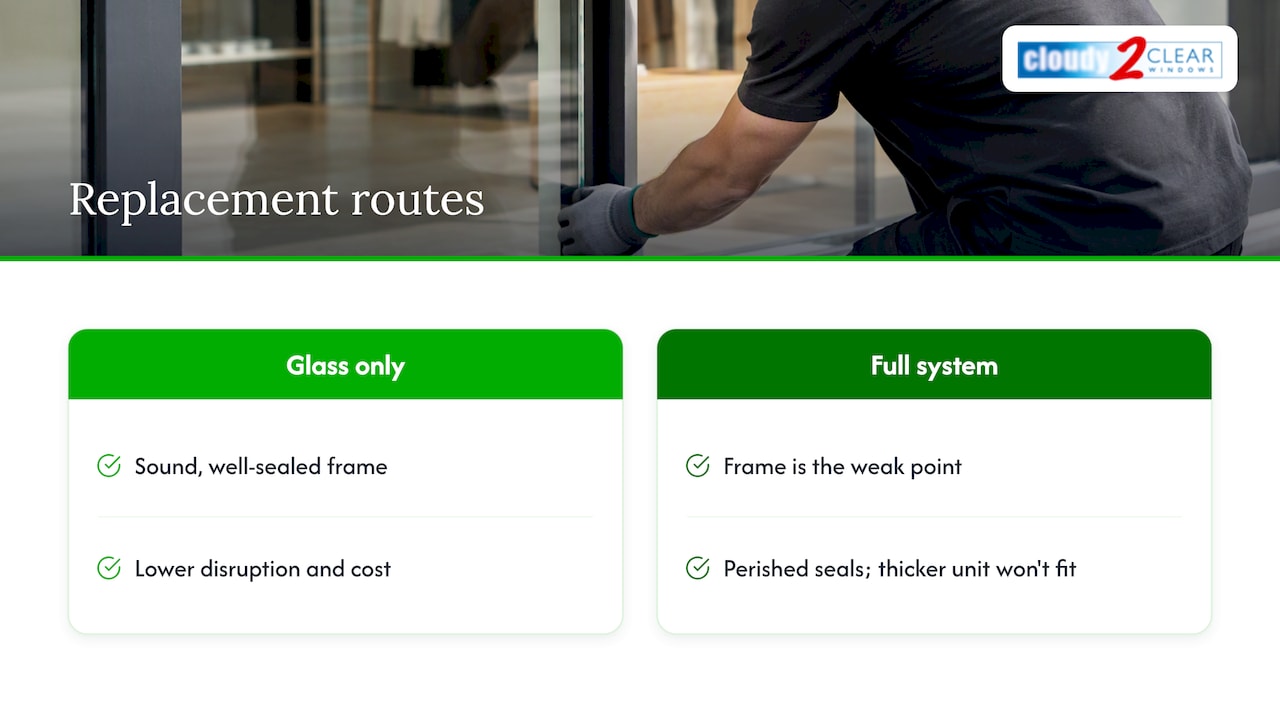
A frame’s airtightness and thermal break affect acoustic results just as much as the glass itself: a perfect acoustic pane in a leaky or poorly sealed frame will still let sound through the gaps. Glass-only replacement is usually feasible when the existing frame is structurally sound and well sealed, which keeps disruption and cost down. A full system replacement becomes the better route when the frame itself is the weak point, for instance where seals have perished or the profile cannot accept a thicker acoustic unit.
Conservation areas and shopfront signage rules can also steer the decision, since some frame styles or glazing bar patterns are protected by local planning conditions, which may rule out a frameless redesign even where it would perform better acoustically.
Glazing types explained: toughened, laminated, acoustic laminated, and IGUs
Not all double glazing reduces noise meaningfully, and understanding why helps you avoid paying for the wrong product. Toughened glass is chosen mainly for impact safety, not sound reduction, and standard double glazing with two matching panes often performs poorly against street noise because both panes resonate at similar frequencies and effectively cancel out the benefit of the cavity.
Acoustic laminated glass changes this picture. It uses a PVB, or polyvinyl butyral, interlayer between two glass sheets that damps vibration and shifts the resonance point away from common traffic and voice frequencies. This is the principle behind products such as Pilkington Optiphon™ and the IGU version, Pilkington Insulight™ Phon, both of which combine the laminate with an insulated cavity for a bigger improvement.
- Symmetric double glazing, where both panes are the same thickness, gives limited acoustic benefit because the panes share a resonant frequency.
- Asymmetric pane pairings, where one pane is noticeably thicker or laminated, break that resonance and improve attenuation.
- Pane thickness and cavity size both influence which frequencies are reduced most, which is why third-octave band data matters more than a single headline figure when targeting traffic, rail or aircraft noise.
- Safety and security performance, covered by standards such as BS EN 12600 and security ratings P1A or P2A, can be combined into the same glazing make-up without compromising the acoustic benefit.
According to Pilkington’s own product information, acoustic laminated glass and insulating units like these can achieve Rw improvements potentially exceeding 50 decibels in some assemblies, which illustrates just how far a well-specified acoustic make-up can outperform standard double glazing. The same source notes that double glazing alone gives little improvement unless the panes are asymmetric or include an acoustic laminate, which is worth checking before assuming any double-glazed unit will quieten a shopfront.
Installation, sealing and ventilation: where performance is won or lost
Even the best acoustic glass underperforms if the installation around it is not airtight. Perimeter sealing, sealed IGU integrity and the condition of existing seals all need checking, since gaps and failed seals are consistently one of the weakest points in a glazed façade for sound transmission.
Ventilation needs equal attention once glazing is sealed shut. Options include acoustically attenuated trickle vents, acoustic ducts, or mechanical ventilation fitted with attenuators to maintain the air quality standards set out in Part F, since relying solely on sealed glazing without a ventilation plan risks both comfort and compliance issues.
Pro Tip: Ask your installer for photographic evidence of completed seals and a short on-site commissioning check once the work is finished, so you have a record that the installation matches the specification you agreed.
Practical experience: how installers translate a spec into a quieter shopfront
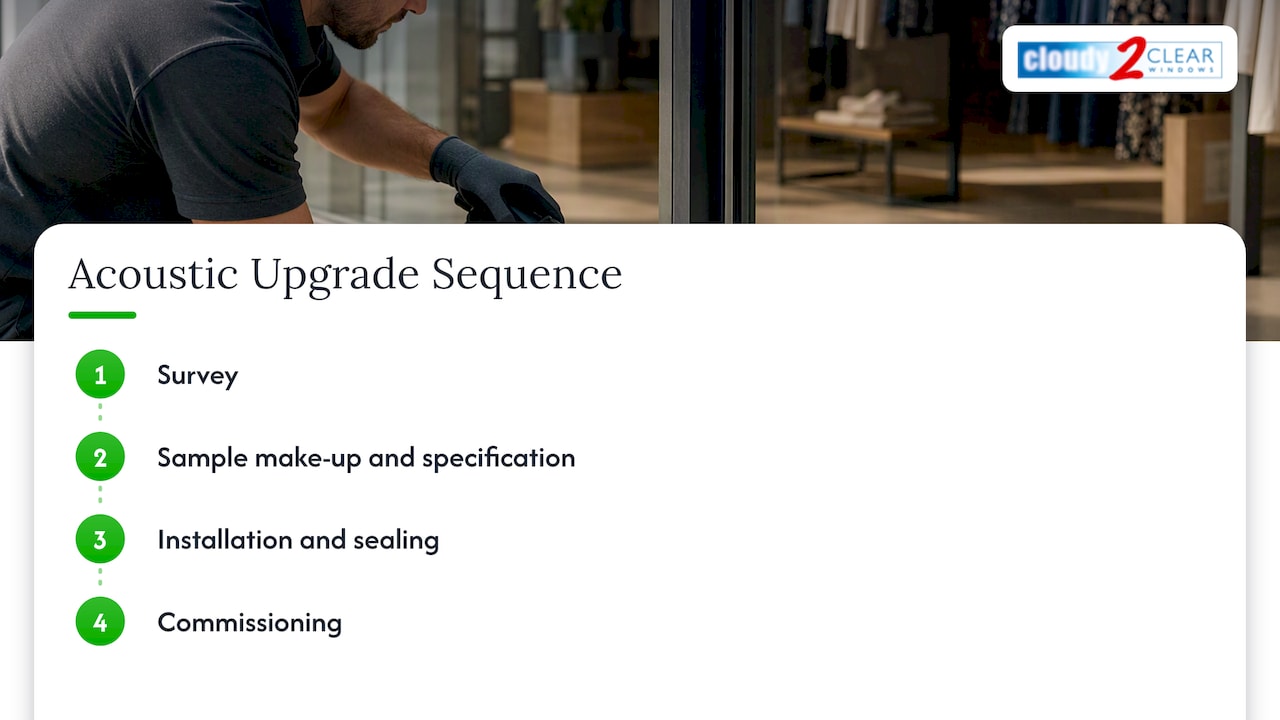
A typical acoustic upgrade follows a sequence of survey, sample make-up and specification, installation and sealing, then commissioning. We note on our acoustic glazing results page that acoustic glazing can reduce noise by up to 40 decibels, a figure worth requesting evidence for from any installer you brief. Ask for product data sheets, Rw figures, a written guarantee and site photos before work is signed off.
Author perspective: when to hire a specialist acoustic glazier
A noise survey earns its cost when street noise is loud or dominated by low frequencies. Smaller shops with moderate noise are often helped by sealing fixes and a laminated retrofit alone. Bring an installer in early so ventilation, signage and safety needs are planned together.
Cloudy2Clear Windows: how we help with shopfront acoustic upgrades
Replacing just the glass, not the frame, wherever that is possible keeps disruption to your trading hours down and the cost lower than a full system replacement. For shopfronts, that means pairing glass-only IGU replacement with our soundproofing and noise reduction service, alongside commercial window repair where frames also need attention.
If your shopfront needs a survey and a proper acoustic specification rather than a guess, get in touch through our double glazing replacement page and we will talk through the right glass make-up for your noise source.
FAQ
What is the best acoustic glass for a shopfront?
Acoustic laminated glass, such as Pilkington Optiphon™, built into a sealed insulating glass unit is generally the strongest option for street noise, since the laminate interlayer damps vibration rather than just adding mass. The exact make-up should still be matched to your noise source and frequency, as Pilkington’s own guidance recommends treating every specification as bespoke.
How does acoustic glass differ from regular double glazing?
Regular double glazing with two matching panes gives limited sound reduction because both panes resonate at similar frequencies. Acoustic laminated glass uses an interlayer and often an asymmetric pane pairing to shift that resonance, which Pilkington’s noise control FAQ confirms gives a meaningfully larger improvement than standard units.
Do I need planning permission to upgrade shopfront glazing?
It depends on your building and location: replacing glass alone is often straightforward, but a full frame replacement, a listed building or a conservation area can bring planning conditions into play. Check with your local planning authority before committing to a design, especially if you also want the shopfront to open.
What rules apply to shopfront glazing safety?
Approved Document K sets out requirements for impact protection and manifestation on large glazed areas, including shopfront doors and low-level panels. Any upgrade should be checked against these rules alongside your acoustic specification, since a pane that performs well acoustically still needs to meet safety glazing standards.
How do I know what noise reduction figure to ask for?
Ask your installer for an Rw figure, or Rw plus Ctr where traffic noise includes a lot of low frequency content, and compare quotes using manufacturer lab data rather than marketing claims. A noise survey beforehand gives you a measured starting point, which makes the target figure far more meaningful than a generic promise.
Sources
- Understanding BS 8233, sound insulation and noise control in buildings
- Approved Document K – Protection from falling, collision and impact