Low-E glass keeps more of your heating inside, lets daylight through and protects furnishings from fading, all through a coating thinner than a human hair. It is also one of the few upgrades that can be done to the glass alone. At Cloudy2Clear Windows, we replace only the glass and keep your existing frames, so a failed or misted unit can be swapped for a low-E sealed unit with less disruption. You can call us 24 hours a day, 7 days a week to book a quote, and our operational hours are 8.30am to 6.30pm.
What low-E glass is and how the coating works
“Low-E” stands for low emissivity. Emissivity describes how readily a surface gives off heat as infrared radiation. Ordinary clear glass has a long-wave emittance of 0.84, while a low-E coating can bring that as low as 0.04, reflecting 96% of long-wave infrared radiation.
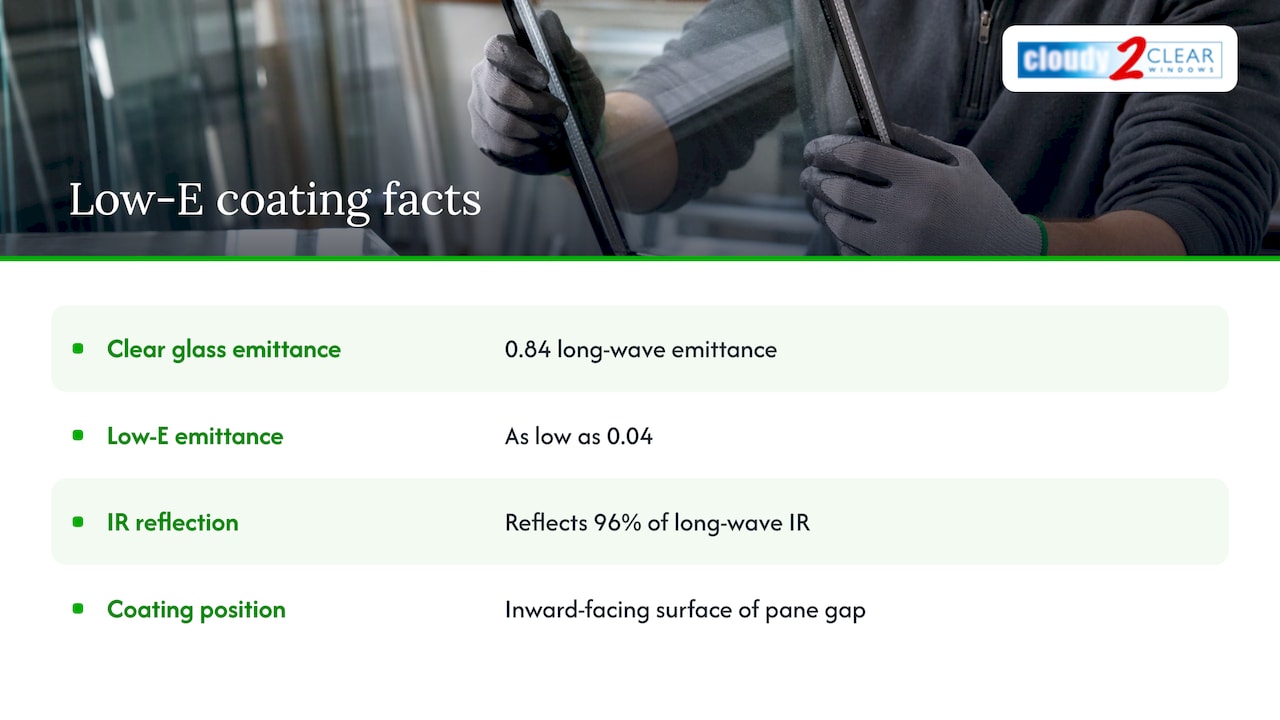
The Glass and Glazing Federation (GGF), the UK trade body, explains that the coating lets short-wavelength solar heat into a room and reflects the long-wavelength heat from warmed rooms back inside. Your heating therefore does not have to work as hard to hold a comfortable temperature.
In a sealed double glazed unit, the coating sits on a surface facing the gap between the panes. The NHBC, the UK new-home warranty body, notes that the coating sits in the gap on the inward-facing surface. Because it is sealed inside the unit, it is protected from cleaning and wear.
Soft and hard coatings
There are two main manufacturing methods. Soft (sputter) coatings are applied in a vacuum chamber as multilayer designs, and hard (pyrolytic) coatings are sprayed on during float glass production, giving a durable but simpler coating. For sealed units, you will usually meet the soft type, which is delicate but sits safely inside the unit.
The main benefits of low-E glass
Lower heat loss and a warmer room
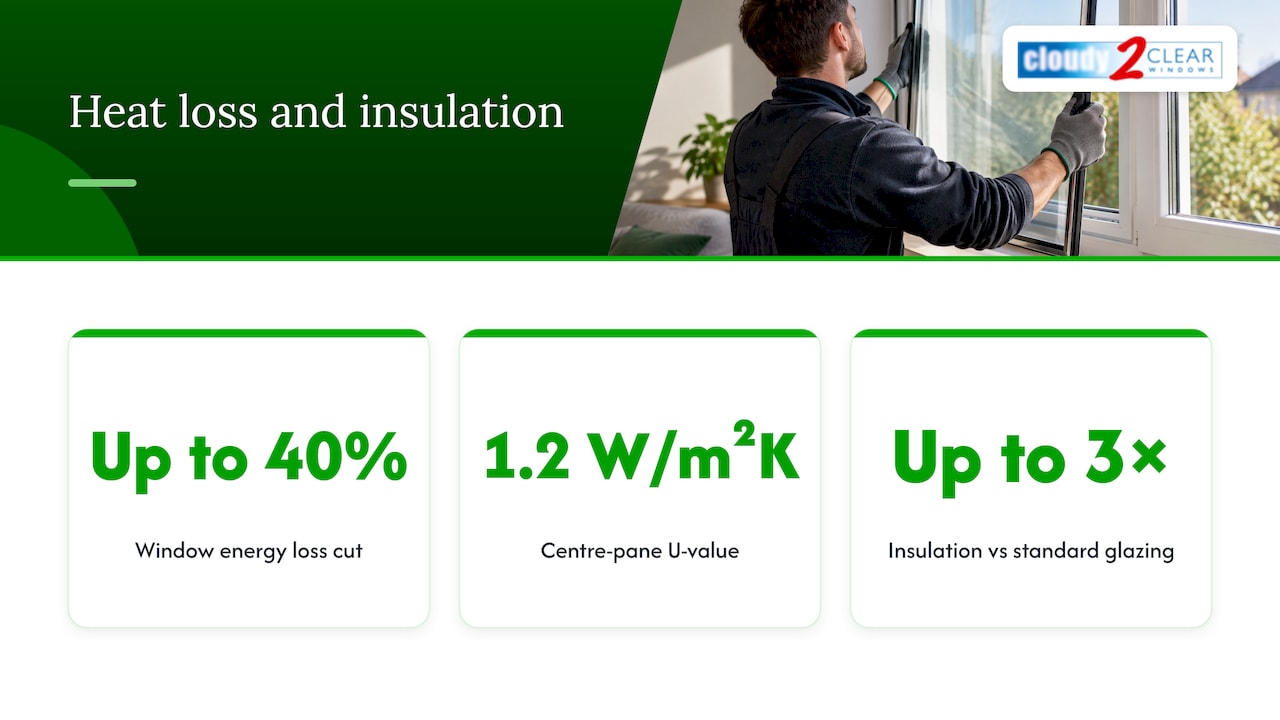
This is the headline benefit. Lawrence Berkeley National Laboratory, a US government research lab, states that low-E coatings reduce window-related energy loss by as much as 40% and improve comfort. That figure comes from US research, so treat it as an indication of scale rather than a promise for your property.
The effect is also visible in the numbers for UK units. Saint-Gobain’s Planitherm Total data gives a centre-pane U-value of 1.2 W/m²K for a 4(16)4 argon-filled unit, and states that it offers up to three times more insulation than standard double glazing. A U-value measures how quickly heat passes through; the lower the figure, the better.
Help meeting Building Regulations
The GGF says that in most cases energy-efficient windows with low-emissivity glass allow stricter thermal insulation standards to be met. If you are replacing glazing, our guide to building regulations for windows explains the rules in plain terms. For landlords and housing associations, that matters when a property has to meet efficiency standards across many windows.
Less fading of furniture and floors
UV light fades fabrics, wood and artwork. The US Department of Energy notes that low-E coatings protect curtains, furniture and hardwood floors from fading over time. Fading is never fully eliminated, but the coating reduces it, which is a real gain in a south-facing living room or a shop with window displays.
Better comfort and less glare
A warmer inner pane means fewer cold spots near the window, so you can sit closer to it in winter. Solar-control versions also help with glare and overheating. The same US Department of Energy page says low-E coatings prevent overheating while letting visible light through.
Choosing the right type: heat gain or solar control
Not every low-E coating is made for the same job. The Efficient Windows Collaborative describes two generations: passive coatings that admit plenty of solar heat, suited to homes where heating dominates, and solar-control coatings that reflect near-infrared radiation to cut summer heat while keeping daylight high. The second type is common in commercial buildings.
| Situation | What to look for |
|---|---|
| Typical living rooms and bedrooms | Standard low-E double glazing |
| South- or west-facing conservatory or large glazed area | Solar-control glass |
| Offices and shopfronts with large glazed facades | Solar-control coating to limit summer heat |
| Windows facing a busy road | Glass chosen for sound reduction as well |
The GGF warns that high-solar-gain low-e glass can cause overheating in large glazed areas, and recommends solar-control glazing for these areas, particularly south-facing conservatories. Its conservatory guide adds that a single 4mm pane reflects only 15% of the sun’s heat, whereas modern solar-control units can reflect over 70%. If you have a conservatory, our conservatory window repair service is the place to start.
How orientation and window size change the result
The amount of sun a window receives affects how useful the coating is. The NHBC explains that the g-value, the share of solar energy passing indoors, typically ranges from 0.4 to 0.8 for modern glazing and that window size and orientation affect solar gain. Free winter warmth is welcome, but on hot days it can tip into overheating. For a wider look at how glazing, orientation and size shape warmth and overheating, see this guide to home features and energy savings.
Is low-E glass worth it?
For most homes and businesses, yes, because it is the standard way to make double glazing perform well. Historic England’s experts point out that the financial benefit depends on the thermal performance and cost of the improvement, the window area and the amount of heating energy used. A large, draughty or north-facing property with high heating use has more to gain than a small, well-heated flat.
The best moment to add low-E glass is when a unit has to be replaced anyway. If a pane has misted, the seal has failed and the insulation is already lost. Fitting a new sealed unit with a low-E coating restores performance and upgrades it at the same visit. Our guide to why invest in energy efficient windows sets out the wider reasoning.
Why glass-only replacement suits this upgrade
The coating lives in the glass unit, not the frame. If your frames are sound, replacing only the glass gives you the thermal upgrade without the cost and disruption of new frames. That is our approach: we replace only the glass, which means less disruption and faster service than full window replacement.
Things to know about low-E glass
Two effects are worth understanding so they never surprise you.
- External condensation. The NHBC notes that modern gas-filled units with low-e coatings block heat so well that the outermost glass can be cold enough in winter to form condensation on the outside. This is a sign the unit is keeping heat in, and it clears as the morning warms.
- Appearance. The GGF says early low-e glass can make light-coloured materials look slightly darker, and haze may appear at certain sun angles or lighting conditions. Modern coatings are designed to keep the view clear.
Another point: if you want better sound reduction, glass choice and the gap between panes matter as much as the coating. Our soundproofing and noise reduction service covers glass options for noisy locations.
For Scotland, housing associations and commercial premises
Colder winters in Scotland make heat retention especially valuable, and our guide to the best window types for Scotland covers the choices. Housing associations and commercial owners can also use our inspection service and full replacements to review glazing across a portfolio. To see how ratings are shown on windows, read our energy ratings for windows guide.
Low-E glass with Cloudy2Clear Windows
We have installed, replaced and repaired double glazed windows for homes and businesses since 2005. Our work includes insulating glass, soundproofing glass, conservatory, Velux and commercial window repairs, and we offer a 25-year guarantee and eco-friendly insulated glass options. Our double glazing replacement service is the right starting point if you have misted or failed panes.

Call us any time, 24 hours a day, 7 days a week, to book a quote. Our operational hours are 8.30am to 6.30pm.
Our view on low-E glass
Most people ask whether low-E glass is worth it when they should ask when to fit it. Our answer is at the moment the glass has to change anyway. A misted or cracked unit has already lost its insulation, and a sealed low-E unit puts that performance back, with a gain on top.
We replace only the glass, not the frame, because that keeps the work quicker and less disruptive, and the coating does its job inside the unit. For conservatories, large glazed areas and commercial premises, we look at solar control as well as heat retention, because comfort in summer matters as much as warmth in winter.
Frequently asked questions
What does low-E glass actually do?
It carries an invisible metallic coating that reflects heat radiation back into the room while allowing daylight through. This helps your rooms stay warmer in winter and, with solar-control types, cooler in summer.
Does low-E glass stop furniture fading?
It reduces the UV damage that fades curtains, furniture and floors, though no glazing stops fading completely. The effect is useful in bright, sun-facing rooms.
Can I add low-E glass without replacing my frames?
Yes, if your frames are in good condition. We replace only the glass, so a sealed low-E unit can be fitted into your existing frame.
Is low-E glass suitable for conservatories?
Yes, but choose the coating for the job. For south- or west-facing conservatories, the GGF recommends solar-control glazing to limit overheating.
Sources
- Low Emissivity Glass and its Visual Quality, GGF
- Low-E Coatings, Efficient Windows Collaborative
- Windows: making it clear, NHBC
- Low-e glass, Guardian Glass
- 50%FIVE, Lawrence Berkeley National Laboratory
- High-Performance Window Systems: Glass, US Department of Energy
- SGG Planitherm Total product data
- A Consumer Guide to Conservatories, GGF
- Webinar on Traditional Windows Care, Repair and Improving Energy Efficiency, Historic England