A noisy patio door is usually one of two problems. Either the door itself makes the noise when it slides, or the door lets outside noise into the room. Both are fixable, and in most homes the fix does not need a whole new door. At Cloudy2Clear Windows, we replace only the glass and leave the frame in place, so a quieter door can be a smaller job than you expect. You can call us 24 hours a day, 7 days a week to book a quote, and our operating hours are 8.30am to 6.30pm.
This guide helps you work out which problem you have, what is safe to check yourself and when it is time to bring in a glazier. It is written for homeowners, business owners and housing association managers in England and Scotland.
First, work out which kind of noise you have
People search for “noisy patio doors” and mean quite different things. Sorting yours into one of these two groups saves time and money.
- The door is noisy. It grinds, scrapes, squeaks, rattles or bangs when you open, close or lock it.
- The room is noisy. The door moves quietly, but you hear traffic, trains, neighbours, aircraft or a busy car park through it.
Sometimes both are true. A door that has dropped slightly on its track often has gaps around it as well, so it rattles and lets sound in. The table below matches common symptoms to likely causes.
| What you notice | Likely cause | What it points to |
|---|---|---|
| Grinding or scraping when sliding | Worn rollers, dirty or damaged track | Door hardware needs attention |
| Door drags or catches the frame | Door has dropped or moved out of alignment | Door needs adjusting or the rollers need replacing |
| Rattling in the wind or when traffic passes | Worn seals, loose glazing or a poorly fitted sash | Seals and glazing need checking |
| Whistling or a hiss around the edges | Gaps where seals no longer close tightly | Draught and sound are both getting in |
| Constant traffic or train noise, even when the door is shut | Thin glass or a poor sound barrier | Glass upgrade |
| Clunk when the handle is lifted or the lock engages | Misaligned keeps, worn locking mechanism | Lock and handle repair |
Why a sliding door makes noise when you move it
A sliding patio door is a heavy glazed panel that rides on small wheels, called rollers, along a track at the bottom of the frame. A good door glides because the rollers carry the weight evenly and the track is clean and straight.
Over the years several things change that:
- Rollers wear. The wheels flatten, crack or seize, and the door starts to grind or judder.
- Tracks collect grit. Dirt, grit and dead insects build up in the channel and scrape as the door moves.
- The door drops. As rollers wear, one side of the panel sinks, the frame catches and the door becomes harder to slide and lock.
- Seals harden. Brush and rubber seals lose their flexibility, so the door rattles in its frame.
- Locks go out of line. When the door sits lower than it should, the handle and keeps no longer meet properly, and the lock clunks or will not engage.
These are mechanical faults, and they tend to get worse. A door that is hard to slide is also hard to lock, so a noisy door can quietly become a security problem too.
Not every noise is the door
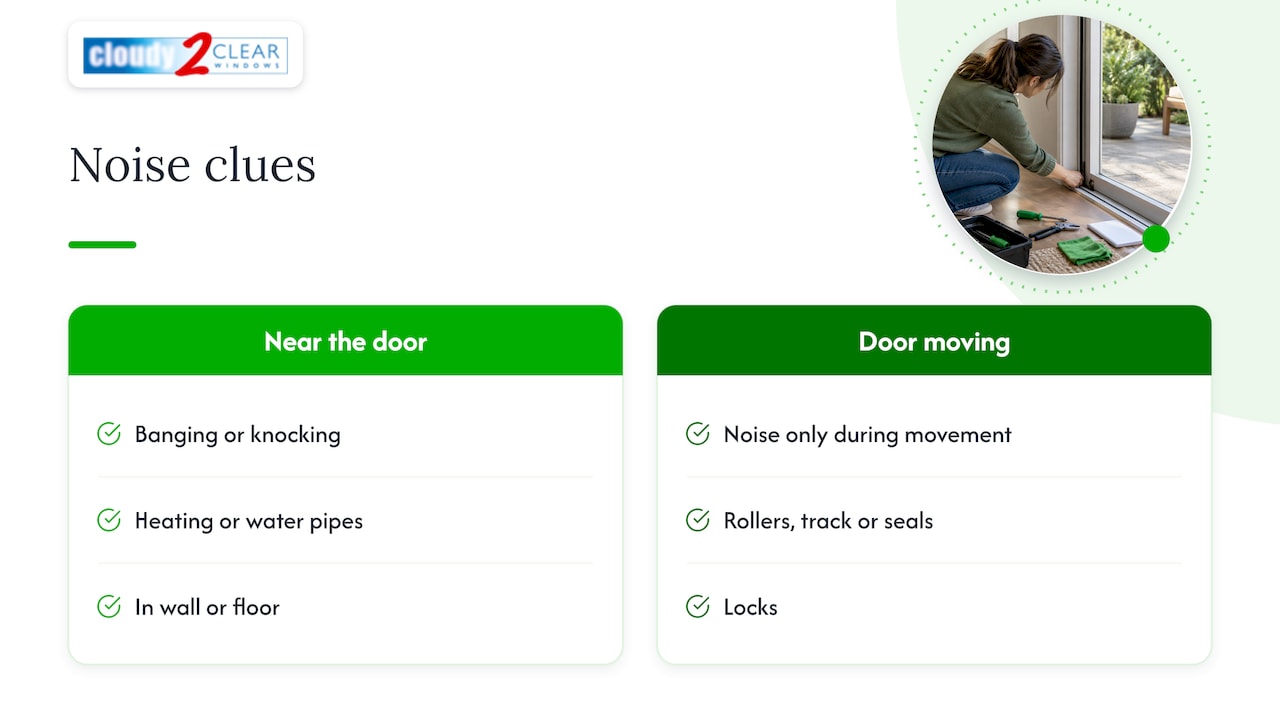
Before blaming the patio door, listen for where the sound really comes from. Banging or knocking that you hear near the door can sometimes be heating or water pipes in the wall or floor. If that sounds familiar, this guide to the causes of noisy pipes will help you rule it out. If the noise only happens when the door moves, you are back to rollers, track, seals and locks.
What you can safely check yourself
A few simple observations tell you a lot, and none of them involves lifting anything heavy.
- Look at the track. If it is full of grit or debris, a gentle clean may quiet a light squeak. Wipe it out with a soft brush or a vacuum nozzle.
- Watch the door move. Does it drag at one end, lean to one side or jump as it slides? That points to the rollers.
- Look at the gaps. With the door closed, check for light, draughts or visible gaps at the edges. Close-fitting seals matter for both warmth and sound.
- Try the lock. If the handle needs force or the lock only works when you lift the door, the alignment has gone.
- Check the glass edges. Look for a mist or condensation trapped between the panes, which means the sealed unit has failed.
That is where the safe checks end. A sliding patio door glass panel is very heavy, and taking it out of the frame without proper equipment risks injury and broken glass. If cleaning has not stopped the grinding, or the door still drops, scrapes or will not lock, it needs a professional. For a door that is more than a light squeak, our double glazed door repairs and locks, handles and hinges repairs cover the hardware side.
Why outside noise gets through a patio door
A patio door is the largest area of glass in many rooms, so it is often the weak point for sound. Several things decide how much noise comes through.
- The glass. Standard double glazed units are built mainly for insulation, not for blocking sound. Two panes of similar thickness can even pass certain frequencies more easily.
- The seals. Sound travels through any gap that air can. Worn seals let in both draughts and noise.
- The fit. A door that has dropped no longer closes tight against its seals, so the gap is wider than it was when installed.
- A failed unit. If a sealed unit has misted, it has lost its seal and its performance, and it is due for replacement anyway.
This is useful because it tells you what to do first. Fix any gaps, then deal with the glass if the noise is still a problem.
Start by closing the gaps
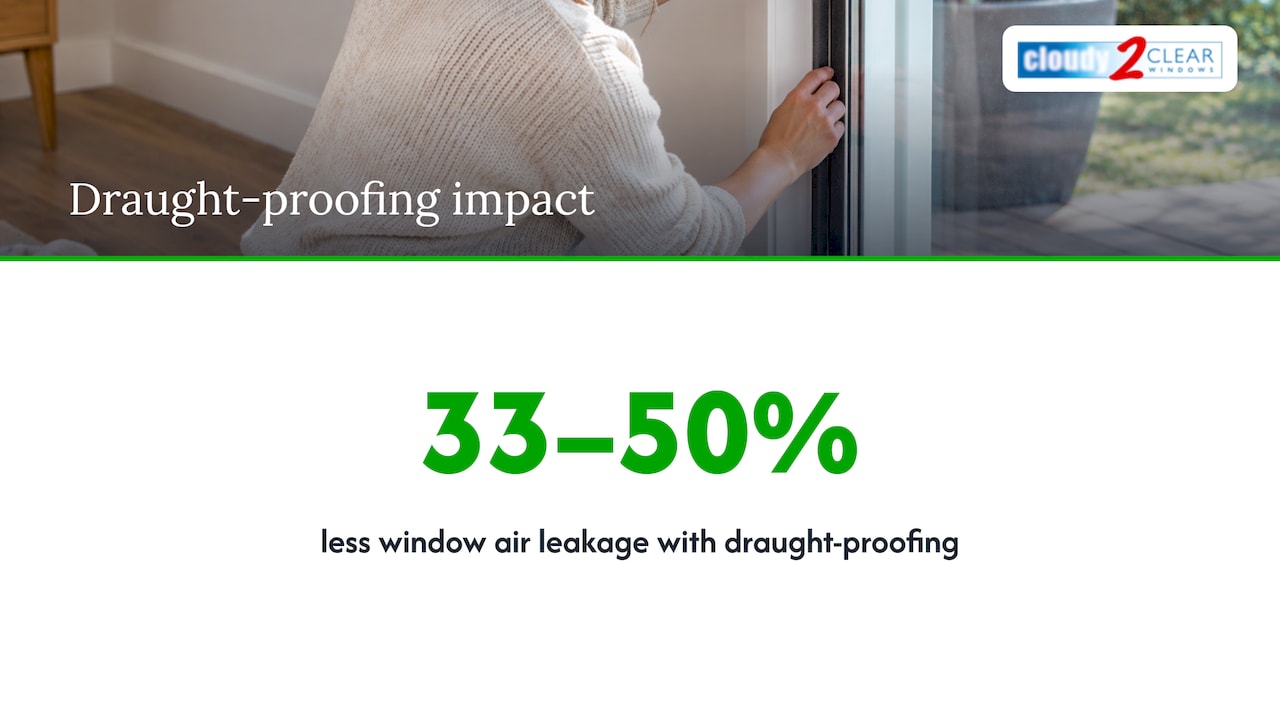
Sealing gaps is the least disruptive step. Historic England’s guidance says draught-proofing can cut air leakage from windows by 33% to 50% and also helps reduce noise and keep out dust. That guidance is written for older buildings, but the principle holds for any door: where air cannot pass, much less sound can either.
For a patio door, this means replacing tired seals and making sure the door sits square in its frame and closes fully. If you are also feeling cold air at floor level, our guide to patio door draughts and when to call a glazier explains the causes in more detail, and the advice on stopping uPVC door draughts covers seals and trickle vents.
Then look at the glass
If the door is sealed and aligned and you can still hear the road, the glass is the next place to look. Acoustic glass is made differently from standard glazing. It typically uses laminated panes and unit make-ups designed to interrupt sound, so more of it stays outside. Our article on acoustic glazing and noise reduction goes through how it works, and our piece on reducing traffic noise through windows shows what makes the difference in practice.
When you compare quotes for acoustic glass, ask what is being fitted and how its sound reduction is rated. Our guide to acoustic glass retrofits explains how to read those ratings and why a reversible upgrade can suit existing frames.
Why glass-only replacement suits noisy patio doors
Many homeowners assume that a noisy patio door means ripping out the whole door. In many cases the frame is sound and the glass is the weak link. Replacing only the glass has clear advantages:
- Less disruption. The frame stays where it is, so there is no rebuilding of the opening and much less mess.
- Faster work. Swapping a glass unit takes less time than removing and refitting an entire door.
- Better glass. The new unit can be an energy-efficient or soundproofing unit, so one visit can improve warmth and quiet together.
- A guarantee. Our work carries a 25-year guarantee.
This is how we work at Cloudy2Clear Windows. We replace misted, cracked or failed panes and upgrade units to energy-efficient and soundproofing glass, rather than replacing complete windows or doors that do not need it. Our soundproofing and noise reduction service is the page to start with if outside noise is your main complaint.
Perspective: why we treat noise as a glass question first
We have been installing, replacing and repairing double glazed windows since 2005, and one pattern comes up again and again. Customers describe a noisy patio door as a problem with the whole door, when the real issue is often a worn part or the glass itself.
That is why we prefer to look at the glass before anyone talks about a new door. If the frame is in good order, replacing only the glass keeps the cost of disruption down, shortens the time the opening is out of action and leaves you with a unit that can be chosen for quiet and warmth. We back that work with a 25-year guarantee.
For homeowners, the result is a living room or bedroom that sounds calmer. For business owners and housing association managers, it also means fewer complaints and less downtime, because the work is more contained than a full replacement. Our insulated glass options are also designed to improve energy efficiency, so the quiet you gain does not come at the expense of warmth.
Patio doors in homes, shops and housing blocks
The reasons for a noisy patio door differ by property, and so does the best approach.
Homes
In houses, patio doors often open onto a garden but face a road, a railway or neighbours on the other side. Bedrooms and living rooms next to traffic benefit most from a glass upgrade. A door that groans every time the family goes into the garden is more likely a roller or track problem.
Business premises
Offices, shops and cafés use sliding glazed doors heavily, so rollers and seals wear faster. Noise from the street also affects the people working inside. Our guides on office window noise and shopfront acoustic glass upgrades show how the right glazing quietens a space without a full refit. Our commercial window repair service covers premises of this kind.
Housing associations
For housing associations, noise complaints from tenants, damaged glazing and compliance checks often arrive together. Our inspection service and full replacements are set up for commercial and housing association properties, so repairs, inspections and replacements can be handled in one place. Glass-only work keeps disruption to residents low.
When to call a glazier
Call a professional when any of these apply:
- The door still grinds, drops or scrapes the frame after cleaning the track.
- The lock or handle no longer works smoothly.
- You can see gaps around the seals, or feel a draught at the base.
- There is mist or condensation trapped between the panes.
- The glass is cracked or chipped.
- Outside noise bothers you even with the door shut and the seals in good order.
Cracked glass in particular should not wait, as it can fail suddenly. Our broken window repairs page covers this. Patio doors at the back of a conservatory are covered by our conservatory window repair service.
How we fix a noisy patio door
The route depends on what the noise turns out to be.
- Tell us what you hear. Describe the sound, when it happens and whether it is the door or the room that is noisy. That tells us whether to expect a hardware fault, a seal problem or a glass issue.
- We look at the whole door. Rollers, track, seals, locks and the glass units are all part of the picture, because a noisy door often has more than one fault.
- Hardware first where it is the cause. Worn or misaligned parts are put right so the door slides and locks properly.
- Glass where it is the cause. Failed or cracked units are replaced, and where outside noise is the complaint, a soundproofing or insulated unit can go into your existing frame.
- Guaranteed work. The glass work we do is covered by our 25-year guarantee.
Double glazing repairs near you
We work nationwide, with branches serving many areas. If you are around Greater Manchester, for example, our team covers double glazing repairs in Stockport and the South Manchester area. In the Midlands we serve Coventry and South Birmingham, and further south Milton Keynes, Watford and Oxford. Each branch page lists the surrounding area it covers.
Get a quieter patio door with Cloudy2Clear Windows
If your patio door grinds, rattles or lets the road into your home, we can look at the glass, the seals and the hardware and tell you what will bring the quiet back. Because we replace only the glass, the work is less disruptive than a full door replacement. Start with our double glazing replacement service, or visit Cloudy2Clear Windows to see everything we repair. You can call us 24 hours a day, 7 days a week to book a quote, and our operating hours are 8.30am to 6.30pm.

If the main complaint is noise from outside, our soundproofing and noise reduction page explains the glass upgrades available for existing frames.
FAQ
Why does my sliding patio door make a grinding noise?
Grinding usually means worn rollers or a dirty track. As rollers wear, the door can drop slightly and drag in the frame. A glazier can check the rollers, track and alignment so the door slides quietly again.
Can I make my patio door quieter without replacing the whole door?
Often, yes. If the frame is in good condition, replacing only the glass with a soundproofing unit and renewing worn seals can cut noise without a new door. At Cloudy2Clear Windows, we replace the glass and leave the frame in place.
Does draught-proofing reduce noise from outside?
It helps. Historic England says draught-proofing reduces air leakage by 33% to 50% and helps reduce noise. Sealing gaps is a good first step before upgrading the glass.
Is a noisy patio door a security risk?
It can be. A door that grinds or drops often no longer locks smoothly, and a lock that does not engage fully is weaker. If your door is hard to lock, have the hardware looked at promptly.
Can I book a visit outside office hours?
Yes. You can call us 24 hours a day, 7 days a week to book a quote. Our operating hours are 8.30am to 6.30pm.