Your windows do more work than you might realise. They hold in warmth, keep out noise, and protect your home from the elements every single day. But when they start to fail, the signs can be surprisingly easy to miss until your heating bills creep upwards, cold draughts appear from nowhere, or you notice a persistent milky haze between the panes. This guide walks you through the key warning signs, explains what causes windows to deteriorate, and helps you decide whether repair or replacement is the right move for your home.
Recognising the early warning signs
Now that you understand the risks, it is time to identify the actual red flags present in your home. Double glazed windows are designed to last, but they are not immune to wear. The trouble is that many of the signs of failure are gradual. You adjust to a slightly colder room, you stop noticing the faint rattle when the wind picks up, and before long a small problem has quietly grown into a costly one.
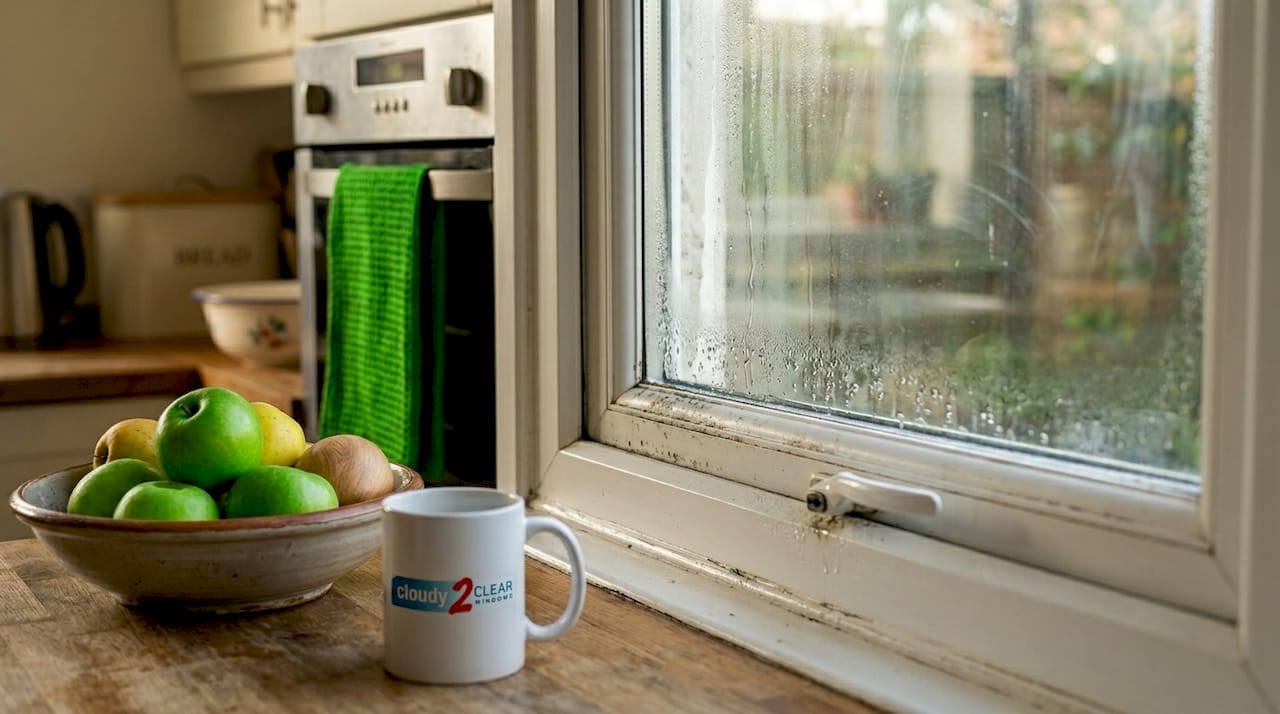
Persistent condensation between window panes indicates failed seals. That milky or foggy appearance inside the glass is not just cosmetic. It means the sealed unit has been compromised and the insulating gas inside has escaped. Once that happens, the window loses a significant portion of its thermal performance.
Here are the most common warning signs to look out for:
- Misting or cloudiness between the panes. This is the most tell-tale sign of a failed seal. The moisture you see trapped inside the glass cannot be wiped away because it is between the two panes.
- Draughts near closed windows. Run your hand around the frame on a cold day. If you feel cold air coming through, the seal or frame has failed.
- Difficulty opening, closing, or locking. Stiff handles, windows that drop when opened, or locks that no longer engage properly all point to warped frames or worn mechanisms.
- Rattling or excessive outside noise. A well-fitted double glazed window should significantly reduce street noise. If it no longer does, the unit may have lost its insulating properties.
- Visible frame damage. Cracked, rotted, or discoloured frames are a clear signal. uPVC frames that have yellowed or become brittle, or timber frames showing signs of rot, need attention quickly.
- Rising energy bills. If your heating costs have increased without an obvious reason, your windows could be leaking warmth. Understanding the signs of window damage early can save you considerably on your energy bills.
Understanding why window seals fail is equally useful, as it helps you catch problems before they worsen. There are also a range of window and door faults that homeowners regularly overlook until the damage becomes significant.
Worth knowing: A single failed sealed unit does not always mean you need to replace the entire window. In many cases, just the glass unit itself can be swapped out, preserving the existing frame and saving you money.
How failing windows affect your home and wallet
Spotting the signals is just the first step. Next, understand why acting on them matters for both comfort and costs.
When a window’s thermal performance drops, your home loses heat through the glass and frame much faster than it should. Your boiler works harder to compensate, and your energy bills reflect that. Replacing failed windows cuts heat loss, making homes warmer and saving money over time. The savings can be meaningful, particularly in older homes with multiple failing windows.
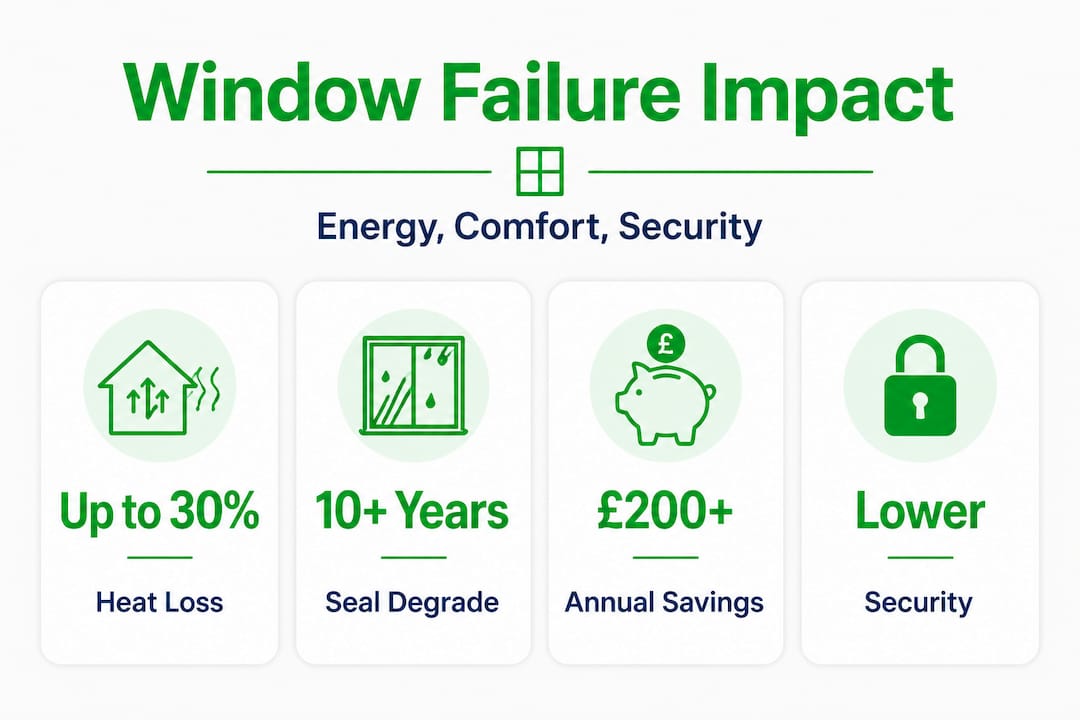
Window problems often lead to higher heating bills, and this is one of the most direct financial consequences of delayed action. But the impact goes beyond your energy costs.
Moisture and mould risk. When cold air penetrates through a failing window, it meets warm interior air and creates condensation on the surrounding wall surfaces. Over time, this moisture encourages mould growth, which can damage plasterwork, wallpaper, and even structural timbers. Mould also poses a health risk, particularly for children and those with respiratory conditions.
Security concerns. A window that does not lock properly, or one with a cracked pane, is a vulnerability. Faulty mechanisms are not just inconvenient; they can make it easier for opportunists to gain access to your home.
| Window condition | Estimated annual heat loss | Potential energy saving after replacement |
|---|---|---|
| Single glazed | Very high | Up to £200 per year |
| Double glazed (10+ years, seal failed) | High | Up to £130 per year |
| Double glazed (good condition) | Moderate | Baseline comparison |
| Modern A-rated double glazing | Low | Best performance |
For a fuller picture of how glazing affects your running costs, the double glazing efficiency guide is a helpful resource. It is also worth checking whether your replacement windows need to meet energy savings compliance standards under current building regulations.
Pro Tip: If your frames are still structurally sound and in good condition, replacing only the failed glass units rather than the entire window can achieve most of the energy savings at a fraction of the cost. Always get a professional assessment before committing to full replacement.
Common causes behind window deterioration
To maintain comfort and protect your investment, it helps to understand what leads to window failure in the first place.
Windows face a tough job. They are exposed to the full force of the British climate, from freezing winter nights to summer heat, and everything in between. Over time, this takes a toll on every component.
Seals often degrade over 10 years, especially in exposed positions such as south-facing elevations or coastal locations where UV exposure and wind-driven rain are more intense. The sealed unit relies on a gas-filled cavity (usually argon) between two panes of glass. When the seal breaks down, that gas escapes, and the insulating effect is lost.
The most common causes of window deterioration include:
- Age and UV exposure. Ultraviolet light gradually breaks down the polymers in rubber seals and uPVC frames, causing them to harden, crack, and lose their flexibility.
- Thermal expansion and contraction. Every time temperatures rise and fall, frames and glass expand and contract slightly. Over many years, this repeated movement stresses the seals and fixings.
- Poor original installation. Windows that were not fitted correctly from the outset tend to fail earlier. Gaps in the sealing, incorrect fixings, or frames that were not properly squared can all accelerate deterioration.
- Physical damage. Impacts from garden equipment, footballs, or even heavy rain carrying debris can chip or crack panes and frames.
- Lack of maintenance. Frames and seals benefit from periodic cleaning and inspection. Dirt and grime can trap moisture against seals, speeding up their breakdown.
Understanding the importance of window seals helps you appreciate why even minor damage to them matters. If you are already seeing signs of seal failure, reading about replacing window seals will give you a clearer idea of what the process involves and when it makes sense.
Simple maintenance steps such as cleaning frames with a mild detergent, checking that drainage channels are clear, and lubricating hinges and handles annually can meaningfully extend the life of your windows.
Repair or replace? Making the right decision
Knowing the causes and visible issues, the next step is to decide on the most sensible solution for your situation.
This is where many homeowners feel uncertain. The good news is that not every problem requires a full window replacement. Some issues can be solved with repairs, but severe problems need complete replacement. The key is to assess each window honestly and methodically.
| Factor | Repair | Full replacement |
|---|---|---|
| Cost | Lower upfront cost | Higher upfront, better long-term value |
| Disruption | Minimal | Moderate, usually one day per window |
| Best suited for | Isolated seal failure, minor frame damage | Widespread failure, structural frame damage |
| Energy improvement | Good if frames are sound | Maximum improvement |
| Lifespan gained | Several years | 15 to 25 years |
Use this checklist to assess whether repair is a viable option for your windows:
- Check the frames. Press gently on the frame around the window. If it feels solid and does not flex, the frame is likely still structurally sound.
- Identify the type of damage. Is it just the glass that is misted? Or are the frames cracked, rotted, or warped? Glass unit replacement is simpler and cheaper than full frame replacement.
- Count how many windows are affected. If only one or two units are misted but the frames are fine, repair makes sense. If most of your windows are failing, replacement may be more cost-effective overall.
- Test the locks and handles. Mechanisms can often be replaced independently without touching the frame or glass.
- Consider the age of the windows. If your windows are approaching or past 20 years old and showing multiple signs of failure, replacement is likely the better investment. Review the window seal lifespan data to put the age of your windows in context.
Pro Tip: Acting on a failed sealed unit quickly, rather than waiting to see if it worsens, prevents moisture from reaching the frame and causing secondary damage. In many cases, a timely glass unit swap is all that is needed.
What to expect when replacing your windows
Once you have chosen to replace, knowing what comes next helps you plan and avoid surprises.
Professional window replacement is a well-established process, and a reputable installer will guide you through each stage clearly. Here is what typically happens:
- Initial assessment. A specialist visits your home to inspect the existing windows, measure openings accurately, and discuss your requirements including style, glazing type, and frame material.
- Quotation. You receive a detailed written quote covering all costs. There should be no hidden charges. Use this stage to ask questions about energy ratings, guarantees, and timescales.
- Manufacturing and scheduling. Replacement windows are usually made to measure. Lead times vary but are typically two to four weeks from order confirmation.
- Removal of old windows. On installation day, the old windows are carefully removed. A good installer will protect your interior and minimise mess throughout.
- Professional installation. New windows are fitted, sealed, and adjusted to ensure smooth operation and a weathertight finish. All locks and handles are tested before the installer leaves.
- Aftercare and guarantee. Reputable companies provide a guarantee on both the product and the installation. You should receive documentation covering this, along with any relevant building regulations compliance certificates.
Most single-window replacements are completed within a day. Larger projects involving multiple windows across a property may take two to three days. The immediate benefits are usually noticeable straight away: less noise, no draughts, and a warmer feel to the room.
Most homeowners wait too long — here’s why catching early signs pays off
Here is a perspective you might not have considered, and it is one we have seen play out many times since we began working with homeowners in 2005.
Most window problems do not announce themselves dramatically. There is no sudden failure, no obvious moment where you think “right, that needs sorting.” Instead, the deterioration is gradual. A small amount of misting appears in autumn. You notice it, think about it, and then forget about it over winter. By the following year, the misting is worse, the frame is starting to show damp, and what could have been a straightforward glass unit replacement has become a more involved job.
We have seen this pattern repeatedly. A homeowner who acts on early window damage warnings typically spends less overall, experiences less disruption, and avoids the secondary problems that come with prolonged moisture ingress, such as mould, damaged plasterwork, and compromised frames.
The practical takeaway is simple: build a quick window check into your routine home maintenance, ideally twice a year. In autumn, before the cold sets in, and in spring, after the worst of the weather has passed. Look for misting, test the handles and locks, feel for draughts, and inspect the frames for any visible damage. Five minutes of attention twice a year can prevent a much larger bill further down the line.
Pro Tip: Take a photo of any window that shows early signs of misting or damage. Comparing photos over six to twelve months helps you track whether the problem is progressing and gives a specialist useful information when they visit.
Need expert help? Professional window repairs and replacements
If you have spotted these signs or simply want peace of mind, expert help is close by.
At Cloudy2Clear Windows, we have been helping homeowners across England and Scotland assess, repair, and replace their double glazed windows since 2005. Whether you need a single misted unit swapped out or a full window replacement programme across your property, our local specialists can visit, assess, and advise without any obligation.

We offer window glass replacement services designed to restore your home’s warmth, security, and appearance efficiently. With branches across the country, including Watford window repairs and Milton Keynes window repairs, there is a local expert ready to help. Get in touch today to book your free assessment and find out exactly what your windows need.
Frequently asked questions
How long do double glazed windows last before needing replacement?
Seals often degrade over 10 years, particularly in exposed or south-facing positions, though well-maintained windows in sheltered locations can perform well for longer.
Will replacing windows really reduce my energy bills?
Yes. Replacing failed windows cuts heat loss noticeably, resulting in a warmer home and lower heating costs, particularly if your current windows are old or have failed seals.
Can I repair a misted double glazed unit or must it be replaced?
Persistent condensation between panes means the sealed unit has failed and cannot be repaired by cleaning. The glass unit itself needs to be replaced, though the frame can often be retained.
How can I tell if my window problem is repairable?
If the frame is structurally sound and the damage is limited to the glass or seals, a repair may be possible rather than a full replacement. A professional assessment will confirm the best course of action.
What’s the process for replacing windows?
Replacement involves a home assessment, a written quote, manufacturing to measure, removal of the old windows, professional installation, and a guarantee covering both product and workmanship.
Recommended
- Spot signs of window damage: save £100s on energy bills
- How to measure windows for replacement: your guide
- Common Window And Door Faults To Watch For – Cloudy2Clear Windows
- Identify and solve window condensation issues in 2026
- Detecta humedad en paredes: guía práctica para tu vivienda – Solo Humedad