Many people still picture aluminium windows as the cold, industrial-looking frames you might find on a 1970s office block. That image is well out of date. Today’s aluminium windows are sleek, thermally efficient, and available in hundreds of colours and finishes. Whether you own a Victorian terrace in Edinburgh, a new build in Manchester, or a commercial premises anywhere across England or Scotland, aluminium could be the most versatile and rewarding window material available to you. This guide covers everything you need to know, from the basics through to energy performance, styling options, and how to keep your windows in top condition.
What are aluminium windows?
Aluminium windows are frames made from extruded aluminium sections that hold glazing panels in place. The metal has been used in construction since the mid-twentieth century, initially in large commercial and industrial buildings where strength and slim sightlines were priorities. Over the decades, advances in manufacturing have made aluminium equally well suited to residential properties of all types and styles.
According to our window materials guide, aluminium windows are lightweight, durable, and suitable for both homes and commercial buildings. That combination of lightness and strength is actually quite remarkable when you compare aluminium to timber or uPVC. Thinner frames are possible because aluminium does not need the same wall thickness to resist bending or warping.
Here is where you will commonly find aluminium windows fitted:
- Residential homes, including new builds, extensions, and period property renovations
- Commercial offices where large glass areas and minimal visible framing are desirable
- Retail and hospitality venues that want an upscale, contemporary appearance
- Schools and public buildings where durability and low maintenance are essential
- Industrial units and warehouses, where robustness is the primary concern
If you are still weighing up your options, our guide to different window materials offers a broader overview of what each material brings to a building. Knowing what aluminium is designed to do from the outset helps you decide whether it is the right fit for your property.
Key benefits of aluminium windows
After covering what aluminium windows are, it is important to understand why they are so highly regarded. The benefits go well beyond appearance.
Our own experience installing and repairing windows across England and Scotland since 2005 has reinforced what the industry data already shows: aluminium windows are durable, low maintenance, and offer superior energy efficiency when paired with high-quality glazing. Here is a closer look at the main advantages:
- Strength and longevity. Aluminium is inherently strong, meaning frames can span wider openings without needing heavy reinforcement. This makes it ideal for large bay windows, bifold doors, or floor-to-ceiling glazing.
- Weather resistance. Unlike timber, aluminium does not rot, warp, or swell with moisture. It stands up well to the wet, changeable climate found across much of England and Scotland.
- Low maintenance. Powder-coated finishes are extremely durable. An occasional wipe with mild soapy water is typically all that is needed to keep frames looking pristine.
- Energy efficiency. When fitted with a thermal break (a non-conductive barrier inside the frame) and double or triple glazing, aluminium windows perform on a par with the best alternatives on the market. You can read more about the energy efficiency of your windows in our dedicated guide.
- Recyclability. Aluminium is one of the most recyclable materials on the planet. It can be melted down and reused without losing quality, making it a strong choice if environmental impact matters to you. For a fuller picture, explore our sustainable window options resource.
- Design flexibility. Hundreds of RAL colour options and a range of profile styles mean aluminium suits everything from minimalist new builds to ornate period homes.
Worth knowing: Aluminium accounts for a large and growing share of the premium window and door market in the UK, precisely because it handles the conflict between slimmer frames and better thermal performance better than any other material.
Pro Tip: If you are retrofitting aluminium windows into an existing property, always ask your installer about the thermal break specification. Not all aluminium profiles are equal, and the quality of the thermal break makes a significant difference to your energy bills.
Comparing aluminium, uPVC, and timber windows
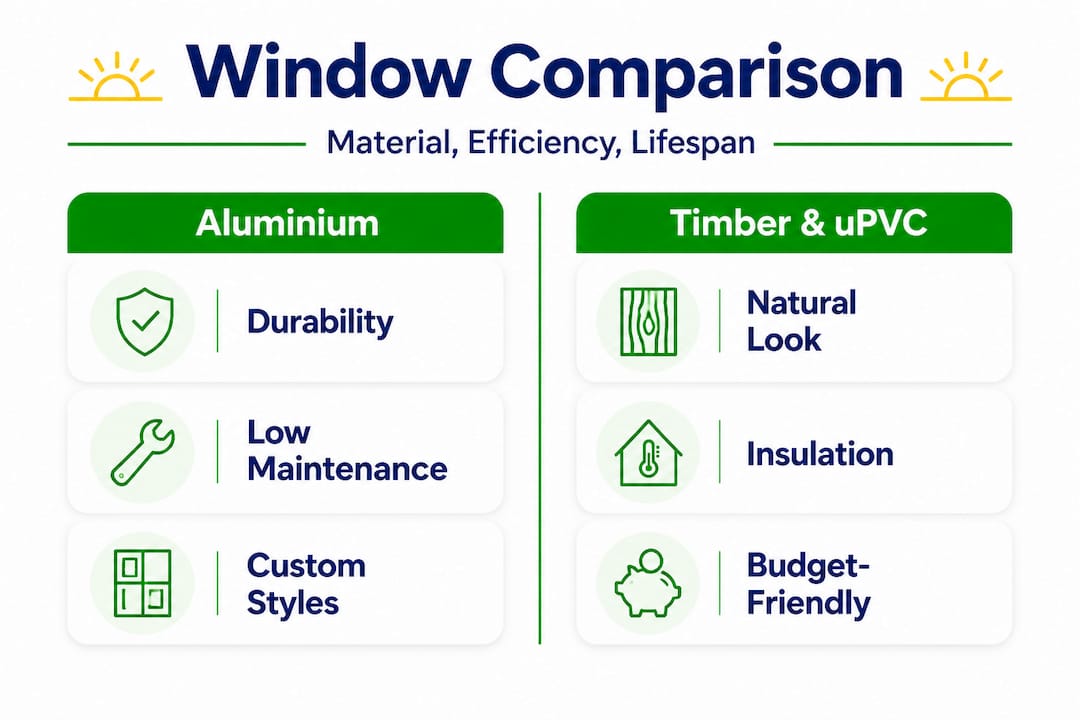
Now you know the benefits, it is easier to understand how aluminium stacks up against other popular options. Choosing the right window material impacts durability, thermal performance, maintenance, and cost. The table below gives you a clear side-by-side view.
| Feature | Aluminium | uPVC | Timber |
|---|---|---|---|
| Durability | Excellent (30+ years) | Good (20-25 years) | Variable (15-30 years) |
| Thermal performance | Excellent (with thermal break) | Very good | Good (if well maintained) |
| Maintenance | Very low | Very low | High (regular painting/sealing) |
| Design options | Extensive (RAL colours, profiles) | Moderate (limited colours) | High (paint/stain options) |
| Upfront cost | Higher | Lower | Medium to high |
| Recyclability | Excellent | Limited | Good |
| Suitability for large spans | Excellent | Moderate | Limited |
You can see from this comparison that no single material is perfect for every situation. uPVC remains popular for budget-conscious homeowners who want reliable performance without a high upfront cost. Timber suits those with listed buildings or a strong preference for natural materials. Aluminium wins when you need longevity, slim sightlines, design freedom, and strong energy performance in one package.
For a more detailed breakdown of how these three materials compare across different property types, our window materials comparison guide is a useful starting point.
Pro Tip: When evaluating the cost of aluminium versus uPVC, factor in the full lifecycle. Aluminium frames typically need far less upkeep over 30 years, so the total cost of ownership often works out favourably even if the initial price is higher.
How aluminium windows improve energy efficiency
Beyond basic comparison, let us look at why aluminium windows are a strong choice for anyone focused on energy savings.
The key technology here is the thermal break. A thermal break is a strip of low-conductivity material, usually a reinforced polyamide, inserted between the inner and outer sections of an aluminium frame. Modern aluminium frames are thermally broken, reducing heat transfer and improving insulation significantly compared to older-style aluminium that conducted cold straight through the frame.
This matters enormously in the UK climate. Buildings lose a substantial proportion of their heat through windows, and upgrading to thermally broken aluminium frames with modern glazing can make a noticeable difference to your energy bills. Understanding the relevant window regulations and energy savings rules helps you ensure your installation meets or exceeds current standards.
Here is a summary of key glazing options and their approximate thermal performance:
| Glazing type | Approximate U-value (W/m²K) | Best use case |
|---|---|---|
| Single glazing | 5.0-5.8 | Not recommended for new installations |
| Double glazing (standard) | 2.8-3.1 | Budget-friendly upgrade |
| Double glazing (low-E coated) | 1.4-1.8 | Most residential applications |
| Triple glazing | 0.6-1.0 | High-performance and passive builds |
The U-value measures how quickly heat passes through a material. Lower numbers mean better insulation, so aim for a window U-value of 1.6 W/m²K or below to meet current UK Building Regulations for replacement windows.
Benefits of pairing thermally broken aluminium with modern glazing include:
- Reduced heat loss during winter months, lowering your heating costs
- Less condensation on the inside surface of the glass
- Better acoustic performance, particularly useful in urban areas
- Compliance with current Building Regulations as well as future-proofing against tighter standards expected in coming years
If you want to explore the technical side in more depth, our double glazing efficiency guide explains U-values and glazing performance in plain language. Understanding why frames matter for overall glazing efficiency is another angle worth exploring if you are researching this thoroughly.
Style, finishes, and customisation options
Energy performance is crucial, but appearance matters too. Aluminium windows have made major strides in terms of aesthetics in recent years, and this is one of the areas where the material genuinely surprises people.
Aluminium windows can be manufactured in a variety of colours, powder-coated finishes, and styles to suit modern and traditional buildings. The range of options available today is genuinely impressive:
- RAL colour range. There are over 200 standard RAL colours available, covering everything from crisp whites and anthracite greys to rich greens, blues, and heritage tones. You can also request custom colours for particularly specific projects.
- Powder coating. This finishing process bonds colour directly to the aluminium surface under heat, creating a hard, even layer that resists chipping, fading, and scratching far better than painted finishes.
- Matt and gloss finishes. Both are available, so you can match the character of your property rather than compromising on aesthetics.
- Dual colour options. Many suppliers offer dual-colour profiles where the interior and exterior of the frame are finished in different colours. This is especially popular for dark grey exteriors combined with a softer white or off-white on the inside to keep interiors feeling light and airy.
- Slimline profiles. Because aluminium is so strong, frames can be made extremely slender. This maximises glass area and creates the floor-to-ceiling, wall-of-glass effect sought after in contemporary architecture.
- Heritage-style profiles. Specially designed profiles mimic the look of traditional steel Crittal windows, making aluminium a realistic option even for conservation areas or period properties where appearance must be carefully controlled.
Whether you are fitting out a glass extension in Glasgow, replacing sash-style windows on a Victorian semi in Leeds, or upgrading a retail frontage in Birmingham, there is an aluminium profile and colour combination to suit.
Maintenance and common issues
Finally, even durable windows need a little care. Proper maintenance can stretch your investment further and protect against the minor issues that, if left unaddressed, can become more costly repairs.
As our double-glazed window maintenance guide explains, aluminium windows are low maintenance but should be checked regularly for seal deterioration and hardware wear. Follow this straightforward routine to keep your windows performing well:
- Clean frames twice a year using a soft cloth and mild soapy water. Avoid abrasive cleaners that can scratch powder-coated surfaces.
- Inspect rubber seals and gaskets at least annually for cracks, shrinkage, or gaps. Failed seals allow draughts and moisture ingress.
- Lubricate moving hardware such as hinges, handles, and locking mechanisms with a silicone-based lubricant every 12 to 18 months to prevent stiffness and wear.
- Check for condensation between panes. If you notice persistent misting inside the double glazed unit, the sealed unit has likely failed and needs replacement rather than cleaning.
- Inspect drainage channels at the base of frames to ensure water can escape freely. Blocked channels can lead to water pooling and, over time, damage to surrounding structure.
- Call a professional if you notice bowing frames, damaged glass, failed locks, or significant condensation. Some issues, particularly failed sealed units, are best handled by an experienced glazing company rather than attempted as a DIY fix.
If you are unsure whether a problem is minor or something more serious, our window fault guide covers the most common issues and what they typically indicate.
Pro Tip: Mark your calendar for an annual window check each autumn before the worst of the cold weather arrives. Finding and fixing a minor seal issue in October is far less disruptive than dealing with draughts and damp in January.
What most property owners miss about aluminium windows
With the practical details covered, it is worth stepping back to share something that most guides overlook. After nearly two decades of fitting and repairing windows across England and Scotland, we have noticed a pattern: people tend to make their window decisions based on purchase price and immediate appearance, then rarely revisit whether they made the right call.
The real payback period for aluminium windows is more impressive than most people realise. Consider a window that costs more upfront but requires no repainting, no rot treatment, no seal failures for 30-plus years. When you spread those savings across the lifetime of the product and factor in reduced heating costs from better thermal performance, aluminium frequently comes out ahead of cheaper alternatives. The upfront price is only part of the story.
There is also a design argument that goes beyond aesthetics. The ability to specify your exact colour, profile, and finish means aluminium windows can add genuine long-term property value, not just visual appeal. A well-chosen window specification that complements your building’s character holds up over decades, whereas a generic choice may feel dated far sooner.
Perhaps most surprisingly, the old myth that aluminium conducts cold and is therefore unsuitable for energy-conscious homes persists despite being genuinely out of date. We still encounter homeowners who dismiss aluminium on these grounds alone, only to discover that frame efficiency importance is heavily tied to the specific profile and thermal break quality rather than the material category. A well-specified aluminium window outperforms a poorly specified uPVC one. The material matters, but so does the specification.
Our advice: judge windows on their full specification, not their material label.
Choosing, installing, or repairing aluminium windows with expert help
If you are considering upgrading or need professional assessment, expert help is on hand. At Cloudy2Clear Windows, we have been working with homeowners and commercial property managers since 2005, and we understand that the right window choice depends on your property, your priorities, and your budget.
Whether you need commercial window repairs for a business premises, a broken window repair carried out quickly and professionally, or a full double glazing replacement across your home or building, our team is ready to help. We offer honest, no-obligation advice and a free quote to get you started. Contact Cloudy2Clear today and let us help you find the right solution for your property.
Frequently asked questions
Are aluminium windows better than uPVC for energy efficiency?
Modern aluminium windows with thermal breaks now rival uPVC in insulation, making both excellent choices for energy savings. The key factor is the quality of the thermal break and glazing specification rather than the frame material alone, as thermally broken aluminium frames significantly reduce heat transfer.
How long do aluminium windows last before needing replacement?
With proper care, aluminium windows can last 30 years or more thanks to their durability and resistance to weather. As aluminium’s durability and low maintenance qualities demonstrate, they consistently outlast many alternative frame materials.
Can aluminium windows be customised for listed or period buildings?
Aluminium frames are now available in a variety of colours and designs, suitable even for traditional property styles. Aluminium windows can be manufactured in powder-coated finishes and heritage profiles that closely mimic period steel frames.
Do aluminium windows require special maintenance?
They are low maintenance but benefit from regular cleaning and checks on hardware and seals. The guidance on double-glazed window care recommends checking seals and lubricating hardware annually to keep windows performing at their best.
Are aluminium windows more expensive than other types?
Aluminium windows are often costlier upfront than uPVC but provide long-term value through durability and minimal upkeep. As the right window material impacts total cost over the lifetime of a building, aluminium typically delivers strong value when assessed over a 25-to-30-year period.
Recommended
- Why window frames matter: boost efficiency and value
- Modern window styles: 5 top options for UK homes 2026
- Top sustainable window options for UK homes and businesses
- Window Materials Guide: Wood, uPVC & Aluminium – Cloudy2Clear Windows
- Stijlvolle en comfortabele raamdecoratie voor uw woning – RDT-concept