Expect acoustic glass to cost roughly £400 to £1,000 per window fitted, with secondary glazing offering the cheapest effective route at £150 to £400 per window. Acoustic laminated double glazing sits as the sensible mid-range choice for most homes facing traffic or neighbour noise, while studio-grade units only earn their higher price near flight paths or railways.
How much does acoustic glass cost across the UK?
Prices vary more than most homeowners expect, mostly because “acoustic glass” covers several very different products. A budget secondary glazing panel and a specialist studio-grade unit both fall under that label, yet sit at opposite ends of the price scale.
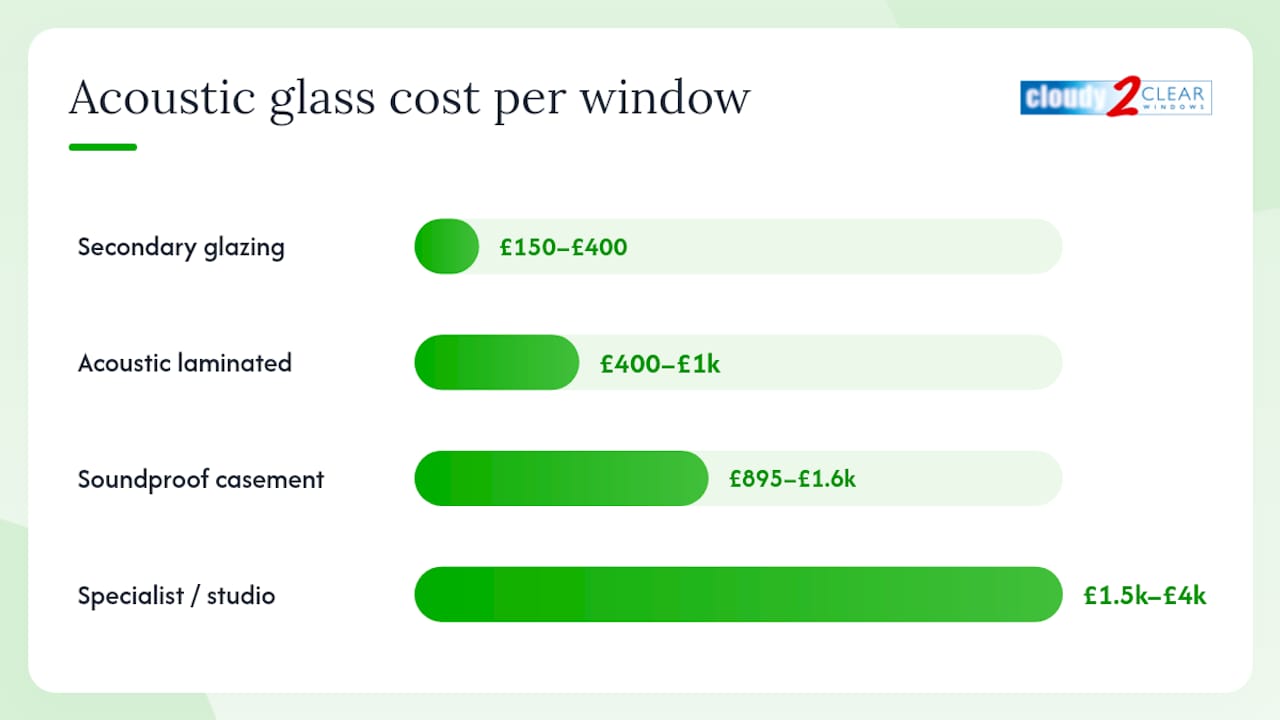
Here’s how the main options break down per window, fitted:
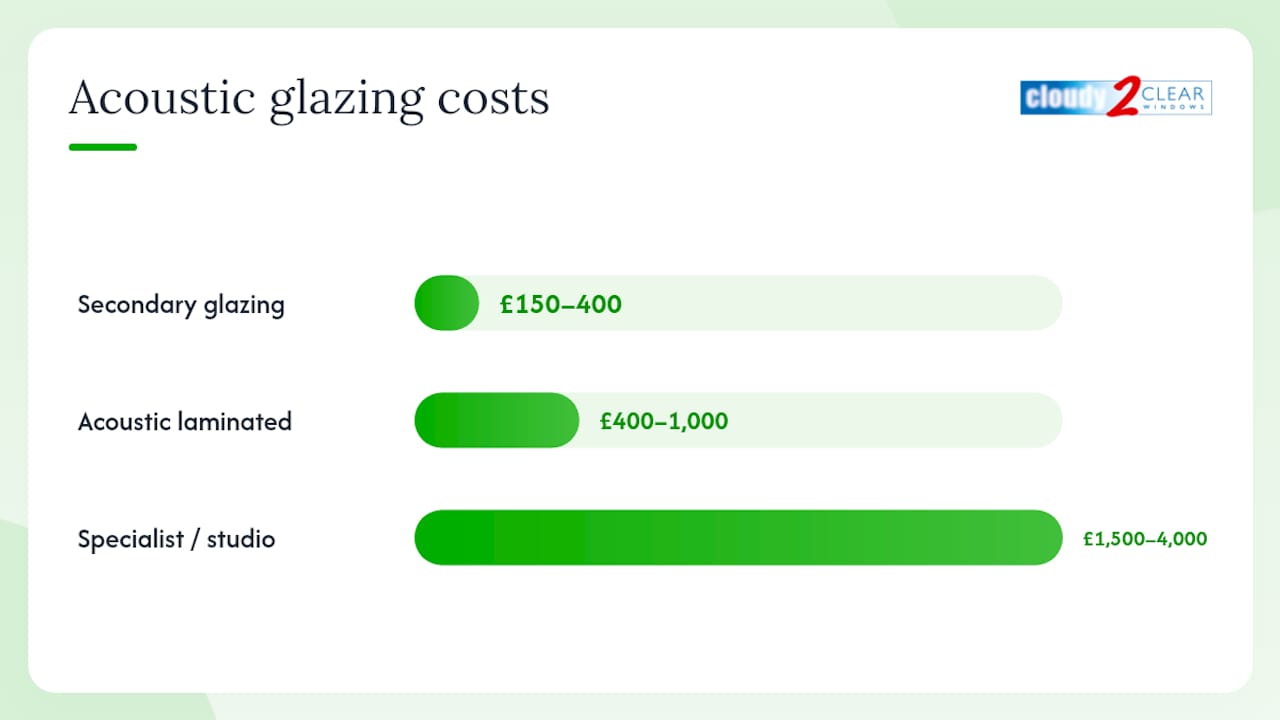
- Secondary glazing: £150 to £400, the most cost-effective retrofit for most rooms
- Acoustic laminated double glazing: £400 to £1,000, rising toward £1,200 depending on frame and glass specification
- Specialist or studio-grade units: £1,500 to £4,000 or more, reserved for extreme noise environments
- Standard soundproof casement windows: around £895 to £1,600 per unit depending on size, with sash windows costing considerably more due to their complexity
For a whole-house upgrade covering eight to ten windows, budget between £4,500 and £12,000 for acoustic double glazing, according to Checkatrade’s cost data. That range reflects window size, frame material and how many rooms genuinely need treating, not just the number of openings in the house.
Regional variance matters too. London and the south east typically sit at the upper end of every band, driven by higher labour day-rates and property access constraints (period conversions, restricted parking, listed building consents). Most quotes you’ll see include installation and VAT, but always confirm this in writing before comparing two figures side by side. A quote that excludes VAT can look £80 to £200 cheaper than one that includes it, without actually being better value.
What does each acoustic glazing option cost and deliver?
Price alone tells you nothing without knowing what sound reduction you’re buying. Here’s the breakdown by solution, with typical performance alongside typical cost.
Secondary glazing adds a second independent pane and frame inside your existing window, creating an air gap that standard double glazing can’t replicate. At £150 to £400 per window fitted, it’s the most cost-effective retrofit available, and it’s often the only option for listed buildings where the original frames can’t be touched. The trade-off is aesthetics and a slight reduction in usable window depth, but the noise reduction can rival far pricier solutions when the air gap is wide enough.
Acoustic laminated double glazing replaces the glass unit itself, usually with a PVB (polyvinyl butyral) interlayer bonded between two panes. This typically costs £400 to £1,000 fitted and delivers Rw values in the mid to high 30s decibels, sometimes touching 40dB with the right specification. Rw is the standard laboratory measurement for how much sound a glazing unit blocks; the higher the number, the quieter the room. Frame type affects the final price. uPVC tends to sit at the lower end of the range, timber and aluminium frames push costs up.
Specialist and studio-grade units cost £1,500 to £4,000 or more per window, and this is where asymmetric pane construction earns its keep. Pairing a thicker outer pane with a thinner inner pane disrupts the resonance frequency that would otherwise let sound pass through both panes equally, improving performance without a proportional cost increase. These units make sense under flight paths, next to mainline railways, or in home recording studios, but they’re overkill for a moderately busy residential street.
Three specification details move both price and performance more than anything else:
- Laminate thickness: thicker PVB interlayers block more sound but add cost and weight
- Cavity width: a wider gap between panes generally improves acoustic performance, up to a practical limit
- Pane asymmetry: mismatched pane thicknesses reduce resonance without needing thicker glass throughout
What makes acoustic glass quotes go up or down?
Quotes for what looks like the same job can differ by hundreds of pounds. These are the factors doing the heavy lifting behind the scenes.
- Frame condition decides whether you need glass-only replacement or a full frame swap. Sound, structurally solid frames let installers fit new acoustic glass units directly, cutting cost and disruption considerably compared with replacing the whole window.
- Window complexity pushes prices up fast. Sash windows, bay windows and oversized picture panes all demand bespoke sizing and more installer time than a standard casement.
- Glass specification (laminate thickness, cavity width, asymmetric panes) adds a marginal premium, often £60 to £150 per window on top of standard double glazing according to trade estimates, though specialist specs can add considerably more.
- Access and labour matter more than people expect. Scaffolding for upper floors, restricted parking, and installer day-rates in high-demand regions all feed into the final figure, and quantity discounts often apply once you’re ordering for six or more windows at once.
Which acoustic glazing option suits your situation?
Matching the solution to the actual noise problem saves money and avoids paying for performance you don’t need.
- Choose secondary glazing for listed buildings, rental properties where you can’t alter the original frames, or when you only need to quieten one or two rooms.
- Choose acoustic laminated double glazing for moderate to heavy road traffic, general neighbourhood noise, or when you’re replacing failed units anyway and want the acoustic upgrade included.
- Choose specialist or studio-grade units only near flight paths, mainline rail corridors, or for dedicated music and recording spaces where standard Rw values aren’t enough.
- Stage the work by room. Bedrooms and home offices usually deliver the most noticeable improvement in daily life, so treating those first lets you spread cost over time rather than committing to a whole-house project immediately.
Pro Tip: Ask installers to quote a target Rw figure rather than just listing materials. Two windows built from similar-sounding specs can perform very differently, and an Rw target gives you a number you can actually compare across suppliers.
How do you get an accurate, comparable acoustic glazing quote?
Getting three quotes that actually mean the same thing takes a bit of preparation. Here’s what to do before you contact anyone.
- Measure and photograph every window you want quoted, noting frame material, approximate age and any visible damage or draughts.
- Ask for the Rw or STC rating on each quote, along with laminate thickness and cavity width, so you’re comparing genuine acoustic performance rather than marketing language.
- Confirm what’s included: scaffold or access equipment, glass disposal, guarantee length, VAT, and estimated lead time from order to fitting.
- Request a written quote rather than a verbal estimate, and ask the installer to state their day-rate assumptions if the job needs more than a single visit.
Most straightforward glass-only replacements complete within a day or two once glass has been manufactured, though lead times for acoustic units often run four to eight weeks depending on specification and supplier backlog.
What does Cloudy2Clear Windows see in real acoustic glazing jobs?
Replacing glass rather than whole frames wherever the frame is still sound can keep acoustic upgrades cheaper and faster than a full window replacement.
Acoustic glazing can reduce external noise by up to 40dB in the right conditions, according to Cloudy2Clear Windows’ own published guidance on acoustic glazing performance. That figure represents a best-case outcome with the right glass specification and cavity width, so always ask installers to confirm the expected Rw for your specific windows in writing.
The practical advice holds regardless of who fits your windows: photograph every affected window, list which rooms matter most, and ask for a written specification before committing. It’s the difference between a quote you can trust and one you’re guessing at.
Why the “just get triple glazing” advice misses the point
Plenty of guides push triple glazing as the default upgrade for noise, but that advice ignores what the research on pane construction actually shows. Asymmetric double glazing, with a deliberately mismatched pane thickness, often outperforms symmetrical triple glazing for pure acoustic performance, at a fraction of the cost. Thickness for thickness’s sake doesn’t beat glass engineered to disrupt resonance.
The bigger gap in conventional advice is treating “acoustic glass” as one product with one price. It isn’t. A homeowner on a quiet cul de sac with one noisy bedroom needs a completely different solution, and budget, to someone living under a flight path. Get the diagnosis right before you get the quote.
If there’s one thing worth prioritising above all else, it’s asking every installer to quote an Rw target rather than a glass thickness. That single change turns a confusing set of quotes into a genuine comparison.
— Cloudy2Clear
Ready to get a quote for acoustic glazing?
If your frames are still in good condition, Cloudy2Clear Windows can fit acoustic glass directly into them, which keeps costs down and avoids the disruption of a full double glazing replacement. That’s the real advantage over starting from scratch with new frames: you pay for the part that actually cuts the noise, not for materials you don’t need to replace.
Cloudy2Clear Windows’ soundproofing and noise reduction service covers everything from single-room upgrades to whole-house projects, and every quote is based on your actual windows rather than a generic estimate. To get an accurate figure quickly, have photographs of each affected window ready, along with rough measurements and a short description of where the noise is coming from (road, rail, neighbours, or something else). Get in touch through the contact page to start the conversation and request a written quote.
Sources
- How Much Do Soundproof Windows Cost? | Checkatrade
- Soundproof windows UK cost 2026 | Axiom Eco Homes
- Soundproof windows UK: Costs & best glazing | Expertsure
- Double glazing cost UK 2026 | BestBuilders
FAQ
How much does soundproof glass cost?
Soundproof glass typically costs £400 to £1,000 per window fitted for acoustic laminated double glazing, or £150 to £400 for secondary glazing as a cheaper retrofit option.
How much do acoustic windows cost?
A full acoustic window, including frame and glass, commonly costs £895 to £1,600 per unit for a casement style, with sash windows costing considerably more due to their complexity.
Is acoustic glass worth the money?
For homes facing heavy traffic, rail noise or nearby flight paths, acoustic glass typically delivers a noticeable, lasting reduction in noise, and glass-only replacement keeps the cost well below a full window swap when frames are still sound.
How much does glass cost in the UK?
Standard double glazing glass typically adds a modest amount to a window’s base price, while acoustic laminated glass adds roughly £60 to £150 per window on top of that, or considerably more for specialist studio-grade specifications.
Does Cloudy2Clear Windows fit acoustic glass?
Yes, Cloudy2Clear Windows offers acoustic glass upgrades as part of its soundproofing and noise reduction service, with pricing available on request based on your specific windows.