A glass conservatory roof in the UK typically costs between £2,000 and £15,000 fitted, with most homeowners settling somewhere in the middle once size, shape and glass spec are factored in. For the standard 12 to 18 square metre conservatory, expect to pay roughly £3,500 to £7,000 for a full supply-and-fit job. Go for a complex shape or top-tier glass and you can expect higher costs.
Here’s the quick breakdown:
- Budget: £2,000 to £3,500 for smaller, simple lean-to roofs with standard toughened glass
- Typical: £3,500 to £7,000 for most 12 to 18m² Edwardian or Victorian roofs
- Premium: £9,000 to £15,000 for large, bespoke shapes with self-cleaning or solar-control glass
The single best recommendation for most UK homes: self-cleaning or solar-control glass. It costs more upfront but earns that money back through lower maintenance and reduced overheating, particularly on south or west-facing rooms.
What does conservatory roof glass cost break down into?
A conservatory roof quote is rarely one flat number. It’s a stack of individual costs, and understanding each one helps you spot a fair price from an inflated one.
Industry price reviews put the overall conservatory roof replacement market between about £2,500 and £12,000, with a typical supplied-and-fitted figure sitting around £6,500. Glass sits at the higher end of that range compared with polycarbonate, but it comes with better clarity, sound insulation and long-term durability.
Here’s how the numbers usually stack up by conservatory size:
- 3x3m conservatory (9m²): roughly £2,500 to £4,000 for standard toughened glass, fitted
- 4x4m conservatory (16m²): roughly £4,500 to £7,500, depending on glass spec and roof shape
- 5x5m conservatory (25m²): roughly £7,000 to £11,000, particularly where the roof includes hips, valleys or a bay
A typical itemised quote should include the glass units themselves, the glazing bars or bar caps that hold them, fitting labour, and new seals and gaskets to stop leaks. What it often excludes is scaffolding access (usually £150 to £400 depending on height and duration), any structural reinforcement to the existing frame, and disposal of the old roof material.
VAT adds 20% on top of most quotes unless you’re VAT-exempt for a specific reason, so always check whether the headline figure you’ve been given is inclusive or exclusive. Waste removal is sometimes bundled in, sometimes charged separately at £50 to £150. If your job needs a building-regulations application, gov.uk publishes the current planning application fees, and it’s worth checking these before you commit to a like-for-like or upgraded specification.
What actually moves the price up or down?
Two conservatories of the same floor area can come back with wildly different quotes. Shape, glass spec, frame condition and where you live all pull the number in different directions.
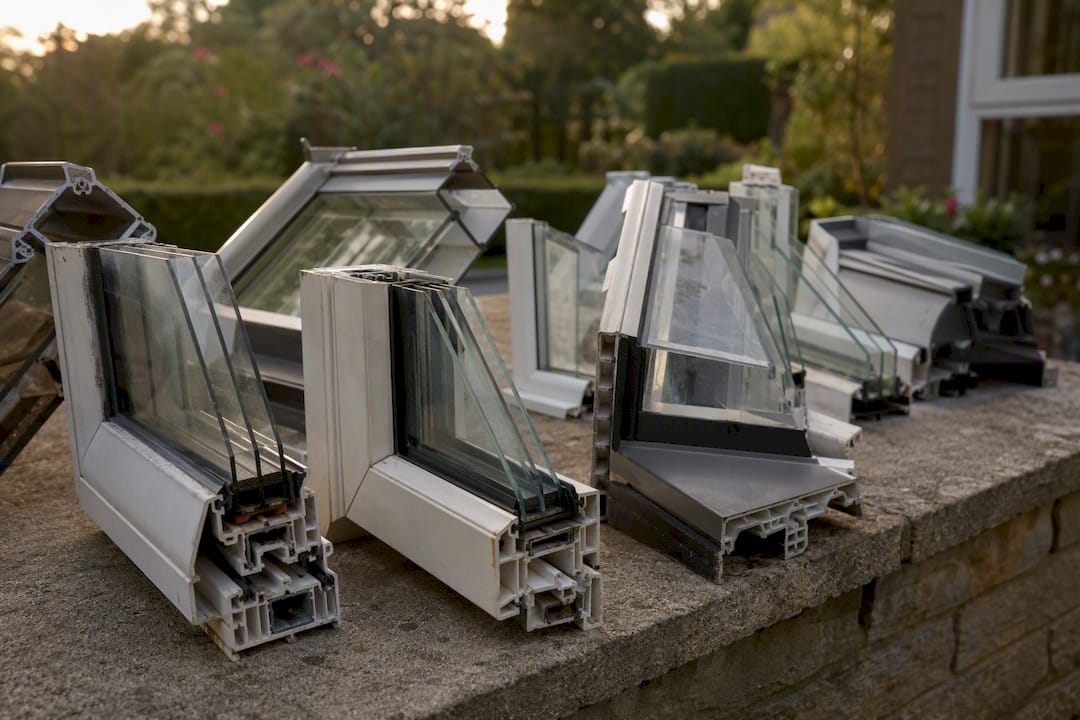
Shape matters more than most homeowners expect. A simple lean-to or Edwardian roof is the cheapest to glaze because the panels are straightforward rectangles. Move to a Victorian, P-shaped or L-shaped roof and you’re commonly paying 15% to 35% more, because those designs need bespoke cuts, hip bars and extra sealing detail around the angles.
Other cost drivers worth flagging:
- Glass specification (self-cleaning, solar-control or smart glass all carry a premium over standard toughened units)
- Frame condition, particularly on conservatories over 15 years old where the uPVC or timber may have degraded
- Access difficulty, such as a roof over an extension or a tight side passage requiring extra scaffolding
- Regional labour rates, which vary noticeably across the country
On that last point, London and the South East typically command a noticeable premium over the Midlands or North for the same specification of work. If you’re quoting installers in Berkshire versus Nottinghamshire, don’t be surprised if the numbers differ by several hundred pounds on an otherwise identical job.
Pro Tip: Ask every installer to itemise frame reinforcement separately from the glass cost. A frame that looks fine from inside the room can still be out of square or rotten at the corners, and that’s usually where “surprise” costs creep in.
Which glass type gives you the best value?
The glass you choose changes both your upfront bill and what you pay to heat and cool the room for years afterwards. Here’s how the main options compare:
- Standard toughened glass: the entry point, usually offering acceptable U-values for a room used occasionally rather than year-round. Fine for a garden room or occasional-use space where budget is the priority.
- Self-cleaning glass: typically adds £1,500 to £2,500 to a roof job. A photocatalytic coating breaks down organic dirt in sunlight and rain washes it away, cutting down on the ladder-and-squeegee routine considerably. Our guide to self-cleaning glass covers how the coating actually works.
- Solar-control glass: usually adds a further £1,500 on top of self-cleaning, and it’s worth it for any south or west-facing conservatory prone to turning into a greenhouse by mid-afternoon. Our piece on solar control glazing breaks down when the premium pays off.
- Smart glass: the newest option, priced around £500 to £700 per square metre for the panel alone, tinting electronically to control light and heat on demand.
Set against polycarbonate (cheaper, noisier in rain, prone to yellowing) or a solid tiled roof (better thermal performance but often needing building-regulations sign-off), glass sits as the balanced middle ground for most homeowners: better clarity and light than either alternative, without the regulatory complexity of a full tiled conversion.
What does a real quote look like for a 12m² Edwardian conservatory?
Take a south-facing Edwardian conservatory, 12m², with a frame in good structural condition that’s under ten years old. No reinforcement needed, straightforward access, based in the Midlands.
| Glass specification | Approximate fitted cost | Notes |
|---|---|---|
| Standard toughened | £3,500 to £7,000 | Baseline; likely to overheat in summer |
| Self-cleaning | £3,500 to £7,000 | Adds low-maintenance coating |
| Solar-control | £3,500 to £7,000 | Reduces heat gain on south-facing aspect |
| Smart glass | £9,000 to £15,000 | Electronic tint control, highest spec |
The jump from standard to solar-control can be a few thousand pounds, but for a south-facing room that’s used through summer, the reduction in overheating and the corresponding drop in fan or air-conditioning use tends to make that money back over time. Homeowners we speak to who’ve made the switch typically describe a simple payback within around nine years when they factor in reduced cooling costs, though this varies with how the room is used.
How do you get reliable quotes and avoid a bad installer?
Getting three quotes is standard advice, but the questions you ask matter more than the number of quotes you collect.
- Ask exactly which glass specification is included — “toughened glass” alone tells you nothing about U-value or coating
- Ask who signs off building regulations, if your job needs them, and get this in writing
- Ask whether frame reinforcement is included or will be quoted separately once they’ve inspected it
- Ask about warranty length and what it actually covers (glass units, seals, workmanship are often separate warranties)
- Ask whether the fitters are direct employees or subcontracted, and check their public liability insurance
Red flags include a quote with no breakdown by line item, pressure to sign on the day for a “special discount,” and any installer unwilling to provide references or evidence of insurance. Reputable installers should offer finance options without pushing them, and a warranty of at least 10 years on the glass units is a reasonable minimum to expect.
Pro Tip: If a quote seems significantly cheaper than the others, ask specifically what U-value the glass achieves. A lower-spec pane dressed up in vague language is the most common way quotes get artificially deflated.
When do you need planning permission for a glass roof?
Swapping like-for-like glass, replacing a failed unit with the same specification, generally sits outside planning permission and building regulations in most cases.
- A straightforward glass-to-glass roof replacement rarely needs sign-off
- Moving to a solid, tiled roof commonly does trigger building-regulations approval, because it changes the structure’s thermal and structural classification
- Any structural alteration, such as removing a supporting wall or extending the footprint, usually needs both planning permission and building control
- Glass and polycarbonate swaps are generally treated more leniently than tiled conversions, which is one reason glass remains the popular choice
Ask your installer directly whether they handle the regulatory paperwork or whether that responsibility sits with you.
What proof points should you look for in an installer?
Cloudy2Clear Windows has been installing, replacing and repairing double glazing across residential and commercial properties since 2005, including conservatory glass, doors, locks and hinges. That length of time in the trade means we’ve fitted glass roofs onto frames in every condition, from newly built extensions to conservatories that hadn’t seen maintenance in over a decade.
A professional service should always include:
- A proper site survey before any quote is finalised, not a desktop estimate
- An itemised written quote covering glass, labour, access and any reinforcement
- Clear warranty terms on both the glass units and the installation work
- Compliance checks for housing association or commercial properties where relevant
When a frame is out of square or showing rot at the corners, fitting expensive glass onto it without addressing the frame first is money wasted. A proper survey catches this before it becomes an expensive surprise mid-installation.
Why the “cheapest glass” advice usually costs homeowners more
Most cost guides push readers towards the lowest headline figure, and that’s the wrong instinct for a conservatory roof specifically. A conservatory lives or dies on its glass. Get the spec wrong and you’ll either bake in summer or freeze in winter, then spend the savings on fans, heaters or a second renovation five years later.
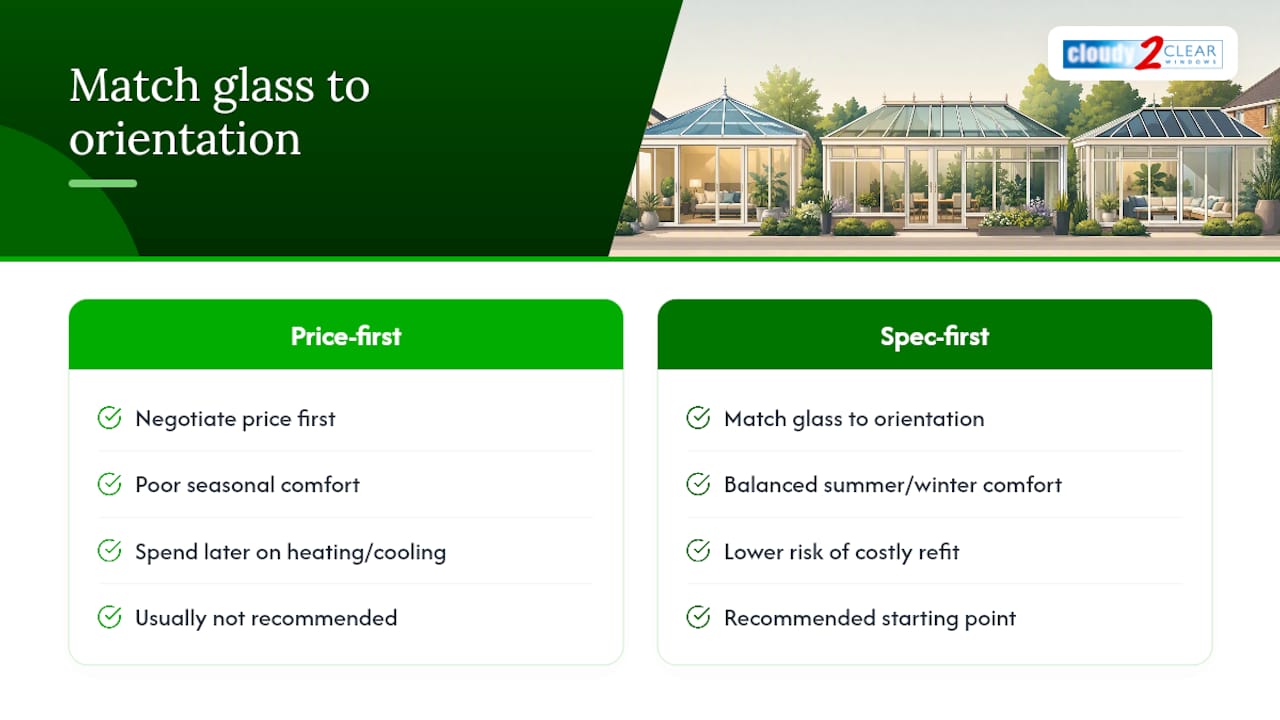
Where conventional advice falls short is treating glass as a single line item rather than a performance decision tied to orientation. A north-facing garden room and a south-facing family space have completely different requirements, yet they’re routinely quoted the same “standard glass” price. That’s backwards.
If you take one thing from this guide, prioritise matching glass spec to your conservatory’s orientation before you even start comparing quotes. Get that right first, then negotiate on price. Homeowners who reverse this order tend to end up with a room they don’t actually want to sit in.
Cloudy2Clear Windows: how we can help and next steps
If you’ve read this far, you already know that getting the glass specification right matters as much as the price on the page. Cloudy2Clear Windows fits and replaces conservatory glass, repairs conservatory windows, and carries out inspection work for homeowners and housing associations alike, so whether you need a full roof replacement or a single cracked pane sorted, it’s the same team handling the job.
Booking starts with a survey, not a sales call. We’ll assess your existing frame, talk through glass options against your conservatory’s orientation, and provide an itemised quote with clear warranty terms before any work begins. Our service hours run Monday to Friday, 8:30am to 6:30pm.
If you’re in the Milton Keynes area and thinking about a conservatory roof glass upgrade, get in touch with our Milton Keynes double glazing team for a survey date. For readers elsewhere, our conservatory window replacement and glass repair page has full details on what a supply-and-fit service includes and how to request a quote.
Sources
- Glass Conservatory Roof Cost UK 2026: What You’ll Pay & When to Choose Glass
- Conservatory roof replacement cost calculator 2026 | Costwise
- Fees for planning applications
- Conservatory roof replacement cost guide 2026
FAQ
What type of glass is best for a conservatory roof?
Self-cleaning or solar-control glass suits most UK conservatories, particularly south or west-facing rooms prone to overheating. North-facing rooms can often manage with standard toughened glass or a high-performance low-e option to preserve natural light.
How much does a 3x3m conservatory cost in the UK?
A 3x3m (9m²) conservatory roof in glass typically costs between £2,500 and £4,000 fitted, depending on shape and glass specification chosen.
How much does it cost to replace the roof of a conservatory in the UK?
Conservatory roof replacement in the UK generally costs between £2,500 and £12,000, with glass roofs for a typical 12 to 18m² space most commonly landing between £3,500 and £7,000.
Is a glass roof cheaper than tiles?
Glass roofs are usually cheaper upfront than solid tiled conversions and are less likely to trigger building-regulations sign-off, though tiled roofs can offer better thermal performance in some cases.