Proper double glazing care transforms UK homes and businesses by preserving energy efficiency and preventing costly repairs. Your windows face constant pressure from British weather, making maintenance critical. Regular biannual inspections detect seal failures up to 80% earlier, reducing expensive replacements. This guide delivers practical steps to extend window lifespan, improve comfort, and protect your investment through simple yet effective maintenance routines.
Introduction to Double Glazing Care
Double glazing improves energy efficiency and reduces noise in properties across England and Scotland. These windows create thermal barriers that slash heating costs and block external sound. UK weather demands robust window performance year round.
British climate variations stress window seals through temperature swings, rain, and humidity. Winter frost contracts materials while summer heat expands them. Proper care extends window lifespan by years, saving thousands on premature replacements.
Economic benefits multiply over time. Maintained windows preserve insulation properties, reducing energy bills month after month. Businesses benefit from consistent indoor temperatures without excessive HVAC costs.
Neglecting maintenance triggers cascading problems:
- Condensation forms between panes when seals fail
- Energy efficiency drops by 20 to 30 percent
- Frames deteriorate from moisture exposure
- Replacement costs reach £400 to £800 per window
Regular care prevents these issues before they escalate. Understanding double glazing lifespan factors helps you protect your investment strategically.
Prerequisites: What You Need Before Starting
Gathering proper tools ensures safe, effective maintenance without damaging seals or glass. Quality materials protect your investment better than improvised alternatives.
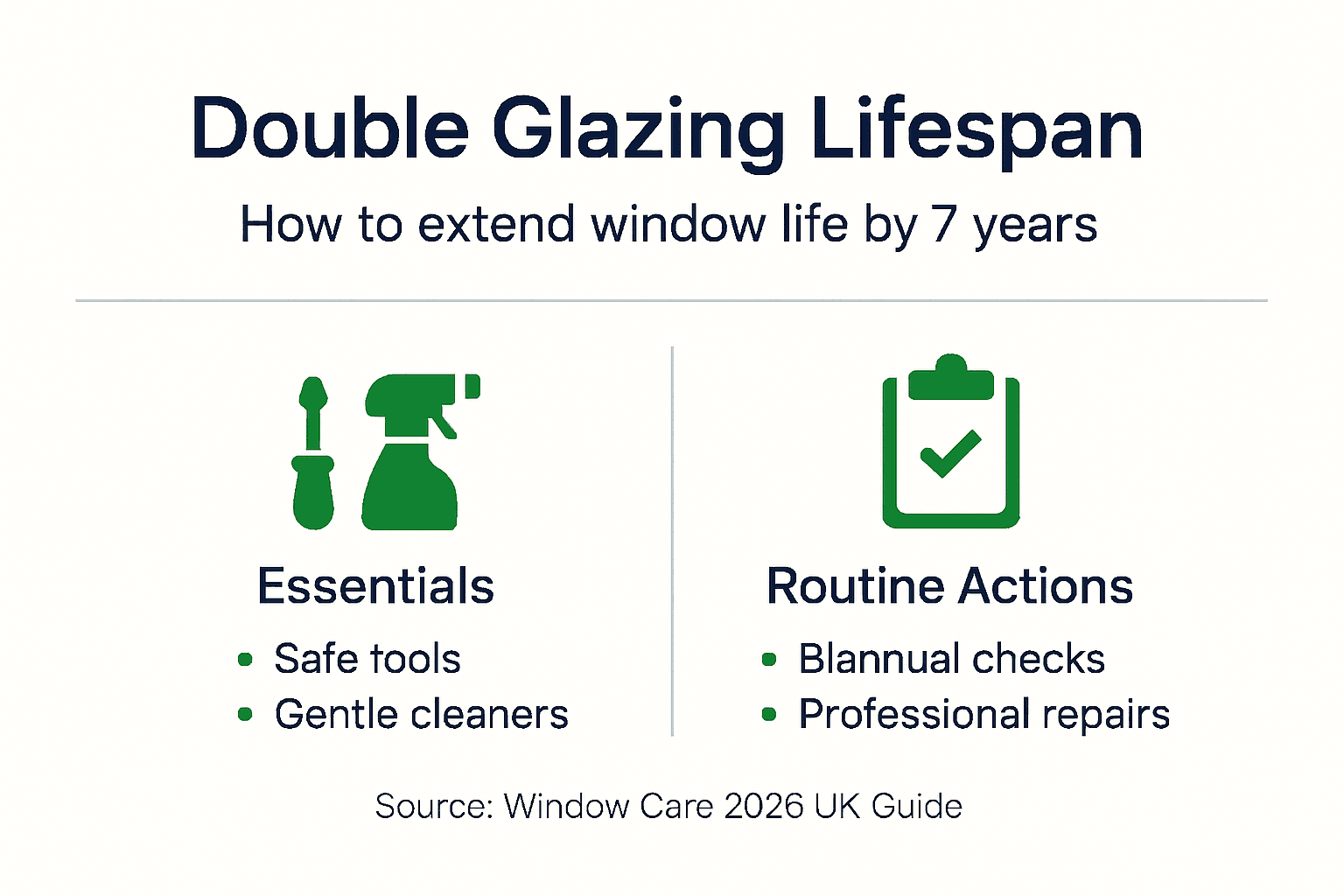
Essential cleaning materials include:
- Microfiber cloths that trap dirt without scratching
- Diluted ammonia-free detergent for gentle cleaning
- Stable ladder for upper floor access
- Protective gloves to shield hands
- Soft bristle brush for frame crevices
Basic knowledge about window construction prevents accidental damage. Seals bond glass panes and require gentle treatment. Using soft microfiber cloths and ammonia-free cleaners prevents damage to seals and glass surfaces.
Safety preparations matter when working at height. Secure ladders on level ground. Work with a partner for upper storey windows. Check weather conditions to avoid slippery surfaces.
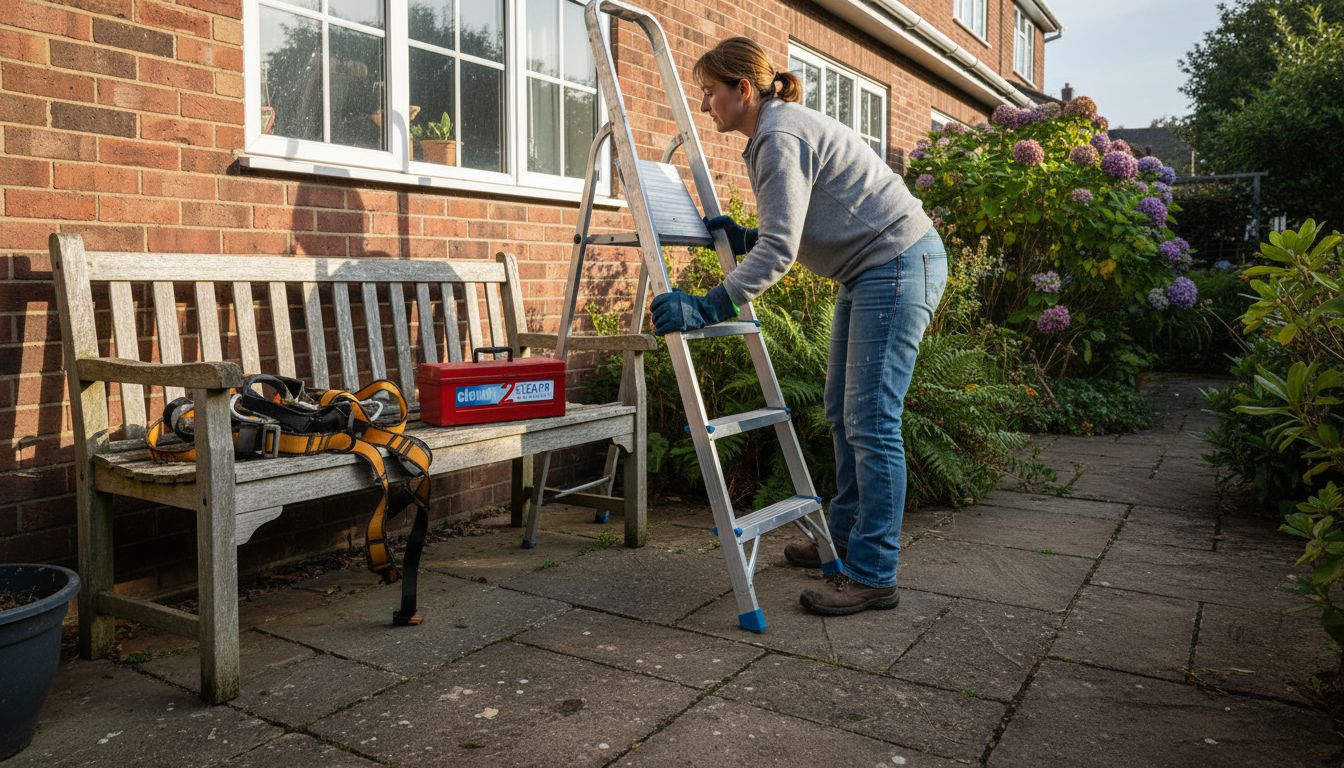
| Tool | Purpose | Safety Note |
|---|---|---|
| Microfiber Cloths | Lint-free glass cleaning | Wash regularly to remove grit |
| Ammonia-Free Detergent | Safe seal-friendly cleaning | Dilute as directed on label |
| Stable Ladder | Upper floor access | Place on firm, level surface |
| Protective Gloves | Hand protection | Choose non-slip grip varieties |
| Silicone Lubricant | Hinge and handle maintenance | Apply sparingly to moving parts |
Having correct tools for window maintenance ready streamlines the process. Purchase quality products once rather than replacing cheap alternatives repeatedly.
Proper Cleaning Techniques
Cleaning double glazed windows correctly preserves seals and coatings for years. Wrong products or methods accelerate deterioration and void warranties.
Ammonia-based cleaners degrade glazing sealants within weeks if used repeatedly. These harsh chemicals break down rubber and silicone compounds essential for thermal performance. Choose pH-neutral cleaners designed for glazing instead.
Follow these steps for optimal results:
- Mix diluted ammonia-free detergent in lukewarm water.
- Dampen microfiber cloth without saturating it.
- Wipe glass in circular motions from top to bottom.
- Clean frames using same gentle solution and fresh cloth.
- Dry immediately with separate clean microfiber cloth.
- Inspect for streaks and buff if needed.
Avoid abrasive materials entirely. Steel wool, scouring pads, and rough cloths scratch glass permanently. High-pressure washers force water behind seals, causing internal condensation.
Frame materials need compatible cleaners. uPVC tolerates mild detergents but suffers from solvent-based products. Wood frames require specialised cleaners that nourish timber while removing dirt. Aluminium tolerates most gentle solutions without issue.
Pro Tip: Clean windows on overcast days when temperatures stay moderate. Direct sunlight dries cleaning solution too quickly, leaving streaks and water spots. Early morning or late afternoon works best during sunny weather.
Practising safe cleaning methods for double glazing protects your investment while maintaining clarity. Consistency matters more than intensity when establishing maintenance routines.
Regular Inspection for Seal Integrity
Catching seal problems early prevents expensive emergency repairs and full window replacements. Visual checks take minutes but save substantial money long term.
Regular biannual inspections detect seal failures up to 80% earlier, reducing costly replacements. Spring and autumn inspections align with seasonal weather changes that stress seals most.
Look for fogging or condensation between panes as early signs of seal failure. Internal moisture appears as persistent fog, water droplets, or mineral deposits between glass layers. External condensation disappears when wiped. Internal moisture never clears.
Inspect every six to twelve months for best results. Commercial properties with heavy use benefit from quarterly checks. Residential homes typically manage with biannual reviews.
Use this inspection checklist:
- Check for condensation or fogging between panes
- Test window opening and closing for smooth operation
- Examine seals for cracks, gaps, or deterioration
- Look for frame warping or discolouration
- Feel for drafts around closed windows
- Listen for rattling when windows are closed
Early detection transforms major problems into manageable repairs. Catching seal failure within months costs £150 to £300 for professional resealing. Waiting until complete failure forces full replacement at £400 to £800 per window.
Document findings with photos and dates. Tracking changes over time reveals deterioration patterns. This evidence helps professionals diagnose issues accurately during consultations.
Double glazing seal inspection tips from professionals emphasise systematic approaches. Create calendar reminders to maintain consistent inspection schedules.
Additional Maintenance Steps
Beyond basic cleaning, supplementary tasks keep windows operating smoothly between professional services. Small actions compound into significant lifespan extensions.
Annual lubrication of hinges with silicone-based products keeps window components operating smoothly. Metal parts corrode without protection, especially in coastal areas with salt air exposure.
Perform these maintenance steps seasonally:
- Apply silicone lubricant to hinges, handles, and locking mechanisms each spring.
- Clear drainage channels in frames to prevent water accumulation.
- Use anti-fog spray on interior glass if minor condensation appears.
- Tighten loose screws in handles and hinges before they strip.
- Check weatherstripping for gaps and replace worn sections.
Drainage channels collect water that enters frame cavities during heavy rain. Blocked channels cause moisture buildup, encouraging mould growth and frame rot. Clear debris with thin wire or compressed air quarterly.
Anti-fog treatments provide temporary relief for minor condensation. These sprays create hydrophobic coatings that prevent moisture from obscuring glass. They work for surface condensation only, not sealed unit failures.
Pro Tip: Schedule maintenance tasks with seasonal changeovers. Lubricate before winter to ease operation in cold weather. Clear drainage before autumn rains. This rhythm prevents forgetting crucial upkeep.
Find anti-fog and lubrication tips tailored to British climate challenges. Regional weather patterns influence maintenance priorities and frequencies.
Common Mistakes and How to Avoid Them
DIY enthusiasm sometimes causes more harm than good. Understanding frequent errors helps you avoid expensive repairs from well-intentioned maintenance.
About 20% of reported double glazing failures in UK properties result from improper cleaning such as high-pressure washing. These preventable problems cost homeowners and businesses millions annually.
Avoid these critical mistakes:
- Never use ammonia, bleach, or acetone-based cleaners that destroy seals rapidly
- Avoid abrasive pads, scrapers, or harsh brushes that scratch glass permanently
- Do not ignore early condensation signs hoping problems resolve themselves
- Never apply high-pressure water near seals or frame joints
- Avoid complex repairs without professional assessment to prevent worsening damage
- Do not paint over drainage holes or ventilation gaps in frames
Correct these errors immediately if discovered. Switch to pH-neutral cleaners. Replace scratched glass before cracks develop. Address condensation within weeks of first appearance.
Many attempt DIY seal repairs with hardware store kits. These temporary fixes last one to two years maximum. Professional resealing uses superior materials and techniques that extend performance five to seven years.
Painting window frames requires care around seals and moving parts. Mask rubber components completely. Avoid thick paint buildup in drainage channels. Use exterior-grade paint formulated for frame materials.
Study avoiding common mistakes in window care to protect your investment. Learning what not to do proves as valuable as proper technique knowledge.
Professional Repairs: When and Why
Recognising when DIY efforts fall short saves money and frustration. Professional intervention delivers superior results for complex issues.
Professional resealing extends double glazing lifespan by 5 to 7 years versus 1 to 2 years for DIY fixes. Technicians use commercial-grade sealants unavailable to consumers. Their experience ensures proper application and curing.
| Approach | Lifespan Extension | Typical Cost | Warranty |
|---|---|---|---|
| DIY Seal Repair | 1 to 2 years | £30 to £60 | None |
| Professional Resealing | 5 to 7 years | £150 to £300 | 2 to 5 years |
| Full Replacement | 15 to 25 years | £400 to £800 | 10 to 15 years |
Seek professional help when:
- Condensation appears between glass panes consistently
- Seals show visible cracks, gaps, or crumbling
- Windows become difficult to open or close
- Drafts penetrate despite closed windows
- Energy bills increase noticeably without usage changes
Early professional assessment helps avoid costly replacements and maximises energy efficiency. Technicians identify root causes, not just visible symptoms.
Professional benefits extend beyond repairs. Experts assess frame condition, hardware functionality, and overall system performance. They catch problems you might miss during routine inspections.
Cost versus benefit analysis favours professional intervention for seal failures. Spending £200 for five years of restored performance beats £600 replacement costs. Calculate payback periods based on energy savings and avoided replacement expenses.
Explore professional double glazing repairs to understand service options. Review cost benefits of professional repairs for financial planning.
Expected Outcomes and Maintenance Frequency
Understanding realistic timeframes and results helps maintain motivation for consistent care. Small investments yield substantial returns over window lifespans.
Routine maintenance takes 30 to 60 minutes twice a year and delays replacements by up to 7 years. This minimal time commitment translates to thousands in savings per property.
Energy efficiency is maintained at peak levels with regular care. Well-maintained double glazing preserves U-values and thermal performance specifications throughout its service life.
Maintenance frequency guidelines:
- Clean glass and frames twice yearly minimum
- Inspect seals and hardware every 6 to 12 months
- Lubricate moving parts annually before winter
- Clear drainage channels quarterly in wet regions
- Schedule professional assessment every 3 to 5 years
Typical outcomes from consistent maintenance include:
- Window replacement delayed 5 to 7 years beyond typical lifespan
- Energy costs reduced 15 to 20 percent compared to neglected units
- Indoor comfort improved through consistent thermal performance
- Property value maintained with well-kept windows
- Repair costs minimised through early problem detection
Commercial properties see additional benefits. Professional appearance impresses clients and customers. Reliable climate control reduces HVAC strain and maintenance costs. Employee comfort improves productivity.
View maintenance as investment rather than expense. Two hours yearly protecting assets worth thousands makes financial sense. Calculate savings by comparing maintenance costs against replacement expenses and energy waste.
Learn about maintenance benefits and timelines to plan long-term property care strategies.
Explore Our Expert Double Glazing Care Services
Maintaining double glazed windows requires knowledge, proper tools, and consistent effort. When professional help makes sense, Cloudy2Clear Windows delivers expertise honed since 2005.

Our team understands British climate challenges intimately. We’ve served homes and businesses across England and Scotland for two decades. Whether you need guidance on expert double glazing maintenance tips or require professional double glazing repairs, we’re here to help.
Schedule an assessment to evaluate your windows’ current condition. Our specialists identify issues early, recommend cost-effective solutions, and extend your windows’ productive lifespan. Contact us today to protect your investment and enhance comfort.
FAQ
How often should I inspect my double glazed windows for signs of seal failure?
Inspect windows every 6 to 12 months for best maintenance results. Spring and autumn inspections align with weather changes that stress seals most. Early detection prevents expensive repairs and maintains energy efficiency. Check window inspection frequency recommendations for your property type.
What cleaning products are safe to use on double glazed windows?
Use diluted ammonia-free detergents with soft microfiber cloths for optimal cleaning. Avoid bleach, ammonia, acetone, and abrasive tools that damage seals and glass. pH-neutral cleaners preserve window components without compromising thermal performance. Review safe cleaning products suitable for different frame materials.
When should I consult a professional for double glazing repairs?
Seek professional help immediately if condensation appears between panes or seals show visible damage. Professional repairs last 5 to 7 years compared to 1 to 2 years for DIY attempts. Early intervention avoids costly full replacements. Learn about professional double glazing repair timing to make informed decisions.
How long can proper maintenance extend the life of double glazed windows?
Maintenance extends window life by up to 7 years beyond typical 15 to 20 year lifespans. Regular care preserves energy efficiency, prevents premature seal failure, and delays expensive replacements. Consistent biannual maintenance delivers maximum value. Explore double glazing lifespan extension factors for your property.