Condensation on Velux roof windows almost always means the air inside your home is holding more moisture than it can lose to the glass, not a fault with the window itself. The fastest fix is ventilation: crack a window or trickle vent for a few minutes and wipe away any mist or mould straight away. If moisture keeps appearing between the panes, or you see steady dripping rather than a light mist, that points to a failed seal or an installation fault, and it’s time to book a professional inspection.
What causes condensation on Velux windows?
Condensation forms when warm, moisture-heavy air meets a cold surface and can’t hold onto its water vapour any longer. Glass is usually the coldest surface in the room, especially at roof level where heat rises and escapes fastest, so Velux windows often mist up before anything else in the house.
Your daily routine generates more of that moisture than you’d think. An average household of four produces several litres of water vapour a day from cooking, bathing and drying laundry indoors, and in a well-sealed modern home, that moisture has nowhere to go unless you let it out.
A few things tend to make roof windows worse than standard ones:
- Airtight homes and blocked trickle vents trap warm, moist air near the ceiling, right where roof windows sit.
- Installation faults, such as missing insulation under the flashing, create localised cold spots that attract condensation.
- Where the moisture appears tells you what’s wrong: light surface mist usually means humidity, dripping suggests a bigger airflow problem, and moisture trapped between the panes points to a sealed unit failure.
Quick fixes you can try today
Before anything else, tackle the humidity at its source. Most Velux condensation clears up within a week or two once you change a few habits.
- Ventilate little and often. Open trickle vents or crack the window briefly a few times daily, ideally with a door or another window open elsewhere to create airflow across the room…
- Run extractor fans properly. Switch them on while cooking or showering, and leave them running for a few minutes afterwards, since most of the moisture escapes after you’ve finished, not during.
- Bring in a dehumidifier if humidity stays high. Portable compressor models work well in most rooms; desiccant models cope better in cold conservatories or unheated lofts. Aim to keep relative humidity between 40 and 50%.
- Build in small daily habits. Wipe the glass and frame each morning, dry laundry outside or in a vented tumble dryer rather than on an indoor rack, and put lids on pans when boiling.
- Try short-term insulating measures if you need a stopgap. Anti-condensation paint and insulating film can reduce misting temporarily, though neither solves the underlying humidity problem, and both are cosmetic fixes rather than cures.
Pro Tip: Leave a small gap behind blinds and curtains overnight. A closed blind traps warm air against cold glass and almost guarantees a damp windowsill by morning.
How do you tell condensation from a leak or seal failure?
Not every damp patch on a Velux window is condensation, and treating a leak as a humidity problem wastes time while the damage underneath gets worse. Start by checking where the moisture actually is.
- Misting confined to the inside of the glass, which clears once you air the room, is ordinary condensation.
- Persistent moisture or a visible haze trapped between the panes means the sealed unit has failed and needs replacing, not drying out.
- Damp plaster, a stained reveal, or wet insulation around the frame usually points to a flashing or installation fault rather than humidity.
A simple test used by installers is to check whether the plaster or insulation behind the lining is damp, which signals a thermal bridge or fitting fault, or whether the moisture sits only on the glass surface, which points to humidity in the room. Around one in three homeowner call-outs for “leaking” roof windows turns out to be internal condensation rather than a genuine leak, which is why this check matters before anyone reaches for a sealant gun. If wiping and ventilating for a week makes no difference, or mould keeps returning despite your best efforts, that’s your signal to stop troubleshooting and get the window looked at.
Preventing condensation through better installation
Some condensation problems aren’t behavioural at all. They’re baked into how the window was fitted, and no amount of airing will fix them.
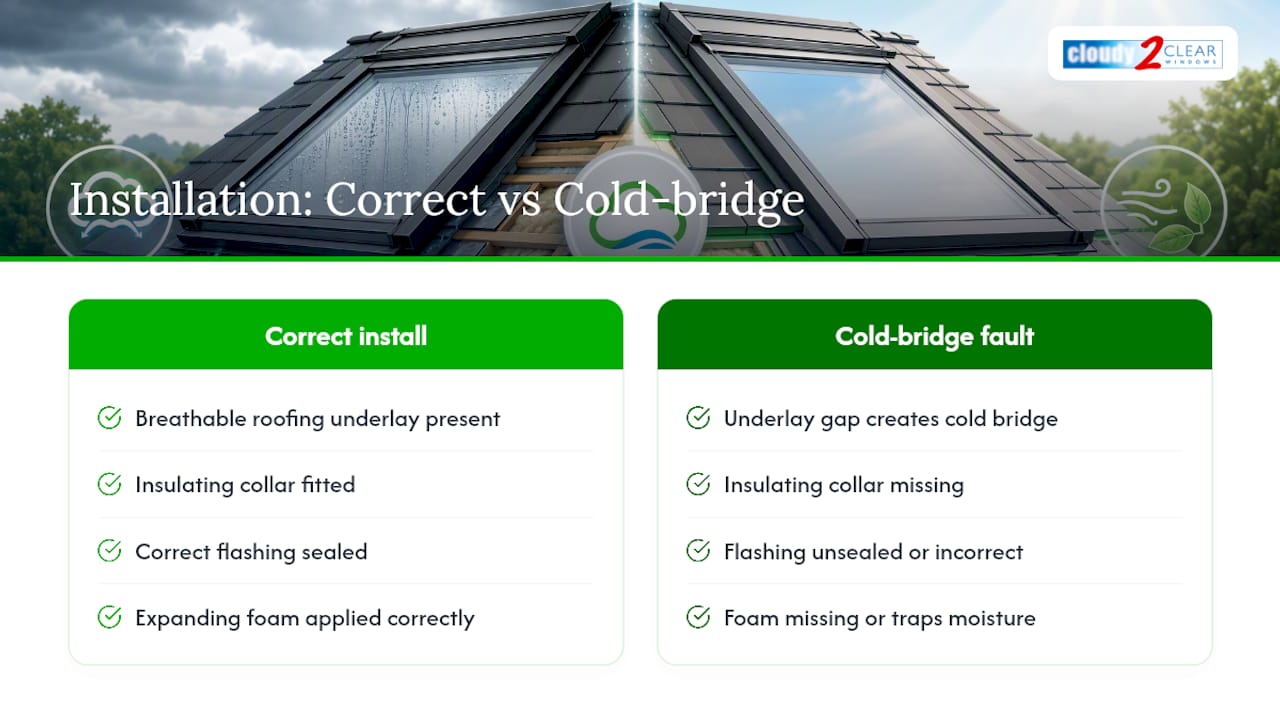
Insulation under the flashing matters more than most homeowners realise. A gap here creates a cold bridge that draws condensation to one spot on the frame, no matter how well ventilated the room is. Trade guidance recommends fitting an insulating collar and correct flashing around the window to close that gap properly.
The way the internal reveal is finished plays a bigger role than it looks. Boxed-in linings restrict warm air from moving across the glass, while splayed plasterboard reveals let air circulate and keep the surface closer to room temperature. This is often a straightforward retrofit on older installations.
Pro Tip: If your Velux window was fitted more than ten years ago and still has a boxed-in reveal, ask an installer whether re-splaying it is worth doing alongside any other repair, since it’s a small job that pays off for years.
Anything involving under-flashing insulation, resealing, or flashing replacement should go to a certified installer. Warranty-safe insulation typically combines a breathable roofing underlay, an insulating collar, and expanding foam applied correctly to avoid trapping moisture in the roof structure, and getting this wrong yourself can void your warranty.
Routine maintenance that stops problems early
A quick annual check catches most Velux problems before they turn into repairs.
- Test the trickle vents open and closed to confirm they’re not painted or dust-sealed shut.
- Inspect gaskets and seals for cracking, and check the flashing for lifted edges or gaps.
- Look closely at the glass for any haze between the panes, which won’t wipe away and signals seal failure.
- Clean mould with a mild bleach or vinegar solution, then dry the area thoroughly to protect the wood frame; if staining keeps returning through fresh paint, that usually means rot underneath rather than surface mould.
- Keep a hygrometer in the room and aim for that same 40 to 50% humidity range year-round.
What we see on a typical Velux repair visit
Most of the call-outs we get for “Velux condensation” turn out to be one of three things: a blocked trickle vent, a perished gasket, or missing insulation under the flashing. Vent clearance and gasket replacement are usually same-day jobs. Insulation and flashing corrections take longer, since they involve working from the roof side.
On a diagnosis visit, we check the trickle vent function, run a hand around the frame for cold spots, inspect the flashing from outside where access allows, and look for any haze between the panes that would point to a failed sealed unit rather than a surface issue.
Cloudy2Clear Windows has been repairing and replacing double glazing since 2005, with a specific focus on Velux window repairs across both homes and commercial buildings. If you’re not sure whether your window needs a repair or a full replacement, that’s exactly what a diagnosis visit is for.
Our take: ventilation first, but don’t stop there
Most advice on Velux condensation stops at “open a window,” and while that’s genuinely the right first move, it lets too many homeowners assume every damp pane is their fault. It isn’t always. We’ve seen plenty of cases where someone spent months airing rooms and running dehumidifiers against a problem that was actually a missing insulation collar or a failed seal that no amount of ventilation was ever going to fix.

The conventional advice also underplays how much modern, airtight homes change the picture. A house built or renovated to today’s insulation standards behaves differently to a draughty older property, and ventilation habits that worked for your parents’ generation may not be enough on their own now.
Our honest priority order: fix your daily habits first, since they’re free and solve most cases within days. Then check for patterns, cold spots, or between-pane haze that habits alone won’t touch. Only then think about whether an installer needs to get involved, and don’t wait months to find out.
Get a warranty-safe inspection from Cloudy2Clear Windows
Cloudy2Clear Windows gives you a fixed-scope alternative to guesswork: rather than trying insulating film, paint, and vent adjustments one by one, a single diagnosis visit tells you exactly whether you’re dealing with humidity, a failed seal, or a flashing fault, and what it will cost to fix.

Call us if you’re seeing mould return despite regular airing, moisture trapped between the panes, or damp plaster around the frame that suggests a flashing leak. On a visit, we check trickle vent function, inspect visible seals and flashing, and confirm whether you need a glass-only replacement or a smaller repair. Any work we recommend under flashing or around the sealed unit is carried out in a way that protects your existing warranty. Cloudy2Clear Windows operates through regional branches, including Milton Keynes, so book a visit through your nearest branch or get in touch via our contact page to arrange a quote.
Sources
For manufacturer advice, see VELUX’s condensation guidance. For humidity control at home, see our step-by-step condensation workflow.
- What should I do when I have condensation on my window? | VELUX Support
- How to Prevent Condensation on Roof Windows | Sterling Build
- Avoiding dripping roofs | BRE Group
- What is normal humidity in a house? | Homebuilding
FAQ
How do I stop my skylight from dripping condensation?
If dripping continues after a week of consistent airing, the cause is likely a seal or installation fault rather than humidity.
What are some common problems with Velux windows?
The most common issues are blocked trickle vents, worn gaskets, and thermal bridging from missing insulation under the flashing. Between-pane haze or persistent damp plaster around the frame usually points to a failed sealed unit rather than a general humidity problem.
Can Velux windows be resealed?
Perished gaskets around the frame can be replaced, but a failed sealed glazing unit itself can’t be resealed and needs replacing. A Cloudy2Clear diagnosis visit can confirm which repair applies to your window.
Should you leave Velux vents open?
Yes, keeping trickle vents open is one of the simplest ways to reduce condensation, since it lets moist air escape before it settles on the cold glass. Close them only briefly during extreme weather, and reopen them as soon as conditions ease.