Replacing the glass in an existing French door typically costs between £150 and £450 installed, depending on panel size and glass specification. Frame condition is the deciding factor: sound frames make glass-only replacement possible, but warped or rotten frames usually force a full door swap instead. UK regulations also require safety glass in doors, so always ask for a site survey and a written quote before committing.
What does French door glass cost break down into?
A quote for French door glass replacement is built from three components: the glass unit itself, labour, and any extras the job throws up. Understanding each one helps you spot a fair price from an inflated one.
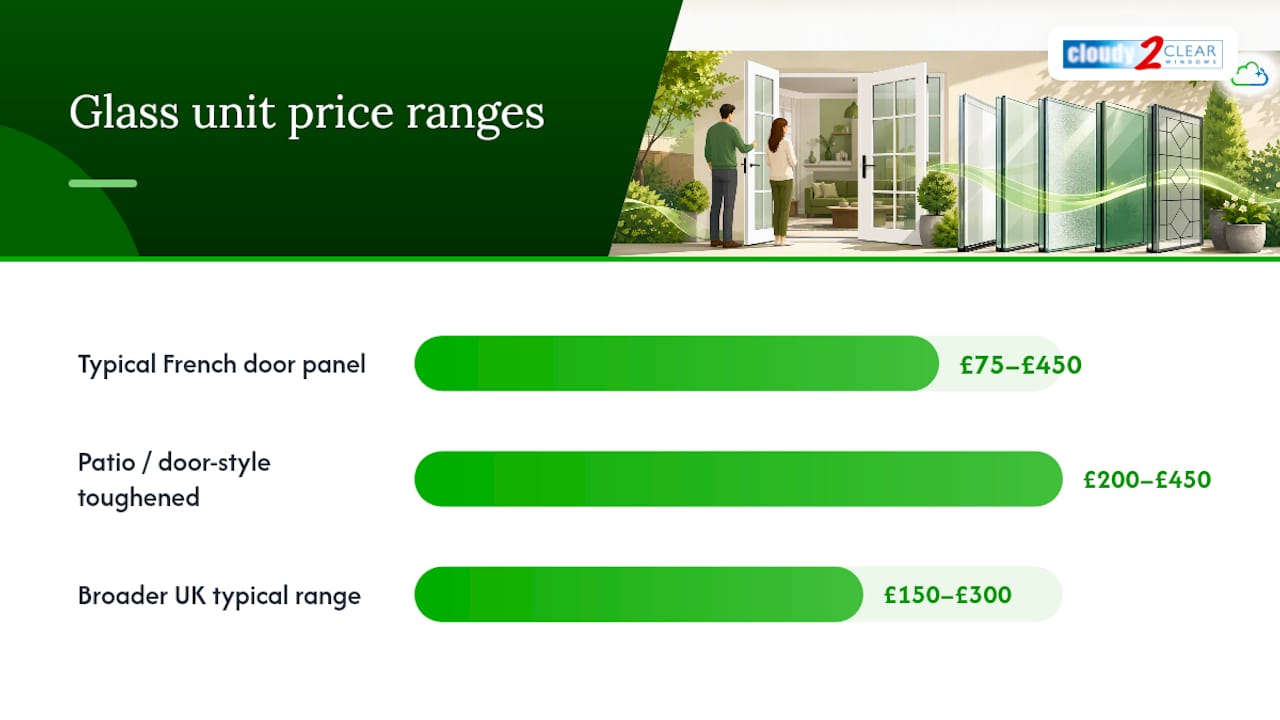
The glass unit is usually the biggest single line. A made-to-measure double-glazed, toughened sealed unit for a typical French door panel commonly runs from around £75 up to £450, with blown or misted sealed units for patio and door-style toughened glass often landing between £200 and £450, while standard casement-sized units sit at the lower end of that range. Broader UK figures for double glazed door glass replacement frequently sit around £150 to £300, which lines up well with what most French door owners should expect to pay for a single panel, installed.
Labour is often quoted as part of a fixed job price rather than a separate hourly rate, though some tradespeople will charge per hour for smaller jobs. Expect the installer’s time on site to be the second-biggest cost driver, particularly where access is awkward or the door sits above ground level.
Beyond glass and labour, a few extras can nudge the final bill up:
- New beading, gaskets, or seals if the originals are damaged during removal
- Disposal of the old sealed unit, particularly for larger or heavier panels
- Call-out charges for urgent or same-day appointments
- Access costs where scaffolding or additional support is needed for upper-floor doors
If you’re replacing glass in more than one door or window at the same visit, ask about a multi-unit discount. Installers save on travel and setup time when doing several panels together, and that saving often gets passed on. Readers weighing up a wider project might also find our guide on how much it costs to replace double glazing useful for comparing glass-only work against a fuller refit.
One more thing worth flagging: prices in London and the south-east tend to run higher than the rest of the country, reflecting both labour rates and demand. If you’re quoted a price that seems unusually low for your region, ask what’s been left out.
What makes French door glass pricing go up or down?
Several variables shift the price beyond the basic glass-and-labour formula.
Unit size and shape matter more than most people expect. French doors often carry larger panels than standard windows, and non-standard or curved shapes cost more to manufacture because they can’t be cut from stock sizes.
Glass specification changes the price meaningfully:
- Toughened glass costs more than standard float glass but is usually the minimum legal requirement for door glazing
- Laminated glass costs slightly more again and offers better security and sound dampening
- Low-E coatings for energy efficiency add a modest premium but reduce heat loss
- Obscure or frosted glass, often used for privacy in utility areas, carries a small surcharge for the pattern process
Frame condition is the detail that determines whether glass-only replacement is even an option. A sound, square, well-sealed frame allows a straightforward sealed-unit swap. A frame that’s swollen, cracked, or rotten at the corners often can’t hold a new unit securely, which pushes the job towards full door replacement. This is why sealed-unit replacement stays substantially cheaper than full frame replacement only when the frame itself is worth keeping.
Bespoke features such as leaded lights or decorative glazing bars add cost because they require specialist fabrication rather than a standard cut. And, as mentioned above, doing several units together lowers the price per panel.
Pro Tip: Ask your installer to inspect the gaskets and drainage channels, not just the glass. A tired gasket is cheap to replace now and expensive to ignore later, since it’s often what lets moisture in and causes the next misted unit.
Do French doors need safety glass by law?
Yes. Under Approved Document K, glazing at low level in doors must be safety-rated, meaning toughened or laminated glass, to reduce injury risk from impact. This applies to French doors just as it does to any other glazed door, because the glass sits within reach of someone falling or walking into it.
Any written quote you receive should state the glass type explicitly, not just “double glazed unit.” If a quote doesn’t specify toughened or laminated glass, ask directly, because installers who skip this detail sometimes supply the cheapest non-compliant option to win the job.
Beyond the legal minimum, a few trust signals are worth checking before you book anyone:
- Membership of the Glass and Glazing Federation, FENSA, or TrustMark
- Valid public liability insurance
- A clear labour and materials warranty in writing
It’s also worth checking whether your original installer’s warranty still covers the glass. Many double glazing guarantees run for ten years or more, and paying for a replacement you’re already covered for is an avoidable expense.
How do I get a reliable quote for French door glass?
Getting comparable quotes takes a bit of structure, but it saves you from both overpaying and ending up with non-compliant glass.
- Book a site survey. A phone estimate is never as accurate as someone measuring the actual opening and checking the frame in person.
- Insist on a written quote that lists unit size, glass specification (toughened or laminated, plus any coatings), labour, and the guarantee terms.
- Collect at least three quotes before deciding, and compare them on identical specifications, not just the bottom line.
- Ask pointed questions at survey stage, including what condition the frame and gaskets are in and whether they expect any complications with removal.
- Check the guarantee covers both the glass and the installation, not just the manufacturer’s unit warranty.
Watch for red flags: no survey offered, no mention of safety glass, cash-only payment demands, or pressure to sign on the spot. An unusually low quote almost always means something has been left off, whether that’s the safety spec, disposal, or a proper reseal.
Pro Tip: Keep every written quote, even the ones you don’t accept. If a dispute ever arises about what was promised, having three quotes side by side gives you a clear record of what “standard” looked like at the time.
What happens on the day of installation?
A single French door glass panel typically takes around one to two hours to replace, with multi-panel jobs taking proportionally longer depending on access and the number of units involved.
The process usually follows the same sequence: the installer confirms the measurements taken at survey, removes the beading, lifts out the failed unit, fits the new sealed unit, then reseals and signs off the work. Ask to see the glass specification written on the invoice before the fitter leaves, along with confirmation of the safety rating and a visual check of the seal quality.
If the frame turns out to be defective once the old glass is out, a reputable installer will stop and talk you through your options rather than force a unit into a frame that won’t hold it properly. That conversation is worth having before you agree to any further work.
What Cloudy2Clear Windows sees on the ground
Across the jobs Cloudy2Clear Windows handles, the split is fairly consistent: misted units and a single cracked pane account for most French door callouts, and the majority of those doors still have perfectly sound frames. Where we do see full replacements, it’s almost always a frame that’s failed, not the glass itself.
If you’re planning work on more than one door or window, batching it into one visit is worth asking about, since it usually brings the per-unit cost down. And whatever you agree, keep the written quote and guarantee somewhere safe. For more on when frames can be kept, see our piece on checking frame condition before replacing glass.
Book a site survey with Cloudy2Clear Windows
This service replaces glass-only, without asking you to pay for a new door when your frame is still doing its job. That’s the practical difference for French door owners: a sound frame gets a straightforward sealed-unit swap, checked, specified in writing, and fitted with safety-rated glass, rather than a sales pitch for a full replacement you don’t need.
A site survey covers the measurement, a proper frame and gasket assessment, and a written specification showing glass type, labour, and guarantee terms before any work is agreed. If you’re near one of our branches, take a look at the Milton Keynes or Watford pages for local contact details, or head straight to our glass replacement service page to book. Enquiries are handled Monday to Friday and 8:30am to 6:30pm.
Sources
For the legal detail on safety glazing, see Approved Document K on GOV.UK. For installer standards, the Glass and Glazing Federation publishes guidance on choosing a reputable tradesperson. Cost figures in this guide draw on current UK market pricing from MyBuilder and BestBuilders.
- Double Glazed Door Repairs Costs in 2026 – MyBuilder
- Blown Window Repair Cost UK 2026 | Misted Glass Unit Prices
- How to Replace Double Glazing in the UK | Axiom Eco Homes
FAQ
How much does it cost to replace French door glass in the UK?
Expect roughly £150 to £450 installed for a single panel, depending on size and specification, with toughened or laminated safety glass at the upper end of that range.
Can I replace just the glass without buying a new French door?
Yes, provided the frame is sound. A warped, cracked, or rotten frame usually means a full door replacement is needed instead of a glass-only swap.
Is toughened glass a legal requirement for French doors?
Yes. Approved Document K requires safety glazing, either toughened or laminated, for glass fitted at low level in doors, including French doors.
How long does it take to replace glass in a French door?
A single panel typically takes one to two hours on site, though multi-panel jobs or difficult access can extend that time.
What should I check before accepting a quote?
Insist on a site survey, a written quote naming the glass type and guarantee terms, and evidence of GGF, FENSA, or TrustMark membership before booking any work.