If your frame is sound, glass-only replacement with a slim or narrow-cavity sealed unit, or applied glazing bars, is usually the least disruptive way to fix misted or failed Georgian bar windows while keeping the heritage look. Full frame replacement is worth reserving for rotten timber, badly damaged structural bars, or where planning consent or energy targets leave no other option. Before ordering anything, arrange a measured survey so the installer can check rebate depth and sightline against what you actually have.
Replacement options and when each one fits
Not every Georgian bar window needs the same fix, and the right option depends on what the frame and rebate can physically take.
Slimline and narrow-cavity insulated glass units (IGUs) keep the sightline close to the original single glazing, which makes them a strong fit for fine glazing bars where the rebate is shallow. Industry guidance on narrow cavity insulating glass units notes that these reduced-sightline units can preserve the appearance of historic windows, but it also flags durability and compliance risks when units are altered beyond standard manufacture, so stick to tested products rather than one-off modifications.
Between-glass bars and duplex bars sit inside the sealed unit and reproduce the look of a divided window without needing structural bars across the pane. They look convincing from a distance, though the long-term seal can be more vulnerable where the bar meets the spacer.
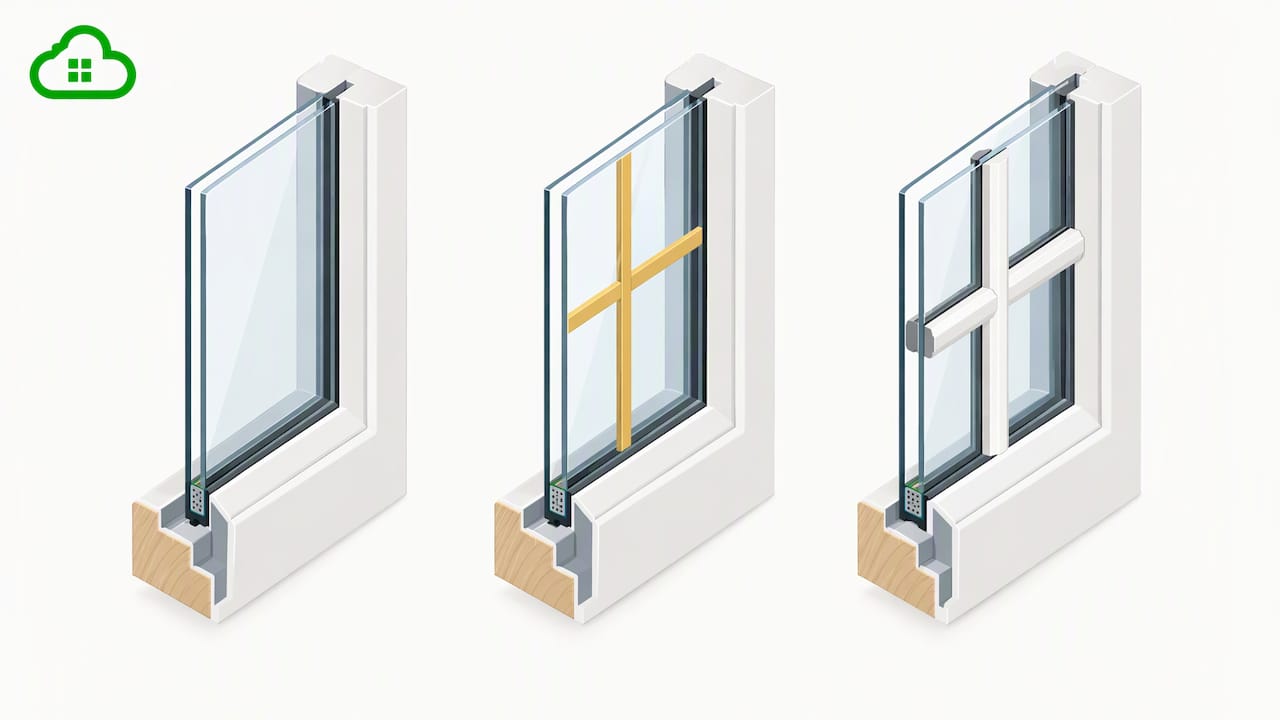
Applied glazing bars, fixed to the surface of a single large pane, suit windows where the rebate is too shallow for anything else or where structural bars are not practical.
Full window replacement makes sense when:
- the frame has rotten timber or the sashes no longer open and close properly
- the glazing bars are too damaged to repair economically
- you want a modern frame rather than a repaired period one
Secondary glazing is a reversible option: an additional pane fitted inside the existing window, which improves thermal and sound performance without touching the original glass or bars at all.
When to repair a failed unit and when to replace it
Matching the symptom to the right fix saves time and avoids paying for more work than you need.
- Misted or cloudy glass almost always means the perimeter seal inside the sealed unit has failed, letting moisture in. Glass-only IGU replacement typically restores clarity and thermal performance without touching the frame.
- Cracked glass or damaged structural bars generally need the pane replaced, or the bar joints repaired, rather than a full unit swap, provided the frame itself is sound.
- Rotten or warped frames are the point where repair stops making sense. If the timber has failed structurally, a glass-only fix will not hold.
Before quoting, a competent installer should check sash movement, measure rebate depth, look for signs of previous repairs, and note whether the glass is original historic glass worth preserving.
Pro Tip: Ask your installer to photograph the rebate and bar profile before removing the old glass, so there’s a record if the replacement unit needs adjusting later.
Heritage, planning and building-regulations rules you must check
Georgian bar windows often sit on listed buildings or in conservation areas, and the rules there can limit what you’re allowed to fit.
- Listed building and conservation-area status can restrict glazing thickness and require like-for-like profiles and sightlines, so always check with your local planning authority before ordering.
- An Article 4 direction can remove permitted development rights that would otherwise let you replace windows without separate consent.
- Replacement glazing can often be self-certified through a competent person scheme, which lets the installer issue a certificate instead of you applying separately for building-regulations approval.
- Where work affects historic fabric, such as removing original glass or structural bars, you may need listed-building consent before work starts.
In many heritage approvals, the permitted overall glazing thickness is capped, usually capped at a modest thickness in listed buildings, which rules out standard double-glazed units and points most owners towards slimline or vacuum glazing instead.
The technical survey: measurements that decide what will fit
A proper survey is less about taste and more about what will physically sit in the frame you already have.
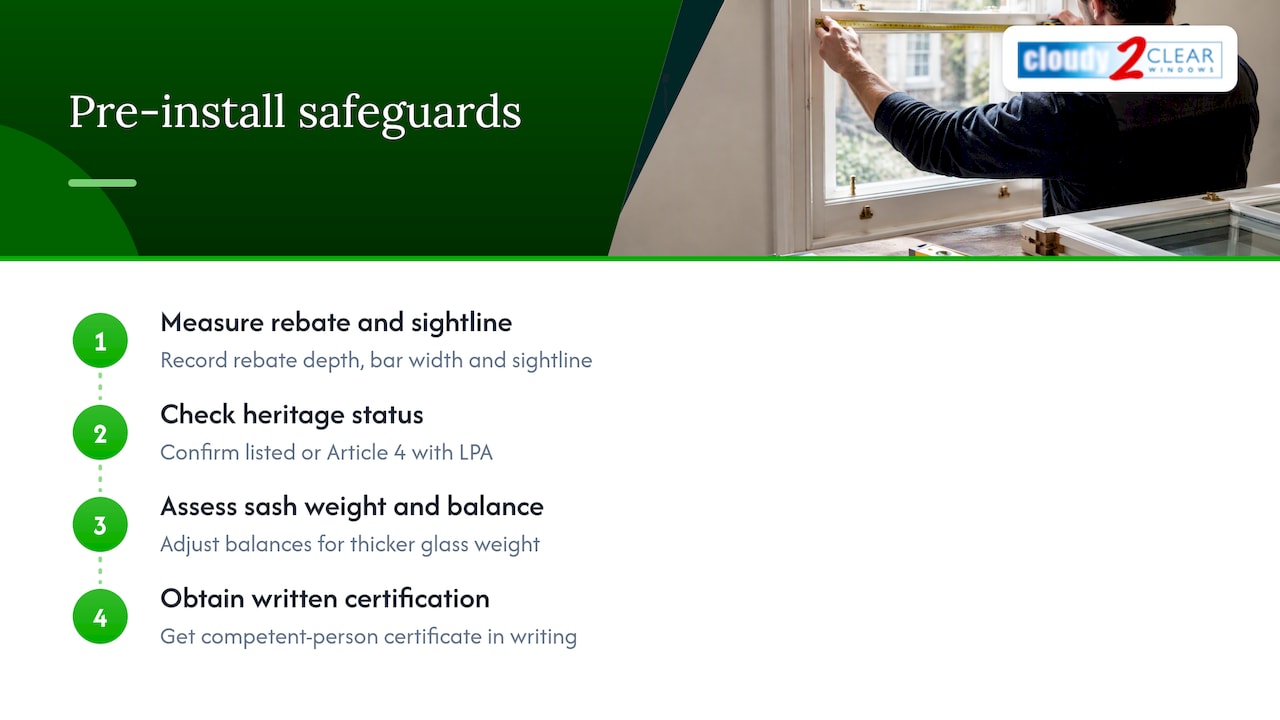
- Rebate depth is the single measurement that decides most of your options. A shallow rebate often rules out a standard IGU and forces a choice between applied bars or a slimline unit.
- Glazing bar width and spacer sightline determine how close the new unit can get to the original look. The Georgian Group’s guidance on windows stresses that the best choice depends on these dimensions and the existing frame condition, not on appearance alone.
- Whether the bars are structural (through-bars), between-glass or surface-applied changes both the look and the type of unit you need, so this has to be confirmed before anything is ordered.
- Sash weight and balance can shift once thicker glass goes in. Heavier units sometimes need the sash weights adjusted or the mechanism repaired to keep the window opening smoothly.
Local building-control guidance also points out that replacement windows and doors need to be checked for ventilation and safety glazing requirements, since a tighter-sealing unit changes how the room breathes compared with the old glazing.
What to ask and check when hiring an installer
A short list of questions at the quoting stage catches most of the problems that surface later on site.
- Who takes the measurements, and will the existing frame be kept or replaced? Ask for a measured drawing that shows sightlines and bar profiles, not just a verbal description.
- Which IGU type is being proposed, what spacer sightline will it have, and does it meet safety-glazing requirements for the location in the window?
- Will the work be self-certified, and which certificate will you receive? Get this in writing rather than taking it on trust.
- What guarantee and lead time apply, and can the installer show examples of similar Georgian-pattern or heritage work they’ve completed before?
Pro Tip: Get the proposed sightline and rebate depth written into the quote itself, not just discussed on site, so there’s no ambiguity if the delivered unit doesn’t match.
Does replacing Georgian bar units affect property value?
Kerb appeal matters on period properties, and Georgian bar windows are often part of what makes a facade read as a coherent, well-kept period home. Replacing failed units with a close match, rather than swapping to plain panes or an unrelated grid pattern, keeps that consistency intact and avoids the slightly patchwork look that puts buyers off on a terrace or square where most neighbouring houses have kept their original glazing pattern.
The bigger risk to value usually comes from getting it wrong rather than from replacing at all. Misted, cracked or clearly failed units are an obvious maintenance flag to any buyer or surveyor, and they tend to invite questions about what else has been neglected. On the other hand, fitting a visibly modern window into a Georgian facade, or losing listed-building consent partway through a sale, can cause far more friction than the condensation problem it was meant to fix.
Energy performance plays a smaller but real part too. A slim or narrow-cavity IGU that keeps the period look while improving thermal performance tends to tick both boxes: it satisfies a buyer looking at running costs and keeps the character that justified the asking price in the first place. The safest route for value is usually the one that’s invisible from the street: matching sightlines, matching bar pattern, and glazing that performs without announcing itself.
Common installation mistakes and how to avoid them
Most problems with Georgian bar replacements trace back to decisions made before the glass ever arrives on site.
Ordering an IGU by eye, rather than from a measured rebate depth and sightline, is the most frequent mistake. It leads to units that don’t sit flush, bars that look too thick or too thin against the frame, or a unit that simply won’t fit without cutting into the rebate. Always get the rebate depth, bar width and spacer sightline measured and written down before ordering.
Skipping the heritage check is another common error. Owners sometimes order and fit replacement glazing before confirming whether the property is listed or sits under an Article 4 direction, only to find the work falls foul of planning rules. Check with the local planning authority first, not after installation.
Ignoring sash weight is an easy one to miss. Thicker glass adds weight, and if the sash balance isn’t adjusted, windows can become stiff to operate or fail to stay open. A competent installer should flag this at survey stage, not after the unit is fitted.
Finally, accepting self-certification without the paperwork leaves you without proof the work met building regulations. Always ask for the certificate from a competent person scheme in writing, since this is what you’ll need if you sell the property later.
Cloudy2Clear Windows perspective and practical site notes
Repairs and replacements of sealed units typically encounter consistent issues: rebates that are shallower than expected, glazing bars too fine for a standard IGU, or sashes requiring weight adjustment after new glass installation. None of these are unusual, but they’re easier to plan for than to fix after fitting.
A measured survey and a written specification before ordering are recommended to ensure the replacement unit fits the window properly.
Book a measured survey with Cloudy2Clear Windows
Focusing on replacing the glass, not the frame, usually results in lower cost, less mess, and a faster job than full window replacement. Where Georgian bars allow, slimline or narrow-cavity units can maintain the period look, often supported by guarantees and certification.
- Measured survey to confirm rebate depth, bar type and sightline before you order anything
- Clear written specification so you know exactly what’s being fitted and why
- Certification provided in writing for self-certified work
If you’d like to get a specification sorted before committing to anything, book a measured survey for double glazing replacement and we’ll talk you through what will and won’t fit your frame.
FAQ
How can I replace misted double glazing units?
Misting between panes almost always means the sealed unit’s perimeter seal has failed, and the usual fix is replacing the glass-only IGU rather than the whole frame. A measured survey first confirms the rebate depth and sightline so the replacement unit fits properly.
What are the different types of Georgian windows?
Georgian-style windows commonly use structural through-bars, between-glass bars set inside the sealed unit, or surface-applied bars fixed to a single pane. Which type suits your window depends on the rebate depth and bar width recorded at survey, as outlined by the Georgian Group’s window guidance.
What are the disadvantages of double glazing?
Double glazing adds thickness and weight compared with single glazing, which can mean adjusting sash balances or, on listed buildings, running into glazing thickness limits that rule out standard units. Reduced-sightline or non-standard units can also carry a higher risk of early seal failure if they aren’t manufactured to recognised standards.
Are building regulations required for replacement windows?
Replacement glazing in most homes needs to meet building regulations, but installers registered with a competent person scheme can self-certify the work instead of you applying separately. Always ask for the certificate in writing, since you’ll likely need it when you come to sell.