A uPVC door that will not close is usually out of alignment, not broken. The hinges have slackened or the door has dropped, or something is catching on the frame or keeps. Most causes can be found in a few minutes by watching where the door touches. Some fixes are simple adjustments, and others need a professional. This guide shows you how to tell which is which.
Why a uPVC door stops closing properly
A uPVC door is a heavy sealed panel, often with double glazed glass, hanging on three hinges and held shut by a multi-point lock. Anything that shifts its position by a few millimetres can make it catch, bounce back or refuse to latch. The usual causes are:
- Dropped door: the weight of the panel pulls the hinge side down, so the lock edge sits lower than the keep.
- Loose or worn hinges: screws work loose with daily use, and the door sags on its fixings.
- Seasonal movement: plastic and the other materials in the door expand and contract with temperature.
- Blocked keeps: grit, a pebble or old paint can sit in the keep or threshold and stop the hooks or latch from seating.
- Swollen or damaged seals: a gasket that has been pushed out of its groove can stop the door from shutting fully.
- Lock mechanism faults: a gearbox that has started to fail can leave the latch or hooks stuck out.
The symptoms overlap, so do not guess. Work through the checks below in order, because each one rules something out before you touch a screw.
Find the rubbing point first
Before adjusting anything, you need to know exactly where the door is meeting resistance. Adjusting without that information often makes things worse.
- Close the door slowly and watch the gap around the edge. Note the point where it first touches or stops.
- Slide a sheet of paper around the closed edge of the door, between the door and the frame. Where the paper grips or tears, you have found a tight spot.
- Look for marks. Scuffs, shiny patches or flattened gasket on the frame show where the door is rubbing.
- Check the keeps. Look at the strike plates on the frame, one near the top, one at the lock and one near the bottom. Check that nothing is lodged in them.
- Check the threshold. Look along the bottom for stones, grit or debris that may stop the lower hook or the door edge settling.
A common surprise is a small pebble or a build-up of dirt in the keep at the bottom. Clear it with a thin brush or a vacuum nozzle and try the door again before doing anything more.
How to tell if your door has dropped
A dropped door is the most frequent reason a uPVC door stops closing smoothly. It happens gradually, so you may not notice until the handle starts to lift stiffly or the key will not turn.
With the door closed, look at the gaps around it:
- Top gap larger than bottom gap: the door is probably sagging, and the lock edge is dragging low.
- Door meets the frame at the top but leaves a gap at the bottom: the hinges may need adjusting.
- Uneven gap down the lock side: the door may be twisted or the hinges may be unevenly set.
- Mitres do not line up: the corner joints of the door and frame should sit evenly. If they are offset, the door is out of square in the frame.
- Bottom corner of the lock edge scuffing the frame or threshold: a classic sign of a door that has dropped.
Hold a spirit level against the top of the door if you want a more objective check. If the door is level but the gaps are uneven, the frame itself may have moved. That is a job for a professional, not an adjustment.
We have a more detailed guide on how to fix a dropped uPVC door and when to call a pro if you want to see the pattern in full.
Adjusting the hinges
Most modern uPVC doors have adjustable hinges, which is why many alignment faults can be corrected without replacing anything. The type of hinge you have decides what can be moved.
Know your hinge type
- Flag hinges are common on modern doors. They usually allow three movements: sideways (lateral), up and down (vertical) and compression, which pushes the door tighter against or away from the seal.
- Butt hinges vary by make, and some offer only limited adjustment.
- T-hinges generally adjust sideways and up and down.
Many hinges have a plastic cap that clips off to reveal the adjustment screws. Use the right size Allen key or screwdriver, and make small changes.
A sensible order of work
- Tighten loose fixings first. Check every hinge screw, as a slack hinge can mimic a dropped door.
- Adjust one hinge at a time, usually starting with the one nearest the problem.
- Turn in small increments, around a quarter turn, and test the door after each change.
- Raise the door at the lock side if the bottom corner is catching, using the vertical adjustment.
- Use lateral adjustment to even out the gap along the lock edge.
- Use compression last, to bring the door snugly against the seals once it hangs square.
If a screw will not turn, a hinge is cracked, or the door is still dropping after you adjust it, stop. Forcing a worn hinge can damage the frame. Our page on locks, handles and hinges repairs explains what we can repair on site.
The door closes but will not lock
This is a different problem from a door that will not shut, and it has a different set of checks. A multi-point lock has a central latch and hooks, or bolts, at the top and bottom. If the door is slightly out of line, the hooks cannot reach their keeps and the handle will not lift properly.
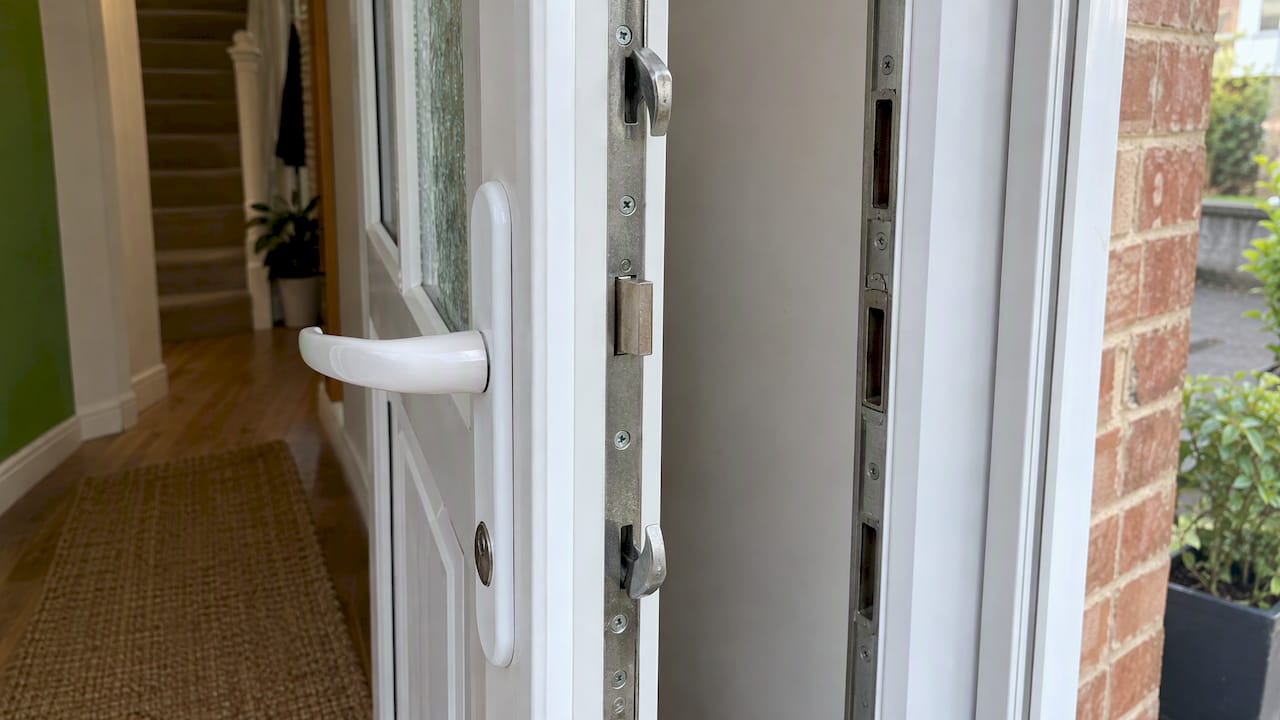
Guidance for multi-point locking doors in a Winkhaus AV2 checklist published by Camden Council says compression should be set on the centre latch only. The top and bottom hooks are security features that should sit loosely in their keeps, so that they do not jam. The same guidance says that if a handle works with the door open but fails when the door is closed, the cause is probably incorrect adjustment or alignment, not a failed handle.
That gives you a very useful test:
- Operate the handle with the door open. If the hooks fire out fully and retract smoothly, the mechanism is probably sound.
- Try again with the door closed. If the handle now resists, the keeps and the hooks are not lining up. Go back to the hinge alignment checks.
- If the hooks do not fire fully with the door open, the same checklist advises lubricating them with silicone spray and getting the manufacturer or a qualified fitter involved if the problem persists.
Avoid general-purpose oil sprays on lock mechanisms, as they can attract dirt. If your handle itself feels loose or floppy, see our guide to fixing a loose uPVC door handle.
Weather, seasons and why the problem comes and goes
If your door sticks in summer and works fine in winter, or the other way round, temperature is the likely cause. Materials in a door and frame expand when warm and contract when cold, and a door that fits well in one season may bind or leave a gap in another. We explain the numbers in our article on why uPVC doors in UK homes stick.
A few practical points follow from this:
- Note when the fault appears. A problem that only shows on hot afternoons points to expansion, while a problem that starts after a cold snap suggests contraction.
- Check again at a different time of day. A door that sticks in the afternoon sun and closes easily in the morning is moving with temperature.
- Do not plane or force a door that sticks in hot weather. It may fit perfectly again when it cools, and you cannot put material back.
- Look at the seals. A compressed or displaced gasket can add friction. If you also feel draughts around the door, our guide to replacing seals and keeping trickle vents open is a good next step.
When a door repeatedly goes out of alignment with each change of season, the hinges or the glass unit’s weight are often part of the problem, and a proper inspection will find the cause faster than repeated adjustments.
Our view: why a door that will not close is worth fixing early
We have repaired and replaced double glazing since 2005, and doors that will not close are among the most common calls we hear about. People often put up with them for months, lifting the handle harder or leaning on the door to get it shut.
That habit is what turns a small alignment fault into a bigger one. A door that is forced shut strains the hinges, wears the lock gearbox and can press on the glass unit in the door, which is the part that is expensive to disturb.
Our approach is to repair what is failing, not to replace the whole door. We replace only the glass where the glass has failed, and we repair locks, handles and hinges where the hardware is at fault. That means less disruption in your home or business and a faster visit. Where a door has dropped, we check the hinges, the keeps and the glass together, because they affect each other.
When to stop and call a professional
Simple checks and small adjustments are reasonable for a confident homeowner. Some signs mean it is time to stop:
- The door has dropped more than a few millimetres and hinge adjustment does not bring it back.
- Hinge screws spin without gripping, or the hinge itself is cracked or bent.
- The key will not turn, even though the door is aligned. The lock barrel or gearbox may have failed.
- The hooks do not fire fully with the door open, even after lubricating them with silicone spray.
- The glass unit looks misted, cracked or loose in the door. Misting means the seal has failed, and the weight of a failing unit can affect how the door hangs.
- The frame has visible gaps, cracks or movement, which can point to a structural cause that adjustment cannot fix.
- You cannot lock the door, which is a security problem as well as an inconvenience. Do not leave the property unsecured while you wait.
If you cannot secure a door and you have to leave the property, ask a trusted neighbour to keep an eye on it and book a repair as soon as you can.
For homes, our double glazed door repairs cover glass, locks, handles and hinges. For shops, offices and other premises, see our commercial window repair service. Housing associations can look at our inspection and replacement services for managing faults across several properties.
It also helps to know the wider warning signs. Our guides on common window and door faults to watch for and how to identify window issues in your property will help you spot problems before they affect how the door closes.
Get your door and glass checked by Cloudy2Clear Windows
If your door still catches, drops or will not lock after the checks above, we can help. We repair the parts that have failed, whether that is the hinges, the lock, the handle or the glass unit, and we replace only the glass, not the whole frame, when the glass is the problem. That keeps disruption low and gets your door working again quickly.
Our lines are open 24 hours 7 days a week. See our double glazed door repairs page or visit Cloudy2Clear Windows to get in touch and describe the fault. A few details speed things up: where the door rubs, whether it locks, and whether the glass shows misting or cracks.
FAQ
Why is my uPVC door hard to close?
The most common reason is that the door has dropped or the hinges have loosened, so the lock edge no longer lines up with the frame. Seasonal movement, debris in the keeps and displaced seals can also add resistance. Watch where the door first touches and check the gaps around it to narrow down the cause.
Why does my uPVC door catch on the frame?
A door catches when it sits lower or further to one side than it should. Slide a sheet of paper around the edge to find the tight spot, then look for scuff marks on the frame. If the bottom corner of the lock side is rubbing, a dropped door is the likely cause, and the hinges may need adjusting.
Can I adjust a uPVC door myself?
Many modern uPVC doors have adjustable hinges, usually allowing sideways and up and down movement and sometimes compression. Make small changes of about a quarter turn and test after each one. If screws spin, hinges are cracked or the door keeps dropping, a qualified fitter should take over.
My door closes but the handle will not lift. What is wrong?
This usually means the hooks and bolts are not meeting their keeps, which points to alignment rather than a broken handle. Try the handle with the door open: if it works, the mechanism is probably fine and the door needs realigning. If it does not, the lock may need servicing or replacing.
When should I call a professional about a uPVC door?
Call when adjustment does not hold, when the lock or hinges are damaged, when the glass is misted or cracked, or when you cannot secure the door. These faults can affect your security and can get worse the longer the door is forced shut.