Misted double glazed windows frustrate homeowners and property managers across England and Scotland every day. Many assume the problem is simple condensation, but the real culprit lies hidden within the sealed unit itself. This article clarifies why glazing units mist up, how to spot the warning signs early, and what practical steps you can take to prevent or address these issues effectively.
What causes glazed units to mist up?
Moisture trapped between window panes signals that the hermetic seal has failed. Double glazed units rely on airtight seals to keep the space between panes dry and insulated. When sealant degrades, humid air enters this space and condenses on the cooler inner surfaces.
Thermal cycling, solar radiation, and manufacturing defects create the primary pathways for seal breakdown. Temperature swings make the glass expand and contract repeatedly, stressing the edge seals until tiny gaps form. This constant flexing weakens even high-quality materials over time.
UV exposure proves particularly damaging. Solar radiation accelerates sealant degradation, especially on south and west facing windows that receive intense afternoon sun. The chemical bonds in the sealant break down, becoming brittle and losing adhesion to the glass.
Several factors compound these natural stresses:
- Manufacturing defects in the original seal application leave weak points vulnerable to early failure
- Poor installation creates uneven stress distribution across the sealed unit
- Low-quality sealant materials cannot withstand normal environmental exposure
- Inadequate desiccant within the spacer bar fails to absorb residual moisture
Understanding window damage prevention helps you recognise that misting is not a surface issue you can wipe away. The problem exists within the sealed cavity itself, requiring professional attention to resolve properly.
Signs of seal failure and misted double glazing
Spotting seal failure early saves money and prevents further damage. Visible condensation between glass panes provides the most obvious indication that your sealed unit has failed. This fogging appears as persistent moisture that won’t clear with wiping or ventilation.
Mineral deposits tell a more advanced story. White films or milky patterns on inner glass indicate prolonged seal failure where moisture has repeatedly entered and evaporated, leaving behind dissolved minerals. These deposits cannot be cleaned from outside because they sit between the panes.
Physical changes to the glass itself signal serious problems:
- Glass warping or bowing suggests the inert gas between panes has escaped
- Visible cracks or gaps around window edges show where seals have separated
- Distorted reflections indicate uneven pressure within the sealed cavity
- Rattling sounds when opening or closing suggest loose components
Pro tip: Inspect windows quarterly, especially after extreme weather. Early detection of small edge gaps or slight fogging lets you address issues before complete seal failure occurs, potentially saving hundreds on replacement costs.
Recognising different types of window condensation helps distinguish between normal surface condensation and sealed unit failure. Surface moisture disappears with ventilation, whilst internal misting persists regardless of room conditions.
How different spacer bars affect misting and window performance
Spacer bars separate glass panes and profoundly influence thermal performance. Traditional aluminium spacers conduct heat rapidly away from window edges, creating cold bridges where condensation forms more readily. These thermal weak points compromise the entire unit’s efficiency.

Warm-edge spacers use materials with lower thermal conductivity, keeping edge temperatures closer to the centre glass temperature. Aluminium spacers increase condensation risk by 20-30% compared to modern warm-edge alternatives, making material choice crucial for long-term performance.
| Spacer type | Thermal conductivity | Condensation risk | Average lifespan | Key advantage |
|---|---|---|---|---|
| Aluminium | High | 20-30% higher | 10-15 years | Lower initial cost |
| Stainless steel | Medium | 15-20% higher | 15-18 years | Good durability |
| Composite warm-edge | Low | Baseline | 18-25 years | Superior insulation |
| Thermoplastic | Very low | 25-35% lower | 20-25 years | Best thermal performance |
The spacer bar also houses the desiccant that absorbs residual moisture during manufacturing. Quality warm-edge spacers incorporate more effective desiccant materials that maintain their absorption capacity longer, providing better protection against internal condensation.
Choosing warm-edge spacers during replacement prevents future misting issues. The modest additional cost delivers significant returns through reduced condensation, improved energy efficiency, and extended unit lifespan. Homeowners replacing failed units should specify warm-edge technology to prevent condensation in double glazed windows going forward.
How long do double glazing seals last and why premature failure occurs
Quality double glazing seals typically last 10-20 years under normal conditions. Material quality, installation precision, and environmental exposure determine where within this range your windows fall. Premium materials and professional installation push lifespan towards the upper end.
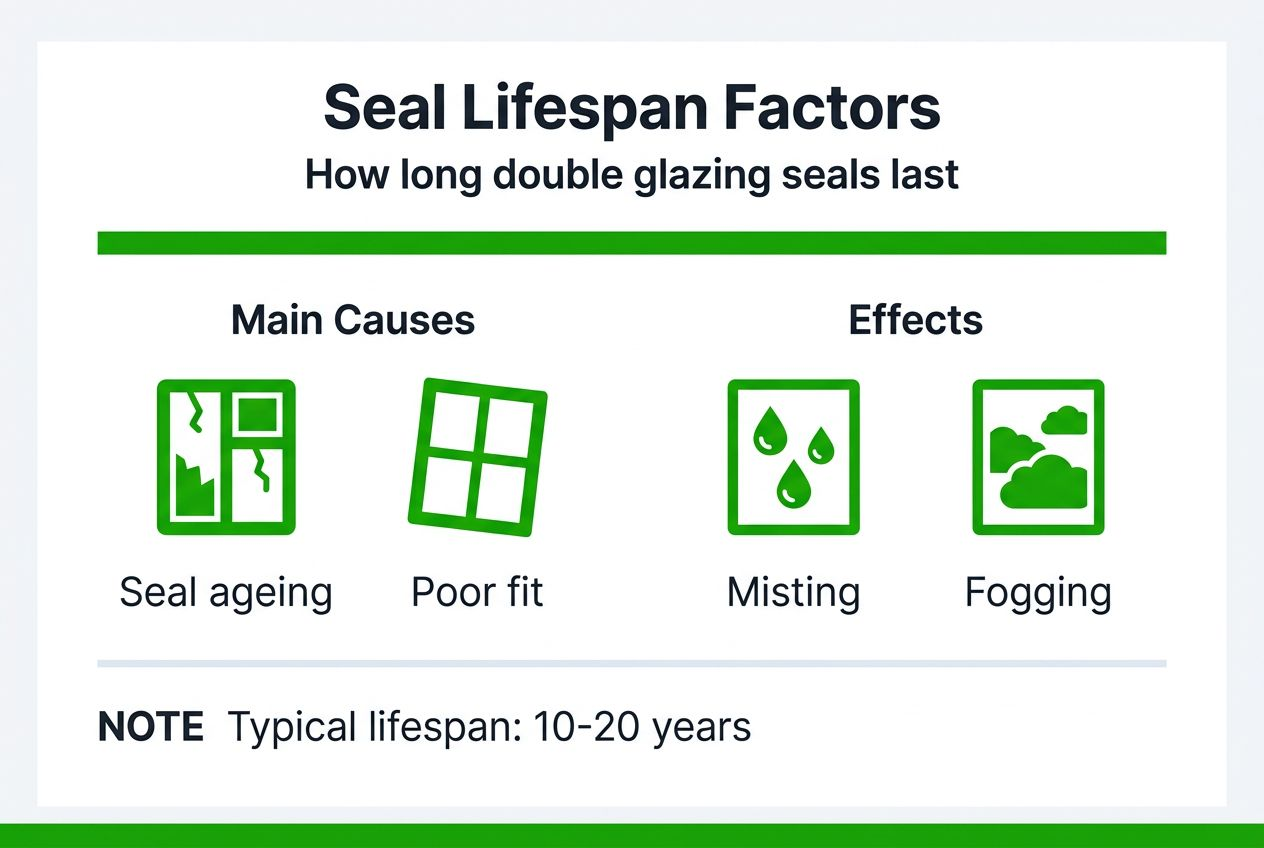
Premature failure stems from controllable and uncontrollable factors. Poor installation increases failure rate by 40% within the first five years, making installer choice critical. Rushed or inexperienced installation creates stress points that accelerate seal breakdown dramatically.
| Lifespan range | Common causes | Observable effects | Prevention strategy |
|---|---|---|---|
| 5-10 years | Poor installation, manufacturing defects | Early fogging, edge gaps | Choose certified installers |
| 10-15 years | Standard materials, moderate UV exposure | Gradual misting, minor deposits | Regular maintenance |
| 15-20 years | Quality materials, good installation | Slow degradation | Protective window films |
| 20+ years | Premium materials, warm-edge spacers, professional care | Minimal issues | Annual professional inspection |
Environmental factors you cannot control include coastal salt exposure, industrial pollution, and extreme temperature variations. Understanding double glazing lifespan expectations helps you budget for eventual replacement whilst maximising current window performance.
Pro tip: Request installation certificates and material specifications when having windows fitted. Documentation proves valuable when assessing whether premature failure resulted from defective materials or poor workmanship, potentially triggering warranty coverage.
Different window seal failure types age at different rates. Primary seals fail first, followed by secondary seals. Understanding this progression helps you recognise when complete replacement becomes more cost effective than repeated repairs.
Preventive care and options for dealing with misted glazed units
Regular inspection catches problems before they escalate. Homeowners should examine windows for cracks or gaps quarterly to prevent moisture ingress. Check edge seals, frame joints, and glazing beads for separation or deterioration.
Cleaning and maintenance extend window life but cannot reverse seal failure. Proper care includes gentle cleaning with appropriate products, ensuring drainage holes remain clear, and checking frame condition. These measures prevent additional stress on already vulnerable seals.
Repair versus replacement depends on damage extent:
- Inspect all windows systematically, noting any fogging, deposits, or visible seal damage
- Document issues with photos showing affected areas and approximate size of misting
- Obtain professional assessment from certified window specialists for accurate diagnosis
- Compare repair costs against full sealed unit replacement for each affected window
- Consider upgrading to warm-edge spacers if replacing units to prevent recurrence
- Schedule work during dry weather to ensure proper seal curing and installation
Replacement often proves more cost effective than attempting to repair failed seals. Warm-edge spacer bars offer long-term benefits for reducing future misting whilst improving energy efficiency, making them worthwhile upgrades during replacement projects.
Pro tip: Group window replacements by priority. Address south and west facing units first, as they experience highest UV exposure and fail earliest. This staged approach spreads costs whilst protecting most vulnerable windows immediately.
Understanding your double glazing care options helps you make informed decisions. Some situations allow repair of failed double glazing, whilst others require complete replacement. Learning why replacing window seals matters helps you evaluate when repair makes financial sense.
How Cloudy2Clear can help with glazed unit misting
Your misted windows need expert attention, and Cloudy2Clear specialises in diagnosing and resolving double glazing failures. Since 2005, we have helped homeowners and property managers across England and Scotland restore clarity and efficiency to their windows through professional repairs and replacements.

Our specialists assess each situation individually, recommending repair or replacement based on damage extent and cost effectiveness. When replacement proves necessary, we install quality sealed units with warm-edge spacer bars that resist future misting whilst improving thermal performance. Professional installation ensures proper sealing and alignment, eliminating the installation defects that cause premature failure. Get expert help with your double glazing repairs and window glass replacement needs today.
Frequently asked questions
What causes misting between double glazed window panes?
Seal failure allows humid air to enter the space between panes, where it condenses on cooler glass surfaces. Thermal cycling, UV exposure, and manufacturing defects degrade the sealant over time, breaking the hermetic seal that keeps the cavity dry.
Can misted double glazing be repaired or must it be replaced?
Complete seal failure typically requires sealed unit replacement rather than repair. Attempting to dry out or reseal failed units rarely succeeds long term, as the underlying seal damage persists and moisture returns quickly.
How long should double glazing seals last before misting occurs?
Quality seals last 10 to 20 years depending on materials, installation quality, and environmental exposure. Poor installation can trigger failure within five years, whilst premium materials and warm-edge spacers extend lifespan beyond 20 years.
Do warm-edge spacer bars really prevent window misting?
Warm-edge spacers reduce condensation risk by 20 to 30% compared to aluminium alternatives by minimising thermal bridging at window edges. They keep edge temperatures warmer, reducing the conditions that promote condensation formation.
How can I tell if my double glazed windows need replacing?
Persistent fogging between panes, mineral deposits on inner glass, visible edge seal gaps, or glass warping indicate failure requiring replacement. Early stage issues like slight fogging may allow timely intervention before complete failure occurs.